
Addressing Health Disparities in Medication Safety Research

Addressing Health Disparities in Medication Safety Research

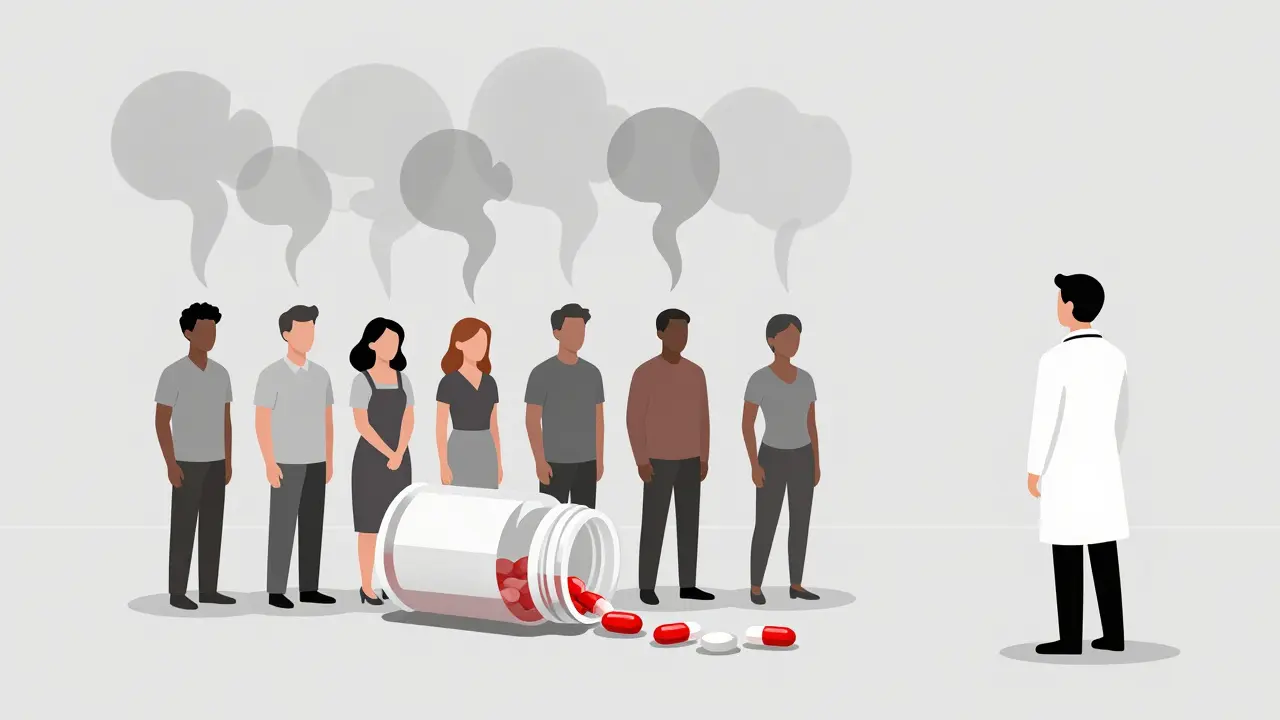
Every year, millions of people around the world suffer harm because of medication errors-wrong doses, missed prescriptions, dangerous interactions. But not everyone is equally at risk. Medication safety isn’t the same for everyone. People of color, older adults, non-English speakers, and those with low incomes are far more likely to experience preventable harm from medications-and far less likely to have their concerns heard or documented. This isn’t random. It’s systemic.

Why Some Patients Are Left Behind

A study across five NHS hospitals in 2021 found that patients from certain ethnic groups filed far fewer medication error reports than others. Not because they had fewer mistakes happen to them. But because they didn’t feel safe speaking up. Language barriers, cultural distrust, and past experiences of being ignored made many patients stay silent. One Black patient in Georgia described how her doctor dismissed her concerns about a new medication, assuming she didn’t understand the instructions. She didn’t report it. She just stopped taking it. That’s not compliance-it’s survival.

The problem goes deeper than communication. Research shows clinicians often make unconscious assumptions about patients based on race, age, or income. A 2024 study in JAMA Network Open found that doctors were more likely to prescribe cheaper, less effective drugs to Black and Hispanic patients, assuming they couldn’t afford or manage more complex regimens. That’s not care. That’s bias dressed as cost-saving.

Even when new drugs are approved, they don’t reach everyone equally. Between 2014 and 2021, Black Americans made up just one-third of participants in clinical trials for drugs treating conditions they were most likely to die from. That means we don’t really know how those drugs affect them. The U.S. Preventive Services Task Force couldn’t even set specific colorectal cancer screening guidelines for Black patients in 2021-because the data just wasn’t there. How can you fix a problem you refuse to measure?

The Hidden Cost of Inequality

The World Health Organization calls medication errors a global crisis. They cost $42 billion a year in avoidable harm. But behind that number are real people. A diabetic in Detroit skips insulin because the co-pay is too high. A Spanish-speaking elder in Chicago gets the wrong pill because no interpreter was available. An elderly woman in Birmingham takes two blood pressure pills at once because her doctor didn’t explain the difference. These aren’t rare cases. They’re the norm for marginalized communities.

And the consequences are deadly. People of color are more likely to be uninsured. In 2022, nearly 19% of Hispanic Americans and 11.5% of Black Americans had no health coverage-compared to just 7.4% of white Americans. That means even when safer medications exist, they’re out of reach. New drugs often cost hundreds, even thousands, per month. For many, choosing between rent and medicine isn’t a metaphor. It’s daily reality.
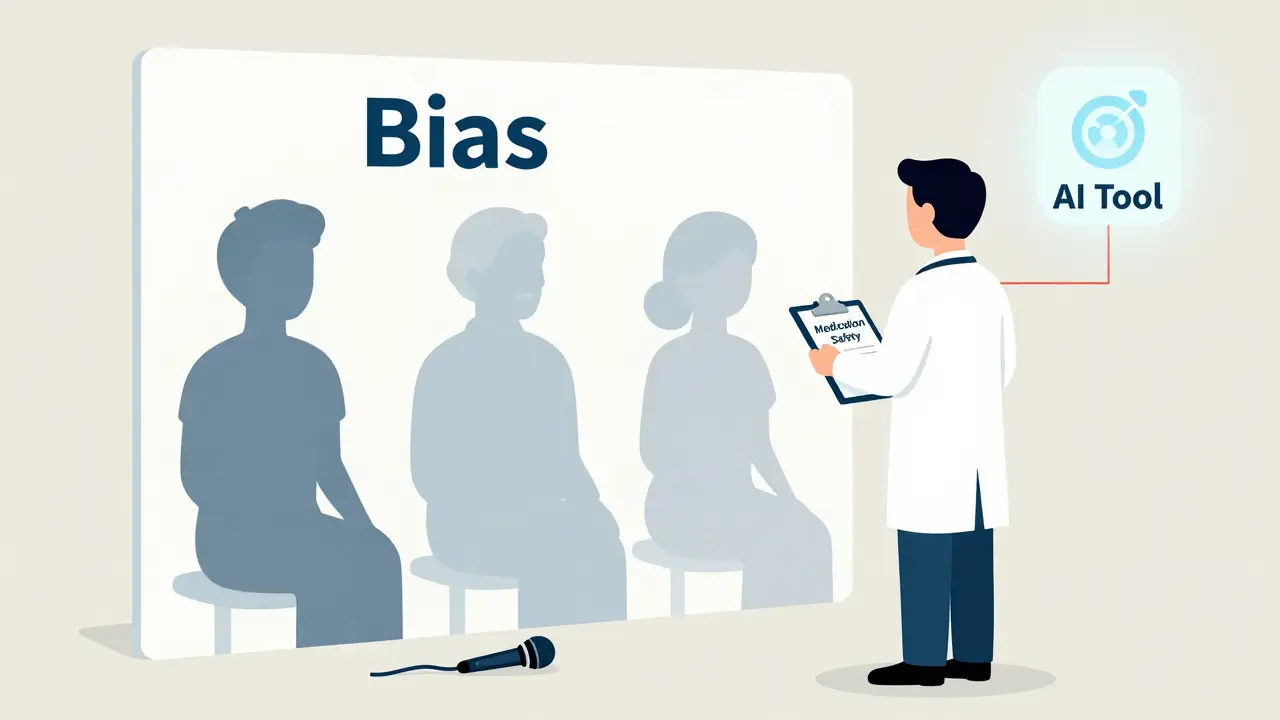
A doctor holds a clipboard while patient silhouettes fade behind a wall of bias, with an unused interpreter mic on the floor.

What’s Being Done-and What’s Missing

In 2017, the WHO launched its Medication Without Harm initiative, aiming to cut severe medication errors by half globally by 2022. It’s a bold goal. But equity wasn’t just an add-on-it was built into the framework. The plan looked at patients, providers, medicines, and systems. Yet, most hospitals still don’t track who’s being harmed, or why. A 2024 survey found only 32% of U.S. hospitals have formal programs to address medication safety disparities-even though 78% say it’s a priority.

The Joint Commission, which accredits U.S. healthcare facilities, finally made equity a formal patient safety goal in 2023. That’s progress. But goals don’t fix systems. Real change needs action: language services that actually work, training that challenges clinician bias, reporting tools that ask not just what happened, but who it happened to.

Some places are trying. The U.S. Office of the National Coordinator for Health Information Technology launched a $15 million project in 2024 to build AI tools that flag patterns of medication errors tied to race, income, or language. But AI can’t fix bias-it can amplify it. If the data feeding these tools is flawed, the outcomes will be too. That’s why community input matters. Patients on Reddit and Twitter are sharing stories of being told their pain was "just anxiety" or their confusion was "just old age." These aren’t anecdotes. They’re data points healthcare systems are ignoring.

How Real Change Happens

There’s no single fix. But there are proven steps:

  • Require demographic data in every medication error report-not just to count, but to act. If you’re not tracking who’s being harmed, you can’t fix it.
  • Expand professional language services with trained medical interpreters, not family members or Google Translate. Miscommunication kills.
  • Train clinicians in cultural humility, not just cultural competence. It’s not about knowing every tradition-it’s about listening without judgment.
  • Involve communities in designing safety programs. If you want to reduce errors among Latino patients, talk to Latino patients. Not just their doctors.
  • Cap out-of-pocket costs for high-risk medications. No one should choose between their health and their rent.
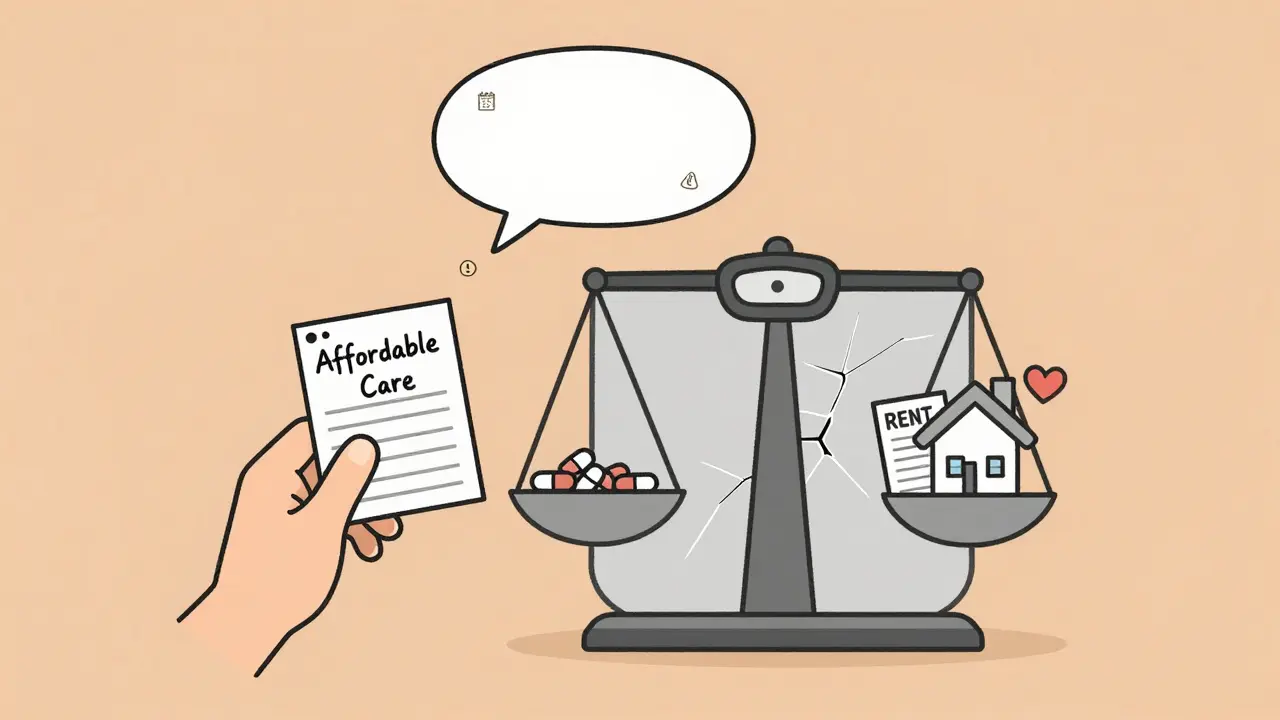
A handwritten medication log sits beside a scale weighing pills against rent and a heart, showing impossible health choices.

The Bigger Picture

Medication safety isn’t just about pills and prescriptions. It’s about trust. It’s about power. It’s about whether your voice matters in a room where decisions are made about your body.

The WHO says harm from medications is preventable. And they’re right. But prevention only works if you see the problem clearly. Right now, the system sees some patients as more visible than others. That’s not an accident. It’s design.

Change starts when we stop treating health disparities as a side issue-and start seeing them as the core safety failure they are. The data is there. The solutions exist. What’s missing is the will to act.

What Comes Next

If you’re a patient: document everything. Keep a written log of your medications, side effects, and questions. Bring a friend to appointments. Ask: "Is this medicine tested on people like me?" If you’re a provider: audit your prescribing patterns. Ask your team: "Who are we missing?" If you’re a policymaker: fund equity-focused safety tools, not just flashy tech.

The next breakthrough in medication safety won’t come from a new drug. It’ll come from finally listening to the people who’ve been shouting the loudest-and been ignored the longest.

12 Comments

  • Image placeholder

    Alex Curran

    December 21, 2025 AT 05:28

    Been working in pharmacovigilance for 12 years and this is the first time I’ve seen a post that actually nails the systemic rot in med safety research
    Most reports still treat disparities as noise not signal
    We collect race data but never analyze it by outcome
    It’s like measuring car crashes but ignoring which neighborhoods the cars are from

  • Image placeholder

    Kitt Eliz

    December 22, 2025 AT 18:05

    THIS. IS. NON-NEGOTIABLE. 🚨
    Health equity isn't a side project-it's the core protocol
    AI tools without diverse data are just algorithmic gaslighting
    Stop funding flashy tech and start funding interpreters, community liaisons, and patient advisory boards
    Our lives aren't variables in a spreadsheet 🧠💥

  • Image placeholder

    Laura Hamill

    December 23, 2025 AT 03:10

    They’re using race to justify not treating people properly
    It’s not bias-it’s a globalist agenda to erase American values
    My grandma took her meds just fine without translators and ‘cultural humility’
    Now they want to turn hospitals into woke focus groups
    Next they’ll ban English in ERs 😡

  • Image placeholder

    Dikshita Mehta

    December 23, 2025 AT 23:37

    Very well articulated. The gap between policy and practice is staggering
    Many hospitals have equity statements on their websites but zero metrics tracking adverse events by demographic
    Simple fix: mandate demographic tagging in all EHR error logs
    Without data, you can't even begin to measure progress

  • Image placeholder

    pascal pantel

    December 24, 2025 AT 18:27

    Let’s be real-the entire ‘medication safety disparity’ framework is a statistical artifact
    Low-income populations have higher comorbidity burden, non-adherence rates, and polypharmacy
    Calling it systemic bias ignores behavioral economics and real-world adherence patterns
    Also, clinical trials are expensive. You can’t force pharma to enroll underrepresented groups without incentives
    It’s not malice-it’s cost-benefit calculus

  • Image placeholder

    Gloria Parraz

    December 25, 2025 AT 21:05

    I’ve sat in too many hospital board meetings where this topic was tabled for ‘next quarter’
    But ‘next quarter’ never comes
    That diabetic in Detroit? That’s my cousin
    That elder in Chicago? That’s my neighbor
    They’re not statistics-they’re people who deserve better
    And we owe them action, not another white paper

  • Image placeholder

    Sahil jassy

    December 26, 2025 AT 05:26

    Bro just hire more bilingual staff
    Stop overcomplicating
    People want to be understood not lectured
    And stop making meds so expensive
    That’s the real problem
    Not the culture
    Just fix the price
    🙏

  • Image placeholder

    Carolyn Benson

    December 26, 2025 AT 05:55

    What if the real issue isn’t bias… but the illusion of agency?
    We tell patients to ‘speak up’ while the system is designed to silence them
    It’s not about language barriers-it’s about power architecture
    Who gets to define ‘compliance’? Who gets to decide what ‘understanding’ looks like?
    Until we dismantle the clinical hierarchy, all interventions are performative
    And performance is the new oppression

  • Image placeholder

    William Liu

    December 26, 2025 AT 21:04

    There’s hope. I’ve seen clinics in rural Ohio implement peer navigator programs-patients helping patients-and error rates dropped 40% in 18 months
    It’s not about tech or policy-it’s about trust
    And trust is built one conversation at a time
    Keep showing up. Keep listening. That’s the real innovation

  • Image placeholder

    Aadil Munshi

    December 27, 2025 AT 14:13

    Oh wow the WHO says ‘medication harm is preventable’
    Wow groundbreaking
    Let me guess… next they’ll say ‘water is wet’ and ‘sun rises in the east’
    Meanwhile, we’re spending $15M on AI that’ll just mislabel 30% of Black patients as ‘high risk’ because the training data was scraped from Medicaid claims
    Classic solutionism
    Meanwhile, the real fix? Pay people enough to afford their meds
    But that’s too socialist for Congress, right? 😏

  • Image placeholder

    Danielle Stewart

    December 28, 2025 AT 10:52

    As a clinical pharmacist with 20 years in safety oversight, I can confirm: the most effective interventions are those co-designed with the communities they serve.
    One hospital in Houston partnered with a local church to train lay health advocates-now they’re the first line of medication error detection.
    No app. No algorithm. Just people who care.
    It’s not sexy. But it works.

  • Image placeholder

    Erica Vest

    December 29, 2025 AT 03:57

    Just one sentence: If you don’t collect demographic data on medication errors, you’re not solving the problem-you’re pretending it doesn’t exist.

Write a comment

*

*

*