
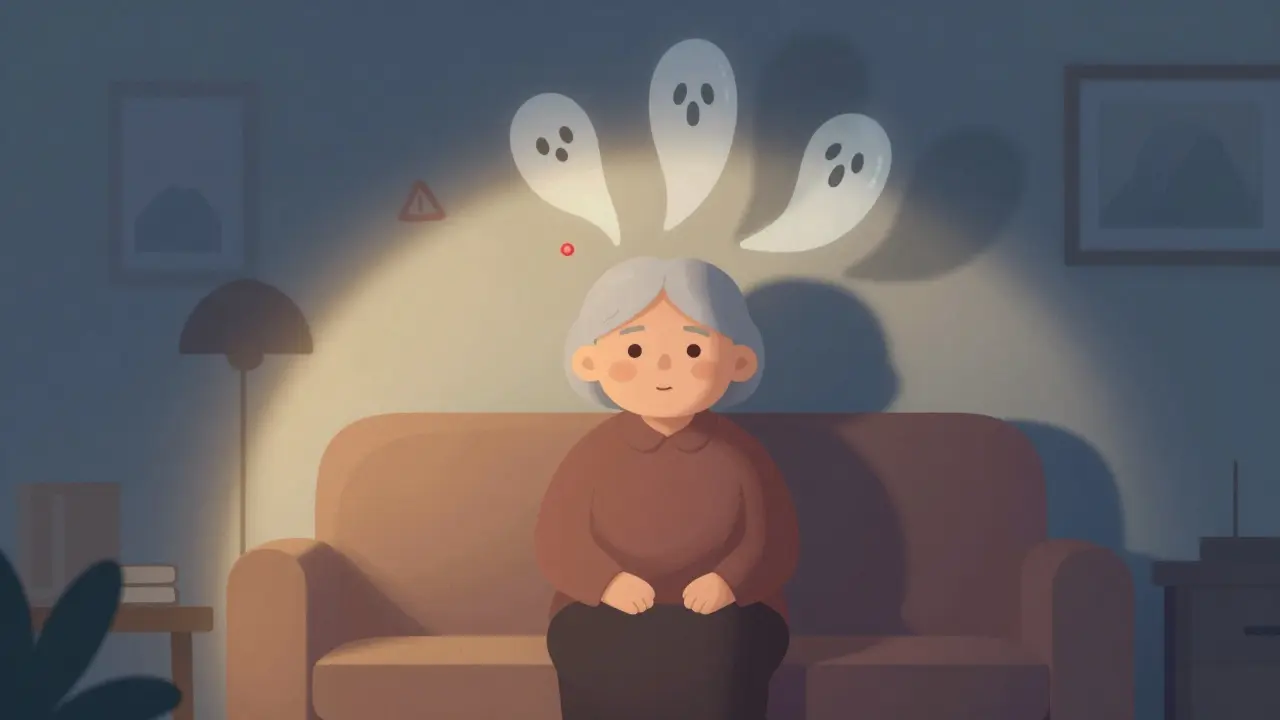
Every year, tens of thousands of elderly people with dementia are given antipsychotic drugs to calm agitation, aggression, or hallucinations. It seems like a quick fix - until a stroke happens. Or worse, until they don’t wake up. The truth? These medications aren’t just risky. For many seniors, they’re deadly.
Why Are Antipsychotics Even Prescribed?
Dementia doesn’t just steal memories. It changes behavior. A once-kind grandmother might start yelling at night. A quiet grandfather might become physically aggressive. Families and caregivers, overwhelmed and desperate, often turn to doctors for a solution. Antipsychotics - drugs like risperidone, olanzapine, or haloperidol - are offered as a way to reduce these behaviors. They’re not approved for dementia. Not officially. But they’re used anyway. In nursing homes, nearly one in three residents gets them. In home care, it’s still common. The problem isn’t that they work. They sometimes do - briefly. The problem is what they cost.The FDA Warning No One Talks About
Back in 2005, the U.S. Food and Drug Administration slapped a black box warning on every antipsychotic drug. That’s the strongest warning they can give. It said: These drugs increase the risk of death in elderly patients with dementia-related psychosis. The data came from 17 studies. Patients on antipsychotics were 1.6 to 1.7 times more likely to die than those on a placebo. That’s not a small risk. That’s a red flag flashing in bright neon. But here’s the thing: the warning didn’t stop the prescriptions. It didn’t even slow them down much.Stroke Risk Is Real - And It Starts Fast
You might think you need months of use for harm to show up. You’d be wrong. A major study from the American Heart Association in 2012 looked at over 100,000 older adults in the Veterans Affairs system. They found that even short-term use - just a few weeks - raised stroke risk by 80%. That’s not a slow buildup. That’s a sudden spike. And it didn’t matter if the drug was old-school (typical) or newer (atypical). Both types carried the same danger. Why does this happen? Antipsychotics mess with your brain’s blood flow. They cause sudden drops in blood pressure when standing up (orthostatic hypotension). They can trigger metabolic changes that lead to diabetes and high cholesterol - both stroke risk factors. And they interfere with dopamine and serotonin systems that help regulate circulation in the brain. One moment, the person seems calmer. The next, they’re in the ER with a stroke.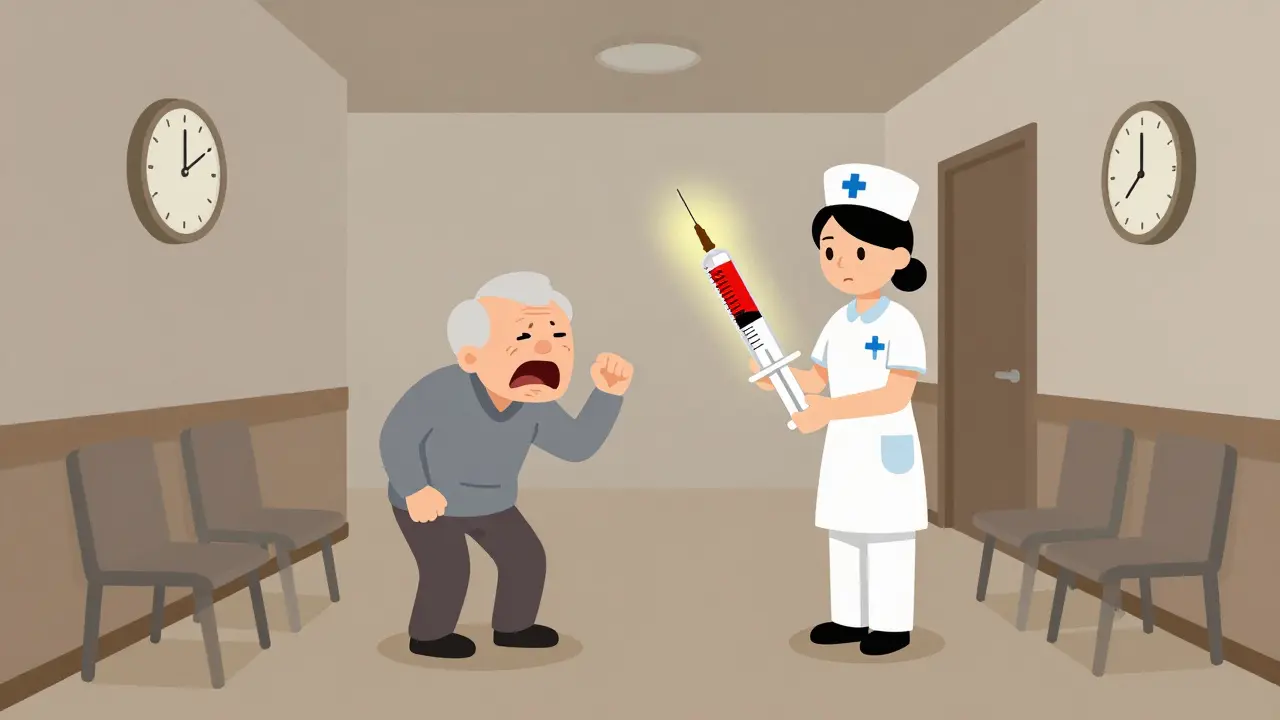
Typical vs. Atypical: Which Is Worse?
Doctors often tell families, “We’re using the newer, safer one.” That’s not true. Atypical antipsychotics - like quetiapine or aripiprazole - were marketed as safer. They’re less likely to cause tremors or stiffness. But they’re not safer when it comes to strokes. Studies comparing typical (haloperidol) and atypical (risperidone) drugs found no clear difference in stroke rates. One 2023 review in Neurology looked at five major studies. Four showed that long-term use of typical drugs carried a higher risk. But one found no difference at all. And here’s the kicker: atypicals are worse for weight gain, diabetes, and heart problems. So you trade one set of dangers for another. The bottom line? Neither class is safe. The idea that one is “better” is a myth.Why Do Doctors Keep Prescribing Them?
It’s not that doctors are careless. Many are trapped. Nursing homes are understaffed. A patient is screaming at 3 a.m. No one can calm them. The family is exhausted. The nurse says, “Can we give the pill?” And the doctor, under pressure, says yes. It’s easier than calling a specialist, arranging behavioral therapy, or training staff in dementia communication. The American Geriatrics Society has been clear since 2015: Do not use antipsychotics for dementia-related behavior. Non-drug approaches - like music therapy, structured routines, reducing noise, adjusting lighting - work better and don’t kill. But those take time. Money. Training. And most facilities don’t have them.Who’s Most at Risk?
Not everyone responds the same. The older you are, the higher your risk. Someone over 85 with heart disease, high blood pressure, or diabetes is in the danger zone. Even people without prior stroke history aren’t safe. The drugs can trigger the first one. Studies show that people with moderate to severe dementia are most likely to be prescribed these drugs - precisely because their symptoms are hardest to manage. That’s the cruel irony. The people who need the most help are the ones most likely to be harmed.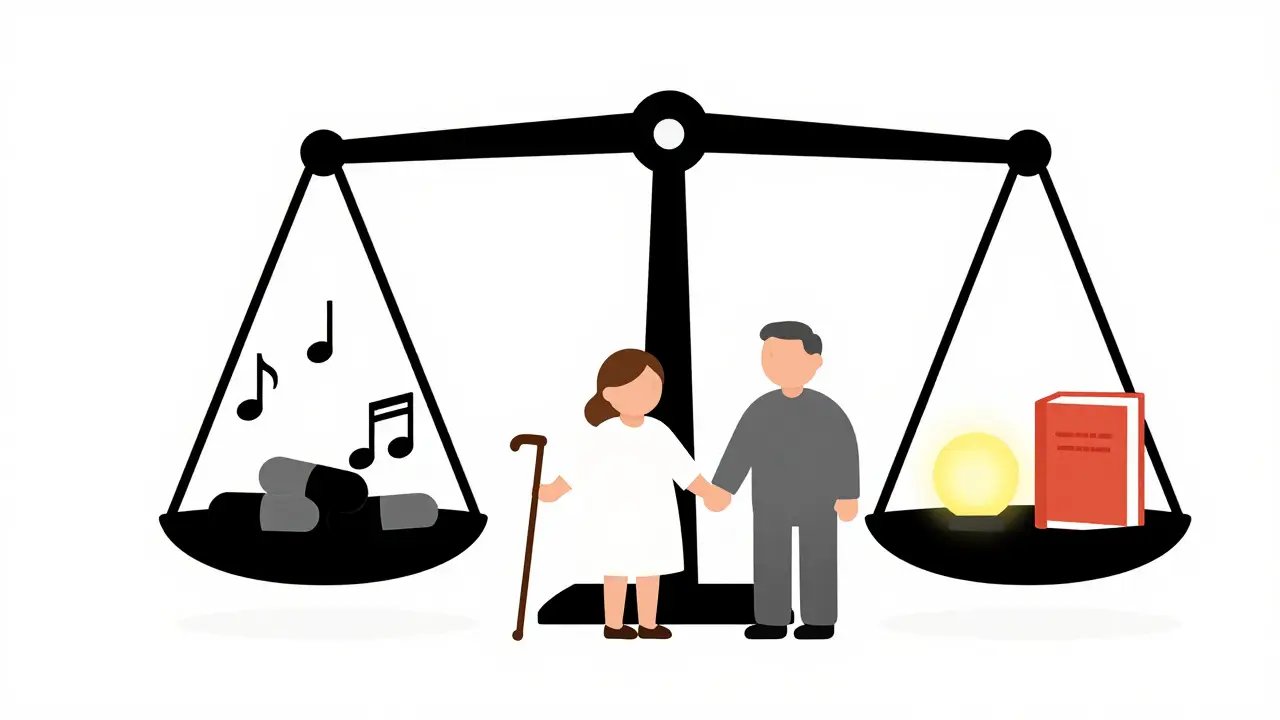
What Should Families Do?
If your loved one is on an antipsychotic, don’t panic. But do ask questions. Ask: Why was this prescribed? Have we tried non-drug options? What’s the plan to stop it? Ask for a review. Ask for a taper. Never stop cold turkey - that can cause withdrawal seizures. But work with the doctor to reduce the dose slowly, over weeks. Track behavior. Keep a journal: when does agitation happen? After meals? In the evening? In a noisy room? Often, the trigger isn’t the dementia - it’s the environment. Change the lighting. Play familiar music. Move the bed away from the window. Simple things. They work.The Alternatives That Actually Work
There are better ways. And they’re not expensive.- Behavioral therapy: Trained dementia specialists can teach caregivers how to respond to aggression without confrontation.
- Environmental tweaks: Reduce clutter, lower noise, use nightlights. Overstimulation causes fear. Fear causes outbursts.
- Music therapy: Familiar songs from the 1940s-60s calm people with dementia better than most drugs.
- Physical activity: Daily walks, chair yoga - even 15 minutes - reduce agitation.
- Staff training: In nursing homes, staff who understand dementia behavior are less likely to reach for pills.
The Bottom Line
Antipsychotics for dementia aren’t a treatment. They’re a bandage on a bullet wound. They might silence the symptoms - but at a deadly cost. The risk of stroke, heart attack, and death is real. It’s proven. And it’s not just for long-term users. Even a few weeks can be enough. Families need to push back. Doctors need to stop defaulting to pills. And the system needs to fund better care - not just cheaper ones. Your loved one deserves more than a sedated silence. They deserve to be heard. To be safe. To live - without the fear that the next pill could be their last.Are antipsychotics ever safe for seniors with dementia?
Antipsychotics are never truly safe for seniors with dementia. The FDA and major medical groups warn they increase the risk of stroke and death. Even short-term use raises stroke risk by 80%. They should only be considered in rare cases - like severe aggression that threatens safety - and only after all non-drug options have failed. Even then, they should be used at the lowest possible dose for the shortest time.
Can antipsychotics cause stroke even in people without prior heart problems?
Yes. Antipsychotics can trigger a stroke even in seniors with no history of heart disease. The drugs disrupt blood pressure control, increase clotting risk, and affect brain circulation. Studies show stroke risk rises within weeks of starting the medication - regardless of past health. Older adults are especially vulnerable because their blood vessels are already more fragile.
What’s the difference between typical and atypical antipsychotics for dementia patients?
Typical antipsychotics (like haloperidol) are older and cause more movement problems. Atypicals (like risperidone or quetiapine) are newer and cause fewer tremors, but they’re not safer. Both carry the same stroke and death risk. Atypicals are more likely to cause weight gain, diabetes, and heart issues. Neither is a good choice for dementia. The idea that atypicals are safer is outdated and misleading.
How long does it take for antipsychotics to increase stroke risk?
Stroke risk can rise within just a few weeks of starting the medication. A 2012 study found that even short-term use - under 30 days - increased stroke risk by 80%. This contradicts the old belief that only long-term use was dangerous. The danger starts quickly, and it’s not dose-dependent. Even low doses can trigger a stroke in vulnerable seniors.
What should I do if my loved one is already on an antipsychotic?
Don’t stop the drug suddenly - that can cause seizures or worsening symptoms. Talk to the doctor about a slow taper plan. Ask what non-drug strategies have been tried. Request a behavior log to identify triggers. Push for a review every 30 days. Many seniors improve once the drug is reduced, even if they seem “calmer” on it. The calm may be sedation, not real improvement.
Are there any legal or ethical concerns with prescribing antipsychotics for dementia?
Yes. Prescribing antipsychotics for dementia behavior is off-label - meaning it’s not FDA-approved for that use. Many nursing homes use them for convenience, not clinical need. In some cases, this has led to lawsuits and regulatory penalties. Ethically, guidelines from the American Geriatrics Society and the FDA are clear: these drugs should be avoided. Using them routinely, especially without informed consent from families, crosses a line.


Written by Felix Greendale
View all posts by: Felix Greendale