
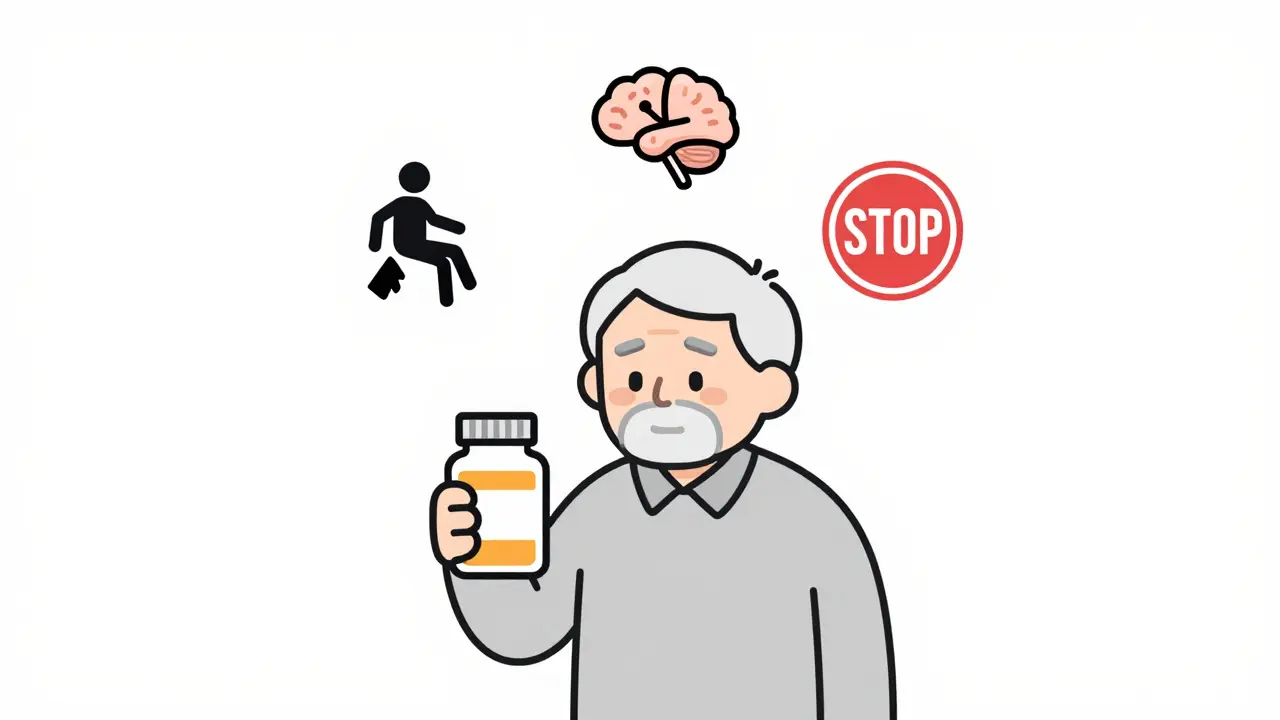
Every year, thousands of older adults end up in the hospital not because of a new illness, but because of a medication they were prescribed. It’s not always the drug’s fault-it’s often the mismatch between the drug and the person taking it. That’s where the Beers Criteria come in. They’re not a rulebook. They’re a warning system. A way to ask: Is this drug doing more harm than good for someone over 65?
What Exactly Are the Beers Criteria?
The Beers Criteria are a list of medications that doctors and pharmacists should think twice about giving to adults aged 65 and older. Developed by Dr. Mark Beers in 1991 and now updated every few years by the American Geriatrics Society (AGS), the latest version came out in 2023. It’s based on over 1,500 studies reviewed by a panel of geriatric experts. The goal isn’t to ban drugs. It’s to reduce harm.Older bodies don’t process medicine the same way younger ones do. Kidneys slow down. Liver function changes. Brain sensitivity increases. A dose that’s safe for a 40-year-old might be dangerous for a 75-year-old. The Beers Criteria flag those drugs that are more likely to cause falls, confusion, kidney damage, or even death in this population.
How the Criteria Are Organized
The 2023 update includes 131 specific medication warnings, broken into five clear groups:- Drugs to avoid in most older adults - These are the big red flags. Like benzodiazepines (e.g., diazepam, lorazepam), which increase fall risk and confusion. Or anticholinergics like diphenhydramine (Benadryl), linked to memory problems and delirium.
- Drugs to avoid with specific conditions - For example, nonsteroidal anti-inflammatory drugs (NSAIDs) like ibuprofen or naproxen are risky for people with heart failure or kidney disease. Even over-the-counter painkillers can be dangerous here.
- Drugs to use with caution - These aren’t banned, but need close monitoring. Think metformin in people with reduced kidney function, or certain blood pressure drugs that can cause dizziness.
- Drugs to avoid with kidney problems - Many medications are cleared by the kidneys. In older adults, kidney function often declines. Drugs like certain antibiotics or contrast dyes can build up to toxic levels if not adjusted.
- Drug interactions to avoid - Some combinations are especially risky. For instance, combining an SSRI antidepressant with an NSAID can raise bleeding risk. Or mixing multiple sedatives can lead to extreme drowsiness or breathing problems.
Each item includes a clear reason why it’s flagged, based on real-world outcomes - hospitalizations, fractures, cognitive decline. The 2023 update added stronger warnings about antipsychotics in dementia patients and expanded guidance on fall-risk medications like certain sleep aids and muscle relaxants.
Why the Beers Criteria Matter
About 40% of older adults take five or more medications. That’s called polypharmacy. And in about 20% of those cases, at least one drug is considered potentially inappropriate by the Beers Criteria. That’s not a small number. It’s millions of people.Studies show that when these drugs are prescribed, the risks climb. Older adults are more likely to:
- Fall and break a hip
- End up in the emergency room
- Develop delirium or memory loss
- Die prematurely
One study found that 45.7% of older adults in long-term care were taking at least one Beers-listed medication. That’s nearly half. And when pharmacists stepped in to review those prescriptions, many were stopped - with no negative effect on health. In fact, patients often felt better.
It’s Not About Saying No - It’s About Thinking Better
The American Geriatrics Society is clear: the Beers Criteria are not meant to be used as a punishment. They’re not a checklist for insurance denials or nursing home inspections. They’re a tool for conversation.Take antipsychotics for dementia. The 2023 update made it even clearer: these drugs should be a last resort. They increase stroke risk and death in dementia patients. But if someone is in severe distress, pacing all night, or aggressive - sometimes, short-term use is necessary. The criteria don’t say never. They say: try everything else first. Monitor closely. Reassess often.
Same with benzodiazepines. They help with anxiety and sleep - but they’re addictive, cause memory gaps, and make falls more likely. For many older adults, a better option is cognitive behavioral therapy, better sleep hygiene, or even low-dose melatonin. The criteria help doctors see alternatives.
How Clinicians Use the Criteria
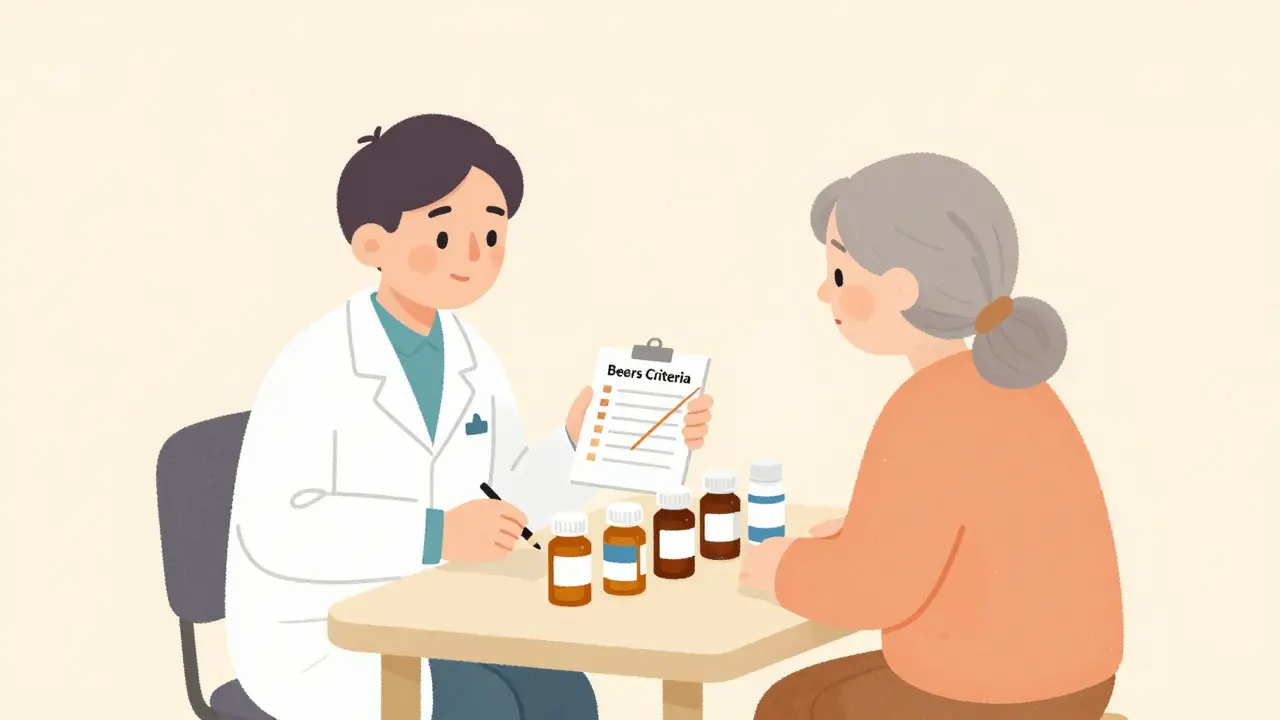
In practice, the Beers Criteria are built into electronic health records. When a doctor types in a prescription for an older patient, a pop-up might say: “This drug is flagged by the Beers Criteria. Consider alternatives.”Pharmacists use it during medication reviews. They’ll sit down with a patient, lay out all their pills, and ask: “Why are you taking this? Is it still helping? Are you having side effects?”
The AGS offers free tools - a mobile app, a pocket card, and plain-language guides for patients at healthinaging.org. These aren’t just for doctors. They’re for families too. If your parent is on five medications, ask: “Has anyone checked if any of these are on the Beers list?”
What the Beers Criteria Don’t Do
They don’t replace clinical judgment. They don’t account for every patient’s unique situation. For example, a person with chronic pain and no kidney issues might still need an NSAID - even if it’s on the list. Or someone with severe insomnia and no fall history might benefit from a short-term sleep aid.The criteria are broad. Real life is messy. That’s why experts like Christine Holman, a clinical pharmacist with decades of experience, calls them a “warning light,” not a stop sign. “It’s not about checking boxes,” she says. “It’s about asking: Is this the right drug, for this person, at this time?”
Also, the Beers Criteria don’t cover what’s missing. They don’t tell you when to start a new drug - like a statin for heart disease or a vitamin D supplement for bone health. That’s where other tools like STOPP-START come in. STOPP-START looks at both inappropriate prescriptions and missed opportunities. Together, they give a fuller picture.

The Bigger Picture: Medication Safety in Aging
The Beers Criteria are part of a larger shift in how we treat older adults. We’re moving away from “more is better” to “less is often more.”Medications aren’t harmless. Every pill carries risk. And as people live longer with multiple chronic conditions, the chance of harmful interactions grows. That’s why deprescribing - the careful reduction or stopping of unnecessary drugs - is now a core part of geriatric care.
Health systems like Medicare have started measuring how often older adults are prescribed Beers-listed drugs. That’s pushed hospitals and pharmacies to pay more attention. But it’s also sparked debate. Some regulators use the criteria to penalize nursing homes. That’s where things go wrong. If a doctor prescribes a drug because it’s the best option for a patient’s unique case, they shouldn’t be punished for it.
The key is balance. Use the criteria as a guide, not a mandate. Involve the patient. Talk to caregivers. Reassess every few months. Medication reviews should be routine - not a one-time event.
What You Can Do
If you or someone you care for is over 65 and taking multiple medications:- Ask the doctor: “Are any of these on the Beers Criteria list?”
- Ask the pharmacist: “Can we review all my meds together?”
- Ask: “Is this still needed? Could it be stopped?”
- Keep a written list of all medications - including vitamins and supplements.
- Don’t stop a drug on your own. But do speak up if you’re feeling dizzy, confused, or more tired than usual.
Medication safety isn’t about avoiding pills. It’s about making sure every pill you take is truly worth it.
Are the Beers Criteria legally binding for doctors?
No, the Beers Criteria are not legally binding. They are evidence-based guidelines meant to support clinical decision-making, not enforce rules. Doctors are not required to follow them, and they should never be used to deny care or restrict coverage. The American Geriatrics Society explicitly warns against using them in punitive ways.
Can a drug on the Beers list ever be appropriate?
Yes. The criteria are not absolute bans. A drug flagged by Beers might still be the best option for a specific patient - for example, if no safer alternative exists, or if the benefits clearly outweigh the risks. The key is intentional prescribing: understanding why the drug is being used, monitoring for side effects, and planning to reassess regularly.
What’s the difference between Beers Criteria and STOPP-START?
The Beers Criteria focus only on potentially inappropriate medications to avoid. STOPP-START looks at two sides: inappropriate prescriptions (STOPP) and important medications that are missing (START). Beers is more widely used in the U.S., while STOPP-START is common in Europe. Many clinicians use both together for a fuller picture.
Why are benzodiazepines on the Beers list?
Benzodiazepines like lorazepam and diazepam increase the risk of falls, fractures, confusion, and memory problems in older adults. They’re also habit-forming. While they can help with anxiety or insomnia short-term, long-term use is rarely beneficial. Safer alternatives - like sleep hygiene, CBT, or low-dose melatonin - are usually preferred.
How often are the Beers Criteria updated?
The American Geriatrics Society updates the Beers Criteria every 3-5 years, based on new research. The most recent version was published in 2023. Updates involve reviewing over 1,500 studies and reaching consensus among a panel of geriatric experts. This ensures the guidelines stay current with the latest evidence.
Final Thoughts
The Beers Criteria aren’t perfect. But they’re one of the most important tools we have to protect older adults from harm. They remind us that aging changes how the body handles medicine - and that what’s safe for one person might be dangerous for another.Medication safety in older adults isn’t about cutting pills. It’s about choosing wisely. It’s about listening. It’s about asking: Is this really helping? When we use the Beers Criteria as a conversation starter - not a rulebook - we give older adults a better chance to live well, safely, and with dignity.


Written by Felix Greendale
View all posts by: Felix Greendale