
Drug Database Selector Tool
Select your primary goal to find the best resource.
DailyMed
Best for verifying official FDA labels, dosage instructions, and legal warnings.
- 142,000+ Products
- 12th Grade Reading Level
- FDA Legal Record
LactMed
The gold standard for checking drug safety while breastfeeding or nursing.
- 4,200+ Substances
- 8th Grade Reading Level
- NLM Curated
DrugBank
Ideal for understanding mechanisms, genetics, and complex drug interactions.
- 13,534 Entries
- 10th Grade Reading Level
- Mechanism Details
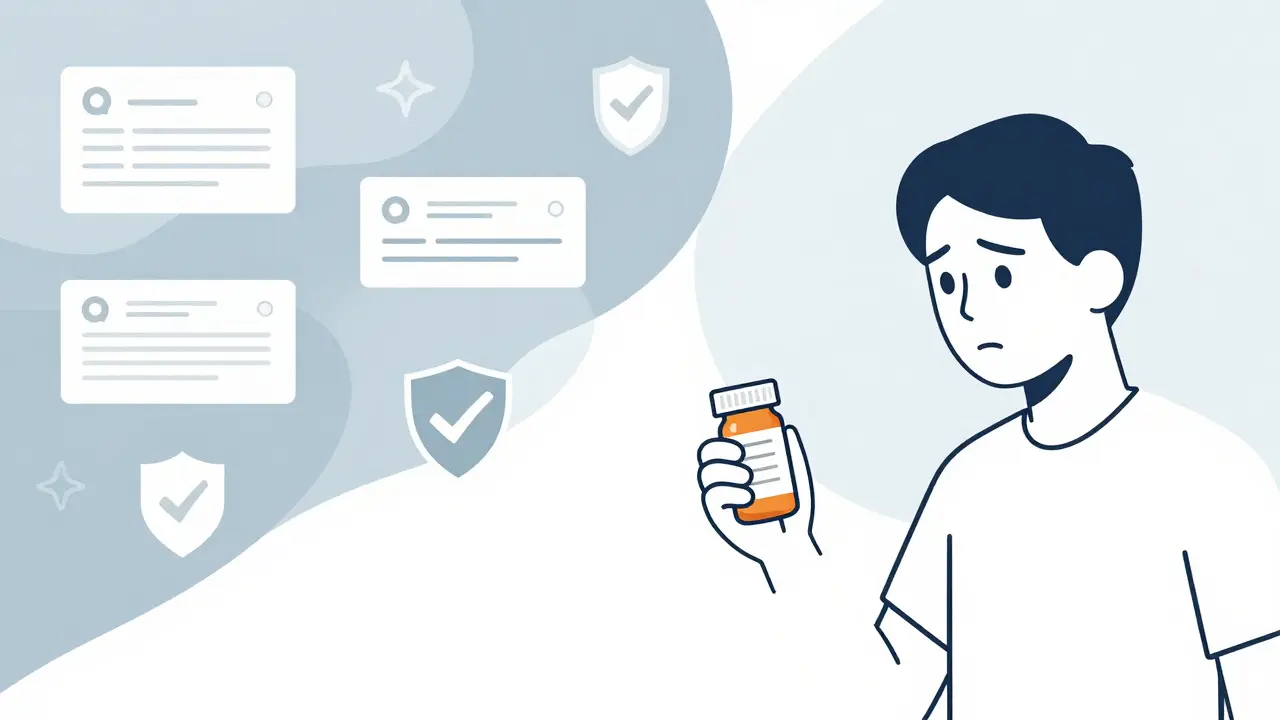
Imagine holding a prescription bottle, reading the tiny print, and feeling that familiar knot of anxiety in your stomach. You want to know if this new medication is safe, what side effects might hit you, or if it’s okay to take while breastfeeding. A quick search on Google often leads to cluttered commercial sites filled with ads, sponsored content, or confusing medical jargon that leaves you more worried than before. This confusion isn’t just annoying; it’s dangerous. According to a 2022 study in the Annals of Internal Medicine, nearly 68% of patients report feeling confused about their medication instructions. That statistic alone should make us rethink where we look for answers.
The good news? You don’t have to rely on random blogs or ad-heavy portals. There are authoritative, evidence-based online drug databases designed specifically to give you clear, unbiased information. These resources are maintained by government agencies and non-profit health organizations, meaning they aren’t trying to sell you anything. In this guide, we’ll break down the best tools available right now-DailyMed, LactMed, and DrugBank-so you can navigate your health with confidence and accuracy.
Why Source Matters More Than You Think
When you search for drug information, the source dictates the quality. Commercial sites like WebMD or Drugs.com are convenient, but they often rely on advertising revenue. A 2021 analysis by JAMA Internal Medicine rated WebMD at only 62 out of 100 for accuracy, largely due to potential conflicts of interest. In contrast, resources hosted by the U.S. National Library of Medicine (NLM), part of the National Institutes of Health (NIH), are taxpayer-funded and completely free from pharmaceutical influence.
This distinction is critical. The NLM hosts platforms like DailyMed and LactMed, which were created following the 2007 FDA Amendments Act to ensure transparent public access to medication labeling. When you use these government-backed tools, you’re getting data that has been vetted by regulatory bodies, not marketing teams. For patients managing chronic conditions or complex treatments, this level of reliability isn’t just a luxury-it’s a necessity for safety.
DailyMed: The Official Repository for FDA Labels
If you need the absolute truth about what’s in your pill, DailyMed is the official repository for FDA-approved drug labels is your first stop. Launched in 2005 as a successor to earlier systems, DailyMed currently holds over 142,000 product entries. It serves as the legal record for medication labeling in the United States, governed by 21 CFR § 201.100. This means when you read a label here, you’re seeing the exact document approved by the Food and Drug Administration.
However, there’s a catch. DailyMed is built for precision, not simplicity. A 2023 readability analysis by the NLM found that 92% of its labels are written at a 12th-grade reading level or higher. For many patients, this feels like reading a legal contract rather than a health guide. The site presents verbatim FDA labeling documents in PDF and structured XML formats. While it includes simplified 'Highlights' sections for newer drugs, the bulk of the content remains technical.
Despite the dense language, DailyMed is indispensable for verifying specific details. Did your pharmacist say 5mg, but the bottle says 2.5mg twice daily? DailyMed clarifies the discrepancy. It receives 1.2 million monthly visits from patients searching for FDA labels, making it the top resource for label verification. Just remember: it doesn’t offer symptom-based searches or cost comparisons. Use it to confirm facts, then translate those facts with help from a clinician or a plain-language summary tool.
| Resource | Primary Focus | Reading Level | Cost | Best For |
|---|---|---|---|---|
| DailyMed | FDA-Approved Labels | 12th Grade+ | Free | Verifying dosage and official warnings |
| LactMed | Breastfeeding Safety | 8th Grade | Free | Nursing mothers checking drug compatibility |
| DrugBank | Pharmacological Data | 10th Grade | Free/Paid | Deep dives into mechanisms and interactions |
LactMed: The Gold Standard for Breastfeeding Safety
For nursing mothers, finding reliable drug information can feel like navigating a minefield. Will this antibiotic pass into my milk? Is it safe for my baby? LactMed is a specialized database providing evidence-based data on substances related to breastfeeding safety was established in 2006 to answer these questions with scientific rigor. Part of the NLM’s Toxicology Data Network, LactMed offers peer-reviewed monographs on over 4,200 substances.
What sets LactMed apart is its balance of depth and accessibility. Unlike DailyMed, LactMed features lay summaries rated at an 8th-grade readability level using Flesch-Kincaid metrics. This makes it significantly easier for patients to understand without losing scientific accuracy. The database is updated weekly and curated by experts with input from the Academy of Breastfeeding Medicine. In a 2023 NIH patient survey, 92% of users reported high satisfaction with LactMed’s specificity.
The American Medical Association’s 2022 Health Literacy Report endorsed LactMed as the only breastfeeding resource meeting all NIH evidence grading criteria. It’s particularly valuable for women undergoing serious treatments, such as chemotherapy, who need to know if they can continue nursing. While it lacks dedicated mobile apps, its web interface is responsive and fast, loading in under two seconds. If you are breastfeeding, skip the forums and go straight to LactMed for peace of mind backed by data.
DrugBank: Deep Dives for the Curious Patient
Some patients aren’t satisfied with basic instructions; they want to understand how a drug works, why it interacts with another medication, or how genetics might affect its efficacy. For these highly motivated individuals, DrugBank is a comprehensive open-access resource offering detailed pharmacological data provides unparalleled depth. Founded in 2006 by Dr. David Wishart at the University of Alberta, DrugBank contains 13,534 drug entries, including 2,720 FDA-approved medications.
DrugBank’s public portal is free, but it comes with a steep learning curve. The interface is designed primarily for researchers, resulting in a 43% patient-reported confusion rate with its pathway diagrams, according to a 2022 usability study by the University of Toronto. However, for those willing to invest the time, the rewards are significant. It covers 1.2 million pairwise drug interactions, far surpassing other public resources. In January 2024, DrugBank released a 'Patient View' interface to simplify interaction reports with color-coded risk levels, aiming to bridge the gap between academic depth and patient usability.
While DrugBank excels in technical detail, it falls short in practical logistics. It does not provide cost data or insurance coverage information. For pricing, you’ll still need to turn to tools like GoodRx. But for understanding the 'why' behind your treatment plan-especially for rare conditions or complex polypharmacy-DrugBank is an invaluable asset. Just be prepared to spend 15-20 minutes mastering its navigation before you get meaningful results.

Practical Tips for Using These Resources Effectively
Knowing which database to use is half the battle; using them effectively is the other half. Here’s how to maximize your experience:
- Start with MedlinePlus: Before diving into DailyMed’s technical labels, check MedlinePlus the NLM's patient portal for foundational education. It offers plain-language summaries linked to DailyMed labels, available in over 40 languages. This acts as a perfect primer before tackling the raw data.
- Use Specific Search Terms: On DailyMed, searching by brand name often yields better results than generic names due to how Structured Product Labeling (SPL) is organized. If you’re stuck, try adding the manufacturer’s name to your query.
- Cross-Reference Interactions: If DrugBank flags a severe interaction, verify it with your pharmacist. Don’t discontinue medication based solely on online data. The FDA MAUDE database records incidents where patients misinterpreted adverse reaction sections, leading to harmful discontinuations.
- Check for Updates: Drug information changes rapidly. DailyMed updates daily with new FDA submissions, while LactMed updates weekly. Always note the date of the entry you’re reading to ensure you have the latest safety guidelines.
Another pro tip: pair these informational tools with cost-checking apps. DailyMed and DrugBank won’t tell you if your insurance covers the drug. Use GoodRx for real-time pricing, then use DailyMed to verify the safety profile. This combination gives you both financial and medical clarity.
Future Trends: AI and Accessibility
The landscape of patient drug information is evolving. The FDA’s 2024 roadmap includes plans to integrate DailyMed with Apple Health Records by late 2025, bringing official labels directly to your smartphone. Meanwhile, the NLM is piloting AI-powered summarization tools to convert DailyMed’s 12th-grade text into 8th-grade plain language. By 2028, the goal is to have all content meet lower readability standards without sacrificing accuracy.
These advancements address the core complaint of current users: complexity. As AI becomes more integrated, expect to see chatbots that can explain 'boxed warnings' in simple terms or flag potential interactions based on your personal health profile. However, until then, human interpretation remains crucial. No algorithm replaces a conversation with your healthcare provider.
Is DailyMed free to use?
Yes, DailyMed is completely free. It is a taxpayer-funded resource hosted by the National Library of Medicine, requiring no registration or subscription to access FDA-approved drug labels.
Can I trust DrugBank for patient advice?
DrugBank is highly accurate but technically complex. It is best used for deep research into drug mechanisms and interactions. However, it should not replace professional medical advice, especially given its high reading level and lack of personalized context.
Which site is best for checking breastfeeding safety?
LactMed is the gold standard for breastfeeding safety. It provides peer-reviewed, evidence-based monographs on thousands of substances, with summaries written at an accessible 8th-grade reading level.
Why is DailyMed so hard to read?
DailyMed publishes verbatim FDA labels, which are legally required to include precise technical terminology. This results in a 12th-grade+ reading level. For simpler explanations, start with MedlinePlus, which links to DailyMed but uses plain language.
Do these sites show drug prices?
No, DailyMed, LactMed, and DrugBank focus on safety and pharmacological data, not costs. For pricing, use third-party tools like GoodRx, which specializes in real-time pharmacy price comparisons.
Written by Felix Greendale
View all posts by: Felix Greendale