

Itching that keeps you up at night. A thick discharge that feels uncomfortable. The sudden worry that something is wrong. For millions of women, these are the unmistakable signs of candida vaginitis, also known as vulvovaginal candidiasis (VVC) or simply a yeast infection. It is one of the most common gynecological issues worldwide. In fact, about three out of four women will experience at least one episode in their lifetime. While it can be frustrating, you do not always need a prescription to fix it. Over-the-counter (OTC) options work well for many people, but only if you use them correctly and know when they are enough.
This guide breaks down exactly what causes this fungal overgrowth, how to spot the specific symptoms that distinguish it from other infections, and which OTC treatments actually deliver results. We will look at real-world data on efficacy, proper application techniques, and the critical warning signs that mean you should stop self-treating and see a doctor immediately.
Understanding Candida Vaginitis and Its Causes
To treat an infection effectively, you first need to understand what it is. Candida vaginitis is a fungal infection caused by the overgrowth of Candida species, primarily Candida albicans, in the vaginal and vulvar regions. This might sound alarming, but Candida albicans is actually a normal resident in your body. About 10-20% of healthy women carry this fungus without any symptoms. It lives in balance with other bacteria, particularly Lactobacillus species, which keep the vaginal environment acidic and healthy.
The problem starts when this balance tips. When Lactobacillus levels drop, Candida can multiply rapidly, triggering inflammation and the symptoms we recognize as an infection. Several specific factors disrupt this microbial equilibrium:
- Antibiotic Use: This is the biggest trigger, contributing to 30-50% of cases. Antibiotics kill off the good bacteria that normally suppress yeast growth.
- Pregnancy: Elevated estrogen levels during pregnancy create a favorable environment for yeast, affecting 20-30% of pregnant women.
- Uncontrolled Diabetes: High blood sugar feeds yeast. Women with HbA1c levels above 7% face a 2.3-fold higher risk.
- Immunosuppression: Conditions like HIV or medications that lower immune function reduce the body's ability to control fungal growth.
Knowing your risk factors helps you anticipate potential outbreaks. If you have just finished a course of antibiotics, for example, being vigilant about early symptoms can prevent a mild irritation from becoming a severe infection.
Identifying Specific Symptoms of Yeast Infections
Not all vaginal discomfort is a yeast infection. Misdiagnosis is common-up to 50-70% of self-treated cases turn out to be something else, such as bacterial vaginosis. To avoid wasting time and money on the wrong treatment, you need to recognize the specific signature of vulvovaginal candidiasis.
According to diagnostic criteria from the Centers for Disease Control and Prevention (CDC), true yeast infections present with a distinct cluster of symptoms:
- Vulvar Pruritus (Itching): Reported in 97% of cases. This is usually intense and persistent.
- Abnormal Discharge: Found in 45% of cases. It is typically thick, white, and clumpy, often described as resembling cottage cheese. Unlike bacterial vaginosis, it rarely has a strong fishy odor.
- Vaginal Soreness: Occurs in 77% of patients, making everyday activities uncomfortable.
- Dyspareunia (Painful Intercourse): Experienced by 45% of those infected.
- External Dysuria: Burning when urine touches irritated vulvar skin affects 25% of cases.
If your discharge is thin, gray, or foul-smelling, it is likely not a yeast infection. Similarly, if you have fever or abdominal pain, these are red flags for more serious conditions like pelvic inflammatory disease. Stick to the classic "itching plus cottage-cheese discharge" pattern before reaching for OTC meds.
Over-the-Counter Treatment Options and Efficacy
For uncomplicated cases-meaning sporadic, mild-to-moderate symptoms likely caused by C. albicans-OTC antifungals are highly effective. They offer cure rates of 80-90% when used correctly. The market offers several active ingredients, each with different dosing schedules.
| Active Ingredient | Formulation | Duration | Efficacy Rate |
|---|---|---|---|
| Clotrimazole | 1% Cream | Twice daily for 7-14 days | 90% |
| Clotrimazole | 2% Cream or Tablet | Once daily for 3 days | 85% |
| Miconazole | 2% Cream or Suppository | Once daily for 7 days | 85-90% |
| Tioconazole | 6.5% Ointment | Single dose | 80-85% |
You might wonder why there are so many options. Research shows no statistically significant difference in cure rates between single-dose oral therapies (like fluconazole, which requires a prescription) and multi-day topical regimens for uncomplicated cases. However, patient preference varies. Many women prefer the convenience of shorter courses, while others find the messiness of creams difficult to manage. Suppositories are often rated slightly lower in user satisfaction (3.8/5 stars) compared to creams (4.2/5 stars) due to insertion difficulty, but they are less messy.
How to Use OTC Medications Correctly
Buying the right medication is only half the battle. Improper use contributes to 35% of treatment failures. Here is how to maximize your chances of success based on clinical adherence studies:
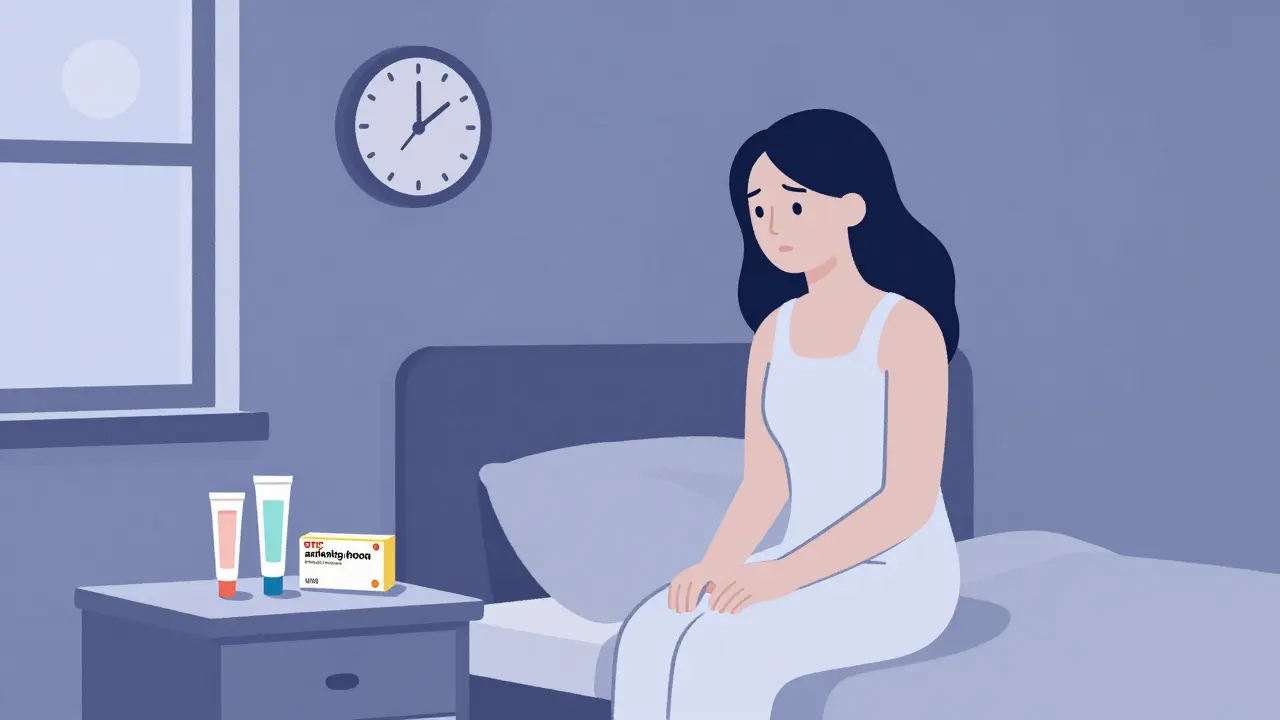
- Timing Matters: Apply topical treatments at bedtime. A 2022 study found that 85% of successful users applied their cream or inserted suppositories right before sleep. This ensures the medication stays in place and absorbs properly throughout the night.
- Complete the Course: Do not stop early just because the itching stops. Only 65% of users finish the full regimen, leading to recurrence. Even if you feel better after day two, finish the seven-day course if that is what the box says.
- Avoid Intercourse: Sexual activity during treatment reduces efficacy by 30%. It can also irritate inflamed tissue further and transfer medication to your partner, causing their own irritation.
- Start Early: Speed counts. Users who started treatment within 24 hours of symptom onset had a 79% success rate, compared to just 42% for those who waited longer than 48 hours.
If you are using a suppository, ensure it is fully inserted. Poor placement is linked to 70% of treatment failures involving these devices. Most packages include diagrams; take a moment to read them. If you are unsure, a quick video search for "how to insert vaginal suppository" can provide visual guidance.

When OTC Treatment Is Not Enough
Self-care works for many, but it is not a universal solution. You should seek professional medical evaluation in the following scenarios:
- First-Time Symptoms: If you have never been diagnosed with a yeast infection before, do not guess. Misdiagnosis rates are high. A clinician can confirm the cause via microscopy or culture.
- Persistence Beyond 7 Days: If symptoms do not improve after completing a full course of OTC treatment, or if they worsen after 72 hours, stop self-treating. You may have a resistant strain or a different infection entirely.
- Recurrent Infections: Defined as four or more episodes per year. This requires a maintenance strategy prescribed by a doctor, often involving longer-term azole therapy.
- Pregnancy: While topical azoles are generally safe, oral fluconazole is not recommended during pregnancy. Always consult your obstetrician before starting any new medication.
- Severe Symptoms: Extensive redness, swelling, fissures (cracks in the skin), or excoriations indicate a severe infection that may require prescription-strength treatment.
Additionally, be aware of emerging resistance. Non-albicans Candida species, such as Candida glabrata, account for 5-10% of cases and respond poorly to standard OTC azoles. Cure rates for these strains drop to 50-60%. If you frequently fail OTC treatments, ask your doctor about testing for non-albicans species.
Prevention and Long-Term Management
Treating the current infection is immediate relief, but preventing future ones saves frustration. Since yeast thrives in warm, moist environments and feeds on sugar, lifestyle adjustments play a huge role.
- Manage Blood Sugar: For diabetic women, keeping HbA1c under control is the most effective preventive measure.
- Wear Breathable Clothing: Cotton underwear allows airflow, reducing moisture buildup. Tight synthetic fabrics trap heat and sweat, creating a breeding ground for yeast.
- Avoid Douches: Douching disrupts the natural pH balance and removes protective Lactobacillus bacteria, making infections more likely.
- Consider Probiotics: While evidence is mixed, some studies suggest that probiotics containing Lactobacillus strains may help restore microbial balance after antibiotic use.
Seasonal changes also matter. Incidence rates rise by 25% during summer months (May-September in the Northern Hemisphere), likely due to increased sweating and humidity. Being extra vigilant about hygiene and breathable clothing during hot weather can help mitigate this spike.
Can men get yeast infections?
Yes, men can develop candidal balanitis, an infection of the penis. It is often transmitted through sexual contact with a partner who has a yeast infection. Symptoms include redness, itching, and a rash. Men should use condoms during treatment or abstain until both partners are cured to prevent ping-pong reinfection.
Is Monistat the same as Gyne-Lotrimin?
They contain different active ingredients. Monistat typically uses miconazole, while Gyne-Lotrimin uses clotrimazole. Both are effective azole antifungals with similar cure rates (85-90%) for uncomplicated cases. Choose based on personal preference for formulation (cream vs. suppository) and duration (1-day, 3-day, or 7-day).
Why does my yeast infection keep coming back?
Recurrent infections (four or more per year) may indicate an underlying issue like uncontrolled diabetes, hormonal changes, or a resistant yeast strain like Candida glabrata. It could also result from incomplete treatment courses. Consult a healthcare provider for a comprehensive evaluation and possibly a maintenance therapy plan.
Can I take OTC yeast medication while breastfeeding?
Topical OTC treatments like clotrimazole and miconazole are generally considered safe during breastfeeding because minimal amounts enter the bloodstream. However, always check with your pediatrician or primary care provider before starting any new medication to ensure it is appropriate for your specific situation.
Does garlic or yogurt cure yeast infections?
There is limited scientific evidence supporting home remedies like garlic or yogurt as cures. While probiotics in yogurt may support general vaginal health, they are not reliable for treating an active infection. Relying solely on home remedies can delay proper treatment and lead to complications. Use clinically proven antifungals for active symptoms.
Written by Felix Greendale
View all posts by: Felix Greendale