
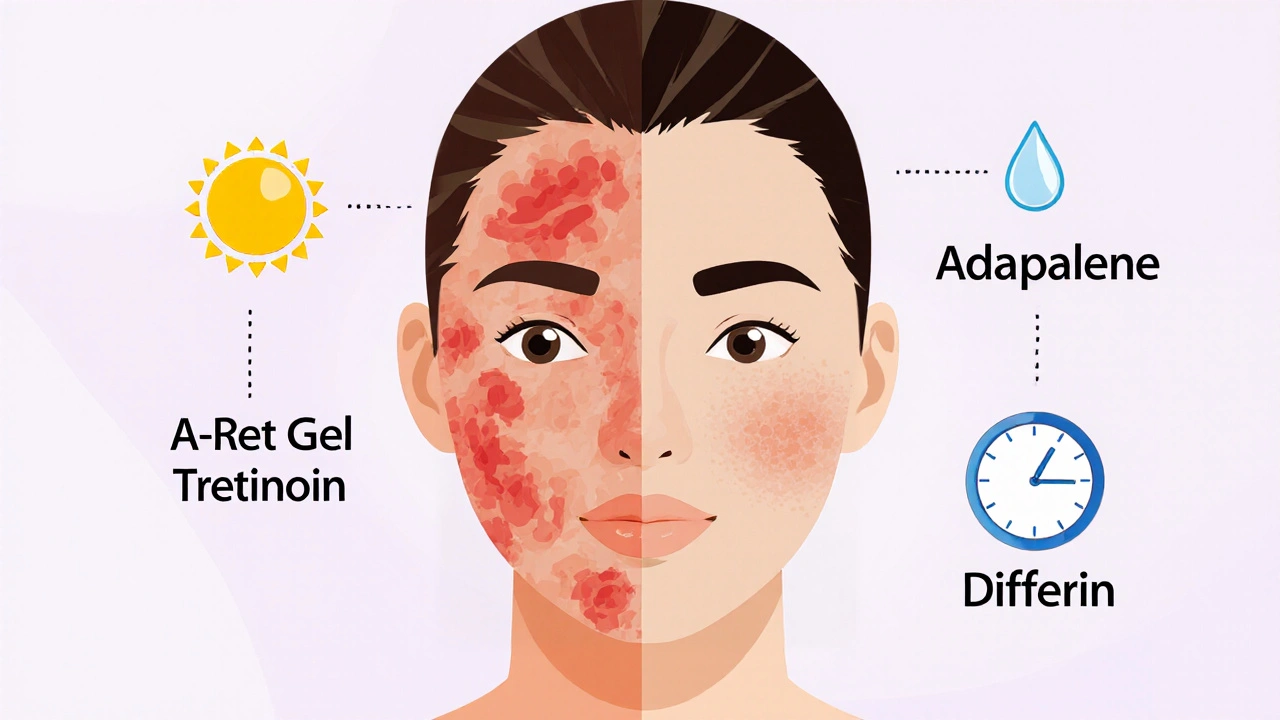
If you’ve been told to try A-Ret Gel for acne or fine lines, you’re not alone. Tretinoin - the active ingredient - is one of the most proven topical treatments for both. But it’s not the only option. And for many people, it’s not the easiest. Burning, peeling, redness - those side effects can turn a promising treatment into a nightmare. So what else works? And how do the alternatives stack up against A-Ret Gel? Let’s cut through the noise and compare real options with real results.
What is A-Ret Gel (Tretinoin) really doing?
A-Ret Gel contains tretinoin, a retinoid derived from vitamin A. It’s not a moisturizer. It’s not a gentle exfoliant. It’s a cell-turnover accelerator. Tretinoin forces your skin to shed dead cells faster and produce new ones. That’s why it clears clogged pores (acne) and smooths fine lines (aging). It also boosts collagen. That’s the protein that keeps skin plump and firm.
The FDA approved tretinoin for acne in the 1970s and for photoaging in the 1980s. Decades later, dermatologists still prescribe it as a first-line treatment. Studies show it reduces acne lesions by up to 60% in 12 weeks and improves skin texture in 6-8 months. But here’s the catch: it doesn’t play nice with sensitive skin. Up to 80% of users report irritation in the first month. That’s why many quit before seeing results.
Adapalene (Differin Gel): The Gentle Alternative
If your skin reacts badly to A-Ret Gel, adapalene might be your best bet. It’s also a retinoid, but it’s designed to be less irritating. Differin Gel (0.1% adapalene) is now available over the counter in the UK and US. It works similarly to tretinoin - unclogging pores, reducing inflammation, speeding up cell turnover - but with a gentler touch.
A 2020 study in the Journal of Clinical and Aesthetic Dermatology found adapalene was just as effective as tretinoin for mild to moderate acne after 12 weeks, but caused significantly less redness and peeling. Users reported better compliance because they could actually tolerate it. If you’ve tried A-Ret Gel and stopped because your skin felt raw, adapalene is the next logical step.
Downside? It’s slower. You might not see results until week 8 or 10. And for deeper wrinkles, it doesn’t boost collagen as strongly as tretinoin. But for acne-prone skin that can’t handle harsher options, it’s a game-changer.
Tazarotene (Tazorac): The Heavy Hitter
Need more power than A-Ret Gel? Tazarotene (sold as Tazorac) is stronger. It’s a third-generation retinoid, and it binds more tightly to skin receptors. That means faster results - especially for stubborn acne and thickened skin from sun damage.
A 2018 trial compared tazarotene 0.1% with tretinoin 0.05% in patients with photoaging. After 24 weeks, tazarotene showed greater improvement in wrinkle depth and skin roughness. For acne, it cleared lesions 20-30% faster than tretinoin in some studies.
But here’s the trade-off: irritation is worse. Up to 90% of users report dryness, burning, or flaking. It’s not for beginners. If you’ve already tolerated tretinoin for a few months and still want more punch, tazarotene is worth discussing with your dermatologist. But if you’re just starting out? Skip it. You’ll likely quit before seeing results.
Retinol: The Drugstore Stand-In
Walk into any pharmacy and you’ll find shelves of creams with retinol on the label. It’s everywhere. And yes, it’s a retinoid - but it’s not the same as tretinoin. Retinol has to convert into retinoic acid (the active form) through multiple steps in your skin. That makes it much weaker.
Studies show you need 10-20 times more retinol than tretinoin to get similar results. A 1% retinol cream might match 0.025% tretinoin. That’s why over-the-counter retinol products take months - sometimes over a year - to show visible changes. They’re fine for maintenance or mild aging, but not for serious acne or deep wrinkles.
Good news? Retinol is gentler. Brands like CeraVe, The Ordinary, and Neutrogena offer stable, well-formulated versions. If you’re new to retinoids, start here. Use it 2-3 nights a week, build up slowly, and pair it with a moisturizer. It won’t replace A-Ret Gel for medical-grade results, but it’s a smart entry point.
Trifarotene (Aklief): The New Kid on the Block
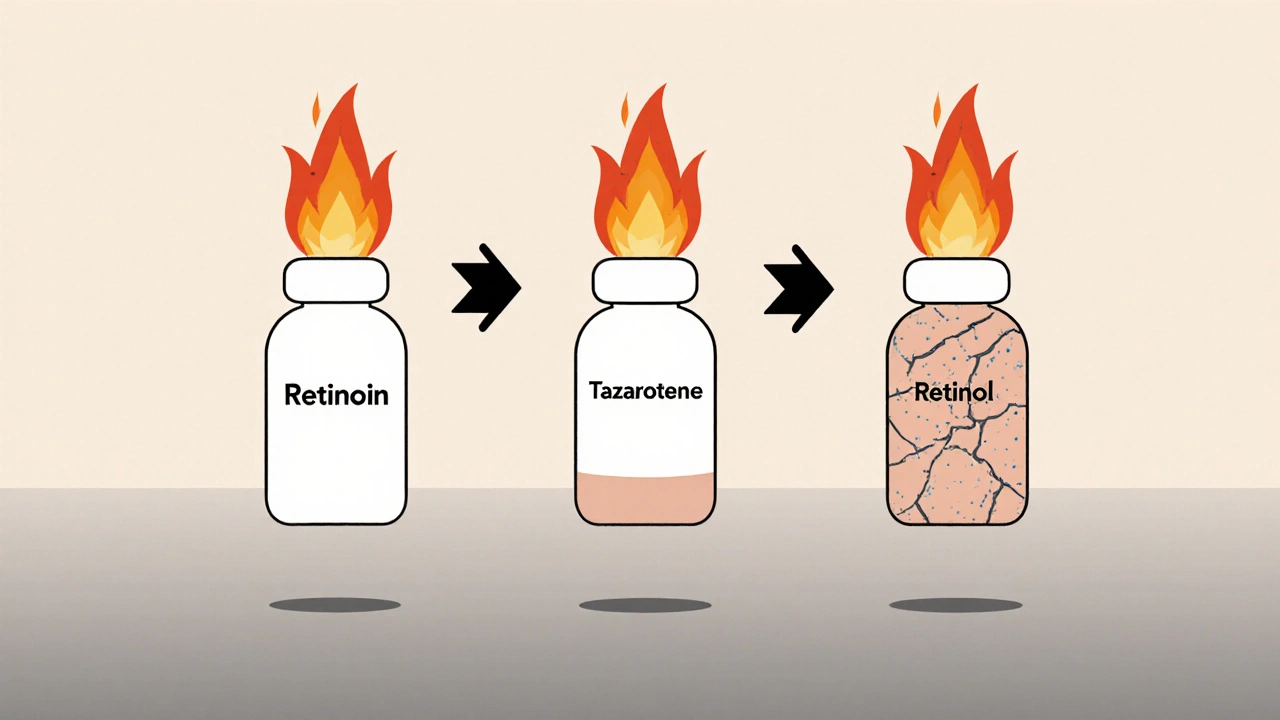
Trifarotene (Aklief) is the newest FDA-approved topical retinoid, approved for acne in 2019. It targets a different receptor than tretinoin, which means it works well on inflammatory acne - especially on the chest and back, where other retinoids struggle.
In clinical trials, it reduced acne lesions by over 50% in 12 weeks with less irritation than tretinoin. It’s also approved for use on the body, which most retinoids aren’t. If you’ve got body acne that won’t quit, this could be the missing piece.
But it’s not widely available outside the US yet, and it’s expensive. In the UK, you’ll likely need a private prescription. It’s not a direct substitute for A-Ret Gel, but if your acne is stubborn and localized, it’s worth asking your dermatologist about.
What About Natural Alternatives?
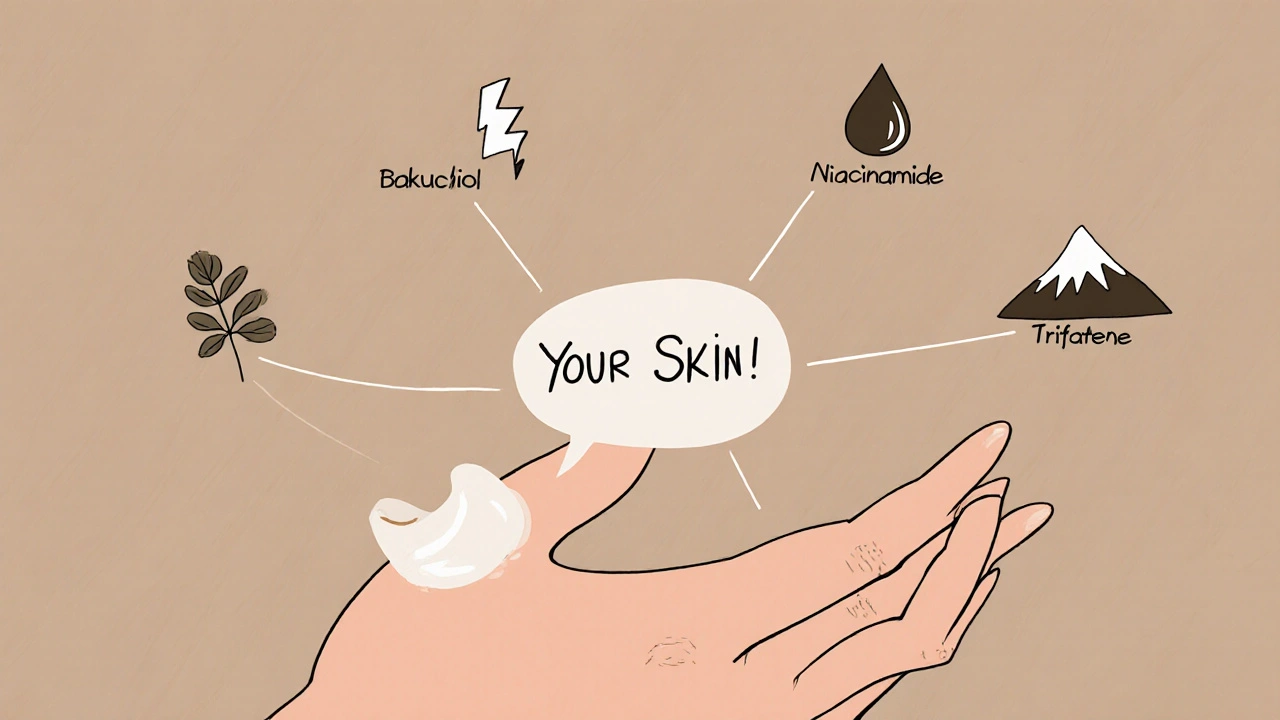
You’ve probably seen ads for bakuchiol, niacinamide, or rosehip oil as “natural tretinoin.” Let’s be clear: none of them work the same way. Bakuchiol, a plant extract from the babchi plant, has shown promise in small studies. One 2018 trial found it improved wrinkles and pigmentation similarly to tretinoin after 12 weeks - but with less irritation.
That sounds great, right? But here’s the reality: the study had only 44 participants. It wasn’t a head-to-head with tretinoin at medical doses. And bakuchiol doesn’t clear acne like retinoids do. Niacinamide helps with redness and barrier repair. Rosehip oil is rich in vitamins but doesn’t speed up cell turnover.
These can be helpful sidekicks - especially for sensitive skin - but they’re not replacements. If you’re treating acne or significant photoaging, you need a retinoid. Natural doesn’t mean stronger. It just means slower and less predictable.
How to Choose: A Quick Decision Guide
- Start with A-Ret Gel if you have moderate to severe acne, visible sun damage, or fine lines - and your skin isn’t super sensitive.
- Try adapalene (Differin) if your skin reacts badly to tretinoin, or if you want an OTC option with proven results.
- Consider tazarotene if you’ve used tretinoin for months and still aren’t happy with results - and you can handle irritation.
- Use retinol if you’re new to retinoids, want mild anti-aging benefits, or just want to maintain results.
- Ask about trifarotene if you have body acne or facial acne that won’t respond to other retinoids.
- Avoid relying on bakuchiol or oils if you need medical-grade results. They’re supportive, not substitutes.
Pro Tips for Using Any Retinoid
- Always use sunscreen. Retinoids make your skin more sensitive to UV damage.
- Start slow: 2-3 nights a week, then increase as tolerated.
- Apply to dry skin. Damp skin increases irritation.
- Use a moisturizer before or after. The “buffer method” (moisturizer → retinoid → moisturizer) helps reduce redness.
- Don’t mix with AHAs, BHAs, or vitamin C at first. Wait until your skin adjusts.
- Give it 3 months. Results don’t show up overnight.
What If Nothing Works?
If you’ve tried tretinoin, adapalene, retinol, and still have breakouts or wrinkles, it’s time to think beyond topical treatments. Oral antibiotics (like doxycycline) can help with inflammatory acne. For stubborn cases, isotretinoin (Accutane) is the gold standard - but it requires strict monitoring.
For wrinkles, laser resurfacing, chemical peels, or microneedling might be better options than doubling down on retinoids. Your dermatologist can help you decide based on your skin type, history, and goals.
Is A-Ret Gel better than Differin for acne?
A-Ret Gel (tretinoin) works faster and more strongly than Differin (adapalene), especially for moderate to severe acne. But Differin causes less irritation, so many people stick with it longer and end up with better overall results. If your skin tolerates tretinoin, go with A-Ret Gel. If it stings or peels too much, Differin is the smarter long-term choice.
Can I use retinol instead of tretinoin?
You can, but it’s not the same. Retinol is weaker and takes much longer to work - often 6 to 12 months for noticeable results. It’s fine for mild aging or maintenance, but if you have active acne or deep wrinkles, tretinoin is more effective. Retinol is a good starter, but not a replacement for medical-grade treatment.
Why does tretinoin make my skin peel?
Tretinoin speeds up skin cell turnover so much that your skin sheds dead cells faster than usual. This causes flaking and dryness - especially in the first 4-8 weeks. It’s normal, but not pleasant. Using moisturizer, reducing frequency, and avoiding harsh cleansers can help. If peeling is severe or painful, stop and consult your doctor.
Is tazarotene stronger than tretinoin?
Yes. Tazarotene binds more tightly to retinoid receptors in the skin, which makes it more potent. Studies show it improves wrinkles and acne faster than tretinoin. But it also causes more irritation. It’s best for people who’ve already built up tolerance to tretinoin and want stronger results.
Can I use A-Ret Gel with niacinamide?
Yes, and it’s often recommended. Niacinamide reduces redness, strengthens the skin barrier, and helps control oil. Many dermatologists suggest applying niacinamide first, waiting 15 minutes, then applying tretinoin. This combo reduces irritation and improves overall results.
Final Thoughts
A-Ret Gel isn’t the only option - and it’s not always the best one. The right choice depends on your skin type, your goals, and how well you tolerate side effects. For most people, adapalene offers the best balance of effectiveness and tolerability. For those who need more power, tazarotene delivers. Retinol is a safe entry point. And natural alternatives? They’re nice, but don’t expect miracles.
The key isn’t finding the strongest retinoid. It’s finding the one you’ll actually use - consistently - for months. That’s what gets results. Don’t rush. Don’t compare your month two to someone else’s month six. Stick with it. And if you’re unsure, talk to a dermatologist. Your skin will thank you.


Written by Felix Greendale
View all posts by: Felix Greendale