
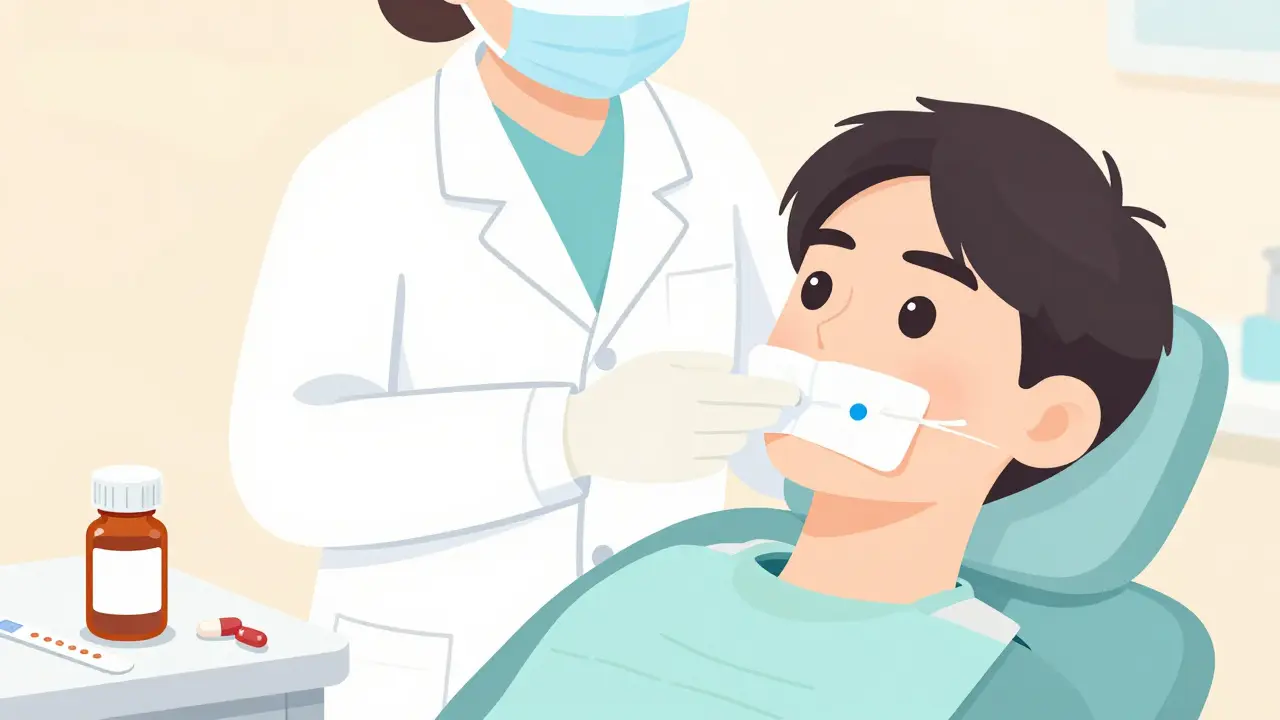
Dental Procedure Risk Assessment Tool
This tool helps you understand the bleeding risk associated with dental procedures while taking blood thinners. Based on your procedure type, medication type, and INR level (for warfarin users), it provides guidance on whether you should continue your medication or consult your doctor.
Getting a tooth pulled or a deep cleaning while on blood thinners used to mean one thing: stop your meds. But that’s not the advice anymore. In fact, stopping your blood thinner for a simple dental visit could be more dangerous than keeping it going. The truth? Most dental procedures are safe even if you’re on anticoagulants - as long as you and your dentist know what to look for.
Why Stopping Blood Thinners Is Riskier Than You Think
For years, dentists and doctors assumed that blood thinners like warfarin or Eliquis had to be paused before any dental work. The fear? Too much bleeding. But research over the last decade has flipped that thinking. Stopping your medication - even for a few days - raises your risk of a stroke, heart attack, or dangerous blood clot. A 2022 study from the American Dental Association found that holding single antithrombotic drugs for minor dental work doesn’t reduce bleeding much, but it does spike the chance of a clot forming. That’s why current guidelines say: keep taking your blood thinner unless you’re having major surgery.Think about it this way: if you’re on blood thinners, it’s because you have a condition like atrial fibrillation, a history of deep vein thrombosis, or a mechanical heart valve. These aren’t minor issues. The risk of a clot forming while you’re off your meds can be life-threatening. Meanwhile, bleeding from a simple filling or extraction? Usually manageable.
Classifying Dental Procedures by Bleeding Risk
Not all dental work is the same. Experts now group procedures into three clear categories based on how likely they are to cause bleeding:- Low-risk: Routine checkups, X-rays, cleanings, and taking impressions. No need to worry. Keep taking your meds.
- Low-moderate risk: Fillings, root canals, scaling and root planing (deep cleaning). These are still safe with blood thinners. No hold needed.
- Moderate risk: Removing one to three teeth, gum surgery, or crown preparations. Here’s where you need to be more careful - but still, stopping your medication isn’t usually required.
Even for tooth extractions, most guidelines say you can go ahead without stopping your blood thinner - as long as your INR (a blood test that measures clotting time) is under 3.5. For warfarin users, an INR between 2.0 and 3.0 is the standard target for most conditions. If it’s higher than that, your doctor might adjust your dose before the procedure - but not your dentist alone.
Warfarin vs. DOACs: Different Rules, Same Goal
There are two main types of blood thinners: warfarin (an older VKA) and DOACs (direct oral anticoagulants like apixaban, rivaroxaban, dabigatran). They work differently, so their management isn’t identical.For warfarin users:
- Simple cleanings or fillings? No hold.
- One tooth extraction? Usually no hold - but your dentist might ask for an INR check the day before.
- Multiple extractions or oral surgery? You might need to pause it for 2-5 days, but only after talking to your doctor.
For DOACs (which now make up about 60% of new prescriptions):
- Most procedures? No hold needed.
- For higher-risk extractions, skipping your morning dose is often enough.
- Timing matters: Schedule the extraction at least 4 hours after your last dose to let the drug clear slightly from your system.
Don’t assume your DOAC works the same as your neighbor’s warfarin. Your doctor knows your exact medication, dose, and kidney function - all of which affect how long the drug lasts in your body.
What Your Dentist Should Do During the Procedure
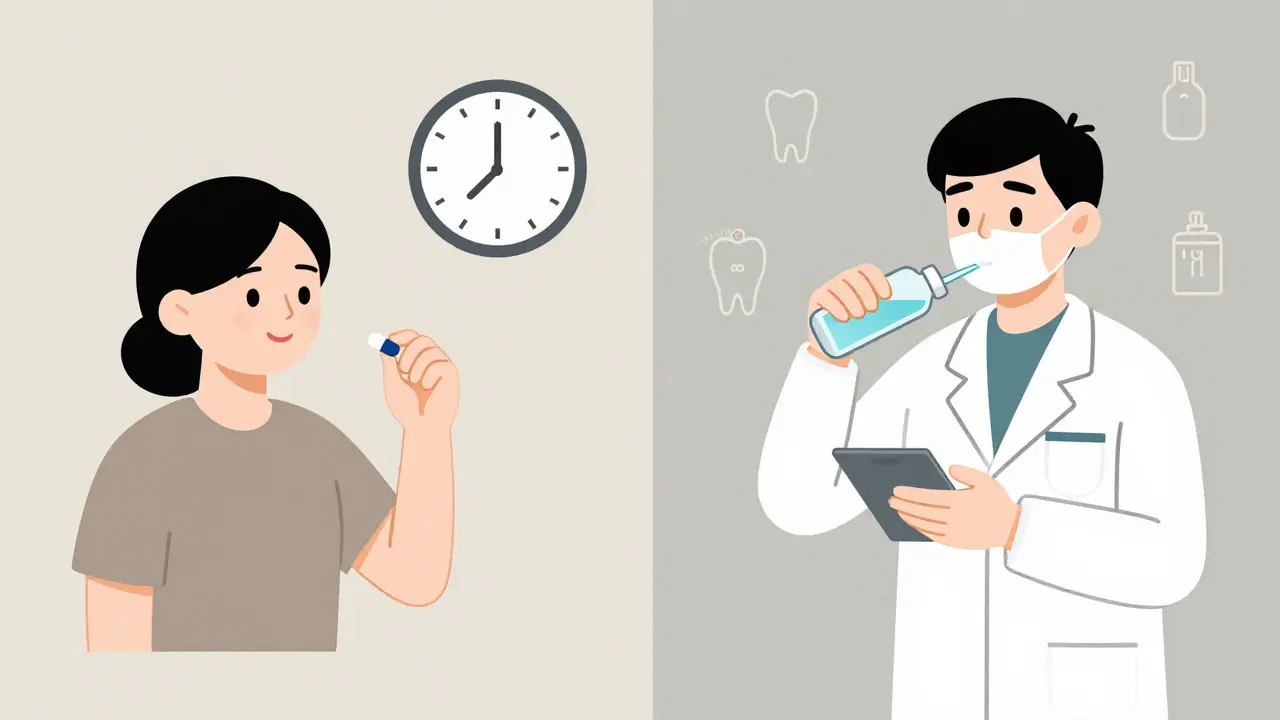
Even if you’re not stopping your blood thinner, your dentist still has to be ready. Here’s what good practice looks like:- Use local anesthesia with epinephrine - it helps narrow blood vessels and reduce bleeding.
- Avoid pulling two or three teeth next to each other. Space them out over multiple visits.
- Apply pressure with gauze for at least 30-45 minutes after extraction.
- Use hemostatic agents like tranexamic acid mouthwash. A 5% solution, swished for 1-2 minutes every 2 hours, can cut bleeding by half.
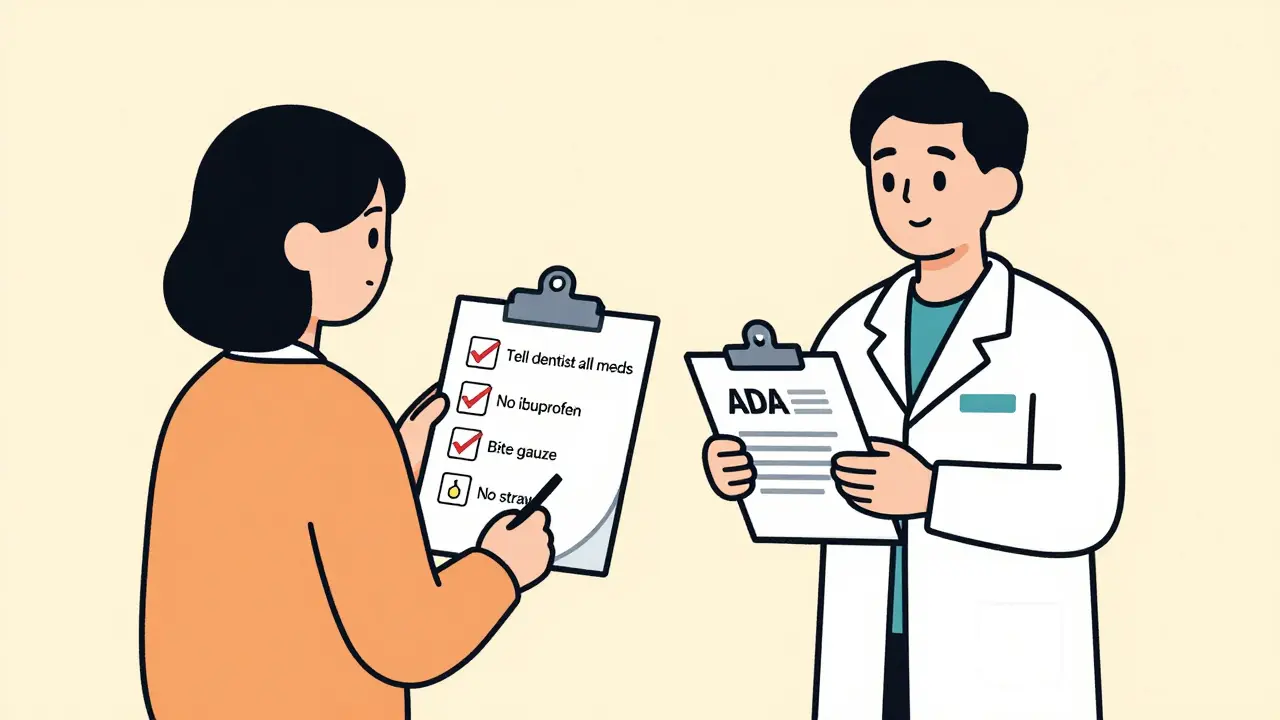
- Don’t use NSAIDs like ibuprofen for pain after surgery. Use acetaminophen instead - NSAIDs can make bleeding worse.
One thing dentists won’t tell you unless you ask: they don’t need to stop your blood thinner to control bleeding. Most cases of bleeding are stopped with pressure, sutures, or a simple rinse. Studies from the University of Texas show that over 95% of bleeding events in anticoagulated patients are minor and resolve within hours.
What You Need to Do Before and After
Your role matters just as much as your dentist’s. Here’s your checklist:- Before: Tell your dentist every medication you take - including aspirin, fish oil, or herbal supplements. Many people don’t realize that garlic, ginkgo, or vitamin E can thin your blood too.
- Before: If you’re on warfarin, get your INR checked within 7 days before your appointment. Don’t wait until the day of.
- After: Bite on gauze firmly. Don’t spit, rinse, or suck through a straw for 24 hours. That creates suction and can dislodge the clot.
- After: Eat soft foods. Avoid hot drinks and alcohol for the first day.
- After: If you see bright red blood soaking through two gauze pads in 20 minutes, call your dentist. A little pink saliva is normal. Heavy bleeding isn’t.
And don’t forget: if you’re on dual antiplatelet therapy (like aspirin + clopidogrel), your dentist may ask you to keep the aspirin but pause the other drug. That’s because aspirin carries less bleeding risk than the stronger antiplatelets.
Special Cases: Younger Patients and Pregnancy
Blood thinners aren’t just for older adults anymore. You’re seeing more 25-year-olds on anticoagulants after a blood clot from a long flight, or postpartum women recovering from a pulmonary embolism. These cases add complexity.Pregnancy changes how blood thinners are managed. Warfarin is generally avoided in early pregnancy because it can harm the fetus. Alternatives like heparin are used instead - and dental procedures are usually safe with those. Always tell your dentist if you’re pregnant or trying to conceive.
Also, if you have kidney or liver problems, your body clears blood thinners slower. That means even a small dose can linger longer and increase bleeding risk. Your dentist should know this - so bring your full medical history.
What to Do If Your Dentist Says to Stop Your Meds
If your dentist tells you to stop your blood thinner, don’t agree without checking with your doctor. Many dentists still follow old habits. But guidelines from the ADA, Stanford, and the Scottish Dental Clinical Effectiveness Programme all say the same thing: don’t stop unless it’s a major surgery.Ask your dentist: “Do you have the latest ADA or SDCEP guidelines?” If they say no, offer to share them. Most clinics now follow these standards - but not all.
And if your doctor insists on stopping your medication? Ask why. What’s your specific clot risk? What’s the INR level? Is there a safer alternative? Push for evidence, not tradition.
The Bottom Line
You don’t need to fear dental work just because you’re on blood thinners. The real danger isn’t the bleeding - it’s the clot you might get if you stop your meds. Most procedures are safe with your medication running normally. Your dentist can control bleeding with simple, proven techniques. Your job? Tell them everything you’re taking, follow their aftercare instructions, and never stop your blood thinner on your own.Today’s dental care isn’t about avoiding risk - it’s about managing it smartly. And that’s exactly what modern guidelines are designed to do.
Can I still get a tooth pulled if I’m on blood thinners?
Yes, most single tooth extractions are safe while on blood thinners. Dentists use local pressure, sutures, and hemostatic rinses to control bleeding. Stopping your medication isn’t usually needed unless you’re having multiple extractions or major oral surgery - and even then, only after consulting your doctor.
Should I stop taking warfarin before a dental cleaning?
No. Routine cleanings are low-risk procedures, and stopping warfarin increases your risk of stroke or clotting more than it reduces bleeding. The American Dental Association recommends continuing warfarin for all routine dental care. Just make sure your INR is under 3.5.
What if my INR is too high for a dental procedure?
If your INR is above 3.5 for low-risk procedures or above 3 for moderate ones, your dentist will likely ask you to contact your doctor before proceeding. Your doctor may temporarily adjust your warfarin dose, but they won’t stop it completely unless it’s an emergency. Never adjust your dose yourself.
Can I use ibuprofen for pain after a tooth extraction while on blood thinners?
No. Ibuprofen and other NSAIDs can increase bleeding risk when combined with blood thinners. Use acetaminophen (Tylenol) instead. It’s just as effective for pain and doesn’t interfere with clotting.
Do I need to tell my dentist about my blood thinner if I’ve been on it for years?
Yes - every time. Even if you’ve had cleanings before without issues, your dose, health status, or other medications may have changed. Your dentist needs to know your full list of medications, including supplements, to plan safely.
Are DOACs safer than warfarin for dental procedures?
DOACs like apixaban or rivaroxaban are generally easier to manage because they don’t require regular blood tests and have fewer food or drug interactions. For most dental work, skipping your morning dose is enough. But they still carry bleeding risk - so never stop them without medical advice.
What Comes Next?
If you’re on blood thinners and need dental work, the best step is to call your dentist and say: “I’m on a blood thinner. Can we review the latest guidelines before scheduling?” Most clinics now have protocols in place. If they don’t, you can share the ADA or SDCEP guidelines - they’re free and publicly available.Remember: the goal isn’t to avoid dental care. It’s to get it safely. With the right information and communication, you can protect your heart and your smile at the same time.


Written by Felix Greendale
View all posts by: Felix Greendale