
Have you ever stared at a pharmacy receipt and wondered why your generic blood pressure medication costs more than a decent lunch? You aren't alone. For years, the path from pill bottle to patient has been cluttered with middlemen-wholesalers, pharmacy benefit managers (PBMs), and retail chains-all taking a cut. But in 2025 and 2026, that model is cracking. A new breed of direct-to-consumer (DTC) generic pharmacies is emerging business models where pharmaceutical companies or specialized platforms sell medications directly to patients, bypassing traditional intermediaries is reshaping how we buy medicine.
This isn't just about convenience; it's a fundamental shift in power. By cutting out the layers that have historically inflated prices, these new models promise transparency, lower costs, and faster access. But they also bring new questions about safety, regulation, and what happens to your local pharmacist. Let’s break down exactly how this works, who is leading the charge, and what it means for your wallet and your health.
The End of the Middleman: Why DTC is Booming
To understand why direct-to-consumer pharmacies are exploding now, you first have to look at the old system. Traditionally, drugs moved through a complex chain: manufacturer → wholesaler → PBM → retailer → patient. Each step added cost and complexity. In 2024, the 'Big Three' PBMs-CVS Caremark, Express Scripts, and OptumRx-generated roughly $28 billion in gross profit, largely by retaining rebates rather than passing savings to consumers.
Pharmaceutical companies got tired of this 'gross-to-net' spread. They were paying massive rebates but seeing little return in brand loyalty or patient data. Enter the Direct-to-Patient (DTP) movement. Accelerated by regulatory shifts like the May 2025 executive order on prescription drug pricing, major players began building their own infrastructure. The goal? Disintermediation. By selling directly, manufacturers can control the price, ensure authenticity, and collect valuable data on how patients actually use their meds.
For generics specifically, the opportunity is even bigger. Established telehealth companies like Ro, Hims & Hers, and Honeybee Health have pioneered cash-based generic delivery. Ro alone processed approximately 2.1 million prescription orders in Q1 2025. These platforms typically offer discounts of 30-50% compared to traditional brick-and-mortar pharmacies. That’s not a rounding error; that’s real money back in your pocket.
How the Technology Works Under the Hood
You might think ordering a pill online is simple, but the technology powering modern DTC pharmacies is sophisticated. It’s not just an e-commerce cart; it’s a healthcare ecosystem. The technical architecture relies on cloud computing to handle real-time data access for telehealth services and digital pharmacies. This ensures that when you chat with a provider, they have immediate access to your relevant health history.
Artificial intelligence plays a huge role here. AI-powered chatbots don’t just answer FAQs; they act as health assistants, sending medication reminders and predicting adherence risks before you miss a dose. Cybersecurity is paramount, with robust measures protecting patient data under HIPAA regulations. Without ironclad security, trust evaporates instantly.
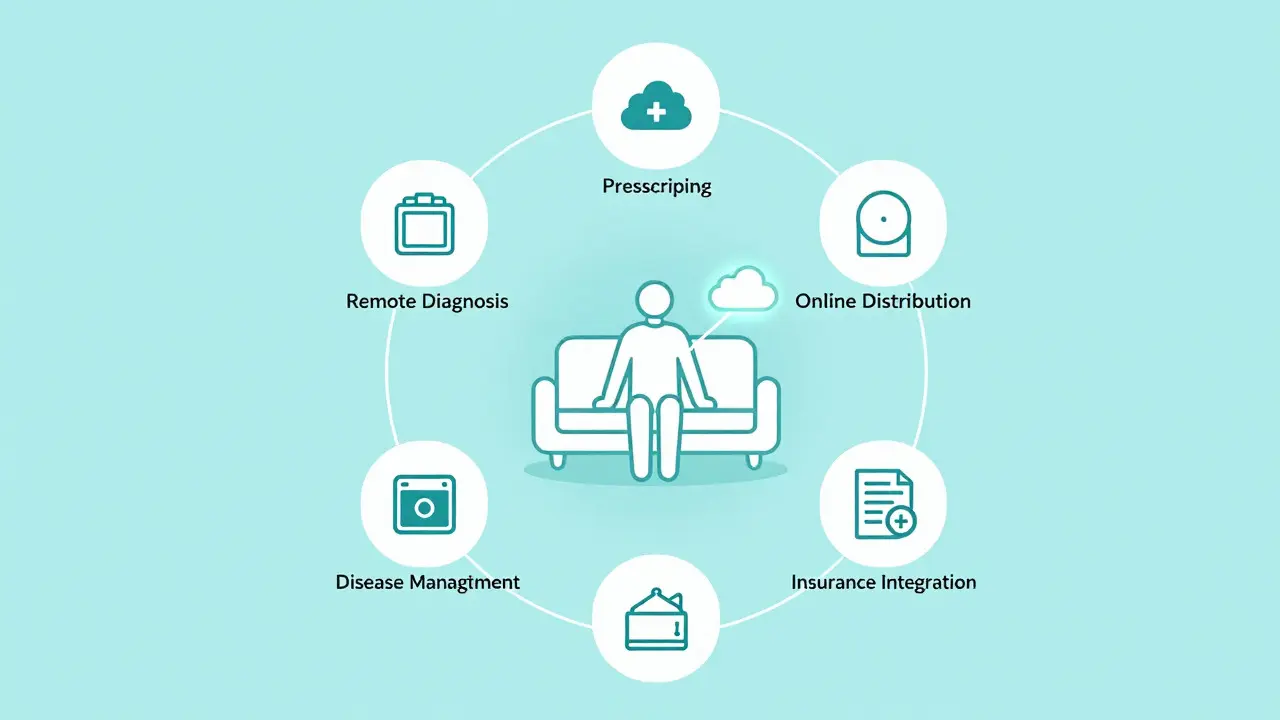
The most advanced platforms integrate five critical elements into one seamless workflow:
- Remote Diagnosis: Video consultations with licensed providers.
- E-Prescribing: Digital prescriptions sent directly to the pharmacy via networks like Surescripts.
- Online Pharmacy & Distribution: Automated fulfillment centers that package and ship meds.
- Disease Management: Ongoing support tools and educational content.
- Health InsurTech: Integration with insurance plans for billing and claims.
Platforms like LillyDirect and PfizerForAll are currently the only ones spanning all five of these elements. This integration reduces the time-to-therapy by an average of 3.7 days. Instead of waiting for a doctor’s appointment, then a script, then a pharmacy queue, you get diagnosed and treated in one sitting.
Brand Giants vs. Telehealth Startups
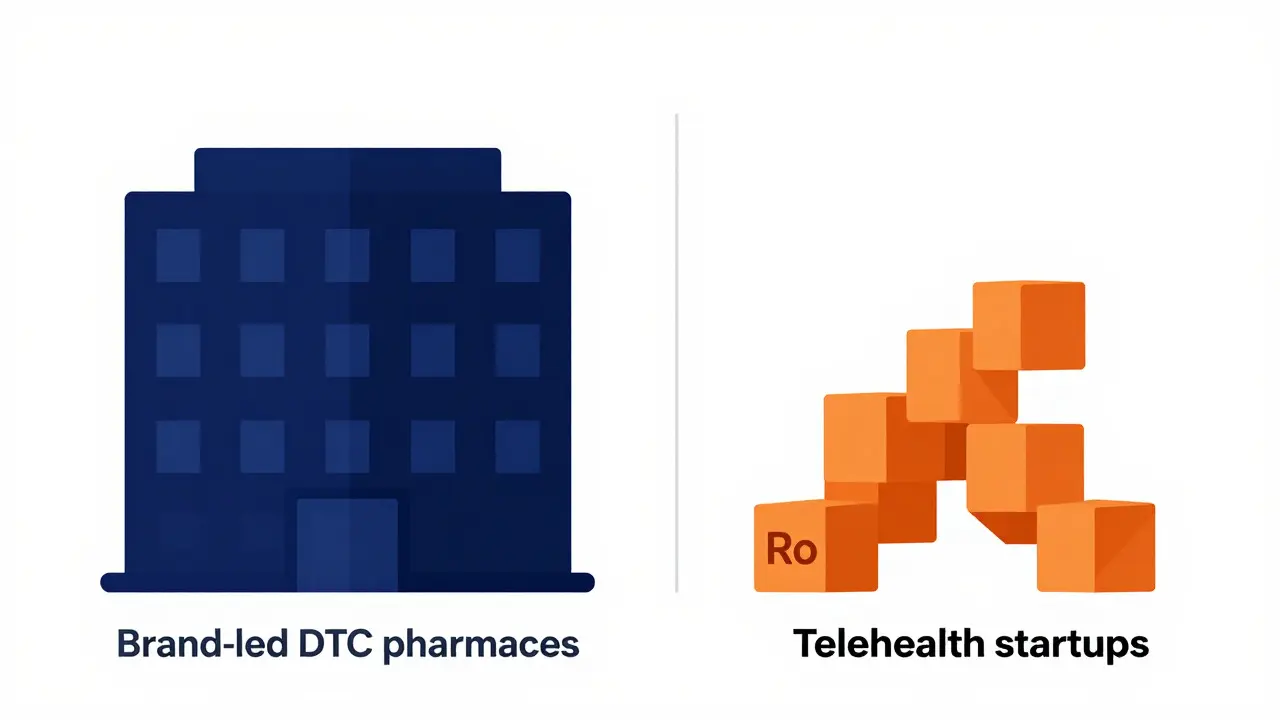
The DTC landscape is splitting into two distinct camps. On one side, you have the big pharmaceutical brands-Eli Lilly, Pfizer, Novo Nordisk, and Astellas. They launched integrated DTP platforms between 2024 and 2025. Their advantage? Trust and scale. They can offer proprietary data insights and often bundle expensive specialty drugs with generic counterparts.
On the other side are the pure-play telehealth startups like Ro and Honeybee Health. These companies focus heavily on high-volume generic medications. They operate on a cash-pay basis, which simplifies their operations but limits their reach to those without comprehensive insurance coverage. However, their agility allows them to iterate quickly. For example, Ro received a 4.2/5 rating for usability in mid-2025 assessments, while newer entrants struggled with lower scores.
Let’s compare these approaches directly.
| Feature | Brand-Led DTC (e.g., LillyDirect) | Telehealth Startups (e.g., Ro, Hims) |
|---|---|---|
| Primary Focus | Specialty & Brand Drugs + Generics | High-Volume Generics & Lifestyle Meds |
| Pricing Model | Hybrid (Insurance + Cash) | Cash-Pay / Subscription |
| Avg. Savings | 10-15% on Brands | 30-50% on Generics |
| Data Access | Deep Patient Behavior Insights | Limited to Platform Users |
| Regulatory Load | High (Complex Compliance) | Medium (Standard Licensing) |
If you’re buying a cheap generic antibiotic, the startup model likely offers better value. If you’re managing a chronic condition requiring a mix of specialty and generic drugs, the brand-led hybrid model provides a more cohesive care plan.
The Regulatory Maze and Safety Concerns
It’s not all smooth sailing. Launching a compliant DTC program is a logistical nightmare. According to PharmExec, you need pharmacy licenses in all 50 states plus Washington D.C. This process takes 14-18 months and costs around $2.3 million in legal and administrative fees alone. No wonder many small players fold before they even start.
Safety is the biggest public concern. Critics, including Dr. Sarah Chen from Johns Hopkins, warn that DTC models risk bypassing pharmacists. Pharmacists are trained to catch dangerous drug interactions. In October 2025, Drug Topics documented 17 cases where potential interactions might have been missed because patients relied solely on automated DTC systems without human pharmacist review.
To mitigate this, leading platforms are staffing 1 pharmacist per 5,000 active patients. They also offer 24/7 consultation lines. But does this scale? As the market grows, maintaining this ratio becomes expensive. Legal experts at Debevoise & Plimpton note that compliance must be 'designed into product flows,' not bolted on later, especially with the Department of Justice investigating potential anti-kickback violations in DTC programs.
What Patients Are Saying
Numbers tell one story, but user experiences tell another. On Reddit, users report saving hundreds annually. One user, 'MedSavvy2025', saved $417.50 on blood pressure meds via Ro but complained about limited communication options when issues arose. Trustpilot reviews for Honeybee Health show a 3.8/5 average, with 68% of positive reviews citing price transparency.
However, complaints are consistent too. Delivery delays affect 42% of negative reviews. Customer service response times exceeding 48 hours frustrate 29% of users. And 38% of negative feedback mentions limited medication availability. If your specific generic isn’t in stock, you’re back to square one.
Despite these hiccups, 73% of patients using DTC services for chronic conditions reported improved medication adherence. The convenience of home delivery and simplified refill processes clearly resonates with busy people.
Is This Here to Stay?
The trajectory points toward hybrid distribution, not total replacement. 83% of pharmaceutical executives plan to keep both traditional and DTC channels open. Why? Because DTC captures data, but traditional pharmacies capture foot traffic and immediate needs. Roche announced in July 2025 that it is exploring its own DTC storefront, signaling that this trend is far from over.
By Q3 2025, DTC pharmaceutical sales hit $18.7 billion, up from just 0.8% of total sales in 2023. With 27% of commercially insured patients having tried a DTC service, the adoption curve is steep. If the PBM rebate system continues to shrink, as some analysts predict, the economic case for DTC becomes undeniable.
For now, the smart move is to shop around. Use DTC for your routine, predictable generic refills where you know the price and the platform is reliable. Keep your local pharmacy for urgent needs, complex regimens, and when you want a face-to-face conversation with a professional. The future of pharmacy isn't one or the other; it's choosing the right tool for the job.
Are direct-to-consumer generic pharmacies safe?
Yes, provided they are licensed and regulated. Reputable DTC pharmacies require valid prescriptions and employ licensed pharmacists to review orders. However, risks exist if you use unverified platforms. Look for sites that display state pharmacy board licenses and offer 24/7 pharmacist consultation. Be cautious of platforms that diagnose and prescribe without adequate medical history review.
Do DTC pharmacies accept insurance?
It depends on the model. Pure-play telehealth startups like Ro often operate on a cash-pay basis, offering significant discounts but no insurance integration. Larger brand-led platforms like LillyDirect are increasingly integrating with insurance networks. Always check the platform's payment options before signing up. Some may offer hybrid models where you can choose cash-pay for lower prices or insurance for covered amounts.
How much can I save using a DTC generic pharmacy?
Savings vary widely. For generic medications, platforms like Ro and Honeybee Health typically offer 30-50% discounts compared to traditional retail pharmacies. Brand-name drugs sold via DTC models like LillyDirect may offer smaller savings, around 10-15%, due to different pricing structures. Your actual savings depend on your current insurance coverage and the specific drug tier.
What is the difference between a PBM and a DTC pharmacy?
A Pharmacy Benefit Manager (PBM) is an intermediary that negotiates drug prices between insurers and pharmacies. They manage formularies and process claims but do not dispense drugs. A DTC pharmacy sells medications directly to the consumer, often bypassing the PBM entirely. This disintermediation allows DTC pharmacies to offer transparent cash prices and reduce supply chain costs.
How long does shipping take for DTC medications?
Most reputable DTC pharmacies ship within 1-3 business days after prescription approval. Delivery usually takes an additional 2-5 business days depending on your location. While slower than picking up at a local store, the convenience of home delivery offsets the wait for many users. Check the platform's estimated delivery window during checkout.
Written by Felix Greendale
View all posts by: Felix Greendale