
Drug Holiday Risk Assessor
Imagine your doctor telling you to stop taking your daily medication for a few days-or even weeks-to let your body recover. It sounds counterintuitive, doesn't it? After all, we take medicine to fix something broken. Why would stopping help?
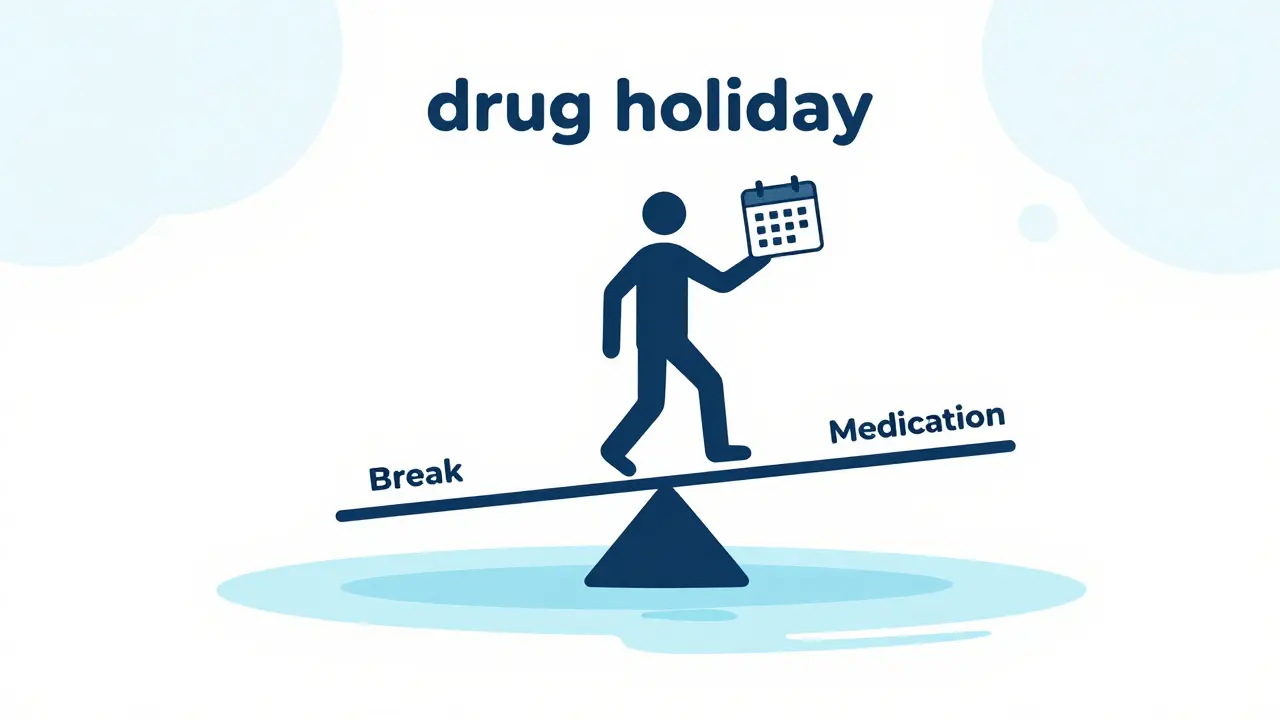
This is the core concept behind drug holidays, which are planned, temporary interruptions of prescribed medications under strict medical supervision. Unlike simply forgetting a dose or quitting cold turkey, a drug holiday is a strategic tool used in specific conditions like depression or ADHD to manage side effects, reset tolerance, or assess if the drug is still needed.
But here’s the catch: this strategy is not one-size-fits-all. For some patients, a weekend off antidepressants restores intimacy and energy. For others, particularly those with HIV or Parkinson’s disease, stopping treatment can be life-threatening. Understanding when a break is beneficial versus dangerous is critical for anyone managing long-term medication.
What Is a Drug Holiday and Why Do Doctors Prescribe Them?
A drug holiday is formally defined as a scheduled pause in therapy, lasting anywhere from 48 hours to several months. The goal isn’t to cure the underlying condition but to mitigate the burdens of chronic treatment. Think of it like a sabbatical for your brain chemistry.
The primary reasons doctors consider this approach include:
- Mitigating Side Effects: Some medications cause issues like sexual dysfunction, weight gain, or emotional numbness that diminish quality of life.
- Preventing Tolerance: Over time, the body may adapt to a drug, requiring higher doses for the same effect. A break can reset receptor sensitivity.
- Assessing Necessity: If symptoms have been stable for years, a short break helps determine if the patient still needs the medication.
- Growth Management: In children, stimulants can sometimes suppress appetite or growth; breaks allow for physical catch-up.
It is crucial to distinguish this from unsupervised discontinuation. Stopping meds on your own carries high risks of withdrawal and relapse. A true drug holiday requires a protocol, monitoring, and a clear plan for restarting.
The Golden Rule: Half-Life Determines Safety
Not every pill is suitable for a holiday. The deciding factor is often the medication’s half-life-the time it takes for the drug concentration in your blood to reduce by half.
Drugs with long half-lives linger in the system, creating a natural buffer against withdrawal. For example, fluoxetine (Prozac) has a half-life of 4-6 days. This means if you skip a dose, the drug remains active in your body for nearly a week. This makes weekend drug holidays feasible for many patients on fluoxetine without triggering severe withdrawal symptoms.
In contrast, paroxetine (Paxil) has a short half-life of 21 hours. Skipping doses leads to rapid depletion, causing intense discontinuation syndrome. Similarly, venlafaxine (Effexor) has a half-life of just 5 hours, making it highly risky for interruptions.
| Medication Class | Example Drug | Half-Life | Holiday Risk Level |
|---|---|---|---|
| SSRI (Long-acting) | Fluoxetine (Prozac) | 4-6 days | Low (with supervision) |
| SSRI (Short-acting) | Paroxetine (Paxil) | 21 hours | High |
| SNRI | Venlafaxine (Effexor) | 5 hours | Very High |
| Stimulant (ADHD) | Methylphenidate (Ritalin) | 2-3 hours | Moderate (Symptom rebound) |
| Beta-Blockers | Metoprolol | Varies | Contraindicated (Life-threatening) |
Antidepressants: The Weekend Break Strategy
One of the most common uses of drug holidays is addressing SSRI-induced sexual dysfunction. Studies published in the Journal of Sexual Medicine (2020) indicate that weekend breaks show a 65% efficacy rate in reducing these side effects. The logic is simple: skip the Saturday and Sunday doses, allowing libido to return during the weekend, then resume Monday.
However, this only works for stable patients who have been on the medication for at least six months. Dr. David Healy, Professor of Psychiatry at Cardiff University, warns in his 2020 meta-analysis that 33% of patients experience symptom return within 14 days of discontinuation, especially those with a history of multiple depressive episodes.
If you are considering this, you must track your mood meticulously. Many users report "brain zaps"-a sensation of electric shocks in the head-and dizziness if the break is too long or the drug clears too quickly. Always use a long-acting SSRI if possible, and never attempt this without your psychiatrist’s explicit approval.
ADHD Medications: The Summer Debate
For children with Attention Deficit Hyperactivity Disorder (ADHD), parents often ask about summer breaks from stimulants like methylphenidate (Ritalin) or amphetamines (Adderall). The idea is to give the child’s body a rest and potentially improve appetite or sleep.
While the American Academy of Child and Adolescent Psychiatry (AACAP) acknowledges that breaks might help growth concerns in 15-20% of pediatric patients, the data on behavioral outcomes is stark. Research from the Child Mind Institute (2022) shows that 78% of children experience significant symptom rebound during summer breaks. This isn’t just about being hyperactive; it affects social functioning. One study noted a 45% increase in accident rates during medication-free periods.
Dr. Alan Ravitz, a Child and Adolescent Psychiatrist, advises against routine summer breaks unless there are compelling medical reasons. Longitudinal data suggests children maintaining year-round treatment demonstrate 37% better social functioning and fewer behavioral incidents in non-academic settings. Imagine a baseball coach watching a child’s performance deteriorate because their focus vanished mid-season-it impacts self-esteem deeply.
If a break is necessary, it should be structured. Gradual tapering (reducing dose by 25% weekly) is safer than abrupt cessation. Caregivers need training to recognize early signs of impulsivity or aggression so they can intervene before situations escalate.
When Drug Holidays Are Dangerous: HIV and Parkinson’s
History offers harsh lessons about the dangers of interrupting certain therapies. In the 1990s, drug holidays were explored for HIV treatment, based on the hope that resting the immune system might help. The 1999 STACCATO study initially suggested potential benefits. However, the landmark SMART trial (2006), involving over 5,000 participants across 33 countries, proved otherwise.
The results were devastating: intermittent therapy led to a 50% higher risk of opportunistic infections and a 64% increase in cardiovascular events compared to continuous therapy. Today, the scientific consensus is absolute: drug holidays are contraindicated for HIV management.
Similarly, in Parkinson’s disease, "drug holidays" were common in the 1980s to reset dopamine receptors. This practice was abandoned after studies showed severe symptom exacerbation and a 22% higher hospitalization rate. Conditions requiring continuous neurochemical regulation do not tolerate gaps in coverage.
Absolute contraindications also include beta-blockers, anticonvulsants, and corticosteroids. Abruptly stopping these can cause life-threatening rebounds, such as hypertensive crises or seizures.
How to Implement a Safe Drug Holiday Protocol
If your doctor agrees a break is appropriate, follow these steps to minimize risk:
- Establish Stability First: You should have been symptom-free and stable on your current dose for at least 3-6 months. Do not attempt this during an acute episode.
- Define Clear Triggers: Write down exactly what symptoms will signal the end of the holiday. For example, "If I feel anxious for two consecutive days, I restart the medication immediately."
- Use Pharmacokinetics: Choose timing based on the drug’s half-life. For long-acting drugs, a 48-72 hour window is typical. For shorter-acting ones, breaks are rarely advised.
- Monitor Closely: Keep a daily log of mood, sleep, appetite, and side effects. Share this with your provider.
- Plan the Restart: Decide in advance whether you will return to the full dose or start lower. Sudden re-initiation can sometimes cause renewed side effects.
The NCBI evidence review (2021) highlights that structured protocols have a 68% success rate, whereas ad hoc, unplanned breaks succeed only 22% of the time. Preparation is everything.
Emerging Trends: Personalized Breaks via Genetics
The future of drug holidays lies in precision medicine. The FDA’s 2023 approval of extended-release bupropion formulations with built-in "holiday windows" represents a shift toward designing drugs that accommodate breaks safely. Meanwhile, the NIH-funded SPRINT trial (2024) is evaluating personalized protocols using pharmacogenomic testing.
By analyzing your genetic makeup, doctors can predict how quickly you metabolize certain drugs and how likely you are to experience withdrawal or relapse. AI-driven risk assessment tools are currently in development, projected to reduce inappropriate holiday attempts by 35%. Until then, communication with your healthcare provider remains the safest path forward.
Can I stop my antidepressant for the weekend to avoid sexual side effects?
Only if your doctor approves and you are on a long-acting SSRI like fluoxetine. Short-acting SSRIs like paroxetine or SNRIs like venlafaxine carry a high risk of withdrawal symptoms (such as brain zaps) and should not be interrupted without a gradual taper. Always consult your psychiatrist first.
Is a summer break from ADHD medication safe for children?
It depends on the child. While breaks may help with appetite or growth, studies show 78% of children experience symptom rebound, affecting social skills and safety. The American Academy of Child and Adolescent Psychiatry recommends weighing growth benefits against the risk of behavioral regression and accidents. Year-round treatment is often preferred for better overall functioning.
Why are drug holidays dangerous for HIV patients?
The SMART trial demonstrated that intermittent HIV therapy increases the risk of disease progression, opportunistic infections by 50%, and cardiovascular events by 64%. Continuous viral suppression is critical for long-term health, making drug holidays strictly contraindicated for HIV management.
How long should a drug holiday last?
Duration varies by medication. Antidepressant holidays typically last 3-7 days (e.g., weekends). ADHD medication breaks may extend 8-12 weeks during school holidays. Longer breaks increase the risk of relapse and withdrawal. Always follow the specific timeline set by your healthcare provider.
What are the signs that a drug holiday is failing?
Warning signs include the return of original symptoms (depression, anxiety, impulsivity), severe withdrawal effects (dizziness, nausea, brain zaps), or significant disruption in daily functioning. If any of these occur, restart the medication immediately as per your emergency protocol and contact your doctor.
Written by Felix Greendale
View all posts by: Felix Greendale