
Every day, millions of Americans take generic drugs-cheaper versions of brand-name medications that work the same way. But once a generic drug hits the market, how does the FDA know it’s still safe? It’s not enough to prove it’s bioequivalent in a small study of healthy volunteers. Real-world use reveals problems that lab tests can’t predict. That’s where the FDA’s post-approval safety system kicks in.
How the FDA Keeps an Eye on Generics After They’re Approved
The FDA doesn’t stop watching a generic drug after it gets approved. In fact, that’s when the real monitoring begins. The agency uses a mix of automated systems, human review teams, and real-world data to catch safety issues that only show up after thousands or millions of people have taken the drug.
The main tool is the FDA Adverse Event Reporting System (FAERS). It’s a database that collects reports of side effects, allergic reactions, or other problems linked to medications. In 2022, FAERS received about 2 million reports-some from doctors, some from pharmacists, and many from patients themselves through MedWatch, the FDA’s online reporting portal. These aren’t just random complaints. Trained scientists and pharmacologists dig into them, looking for patterns. If five people report the same rare liver problem after taking a specific generic version of a blood pressure drug, that’s a signal. And the FDA investigates.
Who’s Actually Doing the Monitoring?
It’s not one person or one office. The Office of Generic Drugs (OGD) leads the effort, but they work with other parts of the FDA’s Center for Drug Evaluation and Research (CDER). The Office of Pharmaceutical Quality (OPQ) checks manufacturing. The Office of Surveillance and Epidemiology runs the data analysis. And there’s a special committee-the OGD Clinical Safety and Surveillance Committee-that meets regularly to review new safety signals. This group includes doctors, chemists, and toxicologists who decide whether a generic drug might be causing unexpected harm.
They don’t just wait for reports. They actively search for red flags. Using data mining tools, they scan FAERS for unusual spikes in side effects tied to specific generic manufacturers or batch numbers. For example, if a generic version of a thyroid medication starts showing a cluster of heart rhythm issues that weren’t seen with the brand-name version, that triggers an immediate review.
What Makes Generic Drugs Different to Monitor?
Here’s the tricky part: generic drugs don’t go through the same clinical trials as brand-name drugs. Brand-name drugs are tested on thousands of patients over years. Generics? They’re usually tested on 24 to 36 healthy volunteers to prove they absorb the same way in the body. That’s enough to show they’re bioequivalent-but it doesn’t catch rare side effects or problems that only show up in older patients, people with kidney disease, or those taking five other medications.
That’s why the FDA pays close attention to inactive ingredients-the fillers, dyes, and preservatives that don’t treat the disease but help the pill hold together or dissolve. One generic version of a seizure drug had a different dye than the brand. A small group of patients developed skin rashes. The FDA traced it back to that dye, updated the label, and warned doctors. It wasn’t the active ingredient. It was the filler.
Manufacturing quality is another big focus. The FDA inspects about 1,200 U.S. and 600 foreign drug factories every year. These inspections are often unannounced. They check if the company is following Current Good Manufacturing Practices (cGMP). That means: Are they using the right ingredients? Is the equipment clean? Are they testing each batch? A single contaminated batch of generic metformin led to a recall in 2020 because of a cancer-causing impurity. That’s the kind of thing the FDA catches through inspections, not just patient reports.
The Sentinel Initiative: Real-Time Safety Tracking
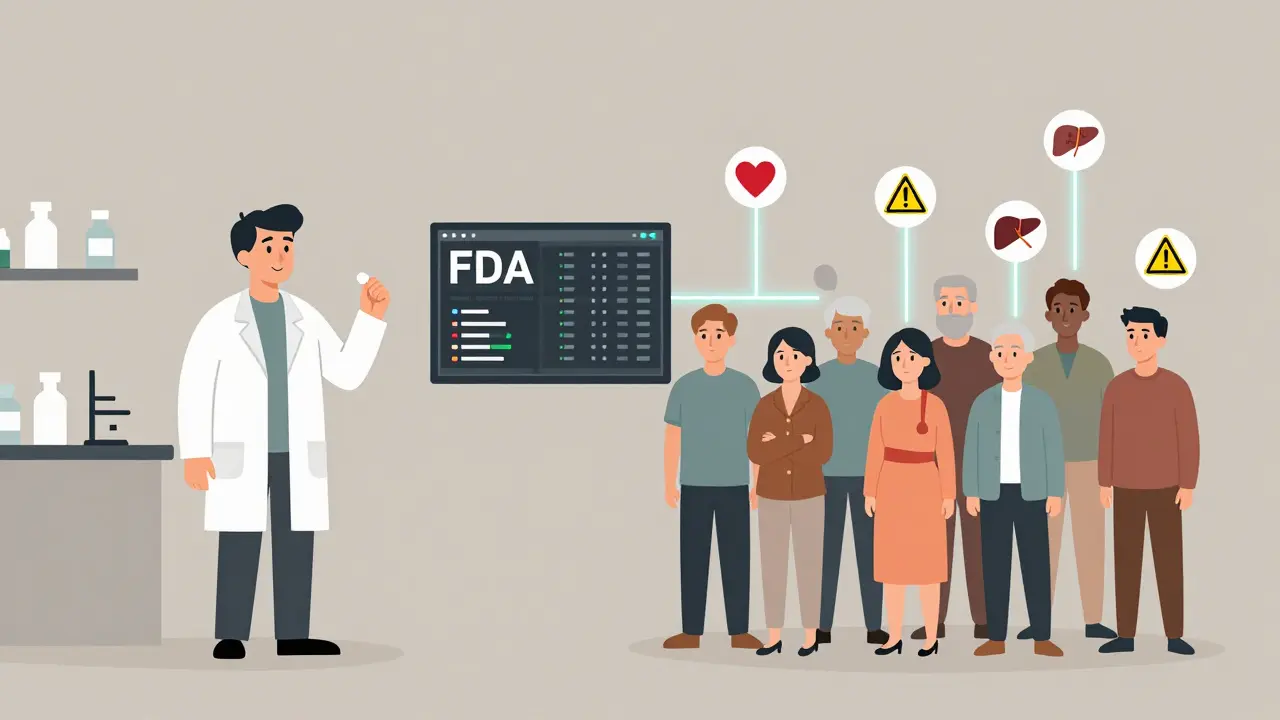
One of the biggest upgrades in recent years is the Sentinel Initiative. Launched in 2008 and expanded under the 21st Century Cures Act, Sentinel uses electronic health records from over 100 million patients across hospitals, clinics, and insurers. Instead of waiting for someone to report a side effect, the FDA can now look at real-time data: Are people taking this generic drug having more strokes? More hospital visits? More liver failures?
This system can spot trends in days, not months. In 2021, Sentinel flagged a possible link between a specific generic statin and muscle damage in elderly patients. The FDA reviewed the data, confirmed the pattern, and updated the drug’s safety label within weeks. Without Sentinel, that might have taken years to notice.
What Happens When a Problem Is Found?
The FDA doesn’t rush to pull a drug off the market. Most issues are fixed with changes to the label. If a generic version of a diabetes drug causes more low-blood-sugar episodes in older adults, the FDA requires the manufacturer to add a warning to the patient information sheet and the doctor’s prescribing guide.
In more serious cases, they issue a “Dear Healthcare Provider” letter-like a formal alert sent directly to doctors and pharmacists. If the risk is severe and widespread, the FDA can demand a recall. In 2023, a generic version of a blood thinner was pulled after multiple reports of dangerous bleeding linked to inconsistent drug release from the pill coating. The manufacturer had changed the manufacturing process without proper testing. The FDA caught it through routine inspections and FAERS data.
Only in rare cases does the FDA remove a generic drug entirely. That usually happens when the problem can’t be fixed with a label change or recall-like if the drug is fundamentally unsafe at any dose.
Why This System Matters More Than You Think
Generic drugs make up 90% of all prescriptions in the U.S. But they cost only 23% of what brand-name drugs do. That’s why safety monitoring isn’t just a regulatory task-it’s a public health necessity. If even 1% of generics had hidden safety issues, millions of people could be at risk.
The system isn’t perfect. Experts estimate that only 1% to 10% of adverse events are ever reported. Many patients don’t know how to report a side effect. Some doctors don’t think it’s worth the time. And complex generics-like inhalers, patches, or injectables-are harder to monitor because small differences in formulation can have big effects.
But the FDA is improving. With GDUFA III (the latest user fee agreement), the agency has more funding to hire data scientists, upgrade its software, and expand Sentinel to include even more health databases. By 2025, the goal is to cover 100 million patients in real time.
What You Can Do
You don’t have to wait for the FDA to find a problem. If you or someone you know has an unexpected reaction to a generic drug-like new dizziness, rash, nausea, or mood changes-report it. Go to MedWatch and fill out the form. It takes five minutes. Your report could help prevent someone else from getting hurt.
Also, if you switch between different generic brands and notice your symptoms change, talk to your doctor. It might not be your condition-it might be the filler in the pill.
How the System Compares to Other Countries
The European Medicines Agency uses a centralized system called EudraVigilance that collects all adverse event reports in one place. The FDA’s system is more decentralized, with different offices handling different parts of the process. But the Sentinel Initiative gives the U.S. an edge in real-time data. No other country has a system that can analyze electronic health records from over 100 million people to spot drug risks as quickly.
That’s why, despite its flaws, the FDA’s approach is considered one of the most advanced in the world. It’s not perfect-but it’s working.
Are generic drugs less safe than brand-name drugs?
No. Generic drugs are required to meet the same strict standards for quality, strength, and purity as brand-name drugs. The FDA ensures they deliver the same active ingredient in the same way. Most safety issues with generics come from rare changes in inactive ingredients or manufacturing flaws-not the drug itself. The system is designed to catch those problems quickly.
Can I report a side effect from a generic drug?
Yes. Anyone-patients, family members, or healthcare providers-can report side effects through the FDA’s MedWatch program. You don’t need to know if it’s the generic or brand-name version. Just report the drug name, the side effect, and when it happened. These reports help the FDA spot patterns that might otherwise go unnoticed.
Why do some people say generic drugs don’t work as well?
Sometimes, it’s not that the drug doesn’t work-it’s that switching between different generic brands can cause small differences in how the body absorbs the medicine. This is more common with drugs that have a narrow therapeutic index, like blood thinners or seizure medications. If you notice your symptoms change after switching generics, talk to your doctor. You may need to stick with one brand.
How often does the FDA recall a generic drug?
Recalls are rare. Most issues are fixed with label updates or manufacturing corrections. From 2018 to 2023, the FDA issued fewer than 10 full recalls of generic drugs due to safety concerns. Most recalls are for contamination, incorrect dosing, or packaging errors-not because the drug itself is unsafe.
What’s the biggest weakness in the FDA’s system?
The biggest weakness is underreporting. Most side effects never make it into the system. Also, monitoring complex generics-like inhalers or topical creams-is harder because small changes in how they’re made can affect how the drug works in the body. The FDA is working on better tools, but it’s an ongoing challenge.


Written by Felix Greendale
View all posts by: Felix Greendale