

When your kidneys stop working, your body can’t clean itself. Waste builds up. Fluid swells your legs and lungs. Blood pressure spikes. You feel tired all the time. This isn’t just aging-it’s end-stage renal disease (ESRD), where your kidneys have lost 90% of their function. Without treatment, you won’t survive. But what comes next-dialysis, transplant, or something else-can change everything about how you live, not just how long you live.
What Happens When Kidneys Fail
Your kidneys do more than make urine. They balance electrolytes, control blood pressure, remove toxins, and make hormones that help your bones and blood stay healthy. When they fail, everything breaks down. Most people with ESRD have diabetes or high blood pressure. Together, these two conditions cause over 70% of cases. Other causes include polycystic kidney disease, autoimmune disorders like lupus, and long-term drug or toxin exposure. By the time you’re diagnosed with ESRD, your glomerular filtration rate (GFR) is below 15. That’s like having one working filter out of ten. At this point, you need renal replacement therapy-either dialysis or a transplant. There’s no cure. No pill. No diet. Only these two options keep you alive long-term.Dialysis: Keeping You Alive, But at a Cost
Dialysis is the most common path. About 71% of Americans with ESRD are on dialysis. There are two types: hemodialysis and peritoneal dialysis. Hemodialysis means your blood is pumped out of your body, cleaned through a machine, and returned. Most people go to a clinic three times a week for 3-4 hours each time. That’s 12-16 hours a week just sitting in a chair, hooked up to a machine. You can’t eat or drink freely during treatment. Many feel exhausted afterward. Travel time, missed work, and the physical toll add up. Peritoneal dialysis happens at home. A fluid is put into your belly through a catheter. It pulls waste out through your abdominal lining, then drained out. You do this 4 times a day, or overnight with a machine. It’s more flexible, but you have to be careful about infection. Every exchange is a chance for bacteria to get in. Either way, you’re stuck with strict rules. No high-potassium foods like bananas or potatoes. No salty snacks. Limited fluids. You’ll need phosphate binders with every meal, vitamin D supplements, and blood pressure meds. Your lab values-calcium, phosphorus, PTH-must stay in narrow ranges. Miss a dose, eat the wrong thing, skip a session, and you risk hospitalization.Kidney Transplant: The Better Option, If You Can Get One
Kidney transplant isn’t just another treatment. It’s the best one. People who get a transplant live longer, feel better, and spend less on care over time. Studies show transplant recipients have a 68% lower risk of death than those on dialysis. Five-year survival? 83% for transplant patients. For those on dialysis? Only 35%. Transplant patients eat normally. They travel. They work full-time. They sleep through the night. They don’t need to be tied to a machine. One study found transplant recipients scored 28.7 points higher on quality-of-life surveys than dialysis patients. That’s not a small difference-it’s life-changing. But here’s the catch: only 29% of ESRD patients have a functioning transplant. Why? Because the waiting list is huge. Over 90,000 people are waiting for a kidney in the U.S. Only about 27,000 transplants happen each year. That means most people wait years. The average wait? Four years. The best outcomes come from living donors. A kidney from a living person lasts longer and works better than one from a deceased donor. One-year graft survival? 95.5% for living donor transplants. For deceased donors? 93.7%. Five-year survival? 86% vs. 78.5%. And if you get a transplant before starting dialysis-called preemptive-you’re even more likely to survive long-term. But only 5% of people on dialysis were ever referred early enough to get one.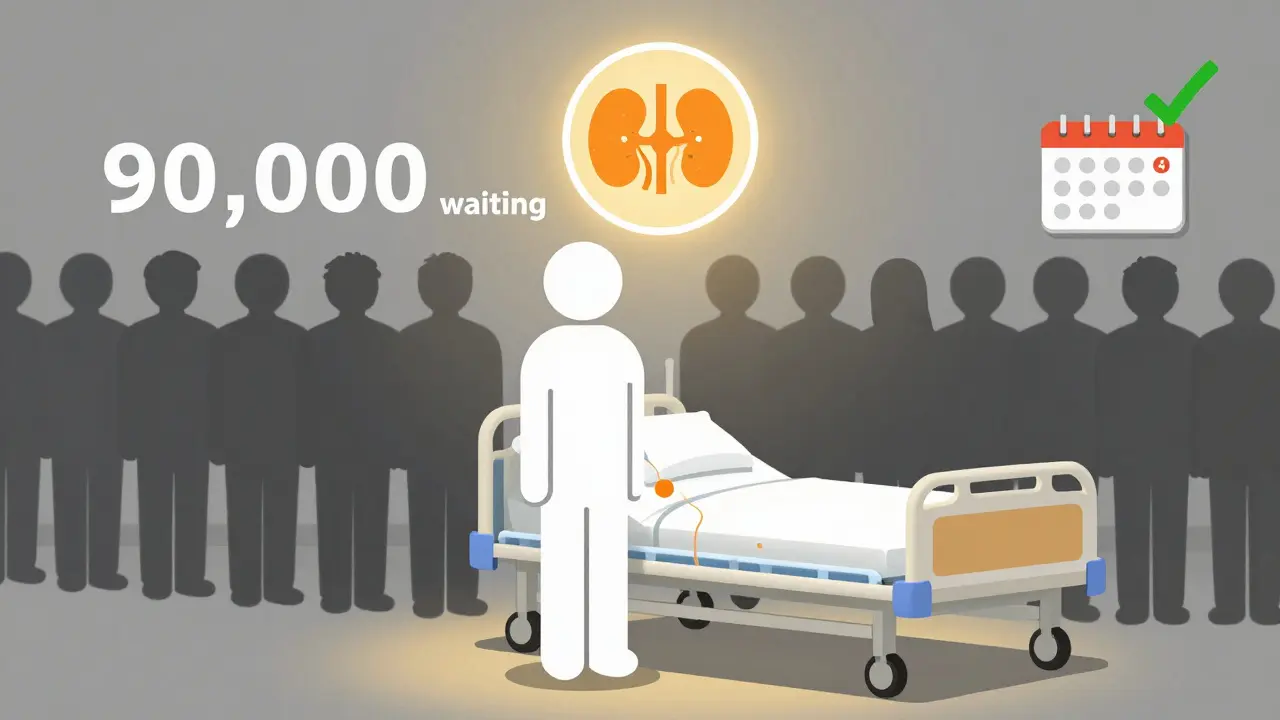
Who Gets a Transplant-and Who Doesn’t
Not everyone qualifies. If you’re over 75 with heart disease, active cancer, dementia, or uncontrolled substance use, you won’t be listed. But even if you’re healthy enough, access isn’t equal. African American patients are far less likely to be referred for transplant evaluation-even when they have the same medical need. One study found that after educating doctors and patients, transplant referrals among Black patients jumped 40%. That’s not a medical issue. It’s a system failure. Medicare covers ESRD treatment, but the rules create weird incentives. Coverage starts only after three months of dialysis. That means many patients wait too long to get evaluated for transplant. If you get a transplant, Medicare pays for immunosuppressants for three years. After that, you’re on your own. Those drugs cost $1,500 to $2,500 a month. Many people can’t afford them.Life After Transplant: Freedom with Responsibility
After transplant, you’re not done. You take immunosuppressants every day for life. These drugs stop your body from rejecting the new kidney-but they also weaken your immune system. You’re more likely to get infections. You need regular blood tests, doctor visits, and biopsies. You can’t take certain herbs or OTC meds without checking with your team. But the trade-off is worth it. Hospital visits drop by half compared to dialysis. You can eat what you want. You can sleep through the night. You can take a job that doesn’t let you leave for dialysis. You can go on vacation without planning around machine schedules. The biggest fear? Rejection. But modern drugs make that rare. Most transplants last 10-15 years. Some last 20 or more. And if it fails? You can go back to dialysis and get another transplant later.
What You Can Do Now
If you have chronic kidney disease and your GFR is below 30, ask for a transplant evaluation. Don’t wait until you’re on dialysis. That’s too late. Get tested for a living donor-family, friends, even strangers through paired exchange programs. Talk to a nephrologist who specializes in transplant. Ask if you’re a candidate. Don’t assume you’re too old, too sick, or too poor. Many barriers are fixable. If you’re already on dialysis, explore home dialysis. It gives you more control. Ask about arteriovenous fistulas-they take months to mature, so if you’re planning dialysis, get one done early. And know your numbers: phosphorus, calcium, PTH. These aren’t just lab results. They’re your survival tools.The Bigger Picture
The U.S. spends $35 billion a year on ESRD care. That’s 7.2% of Medicare’s budget-for just 1% of its patients. That money could be better spent on early intervention and transplant access. New programs like the Kidney Care Choices Model are trying to change that. They pay providers to refer patients early, not just treat them late. The future is brighter. Living donor transplants are up 18% since 2018. More organs are being used from older or higher-risk donors. Research into personalized treatments is getting funding. But until the system fixes its bias, delays, and financial barriers, too many people will die waiting. You don’t have to wait for the system to change. Ask questions. Demand referrals. Know your options. Your kidneys may be failing, but your life doesn’t have to be.Can you live a normal life on dialysis?
Yes, but it’s not easy. Most people on dialysis work part-time or not at all. They can’t travel far without planning. They’re tired after treatments. They follow strict diets and fluid limits. Social life shrinks because appointments take up so much time. Quality of life scores are about 30 points lower than transplant recipients.
How long do kidney transplants last?
On average, a kidney from a living donor lasts 15-20 years. A deceased donor kidney lasts 10-15 years. Some last over 25 years. If it fails, you can go back on dialysis and get another transplant. The key is taking your anti-rejection meds every day-missing doses is the top reason transplants fail early.
Is a kidney transplant better than dialysis?
Yes, by almost every measure. Transplant recipients live longer-68% lower risk of death. They have fewer hospital visits, better energy, fewer dietary restrictions, and higher quality of life scores. They also spend less on care over time. The only downside is needing lifelong immunosuppressants and the risk of rejection or infection.
Why are so few people referred for transplant early?
Many doctors don’t bring it up until dialysis is unavoidable. Patients often don’t know to ask. Insurance rules delay referrals. There’s also a bias-especially against Black, Hispanic, and older patients-where providers assume they’re not "good candidates." Studies show that when providers get training and patients get education, referral rates jump dramatically.
Can you get a transplant without a living donor?
Yes. Most transplants come from deceased donors, but the wait is long-often 4+ years. You can also join paired exchange programs, where two incompatible donor-recipient pairs swap kidneys. Some people even get kidneys from strangers through non-directed donation. The system is improving, but it’s still slow.
What are the side effects of anti-rejection drugs?
They weaken your immune system, so you’re more prone to infections, including serious ones like pneumonia or COVID-19. They can raise blood pressure, cause weight gain, increase diabetes risk, and damage your kidneys over time. Some cause tremors, hair loss, or stomach upset. But most side effects are manageable with dose adjustments and monitoring.
Does Medicare cover transplant medications forever?
No. Medicare covers immunosuppressants for 36 months after a successful transplant. After that, you need other insurance-private, Medicaid, or a patient assistance program. Many people struggle to pay $2,000 a month for these drugs. That’s why some lose their transplants-not because of rejection, but because they can’t afford the meds.
Can you donate a kidney and still live a normal life?
Yes. Most living donors return to normal activities within 4-6 weeks. They have no increased risk of kidney failure. Their life expectancy is the same as the general population. The biggest risk is surgery complications, which are rare. Donating doesn’t shorten your life or harm your future health.


Written by Felix Greendale
View all posts by: Felix Greendale