
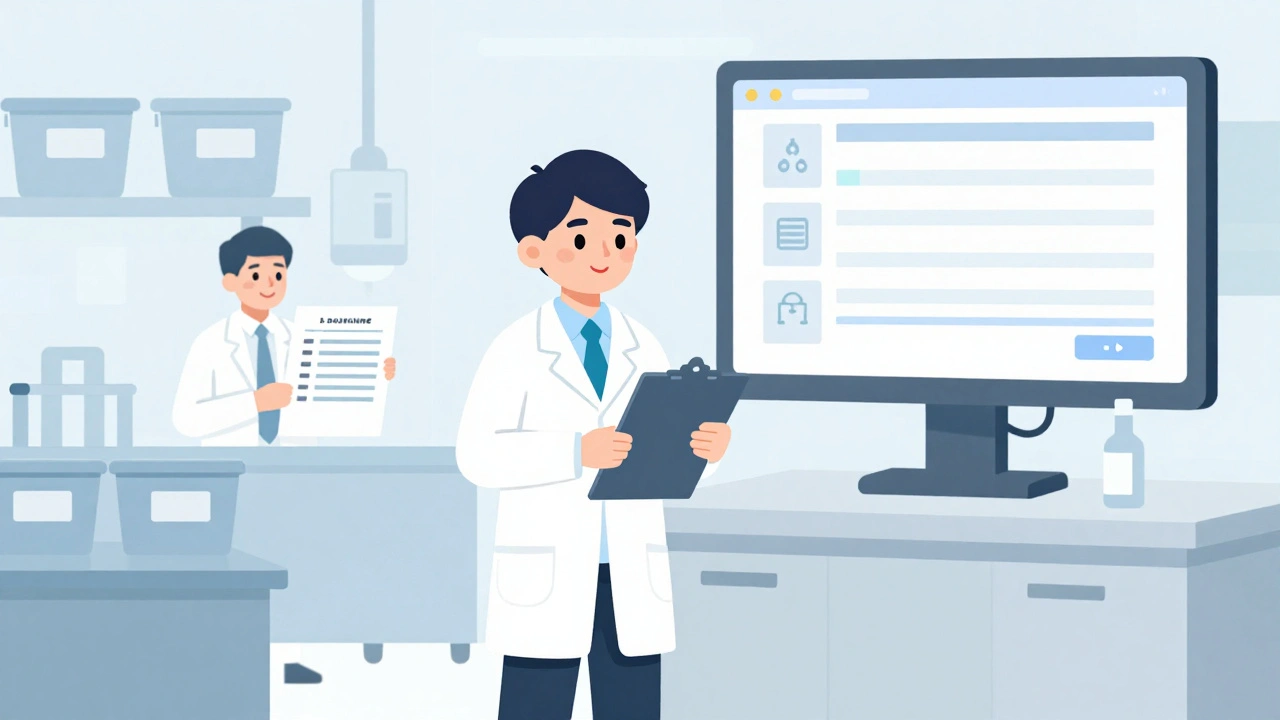
How FDA Facility Inspections Keep Your Medicines and Medical Devices Safe
If you take a prescription drug, use an insulin pump, or wear a glucose monitor, you’re relying on a system that checks every step of how it was made. The FDA doesn’t just approve products - it checks the places where they’re made. Every year, inspectors walk into over 13,000 facilities worldwide - from small labs in Ohio to large plants in India - to make sure nothing risky slips through. These aren’t surprise visits for fun. They’re legal, systematic, and critical. And if you’re in manufacturing, understanding how they work isn’t optional - it’s survival.
Why the FDA Inspects at All
The FDA’s job isn’t to design your medicine. It’s to make sure whoever makes it follows the rules. That’s the core of CGMP - Current Good Manufacturing Practices. These aren’t suggestions. They’re federal law. The rules cover everything from how clean the floors are to how data is stored on a computer. A single contaminated batch can kill. A poorly validated machine can deliver the wrong dose. That’s why inspections exist: to catch problems before they reach patients.
Since 1938, the law has given the FDA the right to walk into any facility producing drugs, devices, biologics, or food. But the real shift came in 2012 with the Food Safety Modernization Act. Before that, the FDA reacted to problems. Now, it tries to stop them before they happen. That means more inspections, smarter targeting, and a heavy focus on data - not just paperwork.
The Four Types of Inspections
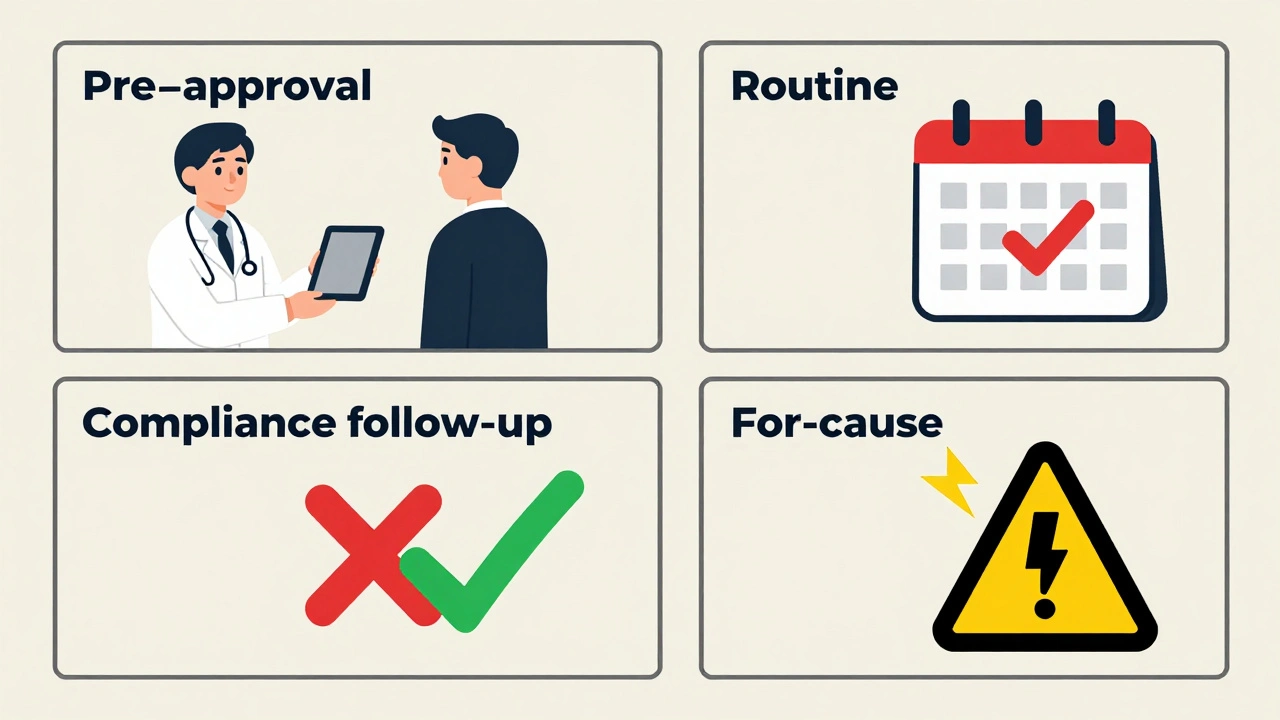
Not all inspections are the same. The FDA uses four clear types, each with a different purpose:
- Pre-approval inspections - Happen right before a new drug or device gets approved. The FDA needs to see that your process can consistently make a safe product. If your facility hasn’t been inspected yet, your application won’t move forward.
- Routine surveillance - These happen every 2 to 5 years, depending on risk. A high-risk facility making life-saving cancer drugs might get visited every year. A low-risk dietary supplement maker might wait four years.
- Compliance follow-up - If you got a Form 483 last time, they’re coming back to see if you fixed it. Ignore the findings? You’ll get a warning letter. Repeat it? Your product could be seized or banned.
- For-cause inspections - Triggered by something specific: a spike in patient complaints, a whistleblower tip, a recall, or even a social media post about a faulty device. These can happen with zero notice.
The FDA doesn’t pick sites randomly. Since 2019, they’ve used a risk-based model with 12 factors: past violations, product type, patient population, recall history, even how new the manufacturing tech is. If you make a device for elderly patients with heart conditions, you’re on the top of the list.
What Happens During an Inspection
On the day the inspectors arrive, they’ll show you FDA Form 482 - the official notice of inspection. They’re legally required to do this. You’ll have a designated person with them the whole time - usually a quality manager or compliance officer. No wandering around alone.
The inspection lasts 3 to 10 days. It’s not just a tour. It’s a deep dive:
- Facility walkthrough - They check cleanliness, lighting, airflow, storage conditions, and even how tools are labeled.
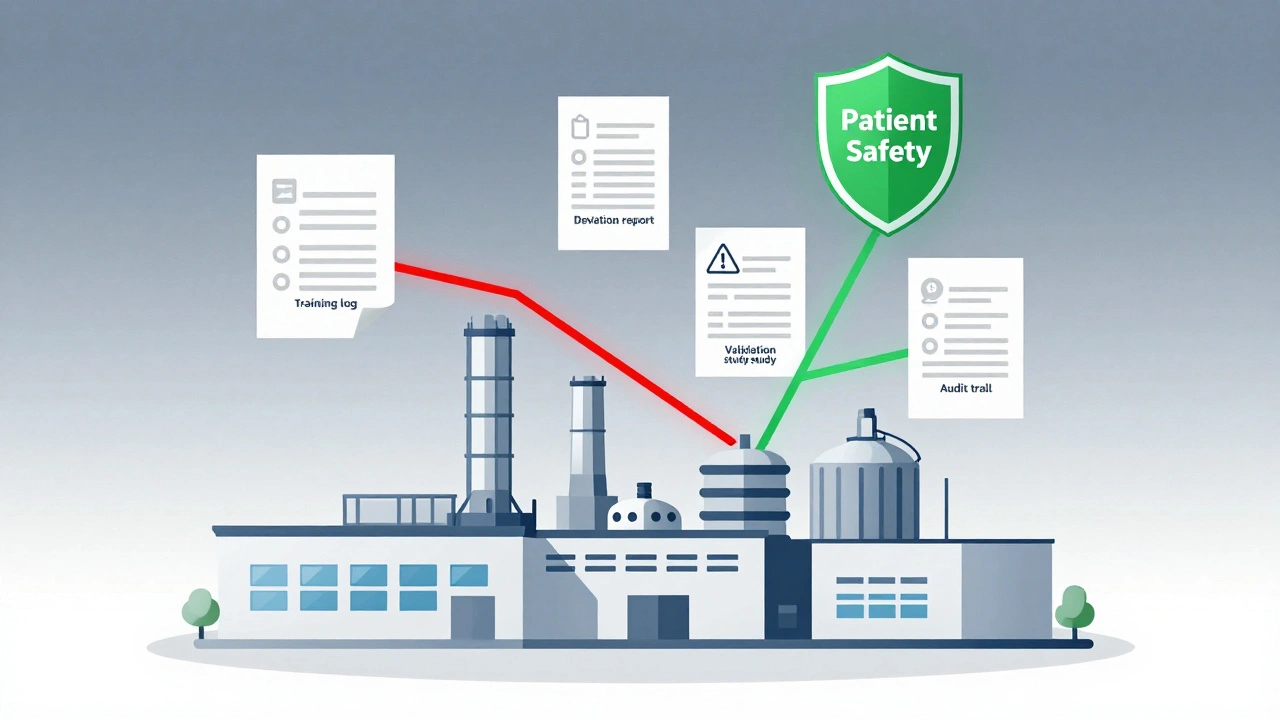
- Records review - This is where most failures happen. They’ll ask for deviation reports, training logs, equipment calibration records, validation studies, and batch records. Everything must be complete, accurate, and traceable.
- Staff interviews - They’ll talk to operators, QA staff, even janitors. If two people give different answers to the same question, that’s a red flag.
- Sample collection - They might take swabs, product samples, or even computer logs. These go to labs for testing.
At the end, they’ll give you FDA Form 483 - a list of observations. These aren’t citations. They’re warnings. But they’re serious. The FDA says you have 15 working days to respond with a plan to fix each item. If you don’t, you’ll get a warning letter. And that goes on your public record.
Why Documentation Is the Biggest Weak Spot
Here’s the hard truth: 78% of inspection findings come from four documentation problems:
- Inadequate deviation investigations (32%) - When something goes wrong, you don’t just note it. You dig into why. Was it human error? A broken machine? A training gap? You need proof you fixed the root cause.
- Incomplete training records (24%) - Every person who touches the product must be trained. And you must prove it. Signed forms, dates, topics covered - all there.
- Insufficient validation documentation (15%) - Did you test your machine to prove it works? Did you validate your cleaning process? If you can’t show it, you’re not compliant.
- Poor change control records (7%) - Changing a supplier? Updating software? Even small changes need documentation and approval.
And here’s the new frontier: data integrity. In 2020, it made up 28% of observations. In 2023, it jumped to 45%. That means the FDA is now watching your computer systems - who logged in, when, what they changed, whether audit trails are turned on. If you’re still using Excel sheets for batch records without controls, you’re asking for trouble.
How to Prepare - Real Strategies That Work
Most companies wait until the inspection notice arrives. That’s too late. The best facilities start preparing every quarter.
Here’s what actually helps:
- Run mock inspections - Quarterly, bring in someone from outside to play inspector. Use real Form 483s. See what breaks. Facilities that do this cut observation rates by 63%.
- Designate one inspection coordinator - Not three people, not five. One person who knows where every document is, who to call, and what to say. Facilities with one point of contact finish inspections 22% faster.
- Keep your facility diagram updated - If you moved a machine last month and the diagram hasn’t changed, inspectors will assume you’re hiding something. Update it within 7 days.
- Create an inspection support room - Dedicated space with printers, computers, phones, and organized documents. No digging through filing cabinets. One company reduced document request time by 40% just by doing this.
- Train your staff - Everyone who might talk to an inspector needs 8 hours of training a year. Principal investigators need 16. Only 63% of sites meet this. Don’t be one of the 37%.
And don’t forget the basics: clean floors, labeled bins, no clutter in production areas. Inspectors notice housekeeping. It tells them how seriously you take quality.
What’s Changing - And What’s Coming
The FDA isn’t standing still. By late 2024, they’ll start testing AI tools that can scan thousands of documents in minutes looking for missing signatures, inconsistent dates, or unapproved changes. By 2026, they plan to use remote inspections for 35% of documentation reviews. That means you’ll be sharing files securely online - no plane tickets needed.
At the same time, inspection frequency is shifting. High-risk facilities - especially those making products for older adults - will see more visits. Dietary supplement makers, on the other hand, will likely see fewer. The FDA is getting smarter about where to put its limited resources.
In 2023, they issued 1,842 warning letters. Nearly half went to medical device makers. That’s not because devices are riskier - it’s because they’re more complex. More parts. More software. More validation needed.
What Happens If You Fail
A Form 483 isn’t the end. But if you ignore it, it becomes a warning letter. That’s public. Investors see it. Customers ask questions. Regulators watch you closer.
Worse, if you get a warning letter and don’t fix it, the FDA can:
- Block your product from entering the U.S.
- Seize your inventory
- Issue an injunction to shut down operations
- Bar you from future approvals
There’s no appeal process for a Form 483. You respond. You fix it. You prove it. There’s no second chance if you pretend it didn’t happen.
Final Thought: Quality Isn’t a Project - It’s a Culture
The best facilities don’t prepare for inspections. They live by them every day. Quality isn’t a department. It’s built into how people talk, how records are kept, how problems are solved. If your team thinks inspections are a nightmare, you’ve got a culture problem - not a paperwork problem.
Inspections aren’t about catching you. They’re about helping you protect patients. The more you prepare, the less stressful they become. And the safer your products will be.
How often does the FDA inspect manufacturing facilities?
The FDA inspects facilities every 2 to 5 years on average, but this varies by risk. High-risk sites - like those making life-saving drugs or devices for vulnerable populations - may be inspected every 6 to 12 months. Low-risk sites, such as some dietary supplement manufacturers, might go 4 or 5 years between visits. The agency uses a risk-based model with 12 factors to determine inspection frequency.
What is FDA Form 483?
FDA Form 483 is a list of observations made by inspectors during a facility visit. It’s not a citation or penalty - it’s a notice of potential problems. It includes issues like missing records, unvalidated equipment, or poor housekeeping. Facilities must respond in writing within 15 working days with a plan to correct each item. Failure to respond adequately can lead to a warning letter.
Can the FDA inspect without notice?
Yes - but only for "for-cause" inspections. These are triggered by specific evidence like consumer complaints, adverse event reports, whistleblower tips, or product recalls. Routine and pre-approval inspections usually come with 5 business days’ notice. However, the FDA has the legal right to enter any facility without warning if they have reason to believe a serious public health risk exists.
What documents does the FDA ask for during an inspection?
Inspectors typically request: batch records, deviation and non-conformance reports, training logs, equipment qualification and calibration records, process validation studies, analytical method validation data, change control logs, and audit trails for electronic systems. All records must be complete, accurate, and maintained for at least 2 years after product discontinuation - longer for certain products.
What’s the biggest mistake companies make during FDA inspections?
The biggest mistake is treating inspections as a one-time event. Companies that wait until the notice arrives to start preparing almost always fail. The most successful facilities treat compliance as a daily practice: running quarterly mock inspections, updating facility diagrams within days of changes, training staff annually, and assigning one person to coordinate the entire process. Data integrity and documentation gaps are the top causes of observations - not dirty floors or broken equipment.
Are remote inspections real now?
Yes. The FDA began piloting remote inspections in 2022 and expanded them in 2023. For documentation reviews, remote inspections were found to be just as effective as in-person visits in 78% of cases. While physical walkthroughs still require on-site presence, the agency now uses secure digital platforms to review records, conduct video interviews, and even perform virtual tours. By 2026, they plan to use remote tools for 35% of inspections, especially for low-risk facilities.
What Comes Next
If you’re in manufacturing, don’t wait for the next inspection notice. Start now. Review your documentation. Train your team. Run a mock inspection. Update your diagrams. Fix your data trails. The FDA isn’t coming to punish you - they’re coming to make sure your product doesn’t hurt someone. If you’re ready, the inspection becomes a formality. If you’re not, it becomes a crisis.


Written by Felix Greendale
View all posts by: Felix Greendale