
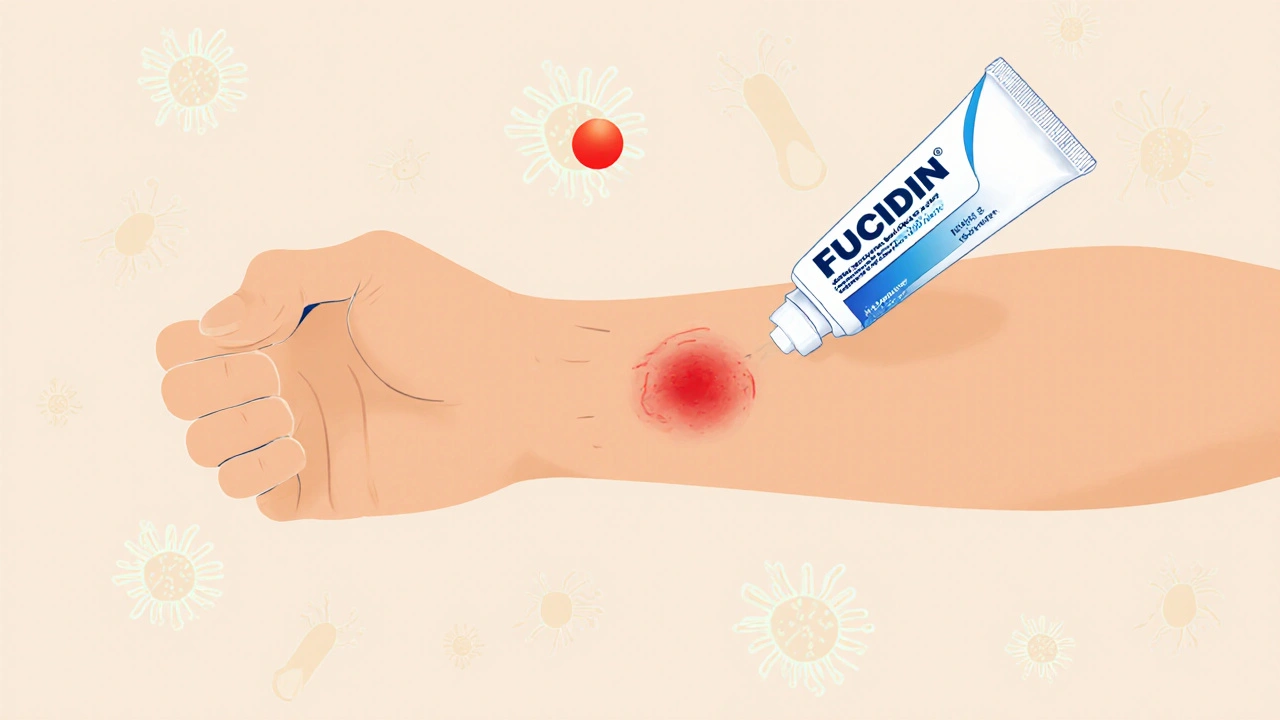
When a small cut, scrape, or rash turns red, swollen, and painful, you might reach for Fucidin Cream. It’s been a go-to for many in the UK, especially after minor skin injuries or boils. But if you’ve run out, or it didn’t work, or your pharmacist suggested something else-you’re not alone. Many people wonder: Fucidin Cream is popular, but are there better or cheaper options? And more importantly, which ones actually work?
What is Fucidin Cream?
Fucidin Cream contains fusidic acid, a topical antibiotic that fights bacteria like Staphylococcus aureus, the most common cause of infected eczema, impetigo, and infected cuts. It’s not a steroid or antifungal-it targets bacteria only. You apply it two to three times a day for up to 10 days. It’s available over the counter in the UK, but pharmacists often ask if you’ve tried other treatments first.
It works well for small, localized infections. But it’s not magic. If the infection spreads, gets hotter, or you start running a fever, you need oral antibiotics-not more cream. Fucidin isn’t designed for deep or widespread infections. And overuse? That’s how resistance builds. The NHS has warned about rising fusidic acid resistance in community-acquired staph infections.
Why Look for Alternatives?
People switch from Fucidin for a few clear reasons:
- It didn’t clear up the infection after 5-7 days
- The cream ran out and the pharmacy didn’t have more
- It’s expensive-around £8-£12 for a 30g tube
- You’re allergic or sensitive to one of the inactive ingredients
- Your doctor wants to avoid antibiotic overuse
There are other topical antibiotics that work just as well-or better-depending on your situation. Some are cheaper. Some are gentler. Some are available without a prescription.
Top Alternatives to Fucidin Cream
Here are the most commonly used and clinically supported alternatives, ranked by effectiveness and accessibility.
1. Mupirocin Cream (Bactroban)
Mupirocin is often considered the gold standard for bacterial skin infections, especially impetigo. It’s more potent than fusidic acid against resistant strains of staph. Studies show it clears up impetigo in 85-90% of cases within 7 days, compared to 75-80% for fusidic acid.
It’s prescription-only in the UK, but many GPs will prescribe it if Fucidin fails. It’s also more expensive-around £15 for a 20g tube. But because it’s stronger, you often use less. It’s also less likely to cause resistance if used correctly.
Best for: Impetigo, infected eczema, nasal staph (if prescribed as nasal ointment). Not for large areas.
2. Retapamulin Ointment (Altabax)
This newer option is FDA-approved and used in the UK for impetigo and minor skin infections. It’s a synthetic antibiotic that works differently than fusidic acid, so it’s effective even when bacteria resist older drugs.
It’s prescription-only and costs about £18-£22. But it’s often used as a second-line treatment after Fucidin fails. Clinical trials show it works as well as mupirocin, with fewer side effects like burning or itching.
Best for: People who’ve had Fucidin fail, or those with sensitive skin. Not widely stocked in pharmacies yet.
3. Neomycin/Polymyxin B Cream (e.g., Neosporin)
This is a common over-the-counter option in the US, but in the UK, it’s harder to find. Some pharmacies stock generic versions under names like “Antibiotic Ointment.” It contains two antibiotics and works against a broader range of bacteria.
But here’s the catch: neomycin is a common skin allergen. Up to 10% of people develop contact dermatitis from it. That means your rash might get worse. The NHS doesn’t recommend it for long-term or repeated use.
Best for: Minor scrapes or cuts where infection risk is low. Avoid if you have eczema or sensitive skin.
4. Chlorhexidine Gluconate Cream or Wash
This isn’t an antibiotic-it’s an antiseptic. It kills bacteria on contact and doesn’t cause resistance. You’ll find it in products like Hibiscrub or as a cream base for wound cleaning.
It’s great for preventing infection, not treating an active one. If you’ve got a red, pus-filled spot, chlorhexidine alone won’t fix it. But if you’re cleaning a wound daily, using chlorhexidine wash first, then applying a thin layer of Fucidin or mupirocin, you get the best of both worlds.
Best for: Wound hygiene, pre-treatment, or maintenance after infection clears.
5. Natural Options: Tea Tree Oil and Manuka Honey
Some people turn to tea tree oil or medical-grade Manuka honey for mild infections. Tea tree oil has antimicrobial properties, but it’s not regulated as a medicine. You must dilute it (5-10% in a carrier oil) or it burns. There’s no strong clinical proof it works as well as antibiotics for confirmed bacterial infections.
Manuka honey (UMF 10+ or higher) has been shown in trials to help heal infected wounds, especially in diabetics. It’s used in hospital dressings. But it’s messy, expensive (£20+ for a small jar), and not practical for small, everyday infections.
Best for: Supportive care, not primary treatment. Use only if you’re avoiding antibiotics for personal reasons.
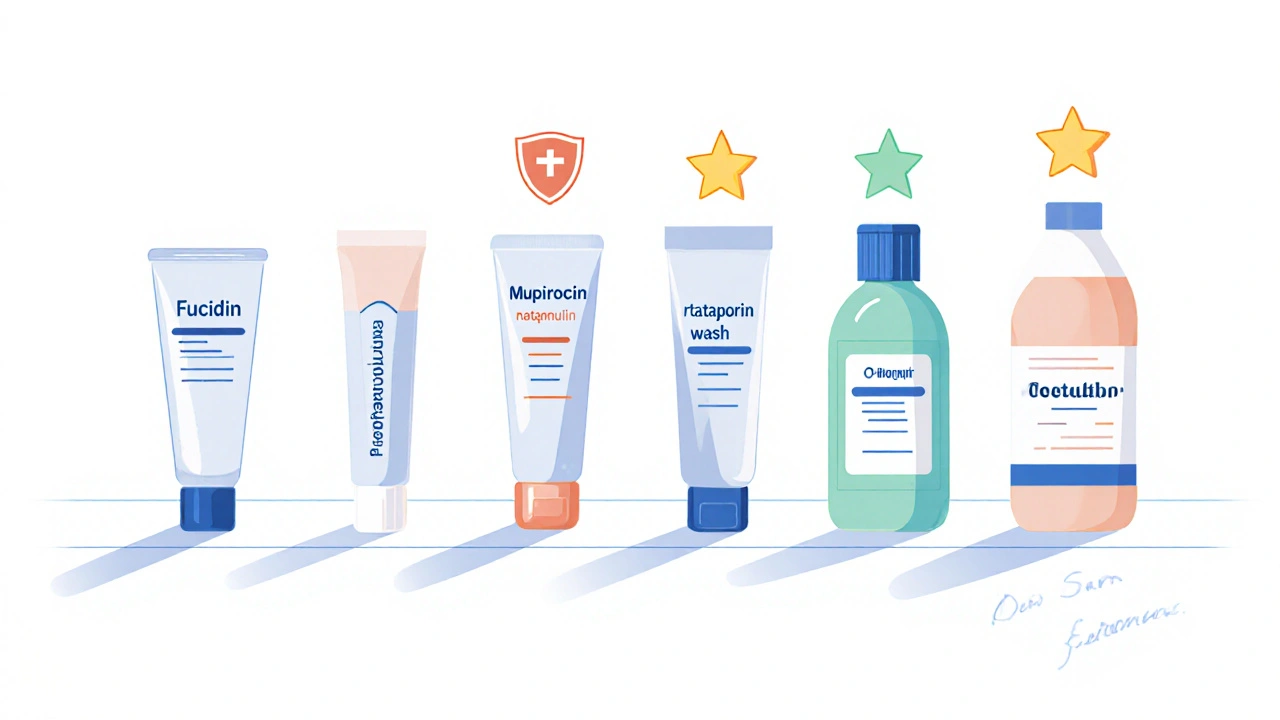
Comparison Table: Fucidin vs Alternatives
| Product | Active Ingredient | Prescription? | Cost (UK) | Effectiveness | Best For |
|---|---|---|---|---|---|
| Fucidin Cream | Fusidic acid | OTC | £8-£12 | Good for mild infections | Small boils, infected eczema |
| Mupirocin Cream | Mupirocin | Prescription | £15 | Excellent, less resistance | Impetigo, stubborn infections |
| Retapamulin Ointment | Retapamulin | Prescription | £18-£22 | Very good, new generation | Fucidin failure, sensitive skin |
| Neosporin-type Cream | Neomycin + Polymyxin B | OTC (rare) | £6-£10 | Moderate, high allergy risk | Minor cuts, not eczema |
| Chlorhexidine Wash | Chlorhexidine gluconate | OTC | £5-£8 | Prevention only | Wound cleaning, hygiene |
| Medical Manuka Honey | UMF 10+ honey | OTC | £20+ | Supportive, slow | Chronic wounds, diabetic ulcers |
When to Skip Antibiotics Altogether
Not every red spot needs antibiotics. Many skin issues look infected but aren’t. Eczema flares, fungal infections (like ringworm), or even insect bites can mimic bacterial infection.
If your skin is dry, flaky, and itchy-it’s probably eczema. If it’s circular with a raised edge-it’s likely ringworm. If it’s a single bump that’s itchy and grows slowly-it could be a spider bite or folliculitis.
Using Fucidin or any antibiotic cream on a non-bacterial problem won’t help. It might even make it worse by irritating the skin or encouraging resistant bacteria.
Always ask: Is it hot? Pus? Spreading? Fever? If yes, see a GP. If no, try a gentle moisturiser and see if it improves in 3-4 days.
What Your Pharmacist Won’t Tell You
Pharmacists are trained to recommend Fucidin because it’s cheap, widely available, and works for most minor cases. But they’re not always aware of newer alternatives like retapamulin, or that mupirocin might be better for recurrent infections.
Here’s what to ask: “I’ve used Fucidin before and it didn’t work. Is there something stronger or less likely to cause resistance?”
Also, don’t assume OTC means safer. Over-the-counter doesn’t mean low-risk. Misusing antibiotics-even topical ones-contributes to the global problem of antimicrobial resistance. The WHO lists fusidic acid as a critically important antibiotic for human medicine.

How to Use These Creams Right
Even the best cream fails if used wrong. Here’s how to get the most out of any topical antibiotic:
- Clean the area with mild soap and water. Pat dry-don’t rub.
- Apply a thin layer. A pea-sized amount covers a 5cm area. More doesn’t mean faster healing.
- Use it only as directed. Twice daily, for no longer than 10 days.
- Don’t cover with a bandage unless told to. Trapping moisture can worsen infections.
- Stop if it stings, burns, or the rash spreads. That’s a sign of allergy or worsening infection.
- Finish the full course-even if it looks better after 3 days. Stopping early breeds resistant bugs.
What Happens If It Doesn’t Work?
If you’ve tried Fucidin and one alternative for 7 days with no improvement, it’s time to see a GP. You might need:
- An oral antibiotic like flucloxacillin or clarithromycin
- A swab test to identify the exact bacteria
- A referral to a dermatologist if it’s recurrent
Recurrent skin infections-especially around the nose or groin-can be a sign of something deeper, like diabetes, a weakened immune system, or persistent staph carriage. A simple nasal swab can tell if you’re carrying staph bacteria and need decolonisation treatment.
Is Fucidin Cream better than mupirocin?
Mupirocin is generally more effective, especially for impetigo and stubborn infections. It’s less likely to encounter bacterial resistance. Fucidin is easier to get without a prescription and cheaper, but if it doesn’t work after 5-7 days, mupirocin is the next step.
Can I use Fucidin Cream on my face?
Yes, but carefully. Avoid getting it near your eyes or mouth. It’s often used for infected spots or small boils on the face. If you have eczema or rosacea, check with a pharmacist first-some people get irritation.
How long does Fucidin Cream take to work?
You should see improvement within 2-3 days-less redness, less pus. If there’s no change after 5 days, it’s not working. Don’t keep using it. See a doctor.
Is Fucidin Cream safe for children?
Yes, it’s approved for babies over 1 month old. It’s commonly used for impetigo in young children. Always use the smallest amount needed and wash hands after application.
Can I use Fucidin Cream with other creams or lotions?
Wait at least 30 minutes between applying Fucidin and any moisturiser or steroid cream. Applying them together can reduce absorption. If you’re using a steroid for eczema, apply the steroid first, then wait before putting on the antibiotic.
Why does Fucidin Cream sometimes make my skin feel dry?
Fusidic acid itself isn’t drying, but the cream base (often petrolatum or paraffin) can trap heat and moisture, which irritates sensitive skin. If your skin feels tight or flaky, switch to a lighter ointment like mupirocin or add a fragrance-free moisturiser after 2 hours.
Final Advice: Choose Based on Your Situation
Fucidin Cream is fine for simple, minor skin infections. But it’s not the only option-and not always the best. If you’ve used it before and it didn’t work, don’t try it again. Ask for mupirocin or retapamulin. If you’re cost-conscious and have a small cut, chlorhexidine wash plus a good moisturiser might be enough. If you’re dealing with recurring infections, talk to your doctor about testing for staph carriage.
Antibiotics save lives-but only when used wisely. Don’t reach for Fucidin because it’s familiar. Reach for the right tool for the job.


Written by Felix Greendale
View all posts by: Felix Greendale