
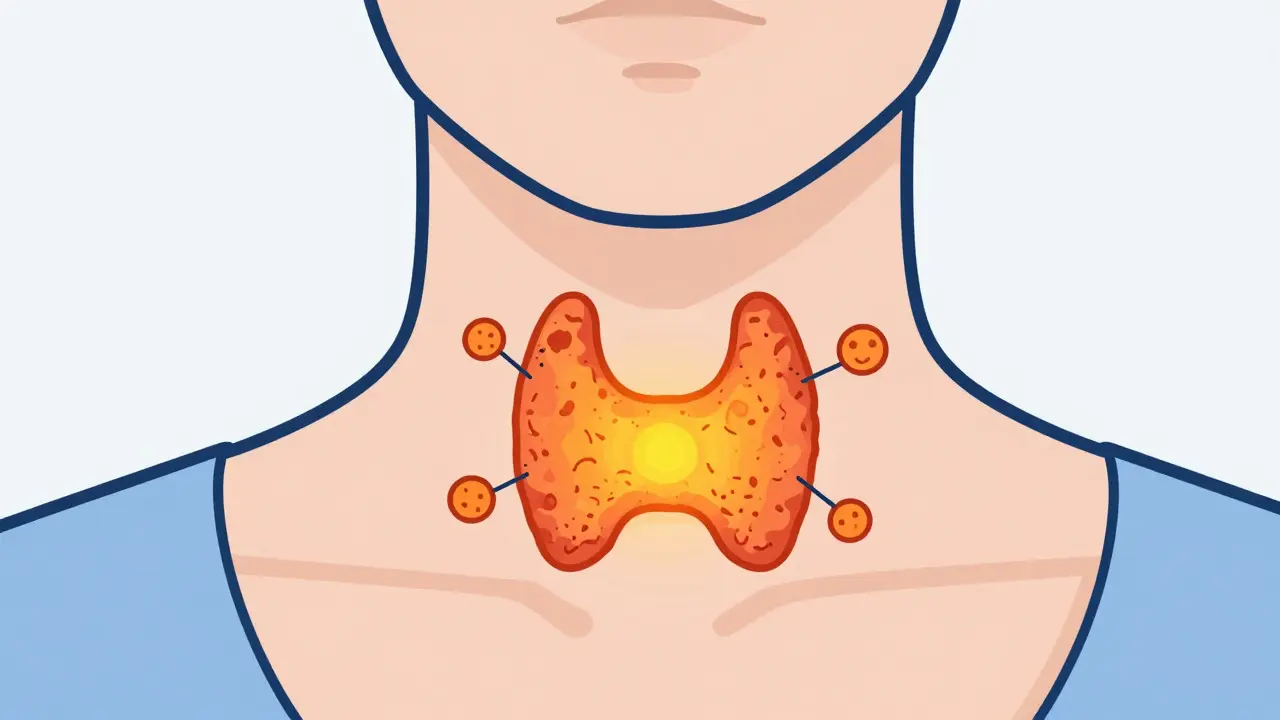
Imagine your body’s engine running at full speed while you’re just trying to sit still. That is the reality for millions of people living with Graves' disease, a condition where the immune system accidentally turns up the heat on the thyroid gland. First described in 1835 by Robert James Graves and independently by Karl Adolph von Basedow in 1840, this disorder remains the leading cause of hyperthyroidism in regions with adequate iodine intake. It affects roughly 1-2% of the general population, but women are hit seven to eight times harder than men, with peak incidence hitting between ages 30 and 50. If you or someone you know has been diagnosed, understanding the mechanics behind the symptoms and the specific trade-offs of each treatment path is crucial for making informed decisions.
Key Takeaways
- Graves' disease is an autoimmune response where antibodies stimulate the thyroid to overproduce hormones, causing rapid metabolism.
- Symptoms vary by age; younger patients often feel anxious and hot, while older adults may present primarily with heart issues like palpitations.
- Diagnosis relies on blood tests showing low TSH and high T4/T3, confirmed by thyroid-stimulating immunoglobulin (TSI) antibodies.
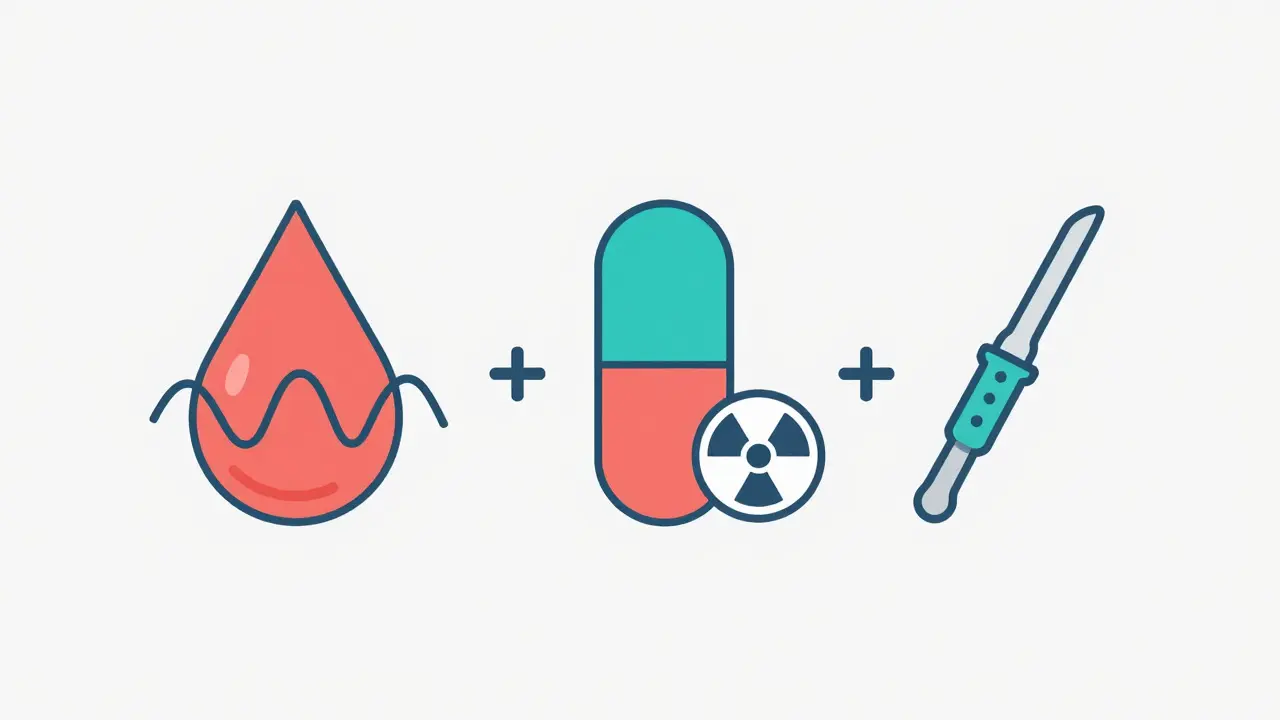
- Treatment involves three main paths: antithyroid drugs, radioactive iodine, or surgery, each with distinct risks and long-term implications.
- Smoking significantly worsens eye complications, known as Graves' ophthalmopathy, which affects about one-third of patients.
How Your Immune System Triggers the Overdrive
To understand why you feel so wired, you have to look at what is happening inside the neck. In a healthy body, the pituitary gland sends a signal called thyroid-stimulating hormone (TSH) to tell the thyroid how much hormone to make. In Graves' disease, the immune system produces rogue proteins called thyroid-stimulating immunoglobulins (TSI). These TSI molecules bind to the same receptors on the thyroid that TSH uses. Think of it like leaving the gas pedal stuck to the floor of a car. The thyroid doesn't know when to stop producing triiodothyronine (T3) and thyroxine (T4), leading to a state of constant metabolic acceleration.
This unregulated production explains the classic symptoms. Because your body is burning energy faster than it can replenish it, you might eat more but lose weight. Your heart rate stays elevated, often exceeding 100 beats per minute, even at rest. Heat intolerance becomes a daily struggle, with excessive sweating becoming common. For many, the mental impact is just as severe as the physical; anxiety, insomnia, and difficulty concentrating are reported by nearly 90% of younger patients. While these symptoms are intense, they are manageable once the hormonal balance is restored.
Recognizing the Signs: Age Matters
Not everyone presents with the same picture. A 35-year-old woman might complain of jitteriness and trouble sleeping, while a 65-year-old man might only report chest pain or memory lapses. This difference matters because older adults are less likely to show the obvious signs of hypermetabolism. Instead, they often suffer from atrial fibrillation, a type of irregular heartbeat that increases stroke risk. If you notice sudden changes in mood, unexplained weight loss despite good appetite, or new-onset heart palpitations, it is worth getting checked.
Eye changes are another critical marker. Approximately 30% of people with Graves' disease develop some form of eye involvement, though only 5% experience moderate-to-severe inflammation. Symptoms range from mild irritation and tearing to bulging eyes (proptosis) and double vision. Interestingly, smoking is a major aggravating factor here. Current smokers face a seven to eight times higher risk of developing severe eye disease compared to non-smokers. This makes quitting smoking not just a general health goal, but a specific medical necessity for those managing this condition.
The Diagnostic Path: From Blood Work to Confirmation
Getting a diagnosis usually starts with a standard thyroid function test. Doctors look for a suppressed TSH level (below 0.4 mIU/L) paired with elevated free T4 and T3 levels. However, low TSH and high T4 can happen in other conditions too. To confirm Graves' disease specifically, clinicians test for TSH receptor antibodies (TRAb) or TSI. These antibodies are present in 90-95% of cases, providing a definitive answer without needing invasive procedures.
If antibody testing is inconclusive, a radioactive iodine uptake scan might be ordered. In Graves' disease, the entire thyroid gland absorbs iodine diffusely, showing up as a bright, uniform glow on the scan. This distinguishes it from toxic nodules, which would appear as hot spots. Ultrasound is also increasingly used to assess thyroid size and blood flow, offering a radiation-free alternative for monitoring goiter growth. The diagnostic process typically takes one to two weeks, allowing time for comprehensive history taking, including checking for family history of autoimmune disorders, which is present in about 25-30% of cases.
Comparing Treatment Options
Once diagnosed, you generally have three main avenues for treatment. Each has its own set of pros and cons, and the right choice depends on your age, the size of your goiter, and whether you plan to have children soon.
| Treatment Method | Mechanism | Success Rate / Outcome | Key Risks / Side Effects | Best For |
|---|---|---|---|---|
| Antithyroid Medications | Blocks hormone synthesis | 30-50% remission after 12-18 months | Agranulocytosis (rare), liver toxicity | Pregnant women (1st trimester), mild cases, those wanting to avoid permanent hypothyroidism |
| Radioactive Iodine | Destroys thyroid tissue | 80-90% achieve hypothyroidism within 1 year | Lifelong thyroid hormone replacement required | Definitive cure, large goiters, patients preferring single intervention |
| Thyroidectomy | Surgical removal of thyroid | >95% success rate | Voice changes, calcium imbalance, scarring | Huge goiters causing compression, suspicion of cancer, severe ophthalmopathy |

Managing Medication and Monitoring
For most first-time diagnoses, doctors start with methimazole. It is preferred over propylthiouracil (PTU) because PTU carries a slightly higher risk of liver damage. Methimazole works by stopping the thyroid from making new hormones. You will likely need monthly blood tests for the first three months to adjust the dose, then every two to three months during maintenance. The goal is to bring your TSH back into the normal range (0.5-4.5 mIU/L) without swinging into hypothyroidism, which causes fatigue and weight gain.
Adherence is key. Missing doses can lead to relapse, which happens in about half of patients who stop medication prematurely. There is a rare but serious side effect called agranulocytosis, where white blood cell counts drop dangerously low. If you develop a fever above 100.4°F (38°C) and a sore throat while on methimazole, seek medical attention immediately. Regular blood count monitoring helps catch this early. For those who do not respond to medication or prefer a permanent solution, radioactive iodine therapy offers a one-and-done approach, though it means committing to daily levothyroxine pills for life.
Living With the Condition: Practical Tips
Managing Graves' disease is a marathon, not a sprint. Beyond medication, lifestyle adjustments play a significant role. Since the disease is autoimmune, stress management becomes particularly important. Techniques like mindfulness or regular exercise can help mitigate the anxiety and tremors associated with high hormone levels. Nutritionally, you don't necessarily need to restrict iodine unless advised otherwise, but consistency in your diet helps stabilize your metabolism.
If you are dealing with eye symptoms, selenium supplementation (100 mcg twice daily for six months) has shown promise in preventing progression in mild cases. For more severe eye issues, treatments range from steroid injections to orbital decompression surgery. Always communicate openly with your endocrinologist about quality-of-life impacts. Data from patient communities shows that 68% of people report significant improvement in their daily lives within three months of achieving stable hormone levels. Patience with the titration process is essential, as finding the right dosage can take several weeks.
Frequently Asked Questions
Is Graves' disease curable?
It depends on the definition. Antithyroid drugs can induce remission, meaning the disease goes into long-term remission without medication, but there is a risk of recurrence. Radioactive iodine and surgery are considered cures because they remove or destroy the source of excess hormone, but they result in permanent hypothyroidism, requiring lifelong hormone replacement therapy.
Can I get pregnant with Graves' disease?
Yes, many women with well-controlled Graves' disease have healthy pregnancies. However, you must work closely with your doctor to adjust medications. Methimazole is often switched to propylthiouracil during the first trimester due to different safety profiles. Uncontrolled hyperthyroidism poses greater risks to both mother and baby than properly managed treatment.
Why do my eyes hurt or bulge?
This is called Graves' ophthalmopathy. The same antibodies that stimulate the thyroid also target tissues behind the eyes, causing inflammation and swelling. This pushes the eyeball forward. Smoking greatly increases the severity of this condition, so cessation is critical if you are experiencing eye symptoms.
How long does it take for treatment to work?
Symptoms like palpitations and anxiety often improve within two to four weeks of starting medication. However, it takes longer to fully normalize thyroid hormone levels, typically one to three months. Radioactive iodine takes six to twelve weeks to fully destroy thyroid tissue, after which you will transition to thyroid hormone replacement.
Does diet affect Graves' disease?
There is no specific "Graves' diet," but maintaining a balanced intake of calories and nutrients supports your increased metabolic rate. Some patients find that reducing caffeine helps manage anxiety and tremors. Iodine restriction is sometimes recommended before radioactive iodine therapy to make the treatment more effective, but otherwise, a standard healthy diet is sufficient.
Written by Felix Greendale
View all posts by: Felix Greendale