
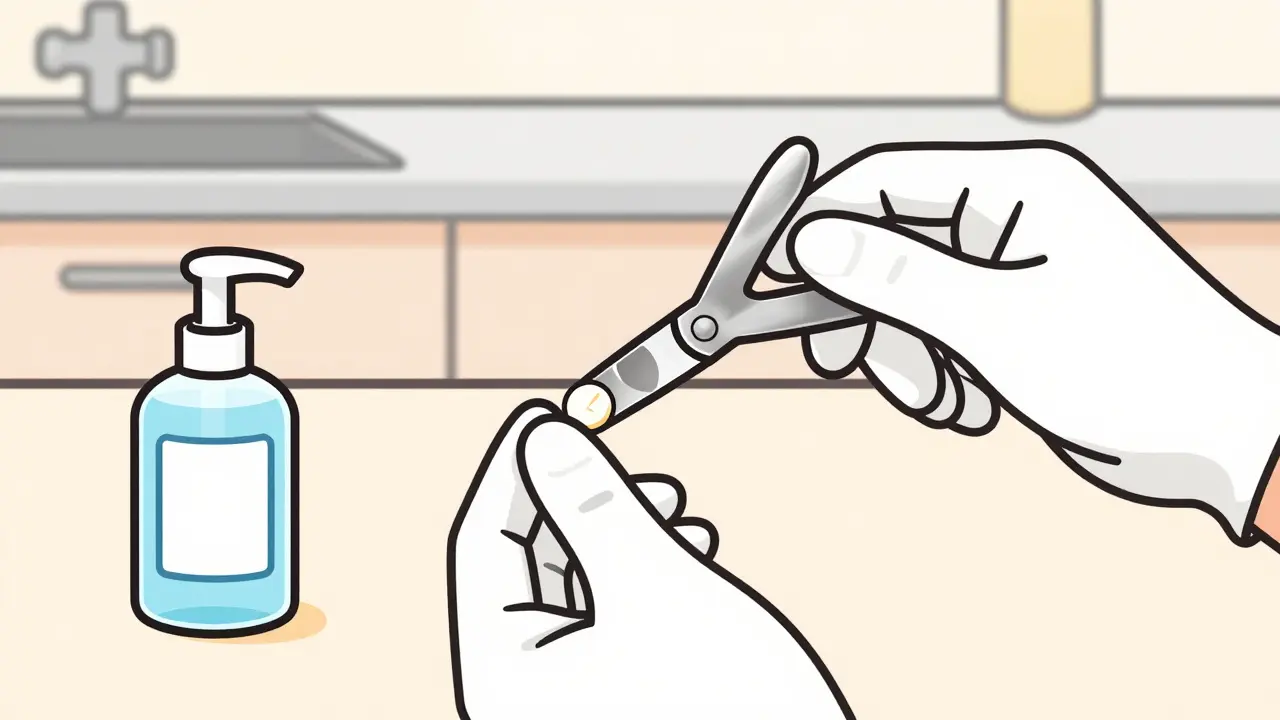
Splitting or crushing pills might seem like a simple fix-maybe you’re trying to save money, make it easier to swallow, or adjust a dose. But if you don’t do it right, you could be exposing yourself or someone you care for to serious health risks. Contamination, uneven doses, and chemical exposure aren’t just theoretical dangers-they’re real, documented problems that have led to hospitalizations and even deaths. The good news? With the right tools and habits, you can do this safely. Here’s how.
Why This Matters More Than You Think
Every year, millions of people split or crush pills at home or in care facilities. About 23% of residents in U.S. long-term care facilities rely on this practice to manage their medications. It saves money-roughly $1.2 billion annually when done correctly. But when done wrong, it causes 8.3% of medication errors in institutional settings, according to the Agency for Healthcare Research and Quality. That’s not just a statistic. It’s someone’s parent, sibling, or neighbor getting sick because a pill was crushed in a shared device without cleaning. The biggest risks? Cross-contamination between medications, inhaling toxic dust from chemotherapy drugs, or getting a dose that’s too high-or too low-because the pill didn’t split evenly. A 2021 study found that using a proper pill splitter gives you 92.4% accuracy in dosing. Scissors or fingers? Only 63.7%. That’s a huge gap.Which Pills Should Never Be Split or Crushed
Not all pills are created equal. Some are designed to release medicine slowly over hours. Others have special coatings to protect your stomach or keep the drug from breaking down too early. Crushing or splitting these can turn them into dangerous substances. Never split or crush:- Extended-release or sustained-release tablets (look for SR, XR, ER, or XL on the label)
- Enteric-coated pills (these have a shiny, hard outer layer to survive stomach acid)
- Capsules, especially those with beads or pellets inside
- Hazardous drugs like chemotherapy agents (cyclophosphamide, methotrexate, etc.)
- Sublingual or buccal tablets meant to dissolve under the tongue
Use the Right Tools-No Exceptions
Using a knife, scissors, or your fingers to split a pill is like using a butter knife to cut steel. It doesn’t work, and it’s risky. What you need:- A dedicated pill splitter with a v-shaped holder and stainless steel blade (0.05mm tolerance for precision)
- A closed-system pill crusher like the Silent Knight model for hazardous drugs
- Disposable gloves and alcohol wipes (70% isopropyl alcohol)
Step-by-Step: How to Split a Pill Safely
If your pill is safe to split, follow these steps exactly:- Wash your hands thoroughly with soap and water.
- Put on clean gloves-even if you’re just handling your own pills.
- Use a clean, dedicated splitter-never share it between different medications or people.
- Place the pill in the holder with the score line aligned to the blade.
- Press down firmly and evenly in one motion. Don’t wiggle or try to reposition.
- Immediately use the split pieces. Don’t store them unless you’ve been told it’s safe.
- Clean the splitter with an alcohol wipe after every use. Let it air dry.
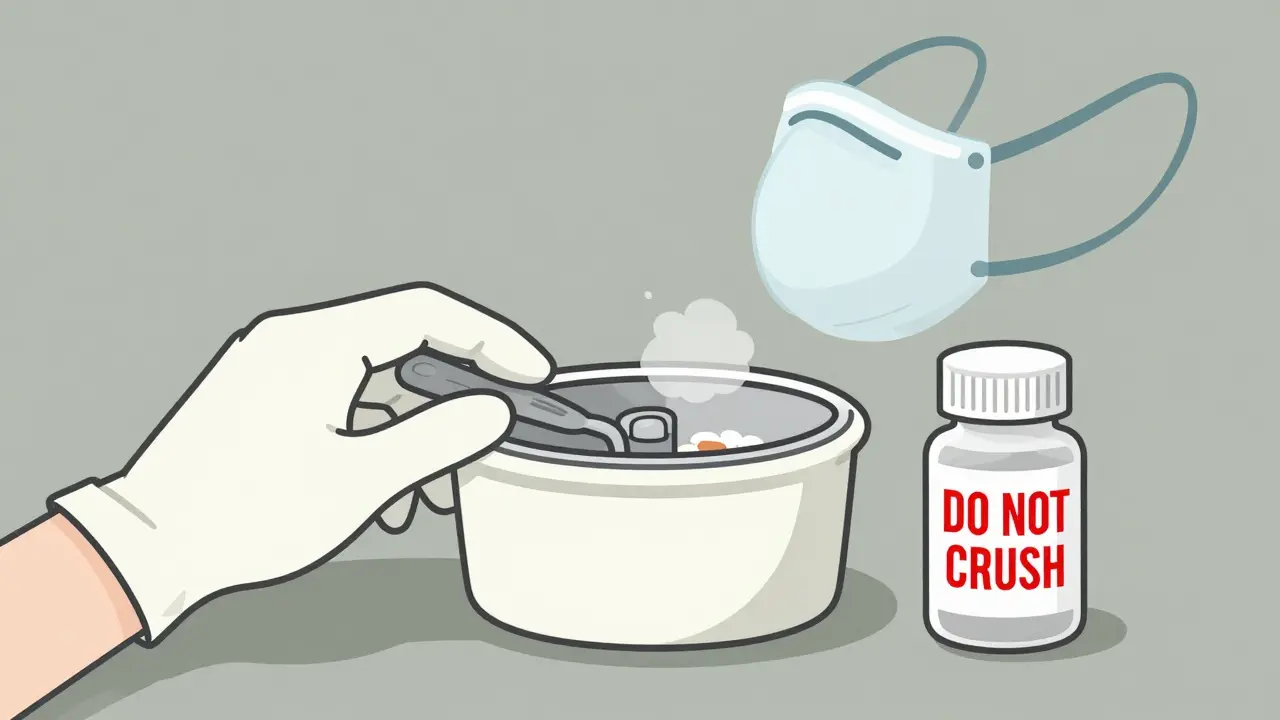
Crushing Pills: Only When Absolutely Necessary
Crushing is riskier than splitting. Only do it if a doctor or pharmacist says it’s okay-and even then, use a closed-system crusher. For hazardous drugs (like chemo):- Use a closed-system device like the Silent Knight
- Wear nitrile gloves, a mask, and eye protection
- Crush only in a well-ventilated area
- Dispose of the crusher and waste as hazardous medical waste
Cleaning and Storage: The Hidden Danger Zone
One of the most common mistakes? Reusing equipment without cleaning it. A 2022 survey found that only 34.6% of care home staff cleaned pill splitters between different medications. That’s how warfarin contamination happened in one care center-14 residents got the wrong dose because the same splitter was used for blood thinners and antibiotics. How to clean properly:- Wipe the splitter or crusher with a 70% isopropyl alcohol wipe after every use
- Let it dry completely before storing
- Store equipment in a clean, dry place, away from other medications
- Label each device with the resident’s name if used in a care setting
What to Do If You’ve Already Made a Mistake
If you’ve split a pill you shouldn’t have, or used a shared device, don’t panic-but don’t ignore it either.- Stop using the equipment immediately
- Wash your hands and any surfaces that touched the pill
- Call your pharmacist or doctor. Tell them what happened
- Don’t take the split or crushed pill unless they say it’s safe
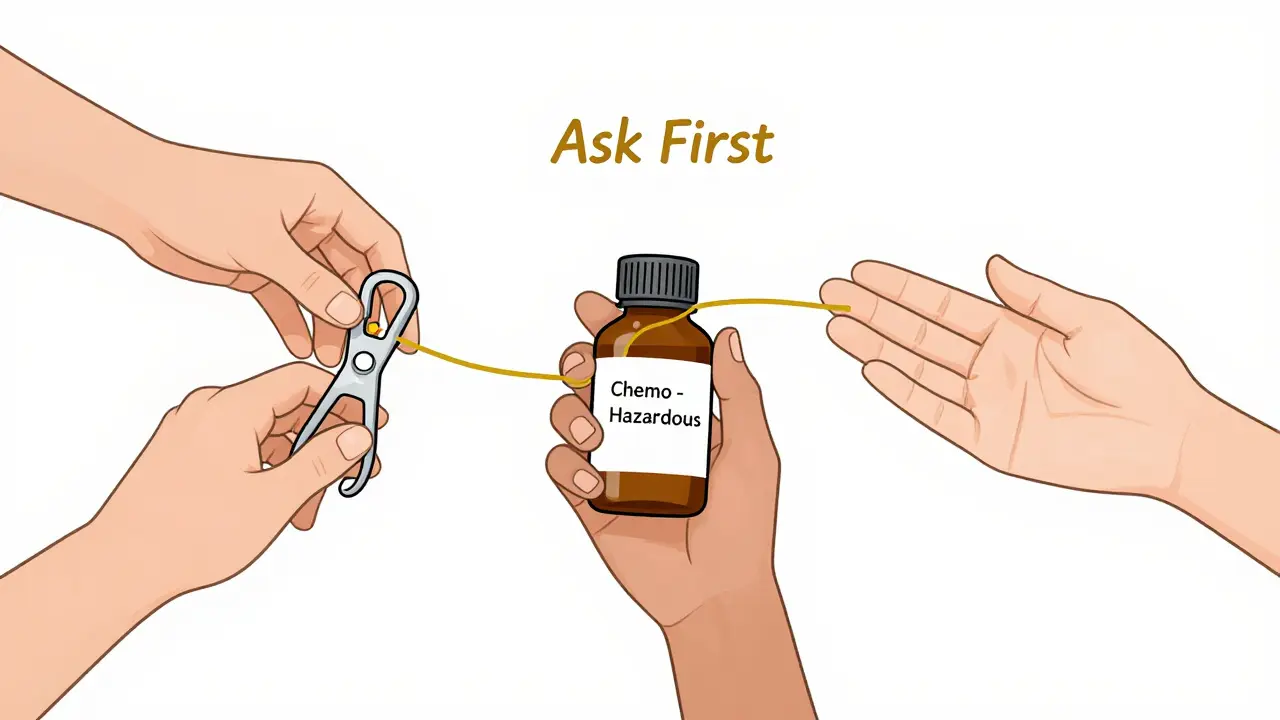
Who Should You Talk To?
You don’t have to figure this out alone.- Your pharmacist can tell you if a pill is safe to split or crush, and recommend the right tools
- Your doctor might be able to prescribe a lower-strength tablet instead
- Home care nurses or aides should be trained in safe splitting techniques
- Medication safety organizations like ISMP and FDA offer free guides
The Bigger Picture: Technology Is Helping
New tools are making this safer. Smart pill splitters like Med-Engage’s 2024 FDA-cleared device check the pill’s alignment, confirm the dose, and even log usage. Hospitals are using centralized pharmacy splitting to reduce errors. EHR systems now flag “DO NOT CRUSH OR SPLIT” in bold red text. But tech alone won’t fix the problem. People still need to know how to use it right. That’s why training matters. ASHP says it takes 3.2 hours of hands-on training to reach 95% proficiency. If you’re caring for someone, ask for it. Demand it.Final Reminder: Safety Over Convenience
Splitting or crushing pills might feel like a small thing. But in the world of medicine, small mistakes have big consequences. A pill that’s not split evenly can cause a stroke. Dust from a crushed chemo drug can cause lung damage. A shared splitter can poison multiple people. Use the right tool. Clean it after every use. Never guess. Always ask your pharmacist. And if something doesn’t feel right-stop. Get help.Medication safety isn’t about being perfect. It’s about being careful. And that’s something you can do-every single time.


Written by Felix Greendale
View all posts by: Felix Greendale