
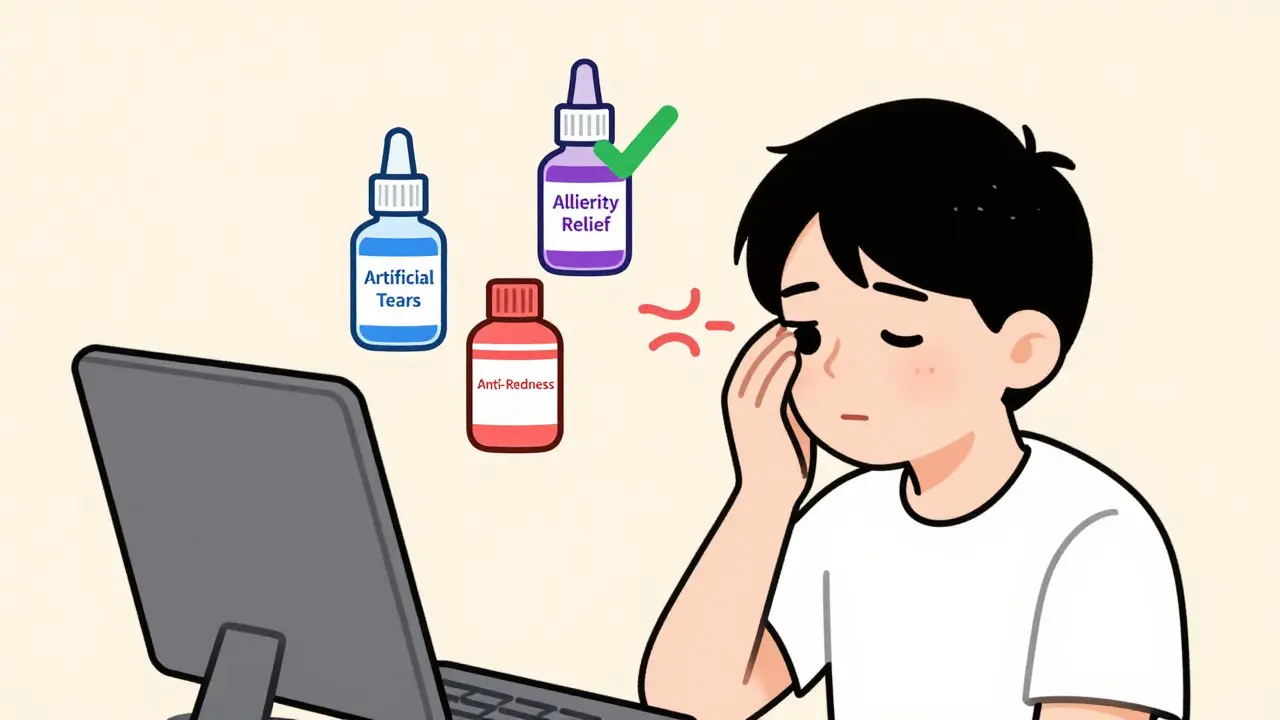
Staring at a screen all day? Eyes burning after a windy walk? Or maybe your eyes are itchy and watery because of pollen in the air? You’re not alone. Millions of people reach for OTC eye drops every day to find quick relief. But not all eye drops are created equal. Using the wrong kind can make things worse-especially if you’re treating dryness with a redness-relief drop. Here’s how to pick the right one for your exact problem, without wasting money or risking your eye health.
Know What’s Really Causing Your Symptoms
Before you grab a bottle off the shelf, figure out what’s going on. Allergies, dryness, and redness often look similar: watery eyes, burning, grittiness. But they need totally different treatments.If your eyes itch, swell, or water badly when you’re outside in spring or fall, you’ve got allergies. The culprit is histamine, released when your body reacts to pollen, dust, or pet dander. You need an antihistamine eye drop.
If your eyes feel gritty, tired, or dry after hours on the computer-or in air-conditioned rooms-you’re likely dealing with dry eye. This happens when your tear film breaks down. It’s not just about being “dry”; it’s about poor tear quality. There are two main types: aqueous deficient (not enough watery part) and evaporative (tears evaporate too fast because the oily layer is missing).
If your eyes look bloodshot but don’t itch or feel dry, you might be using an anti-redness drop. But here’s the catch: redness isn’t always the problem. Often, it’s a symptom of something else-like dryness or allergies. And using redness-relief drops for that? It’s like putting a bandage on a broken bone.
Three Types of OTC Eye Drops-And When to Use Each
There are three main categories of OTC eye drops. Each has a specific job. Mixing them up is the most common mistake people make.- Artificial Tears: These are lubricants. They replace missing moisture. Look for ingredients like polyethylene glycol, propylene glycol, or sodium hyaluronate. Brands like Systane Ultra, Refresh Optive, and TheraTears fall here. They’re safe for daily use, even multiple times a day.
- Allergy Relief Drops: These block histamine. Active ingredients? Ketotifen (Zaditor) or olopatadine (Pataday). Pataday works for up to 24 hours with just one drop. Zaditor needs two doses a day. These are the only drops that truly stop itching from allergies. Don’t use them for dryness-they won’t help.
- Anti-Redness Drops: These shrink blood vessels. Ingredients like tetrahydrozoline (Visine) or brimonidine (Lumify). They make eyes look white fast. But they don’t fix the cause. And if you use them daily for more than a few days, your eyes get dependent. When you stop, the redness comes back worse. Studies show 68% of frequent users get rebound redness within two weeks.
Here’s the rule: Never use anti-redness drops for dry eye or allergies. The American Optometric Association warns these drops reduce blood flow to the eye surface, which actually lowers tear production. That means they make dry eye worse in 83% of cases.
Preservative-Free vs. Preserved: The Hidden Difference
Most eye drops come in multi-dose bottles with preservatives like polyquaternium-1. These keep the solution sterile for weeks. But if you’re using drops more than four times a day, those preservatives can irritate your eyes. Over time, they can cause tiny surface scratches-called punctate keratitis.If you use drops daily, or have sensitive eyes, go for preservative-free. These come in single-use vials. No preservatives. No irritation. Brands like Refresh Optive Preservative-Free or Thealoz Duo are top choices. A 30-pack costs around $12-$22, which sounds expensive, but you’re using one vial per day. It’s cheaper than dealing with chronic irritation or needing prescription drops later.
For occasional use-say, once or twice a day when your eyes feel tired-a preserved bottle like Systane Ultra is fine. Just don’t keep it open longer than 30 days. And never let the tip touch your eye or eyelid. That introduces bacteria.

Special Formulations for Specific Dry Eye Types
Not all dry eye is the same. And not all artificial tears work the same way.If your eyes feel dry all day, especially in air-conditioned offices, you likely have aqueous deficient dry eye. Your body isn’t making enough watery tears. For this, TheraTears is clinically proven to outperform standard drops by 37% because it mimics natural tear electrolytes. It’s hypotonic (230 mOsm/L), which helps draw water into the eye surface.
If your eyes feel worse at the end of the day, with a burning or stinging sensation, you probably have evaporative dry eye. Your tear’s oily layer is thin, so moisture evaporates fast. This is common with screen use, aging, or eyelid inflammation. For this, you need lipid-based drops. Systane Complete PF contains mineral oil and castor oil to rebuild that oily layer. Clinical data shows it reduces symptoms 52% better than regular lubricants.
For severe dry eye-like after eye surgery or from autoimmune conditions-gel drops like Systane Gel Drops or Refresh Relieva PF work best. They stick to the eye longer (4-6 hours), but they blur your vision for 2-3 minutes after use. That’s fine for bedtime, but not for driving or reading. Use them only at night or during breaks.
What the Experts and Real Users Say
Eye care professionals agree on a few things:- Dr. Morgan of Morgan Vision Care: “Systane Ultra lasts 8.2 hours in clinical tests. Generic drops last 3-4.”
- Dr. Haas of Haas Vision Center: “Thealoz Duo improves corneal healing by 40% in severe dry eye cases.”
- Dr. Clarkson of Clarkson Eyecare: “Refresh Optive Gel Drops give 6.5 hours of relief in dry office environments.”
Real users back this up. On Amazon, Systane Ultra has over 18,000 reviews and a 4.5-star rating. People praise how fast it relieves computer eye strain. But 63% of negative reviews mention stinging-usually because they’re using it too often or have preservative sensitivity.
On Reddit’s r/dryeye community, users swear by Refresh Relieva PF. One top post says: “This is the only drop that doesn’t blur my vision for work-it lasts 5 hours.” Meanwhile, users who used Visine daily report their eyes turned redder after three days. “Learned the hard way,” one wrote.
Pataday, the allergy drop, has a 4.7-star rating on Trustpilot. 89% say it gives all-day relief from pollen. Lumify, the newer redness-relief drop, gets good reviews for not causing rebound redness-but 31% of users report headaches, a known side effect of brimonidine.
How to Use Eye Drops Right
Even the best drop won’t work if you use it wrong. Here’s the correct way:- Wash your hands.
- Tilt your head back slightly.
- Pull down your lower eyelid to make a small pocket.
- Hold the bottle above your eye-don’t let the tip touch anything.
- Squeeze one drop into the pocket.
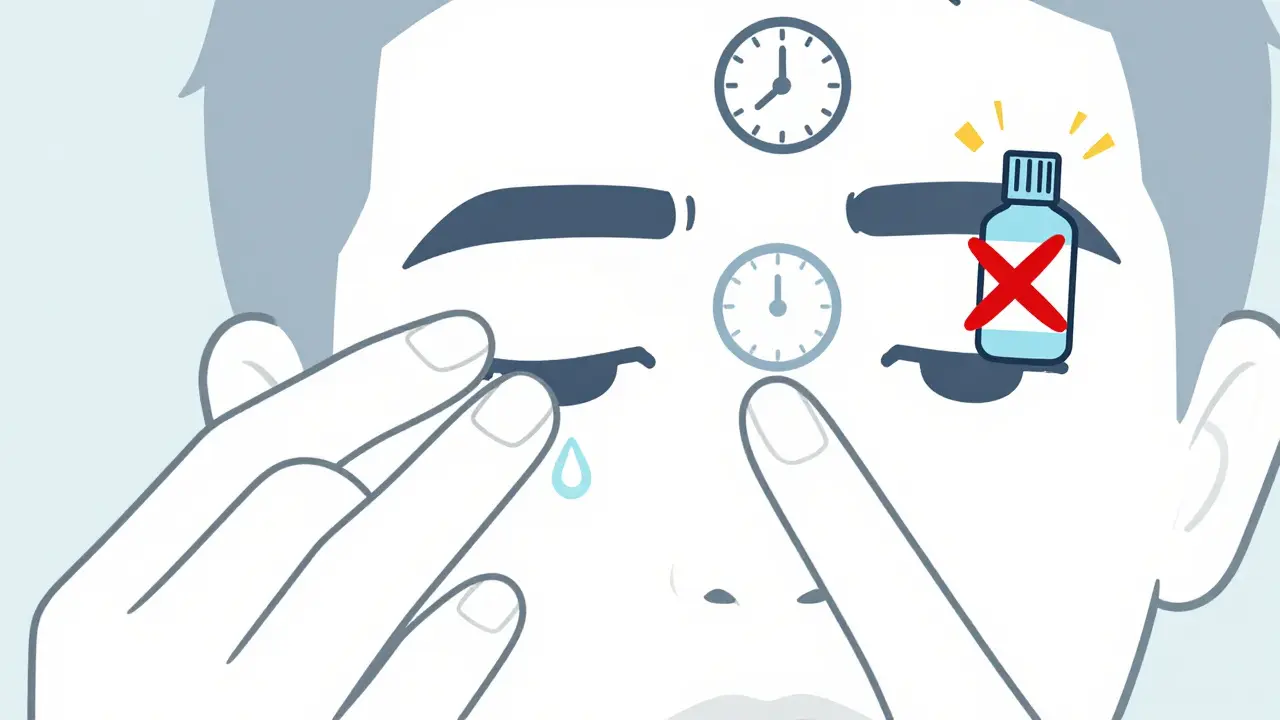
- CLOSE your eye gently for 30 seconds. Don’t blink hard. Blinking pushes the drop out.
- Press lightly on the inner corner of your eye (near your nose) to keep the drop from draining into your throat.
Most people blink right after applying the drop. That wastes 70% of the medicine. The American Academy of Ophthalmology says 68% of first-time users apply drops incorrectly. Fixing this alone can double your relief.
When to Stop and See a Doctor
OTC drops are great for short-term relief. But if you’re using them daily for more than two weeks, it’s time to see an eye care professional. Here’s when to go:- Your vision is blurry more than a few minutes after using drops.
- Your eyes hurt, feel swollen, or have discharge.
- You’ve been using redness-relief drops for more than 3 days.
- Your symptoms get worse, not better, after 7-10 days of using the right drop.
Chronic dry eye can be a sign of autoimmune disease, thyroid issues, or meibomian gland dysfunction. Allergies that don’t respond to OTC drops might need prescription antihistamines or immunotherapy. Don’t ignore persistent symptoms.
What to Buy in 2025
Here’s a simple guide based on your main issue:| Condition | Best Pick | Why | Price (per 10mL or 30 vials) |
|---|---|---|---|
| General Dry Eye (Screen Use) | Systane Ultra | Long-lasting, widely available, no blurring | $12-$18 |
| Severe Dry Eye / Sensitive Eyes | Refresh Optive Preservative-Free | No preservatives, gentle, lasts 5+ hours | $12.50-$22.26 |
| Evaporative Dry Eye (Burning, End-of-Day) | Systane Complete PF | Rebuilds oily tear layer-best for Meibomian Gland Dysfunction | $18-$22 |
| Allergies (Itchy, Watery Eyes) | Pataday (olopatadine) | 24-hour relief, one drop a day | $15-$20 |
| Redness Only (Occasional) | Lumify (brimonidine) | Lower risk of rebound redness than Visine | $14-$19 |
Avoid Visine, Clear Eyes, and other tetrahydrozoline-based drops unless you’re using them once for a special event. They’re not for daily use.
Final Tips for Smart Use
- Store eye drops at room temperature. Only Thealoz Duo needs refrigeration after opening.
- Throw away opened bottles after 30 days-even if they’re not empty.
- Don’t share eye drops. Ever.
- If you wear contacts, use only drops labeled “for contact lens wearers.” Others can damage lenses or cause irritation.
- Use gel drops at night. Use liquids during the day.
- Try to blink more when using screens. We blink 66% less when looking at phones and computers.
OTC eye drops are powerful tools-but only if you use them right. Pick based on your symptoms, not the color of the bottle. Your eyes will thank you.
Can I use allergy eye drops for dry eyes?
No. Allergy drops like Pataday or Zaditor contain antihistamines that stop itching and swelling, but they don’t add moisture. If you have dry eyes, using them won’t help-and might make your eyes feel even drier because they don’t lubricate. Stick to artificial tears for dryness.
Why do my eyes get redder after using Visine?
Visine contains tetrahydrozoline, a vasoconstrictor that shrinks blood vessels to reduce redness. But when the effect wears off, your eyes rebound-meaning blood vessels dilate even more than before. After 2-3 days of daily use, this rebound effect kicks in. Studies show 68% of users get worse redness within two weeks. It’s not fixing the cause-it’s masking it.
Are preservative-free eye drops worth the extra cost?
Yes-if you use drops more than four times a day, or if your eyes sting or burn after using regular drops. Preservatives in multi-dose bottles can irritate the eye surface over time, leading to dryness or even tiny corneal scratches. Single-use preservative-free vials cost more per drop, but they’re safer for daily use. Many users report less irritation and better comfort long-term.
Can I use eye drops while wearing contacts?
Only if the bottle says “for contact lens wearers.” Most artificial tears are safe, but some contain ingredients that can stick to lenses or cause cloudiness. Blink Contacts, Refresh Contacts, and Systane Contacts are designed to be compatible. Always remove contacts before using gel drops or allergy drops unless the label says otherwise.
How long should I wait between different eye drops?
Wait at least 5 minutes between different types of drops. If you use an allergy drop and then an artificial tear, putting them in too close together means the second one washes out the first. Always use the thinner liquid first, then the thicker gel or ointment. And never mix drops in the same bottle.


Written by Felix Greendale
View all posts by: Felix Greendale