
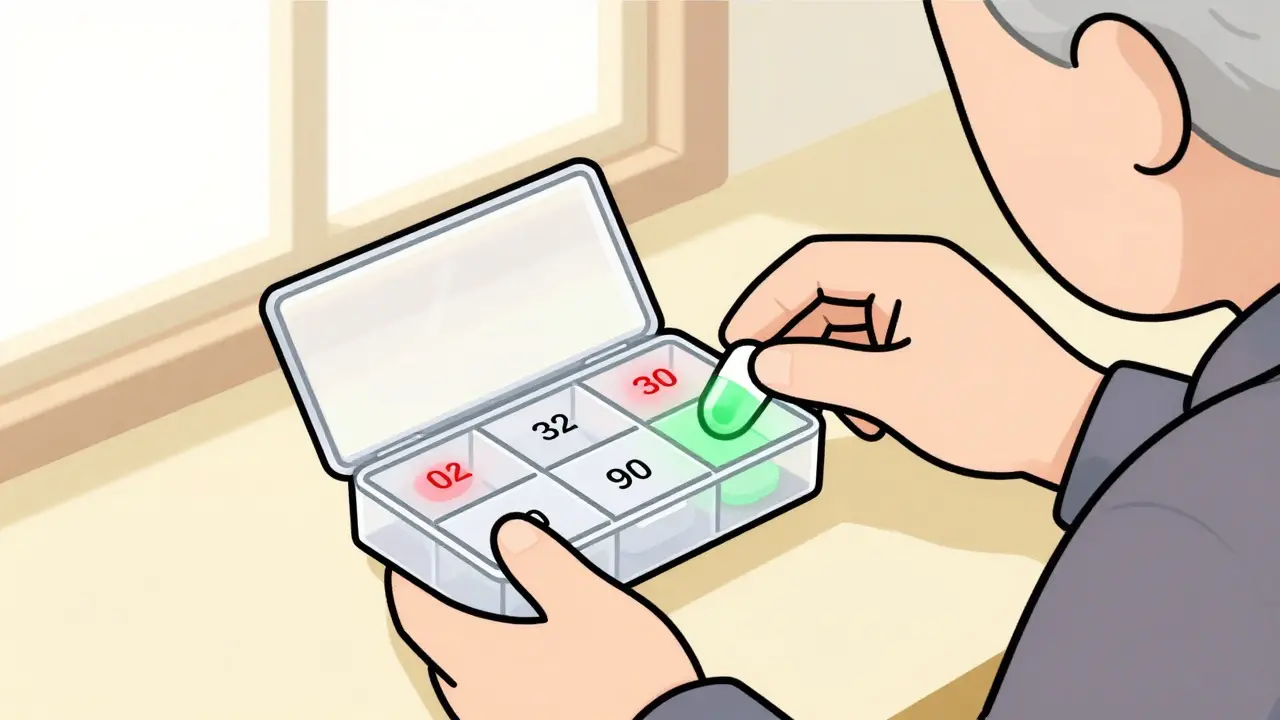
Forgetting to take your pills isn’t just a minor inconvenience-it can land you in the hospital. Nearly half of all adults with chronic conditions miss doses regularly, and for seniors taking five or more medications daily, the risk skyrockets. The good news? Technology has stepped in with smart pill caps and dispensers designed to tackle forgetfulness head-on-not with complex apps or confusing settings, but with simple, reliable systems that fit into real life.
Why Forgetfulness Is a Silent Health Crisis
It’s easy to think, “I’ll remember,” until you’re juggling blood pressure pills, diabetes meds, heart medication, and pain relievers-all at different times of day. A 2023 AARP survey found that 54% of seniors take more than four prescriptions daily. That’s not just a lot of pills-it’s a cognitive overload. One missed dose of a blood thinner can lead to a stroke. Skipping antibiotics can turn a simple infection into a life-threatening one. And when family members live far away, there’s no one around to notice when doses are skipped. The CDC estimates medication non-adherence costs the U.S. healthcare system between $100 billion and $300 billion every year. That’s not just money-it’s lives. And the biggest culprit? Forgetfulness.How Smart Pill Caps Work (Without an App)
Not all smart pill systems need you to download an app, tap notifications, or remember to charge a device. Take Tenovi’s Cellular Pillbox. It’s a simple plastic box with compartments for morning, afternoon, evening, and night. Inside, sensors detect when you open a compartment. When it’s time for your pill, a red light turns on. When you open the right compartment, the light turns green. No phone. No app. No Bluetooth pairing. Just a light that tells you: you did it. This design matters. A 2023 study in the Journal of Medical Systems showed patients using visual reminder systems like Tenovi’s had 28% higher adherence than those relying on phone alerts. Why? Because when you’re older, or have early dementia, an app notification is easy to ignore-or worse, forget how to open. But a red light? That’s hard to miss.Smart Bottles: The Invisible Helper
If you already have a bottle of pills you use every day, why replace it? AdhereTech-now called Aidia-made a smart cap that screws right onto standard prescription bottles. It doesn’t look like tech. It looks like a bottle cap. But inside, it has a weight sensor and a cellular chip. When you open the cap, it records the time. If you don’t open it within two hours of your scheduled dose, it sends a text, a call, and flashes a red light on the cap. If you miss the dose, it asks: “Why didn’t you take your pill?”-and you can reply with “side effects,” “out of pills,” or “forgot.” That last part is powerful. Most devices just track whether you opened the bottle. Aidia tracks why you didn’t. That data gets sent to your doctor or caregiver, so they can adjust your meds, refill your prescription, or talk through side effects. In a 2022 clinical trial published in the Journal of Medical Internet Research, users with Aidia had 92.3% adherence-up from 67.8% before.Automatic Dispensers: The Hands-Off Solution
For people who need more structure, automatic dispensers like Hero Health’s system take the guesswork out entirely. You load all your pills into the device once a week. The machine opens the right compartment at the right time-flashing lights, playing a gentle chime, and even calling you on the phone if you don’t respond. It can alert caregivers if a dose is missed. One user on Reddit shared that her mother, who had a UTI and was on antibiotics, started missing doses. After installing the Hero dispenser, adherence jumped from 60% to 98%. “The 30-minute repeating alarm saved her life,” the caregiver wrote. Hero Health’s system also scores highest in accessibility. It lets you adjust volume, choose between light-only or sound-only alerts, and even set different reminders for different pills. For someone with hearing loss or vision impairment, that flexibility makes all the difference.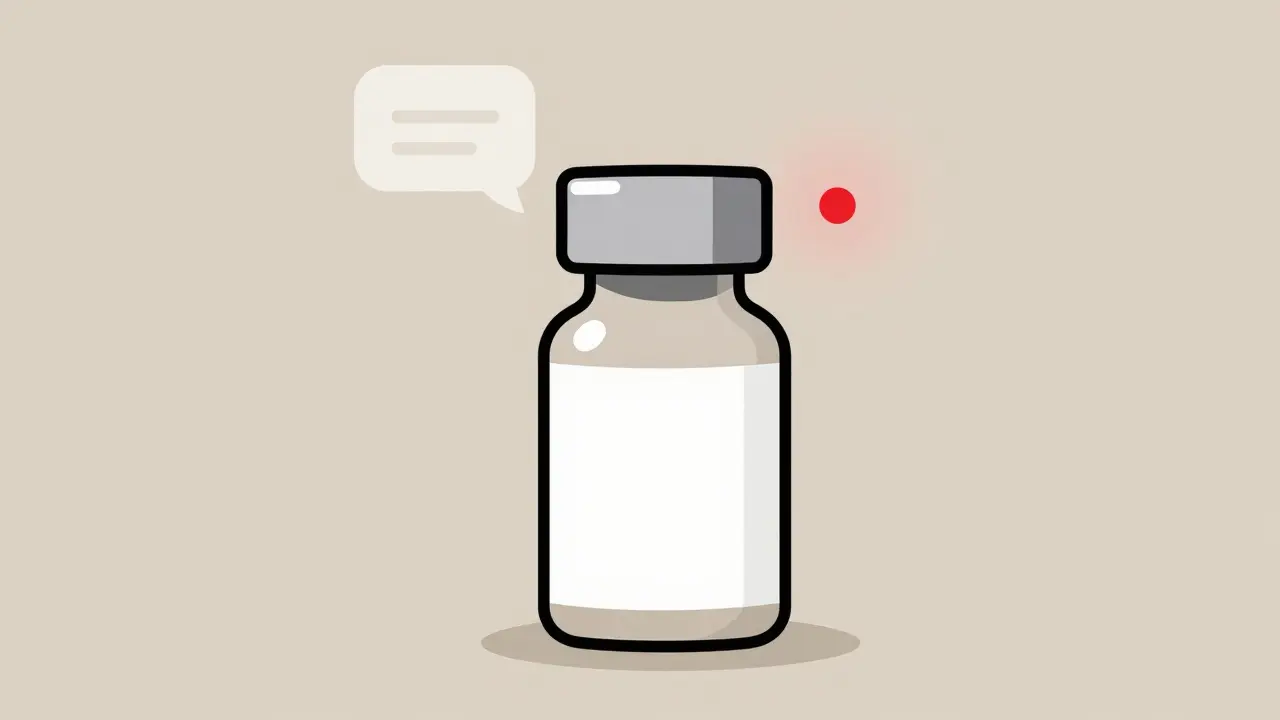
What About the Cheap Options?
You’ll find plenty of budget pill dispensers online-like the MedQ Electronic Programmable Pill Dispenser-for under $150. They beep, they flash, and they repeat alarms every 30 minutes until you take your pill. Sounds great, right? But reviews tell a different story. On Amazon, users complain the alarm is too quiet to hear from another room. Others say the device shuts off after a few days. One reviewer, a 78-year-old with arthritis, said: “I can’t open the lid. It’s too stiff.” And here’s the catch: these devices don’t connect to anyone else. No one knows if you missed a dose. No one gets notified. If you’re living alone and forget to take your pill, the machine beeps… and beeps… and beeps… until you finally hear it. Or don’t.Cost, Coverage, and Hidden Barriers
Price is the biggest hurdle. AARDEX’s Pill Connect, used in clinical trials, costs nearly $300 plus $49 a month in software fees. Hero Health’s full dispenser runs $499. Even the more affordable Aidia Smart Bottle is $149 upfront with a $39 monthly subscription. That’s why adoption among individual consumers is still low-just 12.4%, according to AARP. But things are changing. In 2024, Medicare expanded coverage for adherence devices that reduce hospitalizations by 15% or more. Tenovi is now partnering with UnitedHealthcare to offer its system at no extra cost to members. If your doctor says you’re at risk for hospitalization due to missed doses, ask if your insurance covers a smart pill dispenser. Many Medicare Advantage plans already do.What No Device Can Fix
Technology helps-but it’s not magic. One Reddit user admitted he opened his Pill Connect cap without taking the pill. “The device doesn’t know if I swallowed it,” he wrote. And that’s true. No sensor can confirm ingestion. If you’re skipping pills because they make you sick, or because you can’t afford them, a flashing light won’t solve that. A 2022 JAMA Internal Medicine commentary warned that relying only on tech can worsen health disparities. Low-income seniors often abandon smart devices after six months-not because they don’t work, but because they can’t afford the monthly fee. The best systems don’t just remind you-they connect you. To your doctor. To your family. To your care team. That’s why Aidia’s “why missed?” feature and Hero Health’s caregiver alerts are so valuable. They turn a simple device into a lifeline.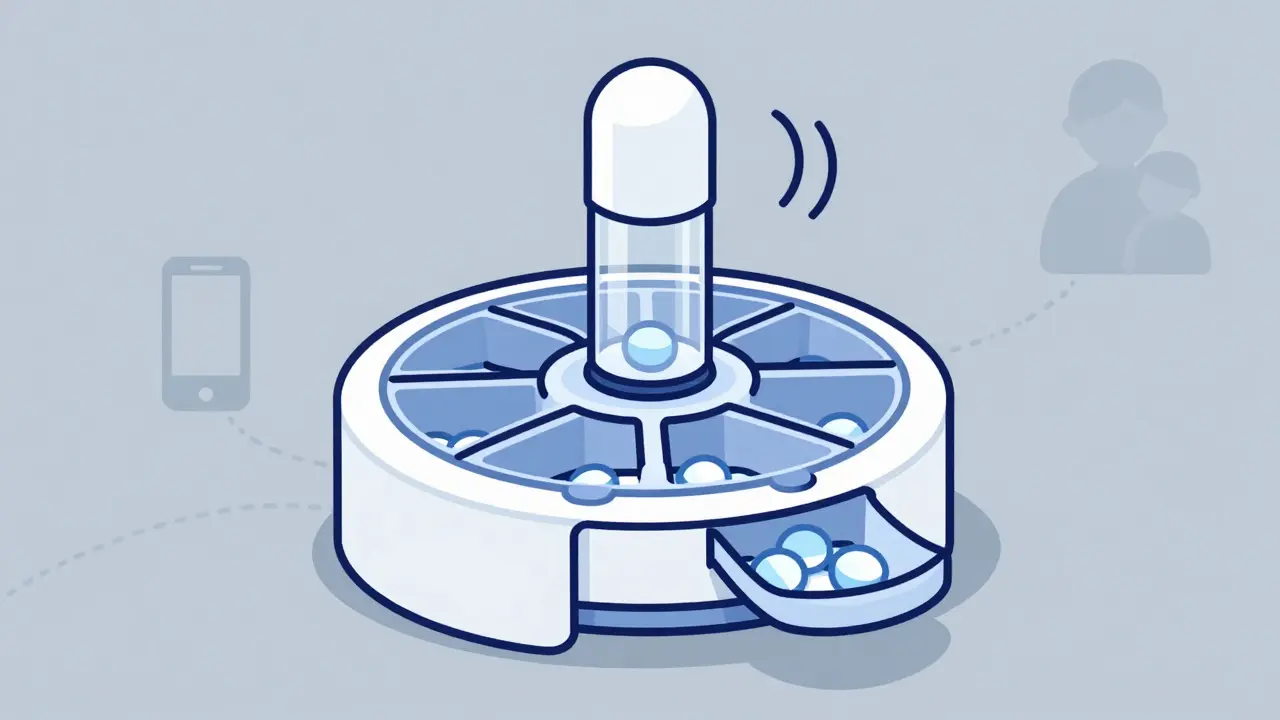
Choosing the Right System for You
Here’s how to pick:- If you take 1-3 pills daily and just need a nudge → Try Tenovi (no app, cellular, visual cues)
- If you use standard prescription bottles and want insight into missed doses → Go with Aidia (smart cap, explains why you missed)
- If you take 5+ pills at different times and need hands-off help → Choose Hero Health (automatic dispensing, phone alerts, caregiver alerts)
- If you’re worried about overdosing (e.g., dementia) → Consider a locked dispenser like MedQ (but accept no remote monitoring)
- If cost is a barrier → Ask your doctor or pharmacist about insurance coverage. Medicare Advantage and VA benefits may pay for it.
Real Talk: What Works in Real Life
I’ve spoken to dozens of caregivers and seniors. The ones who stick with these devices aren’t the tech-savvy ones. They’re the ones who chose simplicity. One woman in Ohio uses Aidia because her daughter can see on her phone when her mom took her blood pressure pill. Another in Florida uses Tenovi because his wife, who has memory loss, now opens the right compartment every morning without asking. “It’s like the box remembers for her,” he said. The goal isn’t to replace human care. It’s to support it. To give you back the peace of mind that your meds are being taken-so you can focus on living, not remembering.Can smart pill dispensers really reduce hospital visits?
Yes. A 2023 pilot study by UnitedHealthcare and Tenovi showed a 18.7% drop in hospitalizations among seniors using their dispenser over six months. Other studies, including those from AdhereTech and AARDEX, report similar results. When people take their meds as prescribed, complications from uncontrolled diabetes, high blood pressure, and heart disease drop significantly.
Do I need Wi-Fi or a smartphone to use these devices?
No, not always. Tenovi’s pillbox uses cellular connectivity and works without Wi-Fi or a phone. Aidia’s smart cap also connects via cellular. Hero Health’s dispenser uses Wi-Fi but doesn’t require you to use an app-caregivers get alerts via text or email. Only the most basic models require manual setup with apps. If you or your loved one doesn’t use smartphones, choose a cellular-based system.
What if I miss a dose and the device doesn’t alert me?
Most reputable systems have backup alerts. Aidia sends texts and calls. Hero Health calls up to three contacts. Tenovi’s red light stays on until you open the compartment. But no system is perfect. If you’re concerned about reliability, choose one with multiple alert types (sound, light, phone call) and ensure your caregiver is enrolled to receive notifications. Battery life is also key-Tenovi lasts 90 days; others last 30-60. Always check the battery indicator.
Are smart pill dispensers covered by Medicare?
Original Medicare (Parts A and B) doesn’t cover them yet. But many Medicare Advantage plans (Part C) do-if your doctor certifies that you’re at high risk for hospitalization due to non-adherence. In 2024, CMS expanded coverage rules to include devices that reduce hospital stays by 15% or more. Ask your doctor to write a letter of medical necessity. Some pharmacies and insurers will help you apply.
Can these devices be used for insulin or liquid medications?
Most smart dispensers are designed for solid pills and capsules. For insulin pens or liquid meds, look for specialized systems like the InPen by Medtronic or smart syringes, which are still emerging. Some companies are testing wearable injectors with reminder tech, but they’re not widely available yet. For now, if you use liquids or injections, pair a simple pill organizer for your oral meds with a visual timer or phone alarm for your injections.
Next Steps: What to Do Today
If you or someone you care for is struggling with missed doses:- Count how many pills are taken daily, and at what times.
- Ask your doctor: “Am I at risk for hospitalization because of missed meds?”
- Call your insurance provider and ask: “Do you cover smart pill dispensers?”
- Try a no-app system like Tenovi first-it’s simple, reliable, and works without tech skills.
- If you need automatic dispensing or caregiver alerts, ask about Hero Health or Aidia.


Written by Felix Greendale
View all posts by: Felix Greendale