
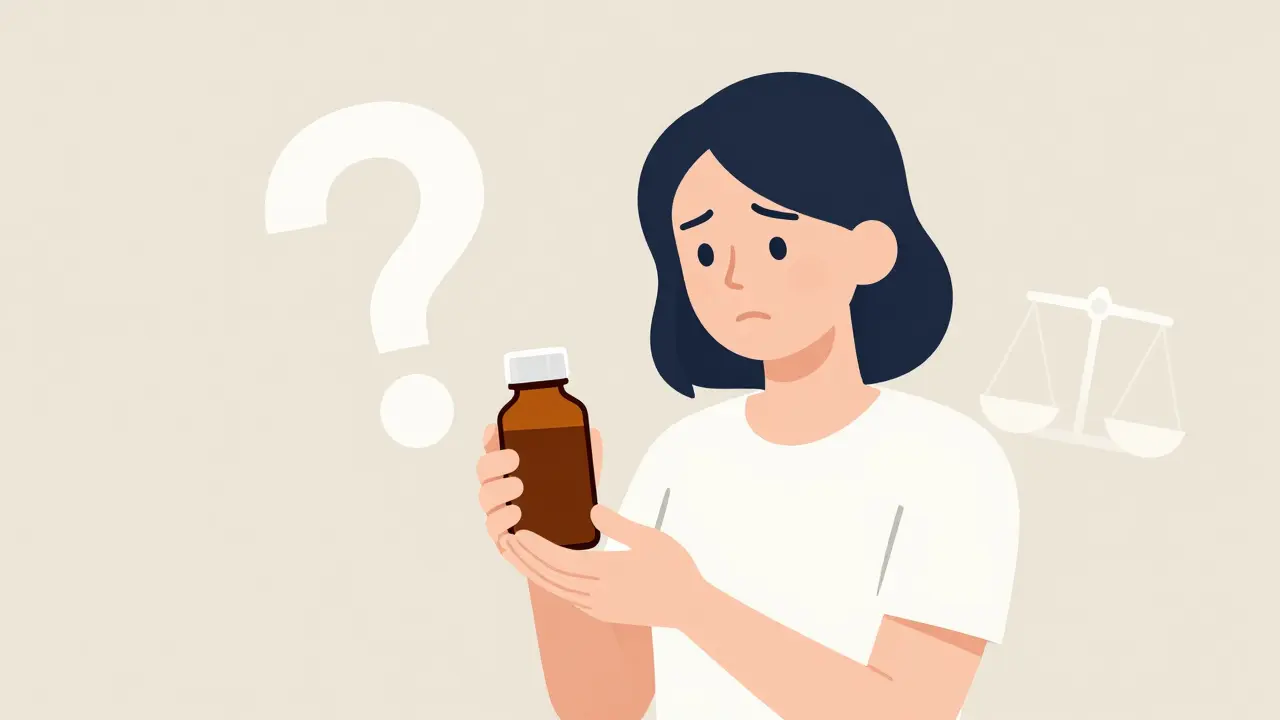
Medication errors in children are not just statistics; they are preventable tragedies. According to the Institute for Safe Medication Practices (ISMP), pediatric patients experience medication errors at rates 3.0 times higher than adults. Of those errors, 56% involve incorrect dosing. For parents, holding a bottle of liquid medicine can feel like a high-stakes test where the stakes are your child's health. The confusion often stems from a simple but dangerous mix-up: confusing volume (milliliters) with strength (milligrams).
This guide breaks down exactly how to verify that the dose on your child’s prescription label is correct, safe, and appropriate for their specific weight. You don’t need to be a pharmacist to catch these errors, but you do need to know what to look for.
Why Pediatric Dosing Is Different
Children are not simply small adults. Their bodies process medications differently due to developing liver and kidney functions. This creates narrow therapeutic windows-the range between a helpful dose and a harmful one is much tighter for a toddler than for a grown man.
The American Society of Health-System Pharmacists (ASHP) mandates that all pediatric doses be verified through weight-based calculations. This means the dose isn't based on age alone, but on how much your child weighs. A 4-year-old who weighs 30 pounds will likely need a different dose than another 4-year-old who weighs 40 pounds, even if they have the same illness. Understanding this fundamental principle is the first step in verifying any prescription.
Is age enough to determine a child's medication dose?
No. While age provides a general guideline, weight is the critical factor for accurate pediatric dosing. Always rely on weight-based calculations (mg/kg) for safety.
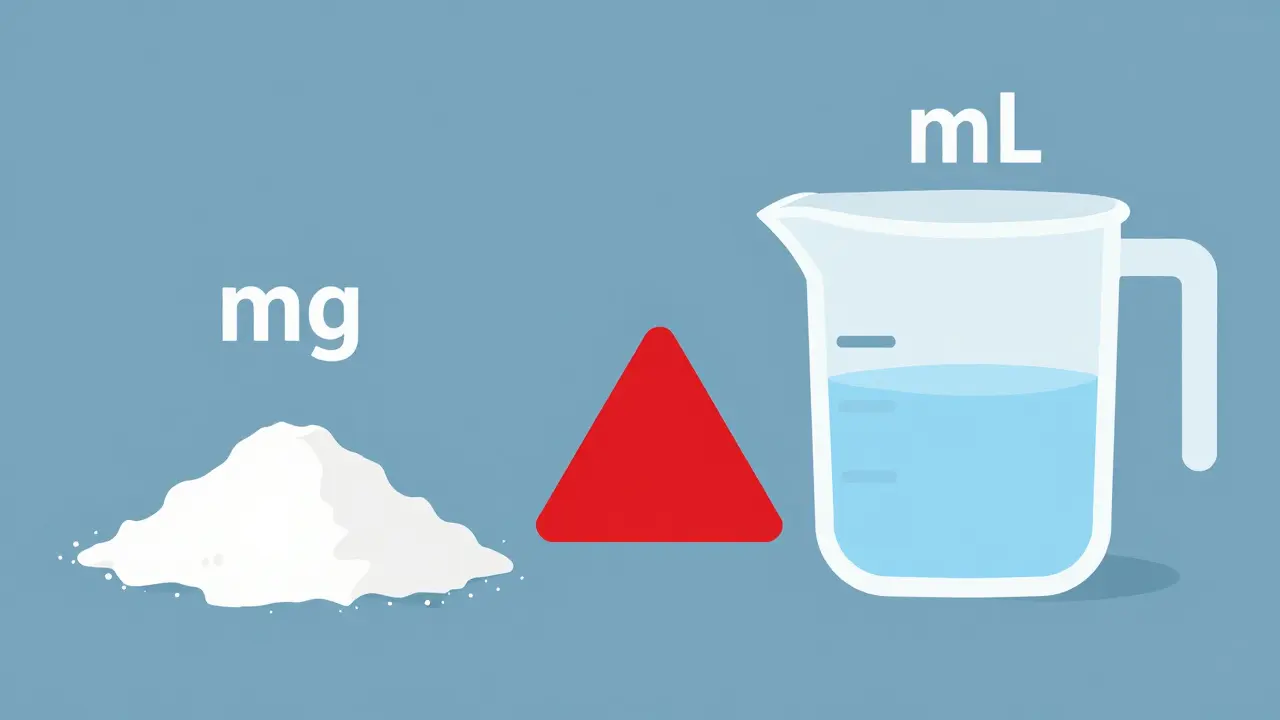
The Critical Distinction: Milligrams vs. Milliliters
This is the most common source of error. In fact, a 2022 study found that 43.5% of preventable adverse drug events in children resulted from misunderstandings about concentration.
- Milligrams (mg): This is the amount of active drug ingredient. It is the actual "medicine" your child needs.
- Milliliters (mL): This is the volume of liquid. It is just water, sugar, and flavoring mixed with the drug.
A prescription should clearly state the dose in milligrams (e.g., "200 mg"). However, many parents see only the volume on the measuring cup (e.g., "5 mL") and assume that is the dose. If the concentration of the liquid changes, the volume needed to get that 200 mg also changes.
FDA Safe Use Guidelines require that labels include both metric measurements. Always ask your pharmacist: "What is the exact dose in milligrams, not milliliters?" If the label says "Take 10 mL," ask them to clarify how many milligrams that represents.
Step-by-Step Verification Process
You can perform a basic sanity check at home using three simple steps. This doesn't replace professional advice, but it adds a crucial layer of safety.
- Check the Weight: Ensure the pharmacy has your child's current weight in kilograms. Errors in converting pounds to kilograms account for nearly 22% of miscalculations. Remember: 1 kg = 2.2 lbs. If your child weighs 44 lbs, they weigh 20 kg.
- Verify the Concentration: Look at the bottle. Does it say "80 mg/mL" or "40 mg/mL"? These are two different strengths of the same drug. If the doctor ordered 200 mg, and the bottle is 40 mg/mL, you need 5 mL (200 ÷ 40). If the bottle is 80 mg/mL, you only need 2.5 mL (200 ÷ 80). Using the wrong volume for the wrong concentration can lead to a double dose or half-dose error.
- Confirm the Frequency: Check how often the dose is given. A daily total of 400 mg might be split into two doses of 200 mg every 12 hours, or four doses of 100 mg every 6 hours. The label must specify the amount per dose, not just the total daily amount.
Understanding Common Calculation Methods
While you won't calculate these yourself, knowing how professionals derive doses helps you understand why certain numbers appear on the label.
| Method | Description | Typical Use Case |
|---|---|---|
| Weight-Based (mg/kg) | Dose calculated by multiplying child's weight in kg by recommended mg per kg. | Antibiotics, pain relievers (most common) |
| Body Surface Area (BSA) | Uses height and weight to calculate surface area (m²). More complex. | Chemotherapy agents, precise metabolic drugs |
| Clark’s Rule | (Weight in lbs ÷ 150) × Adult Dose. Less precise. | Legacy estimates, rarely used in modern hospitals |
Most routine prescriptions use the mg/kg method. For example, Amoxicillin is often dosed at 40-50 mg/kg/day. If your child is 10 kg, the daily total is 400-500 mg. If the label says 100 mg per dose, taken four times a day, that equals 400 mg total. This matches the calculation. If it said 500 mg per dose, that would be a red flag.
Red Flags on the Prescription Label
Be wary of these warning signs that suggest a potential error or unclear instruction:
- Vague Instructions: Phrases like "Take as directed" without specific amounts are unsafe for children.
- Missing Weight: The label should ideally reference the child's weight or the dose should be explicitly stated in mg.
- Unusual Volumes: Doses that require measuring 1.7 mL or 3.9 mL are prone to error. Pharmacists usually round to measurable intervals (like 2 mL or 4 mL) to ensure accuracy. If you see a weird number, call the pharmacy to confirm if it was rounded intentionally.
- Conflicting Information: If the verbal instruction from the pharmacist differs from the written label, trust the label but call immediately to resolve the discrepancy.

Tools and Technology for Safety
Hospitals and pharmacies now use advanced tools to prevent these errors. Electronic Health Records (EHRs) like EPIC and Cerner have built-in checks that alert doctors if a dose seems too high or low for a child's weight. Some systems, like Doser Medical, use AI to cross-reference over 15,000 dosing guidelines in real-time.
As a parent, your best tool is communication. The FDA recommends asking three specific questions when picking up a prescription:
- "What is the exact dose in milligrams?"
- "Is this dose appropriate for my child's current weight?"
- "Can you show me how to measure this dose with the provided device?"
Don't hesitate to ask. Pharmacists expect these questions and appreciate the diligence. A 2-minute conversation can prevent a serious overdose.
Real-World Examples of Confusion
Consider acetaminophen (Tylenol). There are multiple concentrations available: 80 mg/0.8 mL, 160 mg/5 mL, and 320 mg/5 mL. If a parent uses the syringe meant for the concentrated version (80 mg/0.8 mL) but measures out 5 mL thinking it's the standard strength, they administer a dose five times higher than intended. This happened frequently before standardized labeling laws were strengthened.
Always use the measuring device provided by the pharmacy. Kitchen spoons are notoriously inaccurate and can vary by up to 25% in volume, leading to significant dosing errors.
When to Call the Pharmacist
If anything feels off, stop. Do not guess. Call the pharmacy if:
- The dose seems unusually large or small compared to previous medications.
- Your child's weight has changed significantly since the last prescription.
- The instructions are unclear or ambiguous.
- You notice a typo on the label (e.g., missing zeros, unclear units).
Pharmacists spend an average of 2.7 minutes verifying each pediatric order. They want to get it right. Your vigilance acts as a final safety net in a system designed to protect your child.
What should I do if I think I gave the wrong dose?
Contact your pharmacist or pediatrician immediately. Do not wait for symptoms to appear. Have the medication bottle handy to provide the exact concentration and dose given.
Why does the pharmacy sometimes change the dose slightly?
Pharmacists may round doses to volumes that are easier to measure accurately (e.g., rounding 1.88 mL to 2 mL). This is a safety practice to reduce measurement error, but they should document this change.
Are electronic health records foolproof for pediatric dosing?
No. While EHRs like EPIC and Cerner have strong alerts, human error in data entry (such as incorrect weight input) can still bypass these safeguards. Dual verification by pharmacists remains essential.
How often should I update my child's weight for prescriptions?
Update your child's weight at every new prescription visit. Children grow quickly, and a dose that was correct six months ago may be too low today.
What is the Mosteller formula used for?
The Mosteller formula calculates Body Surface Area (BSA) using height and weight. It is primarily used for chemotherapy and other drugs requiring extreme precision, rather than routine antibiotics.
Written by Felix Greendale
View all posts by: Felix Greendale