
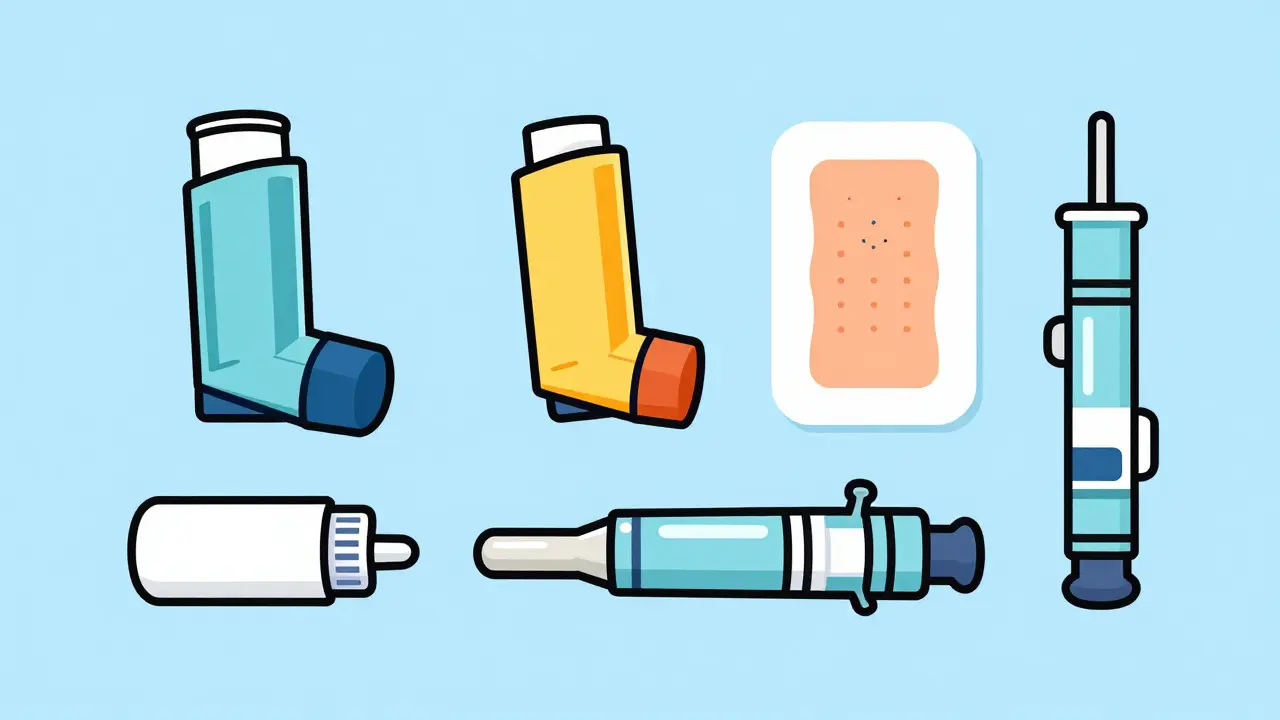
Key Takeaways for Safe Medication Use
- Inhalers: Check the dose per actuation and look for dose counters to avoid running out of medicine.
- Patches: Note the exact hourly delivery rate and strictly follow the rotation and disposal rules.
- Injectables: Double-check the concentration (e.g., U-100 vs U-500) to avoid massive dosing errors.
- General: Use QR codes on packaging for video guides if you're unsure about the physical technique.
Decoding Inhaler Labels
When you hold a Inhaler, the label is telling you more than just how many puffs to take. You need to look for the dosage per actuation. For example, a label might say "albuterol sulfate 90 mcg per actuation." This tells you exactly how much medicine is released every time you press the canister. One common mistake is assuming the canister is full just because it feels heavy; according to the Cleveland Clinic, over 27% of inhaler errors happen because patients don't realize they've run out of medication.
Pay close attention to the "priming" instructions. Many labels will tell you to "prime with 4 test sprays before first use." If you skip this, you might not get the full dose for your first few uses. Also, check if your label says "shake well." This is critical for suspension-based inhalers, but not necessary for solution-based ones. If you're using a modern device, look for the dose counter-a feature the FDA now requires to help prevent emergency room visits caused by empty inhalers.
Mastering Transdermal Patch Instructions
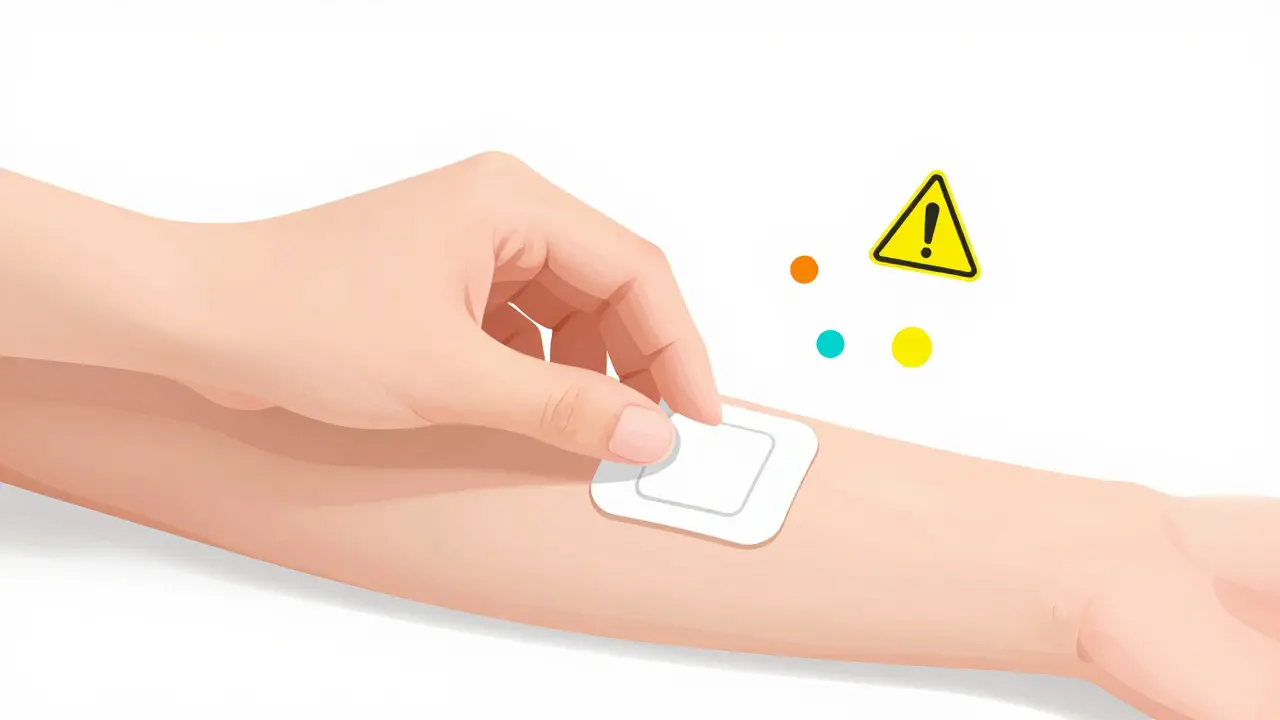
A Transdermal Patch is designed to release medication slowly through your skin. The label won't give you a "per dose" amount but rather a delivery rate, such as "fentanyl 25 mcg/hour." This means the drug is constantly entering your bloodstream over a set period.
The most dangerous part of patch labeling is the timing and the warnings. If a label says "change every 72 hours," it means exactly 72 hours. A Consumer Reports survey found that 63% of users treated this as a suggestion ("about three days"), which can lead to inconsistent medication levels in the blood. Furthermore, look for warnings about heat. Exposing a patch to a heating pad or hot tub can increase drug absorption by up to 50%, potentially leading to an overdose.
Always look for the "do not cut" warning. Cutting a patch to try and save money or adjust the dose can increase the risk of a fatal overdose by nearly five times. Finally, check the disposal instructions. Because these patches often contain potent medications, they must be disposed of according to the specific rules on the label to prevent accidental exposure to children or pets.
Understanding Injectable Medication Labels
Injectables are perhaps the most complex to read because a small mistake in reading a number can lead to a huge mistake in dosage. When reading a label for a Injectable Medication, the first thing you must identify is the concentration. For instance, insulin often comes in "U-100," meaning 100 units per mL. However, some high-concentration versions like "U-500" exist. If you mistake one for the other, you could accidentally administer five times the required dose.
If the medication comes as a powder, the label will provide reconstitution instructions. This is the process of mixing the powder with a liquid before injection. The Institute for Safe Medication Practices notes that 68% of injectable errors happen during this preparation phase, not the actual injection. If the label is confusing or requires a calculation you aren't comfortable with, stop and call your pharmacist.
| Feature | Inhalers | Patches | Injectables |
|---|---|---|---|
| Primary Metric | mcg per actuation | mcg per hour | units or mcg per mL |
| Critical Warning | Priming/Shaking | Heat exposure/No cutting | Concentration level |
| Maintenance | Dose counter check | Site rotation | Reconstitution steps |
| Error Risk | Empty canister | Timing of replacement | Calculation errors |
Common Pitfalls and How to Avoid Them
Many people confuse administration techniques when they use multiple types of specialized meds. There have been cases where patients accidentally applied a patch formulation that was actually intended for inhalation. To prevent this, rely on visual identification descriptors. The 2019 Prescription Drug Labeling Improvement Act pushed for labels that help you distinguish between devices that look almost identical but do completely different things.
Another common issue is ignoring "auxiliary labels." These are the small, colorful stickers that say things like "apply to clean, dry skin" or "do not expose to heat." While they seem like secondary advice, they are actually essential for the drug to work. For patches, applying to oily skin can prevent the medication from absorbing correctly, rendering your treatment ineffective.
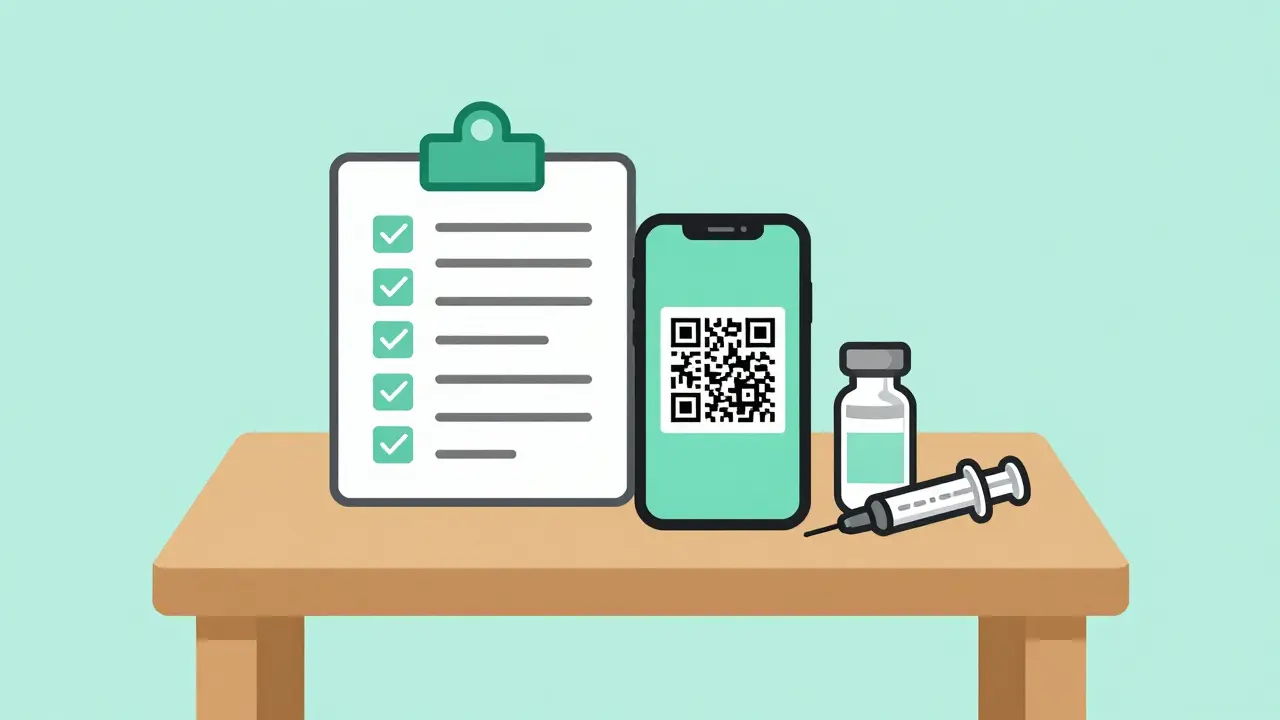
If you struggle with vision or find the text too small, check for a QR code on the box. Many pharmaceutical companies now include these, which link directly to video demonstrations. Studies show that these visual aids improve patient comprehension by nearly 30% compared to reading the fine print alone.
Next Steps for Patients and Caregivers
When you leave the pharmacy, don't just glance at the bag. Set aside 15 to 20 minutes to sit down with your medication and the labels. If you are using an injectable, physically map out the units on your syringe against the concentration on the label. For patches, mark your calendar with the exact hour and day for the next change.
If you're a caregiver, create a simple checklist based on the label's requirements. Instead of relying on memory, write down the specific steps: "Shake for 5 seconds > Prime 4 times > Administer 2 puffs." This reduces the cognitive load and prevents errors during stressful moments, such as an asthma attack or a diabetic emergency.
What does 'actuation' mean on an inhaler label?
An actuation is simply one single spray or 'puff' of the medication. If your label says '2 actuations every 4 hours,' it means you press the canister twice at each scheduled time.
Can I cut a transdermal patch if I only need a half dose?
No. You should never cut a patch unless specifically instructed by your doctor. Cutting a patch can destroy the delivery mechanism, causing the entire dose to be released at once, which can lead to a life-threatening overdose.
What is the difference between U-100 and U-500 insulin labels?
These numbers refer to the concentration. U-100 means there are 100 units of insulin per 1 milliliter of liquid. U-500 means there are 500 units per milliliter. Using a U-100 syringe for U-500 insulin would result in a five-fold overdose.
Why do some inhalers need to be shaken while others don't?
Suspension inhalers contain particles that settle at the bottom of the canister. Shaking ensures the medication is evenly mixed so you get the correct dose. Solution inhalers are already fully dissolved and don't require shaking.
What should I do if I can't read the fine print on my injectable vial?
Do not guess. Use a magnifying glass or a smartphone camera to zoom in on the label. If you're still unsure, contact your pharmacist to confirm the concentration and dosage before administering the drug.


Written by Felix Greendale
View all posts by: Felix Greendale