
Did you know that clinical trials before a drug hits the market typically involve only 1,000 to 5,000 patients? Once that medication is approved and millions start taking it, rare or long-term side effects often emerge. This is where adverse drug reaction (ADR) reporting becomes your most powerful tool for public health. If you suspect a medication caused a harmful effect, reporting it to the U.S. Food and Drug Administration (FDA) isn't just bureaucratic busywork-it’s a critical step in keeping drugs safe for everyone.
You might wonder if one report matters. It does. The FDA receives approximately 2 million reports annually through its Adverse Event Reporting System (FAERS), the primary database for post-marketing drug safety surveillance. These individual data points help regulators detect "signals"-patterns of harm that weren't visible during initial testing. In 2022, a nurse’s report of severe hypoglycemia linked to a new diabetes medication triggered an investigation that led to a label update within just 47 days. That speed saves lives. Here is exactly how you can contribute to that process, whether you are a patient, a caregiver, or a healthcare professional.
Who Can Report and Why It Matters
Anyone can report a suspected adverse drug reaction. You do not need to be a doctor or a pharmacist. Patients, caregivers, family members, and even veterinarians (for animal drugs) are encouraged to submit reports. The system relies on voluntary submissions from the public because healthcare providers often face time constraints; a 2022 American Medical Association survey found that 63% of providers cited "lack of time" as their biggest barrier to reporting.
When you report, you are helping the FDA bridge the gap between controlled trial environments and real-world usage. Clinical trials exclude many people with complex medical histories, multiple medications, or genetic variations. Real-world reporting captures these nuances. While experts estimate that only 5% to 10% of serious adverse events are captured through voluntary systems, every single report adds weight to the data. Your voice helps identify risks like permanent disability, hospitalization needs, or fatal outcomes that define a "serious" adverse event under federal law.
The Three Ways to Submit a Report
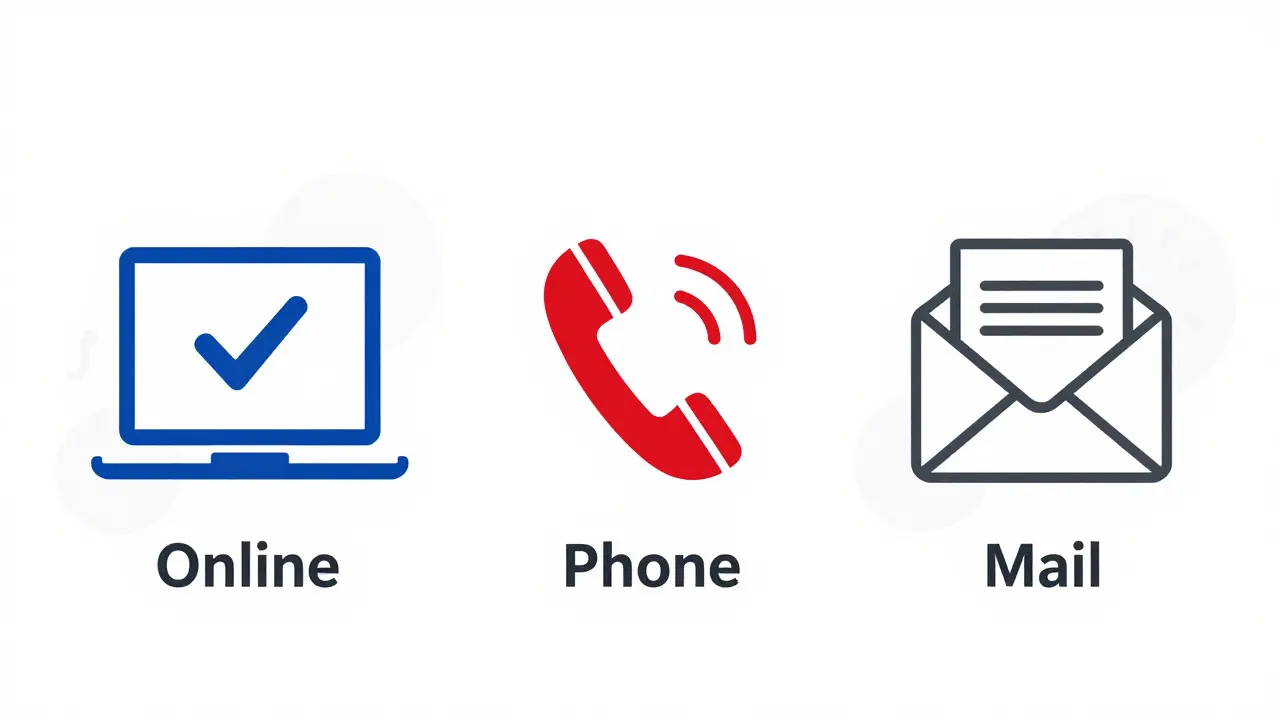
The FDA offers three main channels for submitting a report via its MedWatch program, the central safety reporting mechanism established in 1993 for medicines, devices, and cosmetics. Choose the method that fits your situation best.
- Online Submission (Fastest & Most Efficient): Visit the FDA's MedWatch portal at
www.accessdata.fda.gov/scripts/medwatch. You will complete Form 3500A, the specific form designed for consumers and health professionals to report adverse events. This is the preferred method because it reduces errors and speeds up processing. Pharmacists report an average completion time of 20-25 minutes for this form. - Phone Reporting: Call the toll-free number 1-800-FDA-1088. An agent will guide you through the questions and enter the data for you. This is helpful if you are not comfortable typing out medical details or if you need immediate clarification on whether an event qualifies as reportable.
- Mail-In Form: Download Form 3500A from the FDA website, fill it out by hand, and mail it to the address listed on the form. This is the slowest method but remains a valid option if internet access is limited.
Note that pharmaceutical manufacturers use a different, mandatory electronic system called the Electronic Submissions Gateway (ESG). As a consumer or provider, you stick with MedWatch.
What Information You Need to Gather
To make your report useful, you need four key pieces of information. The FDA mandates these elements under 21 CFR 314.80 to ensure the report is actionable:
- An Identifiable Patient: Include at least one demographic characteristic, such as age, sex, or weight. You do not need to provide a full name or Social Security number unless you want to be contacted for follow-up, but providing initials or a case ID helps link related reports.
- A Suspect Drug: Identify the medication by brand name or generic name. Include the dose, route of administration (e.g., oral pill, injection), and the dates you started and stopped taking it. If you took other medications, list them too, as drug interactions are a common cause of adverse reactions.
- A Description of the Adverse Event: Describe what happened in plain language. Include the onset date, duration, severity, and any treatments received for the reaction. For example, instead of just saying "rash," describe it as "a red, itchy rash covering the torso that appeared two days after starting the antibiotic and required steroid cream treatment."
- An Identifiable Reporter: Provide your contact information (name, phone, email). This allows the FDA to ask clarifying questions if needed. Your identity is kept confidential in public databases.
Defining "Serious" vs. Non-Serious Events
Not all side effects are created equal in the eyes of the regulator. Understanding the difference helps you prioritize urgent cases. The FDA defines a serious adverse event as one that meets any of the following criteria:
- Fatal (resulted in death)
- Life-threatening (put the patient at immediate risk of death)
- Required hospitalization or prolonged existing hospitalization
- Resulted in persistent or significant disability or incapacity
- Caused a congenital anomaly or birth defect
- Required intervention to prevent permanent impairment or damage
If your experience falls into one of these categories, it is classified as serious. Manufacturers are legally required to report serious and unexpected events to the FDA within 15 calendar days. For non-serious events, like mild nausea or a temporary headache, reporting is still valuable but less time-critical. Even minor issues matter if they appear frequently across many reports, signaling a potential quality control problem.
Common Challenges and How to Overcome Them
New reporters often feel stuck on two issues: causality and terminology. You do not need to prove that the drug definitely caused the reaction. You only need to suspect a causal relationship. The FDA uses tools like the Naranjo Adverse Drug Reaction Probability Scale to assess causality later. Your job is simply to report the suspicion.
Another hurdle is coding. The FDA uses the Medical Dictionary for Regulatory Activities (MedDRA), a standardized international medical terminology for collecting, coding, and analyzing regulatory data. You don’t need to learn MedDRA codes yourself. Just describe the event clearly in everyday language. The FDA’s pharmacovigilance team will map your description to the correct code. If you are unsure whether an event is reportable, call the hotline. The average wait time is about 8 minutes, and agents can clarify doubts instantly.
Time is another barrier. To save time, keep a simple log when starting a new medication. Note the start date, dose, and any symptoms that arise. Take photos of rashes or swelling. This documentation makes filling out Form 3500A much faster and more accurate.
| Channel | Best For | Average Time | Pros | Cons |
|---|---|---|---|---|
| Online (MedWatch) | Detailed reports, tech-comfortable users | 20-25 mins | Fastest processing, error checks built-in | Requires internet, mobile interface rated low (4.2/10) |
| Phone (1-800-FDA-1088) | Urgent queries, those needing guidance | Varies (avg 8 min wait) | Human assistance, no typing required | Dependent on agent availability |
| Mail (Form 3500A) | No internet access, paper records | Days to weeks | Accessible offline | Slowest processing, higher risk of lost forms |
What Happens After You Submit?
Once you submit Form 3500A, the data enters the FAERS database. It is reviewed by FDA analysts who look for patterns. If multiple reports mention the same drug and similar symptoms, a "signal" is generated. This triggers further investigation, which may lead to updated warning labels, restricted distribution, or in rare cases, market withdrawal.
You won’t receive a personalized response for every report due to volume, but your contribution is tracked. The FDA publishes regular updates on drug safety actions taken based on reported signals. For instance, recent updates have addressed risks associated with certain painkillers and antidepressants, directly stemming from accumulated user reports.
Remember, the goal isn't to blame a manufacturer but to protect future patients. By reporting, you join a global network of over 12,000 companies and millions of individuals contributing to safer medicine. The system works best when we all participate.
Do I need to prove the drug caused the side effect?
No. You only need to suspect a causal relationship. The FDA and manufacturers will investigate causality using standardized scales like the Naranjo scale. Your role is to report the suspicion and provide factual details about the timeline and symptoms.
Is my identity kept confidential?
Yes. When reports are published in the public FAERS database, personal identifiers like names and addresses are removed. Your contact info is used only for follow-up questions by the FDA if needed.
Can I report an over-the-counter (OTC) medication?
Absolutely. The MedWatch program accepts reports for prescription drugs, OTC medicines, biologics, medical devices, and cosmetics. Any product sold to consumers can be reported if it causes a suspected adverse reaction.
How long does it take for the FDA to act on a report?
There is no fixed timeline for individual reports. However, if a pattern emerges quickly, action can be swift. For example, a label update occurred within 47 days of a cluster of hypoglycemia reports. Serious unexpected events from manufacturers must be reported within 15 days, accelerating the detection process.
What if I already told my doctor?
Telling your doctor is essential for your care, but doctors may not always submit formal reports to the FDA due to time pressures. Submitting your own report ensures the data reaches the national database, adding to the evidence base for broader safety decisions.
Can I report a drug interaction?
Yes. Drug-drug interactions are a major focus of pharmacovigilance. List all medications, supplements, and herbal products you were taking at the time of the adverse event. This context helps analysts determine if the combination caused the issue.
Written by Felix Greendale
View all posts by: Felix Greendale