
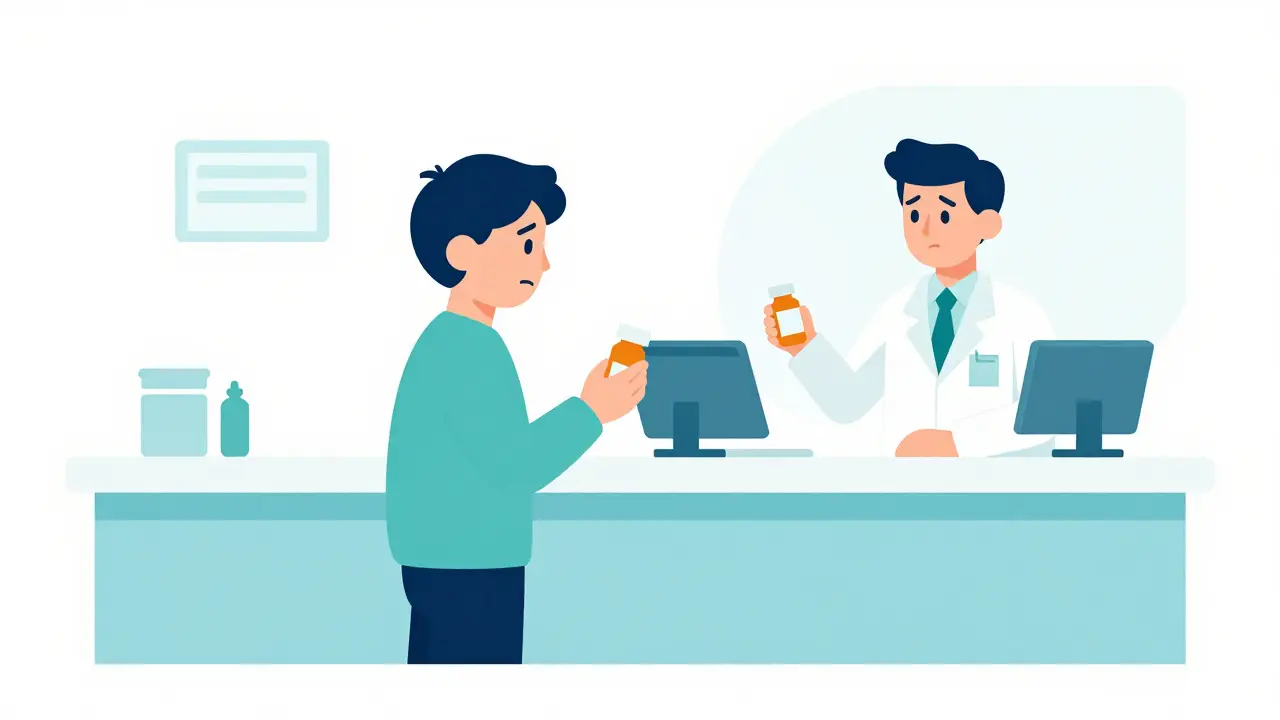
Imagine standing at a pharmacy counter, holding a life-saving medication, but not fully understanding how to take it because of a language barrier. It's a scary thought, but for millions of people with Limited English Proficiency (LEP), this is a daily reality. The stakes are incredibly high here; a 2012 University of California San Francisco study found that LEP patients experience medication errors at three times the rate of English-proficient patients when professional language services aren't used. You have a legal right to understand your healthcare, and that includes every single pill and syrup you're prescribed.
Your Right to Professional Translation
If you are picking up a prescription and struggle with English, you don't have to rely on a child, a spouse, or a friendly stranger to translate. In the U.S., medication counseling translation is a legally mandated support. This isn't just a courtesy; it's rooted in Title VI of the Civil Rights Act of 1964 and strengthened by Section 1557 of the Affordable Care Act (ACA). Essentially, any healthcare provider receiving federal funds must provide language assistance. This means the pharmacy cannot charge you for an interpreter-it's a free service provided to ensure your safety.
How to Request an Interpreter at the Pharmacy
Many people feel awkward asking for help or assume they are being a burden. However, pharmacists prefer using professional services because it protects them from errors and protects you from harm. When you arrive at the counter, be direct. Avoid saying "I need a little help," which might lead the pharmacist to just use a bilingual staff member who isn't actually trained in medical terms.
Instead, use a clear, firm phrase: "I need a professional interpreter for my medication counseling." By specifying "professional," you signal that you want a qualified expert, not just someone who speaks the language casually. If the pharmacist suggests using your family member, you can politely decline and remind them that you prefer a certified medical interpreter for accuracy.
Types of Interpretation Services You Might Encounter
Depending on the pharmacy's size and location, you'll likely encounter one of three delivery models. While all are helpful, they vary in effectiveness.
- On-Site Interpreters: This is the gold standard. A person is physically there to facilitate the conversation. According to the National Association of chain Drug Stores, about 78% of pharmacists report better patient comprehension with this method. It's the best for complex medications.
- Video Remote Interpreting (VRI): You'll see a professional on a screen via a tablet or monitor. It's a great middle ground because it allows for visual cues and body language, which helps in understanding if the patient is confused.
- Telephonic Interpreting: The pharmacist calls a service like RxTran and puts the phone on speaker. While the fastest and most common (often connecting in under 30 seconds), it can be harder for elderly patients or those with hearing impairments.
| Model | Best For | Main Advantage | Potential Downside |
|---|---|---|---|
| On-Site | Complex regimens | Highest comprehension | Rare outside big cities |
| Video (VRI) | General counseling | Visual interaction | Technical glitches |
| Telephonic | Quick clarifications | Immediate availability | Lack of visual cues |
The Danger of "Ad-Hoc" Interpreters
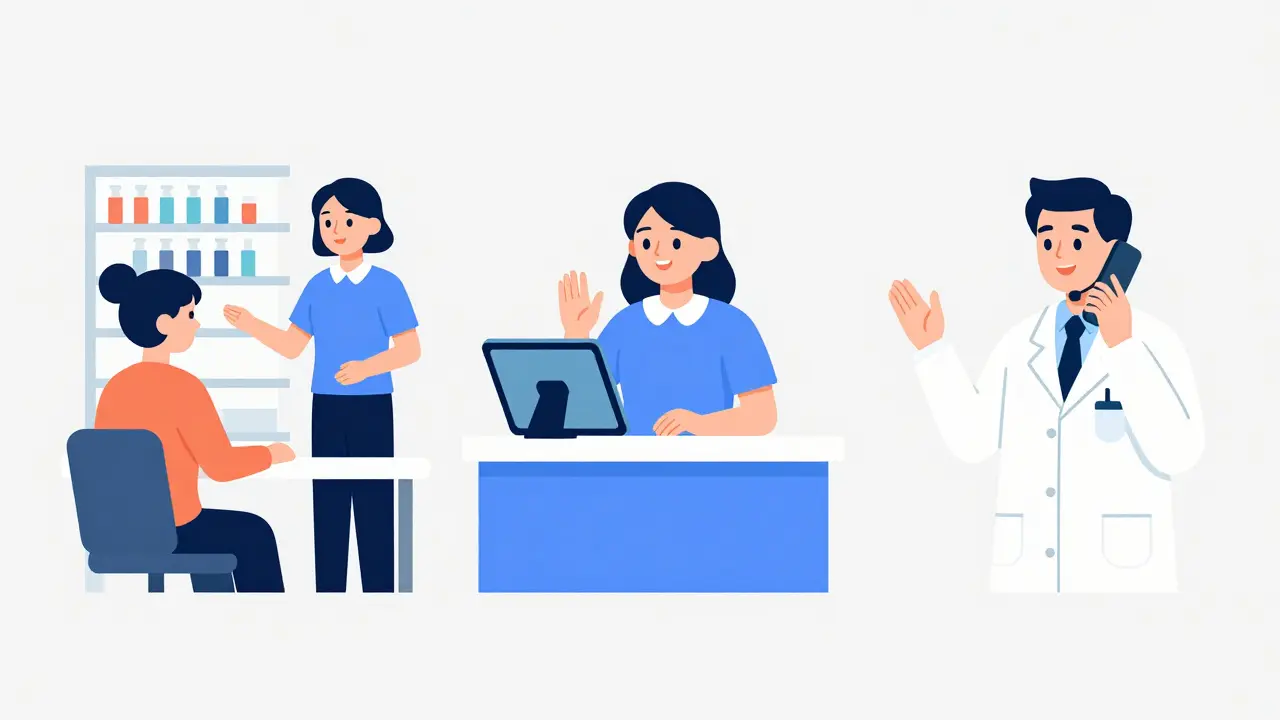
You might be tempted to let your bilingual son or daughter translate, or the pharmacist might offer a staff member who "knows some" of the language. Be very cautious. Medical terminology is a specialized language. Dr. Glenn Flores from Dell Medical School pointed out that using untrained bilingual staff or family members increases the risk of serious medication errors by 49% compared to using professionals.
A professional medical interpreter isn't just someone who speaks two languages; they are trained in confidentiality and pharmaceutical terms. For example, a casual speaker might translate "once daily" in a way that sounds like "whenever you feel like it," which can be dangerous for medications like blood thinners or insulin.
Written Translation and Labeling
Beyond the spoken word, the instructions on your pill bottle (known as SIGs) should also be clear. In California, the SafeRx program provides standardized translations for Spanish, Chinese, Korean, Russian, and Vietnamese. If you don't see these translations, you can ask the pharmacist if they have a library of pre-translated auxiliary labels.
It's worth noting that as of 2025, the ACA prohibits the use of AI translation for prescription labels without a human review. If a pharmacist tries to show you a Google Translate screen for your dosage, you have every right to ask for a human-verified translation. AI often misses the nuance of medical dosage, which can lead to over-dosing or under-dosing.
Quick Guide for Pharmacy Staff: Implementing Requests
If you're a pharmacy technician or pharmacist, handling these requests smoothly is key to avoiding legal trouble and patient harm. The Office for Civil Rights (OCR) has significantly increased enforcement, including multimillion-dollar penalties for language access violations.
- Identify the Need: Use standardized language identification posters or ask a simple question in several common languages.
- Access the Service: Use your approved vendor (like RxTran for phone/written services) immediately. Do not attempt to "wing it" if the pharmacy is busy.
- Document Everything: To comply with Medicaid and federal laws, document the language requested, the type of service used, and the duration. Use billing code T-1013 for the interpretation service alongside the CPT code for the medical encounter.
Common Pitfalls to Avoid
Both patients and providers often fall into a few common traps. Patients sometimes feel they are "bothering" the staff during a rush. Remember, a 10-minute delay to get an interpreter is better than a lifetime of consequences from a medication error.
For providers, the biggest pitfall is the "bilingual staff trap." Only about 12% of self-identified bilingual staff actually meet professional medical translation standards. Relying on a technician who is "pretty good" with Spanish can lead to catastrophic misunderstandings of contraindications or side effects.
Does the pharmacy charge for translation services?
No. Under federal law, specifically Section 1557 of the Affordable Care Act, pharmacies that receive federal funding must provide language assistance services free of charge to the patient.
Can I use my child as an interpreter?
While you can, it is strongly discouraged. Medical experts state that using family members increases the risk of medication errors by nearly 50% because they lack professional medical training and may unintentionally omit or change critical information.
What if the pharmacy says they don't have an interpreter?
Most pharmacies have access to 24/7 telephonic or video services. If they claim they have nothing, you can request that they contact their corporate office or a third-party service like RxTran to facilitate a call.
Are AI translations like Google Translate allowed for prescriptions?
As of January 1, 2025, ACA guidelines prohibit using AI translation for prescription labels and medication guidelines without a human review to ensure clinical accuracy.
What should I do if I still don't understand my medication after translation?
Ask the interpreter to help you perform a "teach-back." This is where you explain back to the pharmacist in your own words how you will take the medicine. If you can't do this accurately, the counseling session is not complete.


Written by Felix Greendale
View all posts by: Felix Greendale