
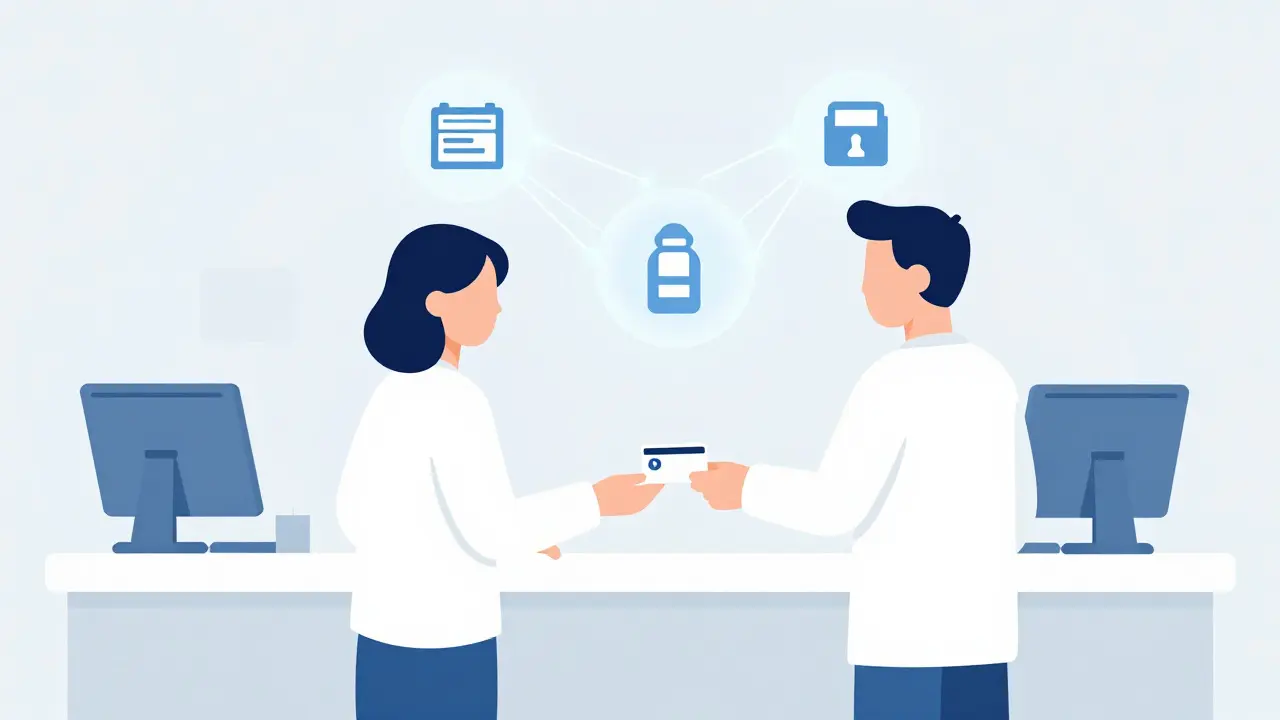
Imagine walking into a new pharmacy after moving cities. You hand over your insurance card and ask them to pick up your prescriptions from the old store. It seems simple, right? But behind that quick request lies a complex web of federal rules, data integrity checks, and labeling standards designed to keep you safe. One wrong digit on a label or a failed electronic handshake between systems can lead to a missed dose, a duplicate fill, or even a dangerous overdose. Understanding how prescription transfer works is no longer just for pharmacists; it’s essential knowledge for anyone managing chronic health conditions.
The Regulatory Shift: Why Electronic Transfers Matter Now
For decades, transferring controlled substances was a headache. The Drug Enforcement Administration (DEA) finally cracked the code with its August 2023 rule, effective August 28, 2023. This update amended 21 CFR § 1306.25, allowing single electronic transfers of Schedule II-V controlled substance prescriptions between retail pharmacies. Before this, Schedule II drugs like oxycodone couldn’t be transferred at all, forcing patients to visit their original prescriber for a new script if they switched pharmacies. Now, the process is faster, but the stakes are higher because the data must remain intact.
This change didn’t happen in a vacuum. It builds on the Electronic Prescriptions for Controlled Substances (EPCS) interim final rule from 2010, which laid the groundwork for digital security. Today, the system relies on NCPDP SCRIPT standards, specifically version 2017071, which ensures that when data moves from Pharmacy A to Pharmacy B, it doesn’t get scrambled. A 2022 study by the University of Florida found that these electronic standards maintain 98.7% data integrity, compared to just 82.3% for fax transfers and 76.1% for phone calls. That gap isn’t trivial; it’s the difference between a smooth refill and a three-day treatment interruption.
Step-by-Step: How to Execute a Safe Transfer
You might think the pharmacy handles everything, but you play a critical role. Under the current DEA rules, the patient initiates the transfer. Here is how to do it without hitting a snag:
- Verify Inventory First: Before calling your old pharmacy, check with the new one. Do they have the specific drug in stock? In California, 23% of initial transfer attempts failed simply because patients didn’t verify capabilities beforehand. If the new pharmacy is out of stock, the transfer might stall or fail entirely.
- Initiate the Request: Call your previous pharmacy and ask for an electronic transfer. Specify the exact medication, strength, and quantity. Avoid vague requests like "all my meds" unless you want to wait while they sort through your history.
- Confirm the Data Elements: Ensure the pharmacist notes the transfer action, their identification, the dates, and the remaining refills. For Schedule II drugs, this is a one-time event. Once transferred, the old prescription is void. For Schedules III-V, you can transfer up to the maximum authorized refills.
- Check the New Label Immediately: When you pick up the med, scan the label before leaving the counter. Look for the drug name, strength, directions, and your name. If something looks off, ask now, not later.
Anatomy of an Accurate Prescription Label
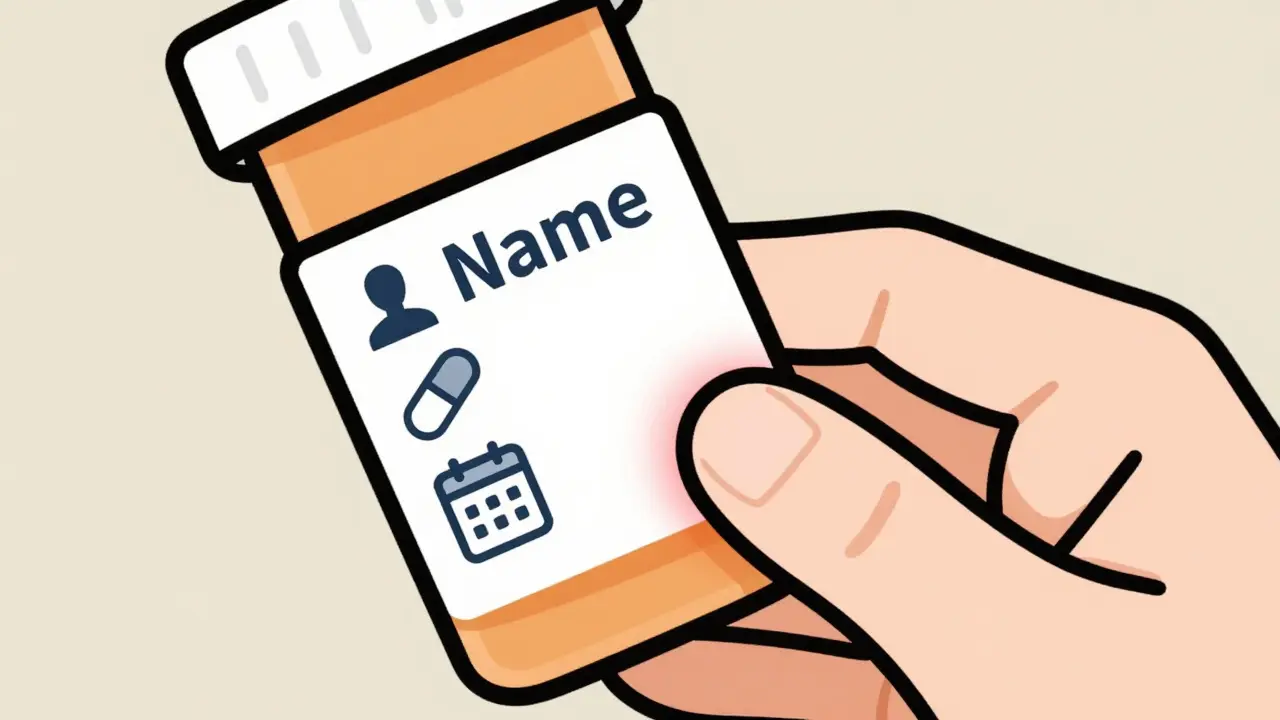
A label is more than a sticker; it’s a legal document and a safety tool. The FDA mandates specific elements under 21 CFR § 201.100 and 21 CFR § 1306.13. Missing one can render the prescription invalid or dangerous. Here’s what needs to be there:
- Patient Name and Date of Issue: Ensures the right person gets the right med at the right time.
- Drug Name, Strength, and Dosage Form: Must be clear and unambiguous. No abbreviations like "HCTZ" for hydrochlorothiazide.
- Directions for Use: Plain language beats medical jargon. "Take one tablet daily with food" is better than "PO qd ac."
- Prescriber Name and Pharmacy Contact Info: Critical for verification if questions arise later.
- Refill Count: Shows how many doses are left. This is where errors often creep in during transfers.
Pay special attention to decimal points. The National Coordinating Council for Medication Error Reporting and Prevention (NCCMERP) analyzed 2,300 error reports in 2022 and found that trailing zeros (like "1.0 mg") and missing leading zeros (like ".4 mg") cause ten-fold dosing errors. Always see "1 mg" and "0.4 mg". If you spot a "1.0", ask the pharmacist to clarify. It’s a small detail that prevents big mistakes.
Common Pitfalls and How to Avoid Them
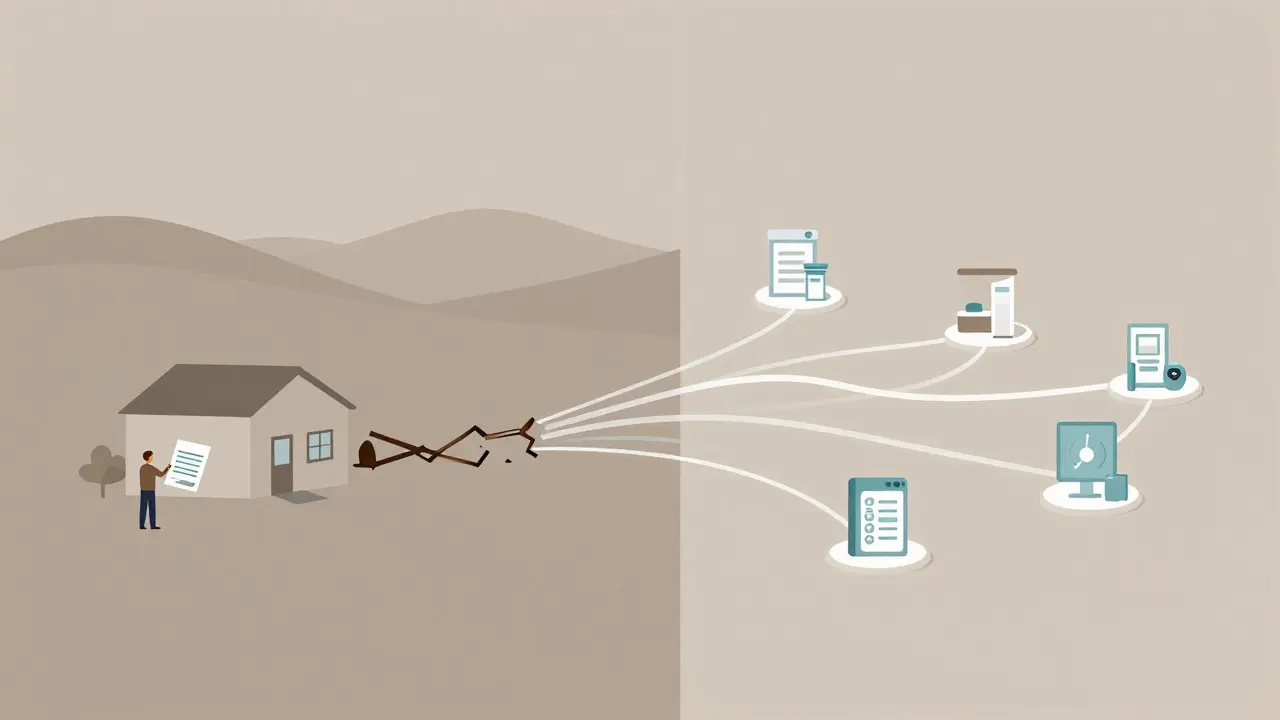
Even with good intentions, things go wrong. System incompatibility is the biggest culprit. The National Community Pharmacists Association surveyed pharmacies in 2022 and found that 18% experienced data truncation during transfers due to mismatched management systems. If your new pharmacy uses a different software platform than your old one, there’s a risk that part of the prescription data gets cut off. To mitigate this, ask the receiving pharmacist to confirm they received the full record before you leave.
Another trap is the "patchwork" of state regulations. Dr. Jerry Phillips, former FDA Office of Medication Errors director, noted that inconsistent state rules create compliance risks for pharmacists working across state lines. While the DEA standardized federal rules in 2023, states like Wisconsin and Massachusetts have their own nuances. For example, Wisconsin requires the transferring pharmacy’s DEA number and the receiving pharmacist’s name to be recorded on the invalidated prescription. If you’re traveling or moving, double-check local requirements or rely on chain pharmacies that operate under uniform national protocols.
Rural areas face another challenge: connectivity. Only 41% of rural pharmacies participate in electronic transfer networks, according to the National Rural Health Association in 2023. This leads to a 15% higher prescription abandonment rate in these regions. If you live in a remote area, consider keeping a backup plan, such as having a paper copy of your prescription details ready in case the electronic transfer fails.
The Future: Standardization and Technology
We’re heading toward a more seamless future. The FDA’s Patient Medication Information (PMI) rule, fully implemented by 2025, will mandate standardized, patient-friendly labels. This includes automated verification technology that scans labels for accuracy before they reach you. Early adopters report implementation costs between $12,500 and $18,750 per location, but the payoff is significant: fewer errors and clearer instructions.
Interoperability is also improving. Epic Systems and Cerner announced partnerships with major pharmacy chains in Q3 2023, enabling real-time transfer authorization. ASHP forecasts this will reduce transfer errors by 75%. As multi-substance prescriptions become more common-predicted to increase by 40% by 2030-these technologies will be vital. Until then, staying informed and proactive is your best defense against medication errors.
Can I transfer a Schedule II prescription more than once?
No. Since the DEA's 2023 rule, Schedule II controlled substances allow only a single electronic transfer between retail pharmacies. Once transferred, the original prescription is void. If you need to switch back, you must see your prescriber for a new script.
What should I do if the label has a trailing zero like '1.0 mg'?
Ask the pharmacist to clarify immediately. Trailing zeros are a known source of ten-fold dosing errors. The standard practice is to write '1 mg' for whole numbers and '0.4 mg' for decimals less than one, never '.4 mg'.
Why did my prescription transfer fail?
Common reasons include inventory shortages at the receiving pharmacy, incompatible pharmacy management systems causing data truncation, or lack of electronic network connectivity in rural areas. Always verify stock and system compatibility before initiating a transfer.
Do state laws affect how prescriptions are transferred?
Yes. While the DEA sets federal standards for electronic transfers, states like Wisconsin and Massachusetts have additional documentation requirements. For instance, some states require specific details about the transferring pharmacist and pharmacy to be recorded on the invalidated prescription.
Is electronic transfer safer than fax or phone?
Significantly safer. Electronic transfers using NCPDP SCRIPT standards show 98.7% data integrity, compared to 82.3% for fax and 76.1% for phone. This reduces the risk of misread numbers or lost information during the handoff.
Written by Felix Greendale
View all posts by: Felix Greendale