
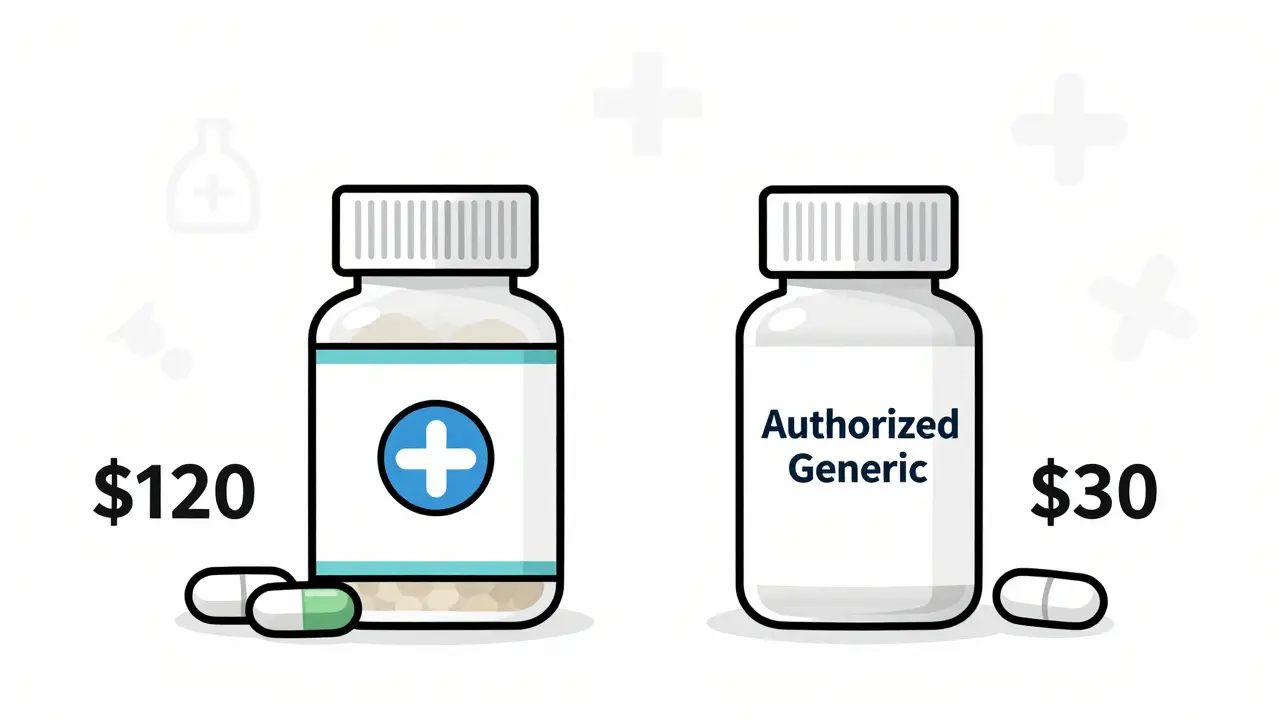
When you pick up a prescription, you might see two bottles that look different but contain the same medicine. One says Brand Name and costs $120. The other says Generic and costs $30. But what if there’s a third option - one that’s exactly like the brand, just without the brand name on the label? That’s an authorized generic. And it’s not the same as the generic you’ve probably used before.
What Exactly Is an Authorized Generic?
An authorized generic is not a copy. It’s not a knockoff. It’s the exact same pill, capsule, or injection that comes out of the original brand-name manufacturer’s factory - but sold under a different label. The FDA defines it clearly: "An approved brand name drug that is marketed without the brand name on its label." That’s it. Same active ingredients. Same inactive ingredients. Same manufacturing process. Same quality control. Even the same pill shape and color.
Here’s how it works: The company that made the original drug - say, Pfizer for Lipitor - decides to sell their own product under a different name. They might use a subsidiary like Greenstone LLC to handle the distribution. The product is identical. No changes. No shortcuts. Just a new label and a lower price.
Because it’s the same product, it doesn’t need to go through the usual generic approval process. Traditional generics have to prove they work the same way as the brand. Authorized generics don’t. They’re already the brand. All the company has to do is notify the FDA and slap on a new label.
How Authorized Generics Differ from Traditional Generics
This is where things get confusing - and why so many patients don’t know the difference.
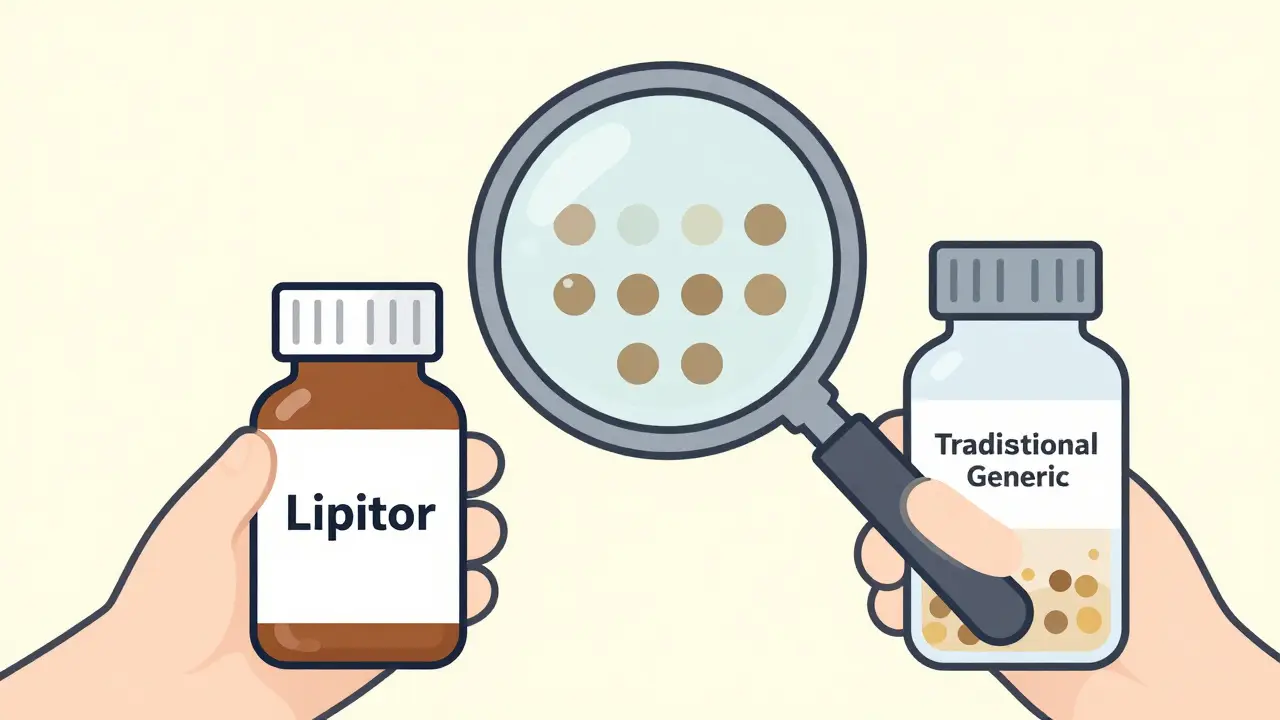
Traditional generics are made by different companies. They have to prove bioequivalence to the brand. That means they must deliver the same amount of medicine into your bloodstream at the same rate. But here’s the catch: they can use different fillers, dyes, or coatings. Those inactive ingredients don’t affect how the drug works - but they can affect how your body reacts to it.
Some people report side effects with traditional generics that they never had with the brand. A rash. A stomach upset. A weird taste. That’s not because the medicine didn’t work. It’s because the inactive ingredients changed. Your body might be sensitive to one of them.
Authorized generics solve that. No changes at all. Same fillers. Same coatings. Same manufacturing line. If you’ve been on a brand-name drug for years and you’ve never had a problem, an authorized generic lets you keep that exact experience - at a fraction of the cost.
Here’s a simple comparison:
| Feature | Authorized Generic | Traditional Generic |
|---|---|---|
| Manufacturer | Same as brand (or licensed by brand) | Different company |
| Active Ingredients | Identical to brand | Identical to brand |
| Inactive Ingredients | Identical to brand | May differ |
| Regulatory Path | Uses brand’s NDA - no separate approval needed | Must file ANDA and prove bioequivalence |
| Appears in FDA’s Orange Book? | No | Yes |
| Price Compared to Brand | 15-30% lower | 50-80% lower |
Why Authorized Generics Aren’t Listed in the Orange Book
You might hear pharmacists or insurance reps talk about the Orange Book. That’s the FDA’s official list of approved drug products with therapeutic equivalence ratings. It’s how pharmacies know which generics can be swapped automatically for brand-name drugs.
But authorized generics aren’t in it. Why? Because they’re not generics. They’re the brand - just unlabeled. The FDA doesn’t list them there because they’re covered under the original brand’s approval. If you look up Lipitor in the Orange Book, you’ll see the brand name. You won’t see the authorized generic version made by Greenstone. But that doesn’t mean it’s less effective. It means it’s not a separate product - it’s the same one.
Market Reality: Who Makes Them and When Do They Appear?
As of September 2023, there were 1,872 authorized generic products in the U.S. market. That’s over 460 unique drugs. And the big players? Three companies control most of it: Greenstone (Pfizer’s subsidiary), Prasco Laboratories, and Patriot Pharmaceuticals. Together, they make up 78% of all authorized generics.
These drugs usually hit the market right after the brand’s patent expires. Sometimes, they appear the same day. That’s not a coincidence. Brand companies often launch their own authorized generic to undercut the first traditional generic that’s trying to claim 180 days of exclusive rights under the Hatch-Waxman Act.
It’s a smart business move - but controversial. Critics say it’s a way for big pharma to delay real competition. If the first generic company invests millions to challenge a patent, only to see the brand launch its own cheaper version, that first company loses its financial reward. Some studies show that in 38.5% of cases, authorized generics were launched at the same time as traditional generics, effectively reducing the incentive to challenge patents.
What Patients Are Saying
A 2022 survey by the National Community Pharmacists Association found that 67% of independent pharmacists said patients specifically asked for authorized generics. Why? Because they’ve had bad experiences with traditional generics.
One patient in Brighton told her pharmacist she’d been on a brand-name statin for five years. When her insurance switched her to a traditional generic, she developed muscle pain she’d never felt before. She switched back - and the pain went away. When her insurance tried again, she asked for the authorized generic. It worked. Same dose. Same results. No side effects.
But here’s the problem: most people can’t tell the difference. A GoodRx study found that 78% of patients couldn’t tell an authorized generic from a traditional one just by looking at the bottle. And insurance companies? Sometimes they treat authorized generics like brand-name drugs - meaning you pay a higher copay even though the drug is identical.
What You Should Do
If you’re on a brand-name drug and your insurance switches you to a generic, ask your pharmacist: "Is this an authorized generic?" If it is, you’re getting the exact same medicine. If it’s a traditional generic, ask if an authorized version is available.
Check the FDA’s List of Authorized Generic Drugs - updated monthly. It’s public. You can look up your drug and see if an authorized version exists. It’s not always cheaper than traditional generics, but it’s always the same formulation.
Also, if you’ve had a reaction to a generic before - even a mild one - ask for the authorized version. It might make all the difference.
What’s Coming Next?
The FDA is under pressure. Congress has ordered a study on how authorized generics affect competition, with results due by December 2024. Meanwhile, the market is growing. In 2022, authorized generics made up 12.7% of all generic prescriptions. By 2027, that’s expected to hit 15.3% - especially for complex drugs like injectables or specialty medications where even tiny formulation changes matter.
For patients, the takeaway is simple: authorized generics are not traditional generics. They’re the brand - just cheaper. If you care about consistency, purity, and avoiding unexpected side effects, they’re worth asking for.
Are authorized generics as safe as brand-name drugs?
Yes. Authorized generics are identical to the brand-name drug in every way - active ingredients, inactive ingredients, manufacturing process, and quality standards. The only difference is the label. The FDA confirms they are therapeutically equivalent to the brand, even if the brand has no other generics approved.
Can I get an authorized generic through my insurance?
Sometimes. Many insurance plans treat authorized generics as generics and cover them at the lower generic copay. But some pharmacy benefit managers still classify them as "brand" drugs, which means you pay more. Always ask your pharmacist or insurer. If they say no, request a formulary exception - you have a strong case because the drug is chemically identical to the brand.
Why aren’t authorized generics listed in the FDA’s Orange Book?
Because they’re not separate products. The Orange Book lists drugs approved under the Abbreviated New Drug Application (ANDA) process. Authorized generics are marketed under the original brand’s New Drug Application (NDA), so they don’t need to be listed. They’re considered the same drug - just unlabeled.
Do authorized generics cost more than traditional generics?
Usually not. Authorized generics typically cost less than the brand-name version - often 15-30% cheaper. But they may cost slightly more than traditional generics because they don’t benefit from the same level of price competition. Traditional generics often have multiple manufacturers driving prices down. Authorized generics usually have only one or two sources.
How do I know if my prescription is an authorized generic?
Check the drug label. Authorized generics usually have the name of the brand manufacturer printed on the bottle - like "Made by Pfizer" or "Distributed by Greenstone" - even though the brand name isn’t on the front. You can also check the FDA’s List of Authorized Generic Drugs online. Ask your pharmacist: "Is this an authorized generic?" They can tell you based on the product code.


Written by Felix Greendale
View all posts by: Felix Greendale