
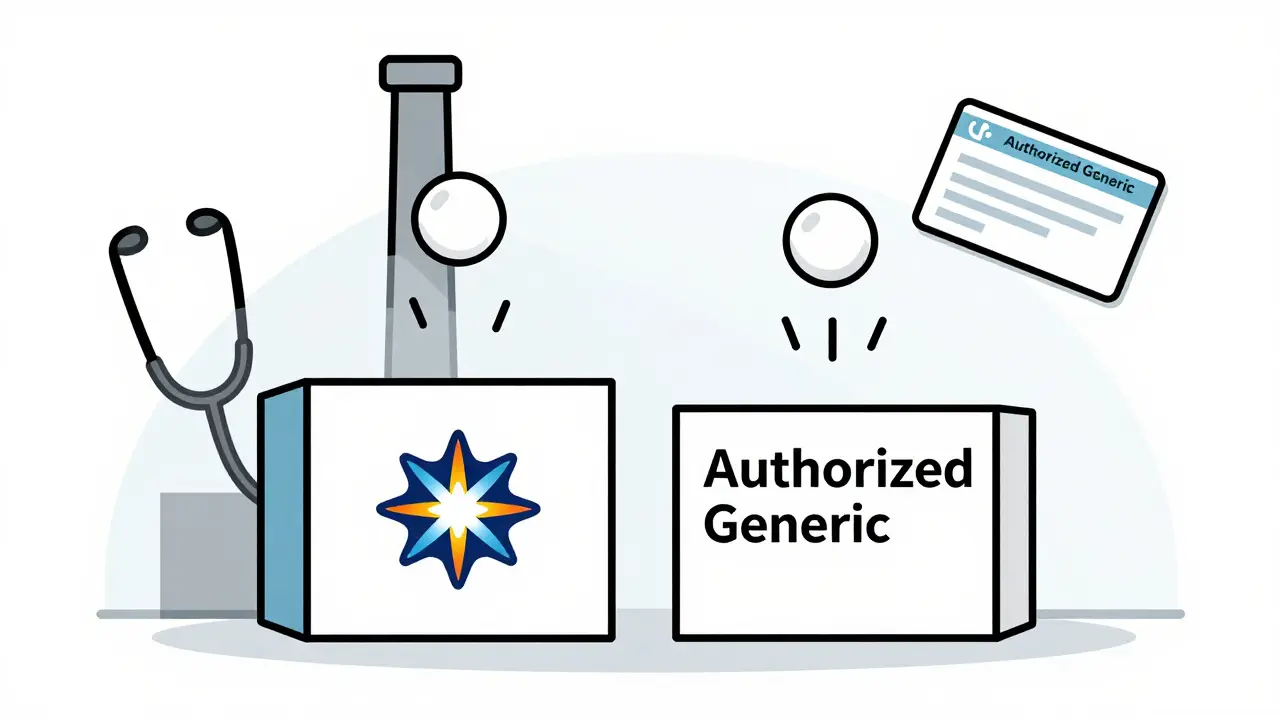
When you fill a prescription for a medication like Protonix or Synthroid, you might not realize there are two types of generics waiting behind the counter: the kind made by a different company, and the kind made by the same company that makes the brand-name drug. The second one is called an authorized generic. It’s not a copy. It’s the exact same pill, same factory, same formula-just without the brand name on the box. And for your insurance plan, that difference matters a lot.
What Exactly Is an Authorized Generic?
An authorized generic isn’t a generic drug in the traditional sense. Traditional generics go through the FDA’s Abbreviated New Drug Application (ANDA) process to prove they work the same as the brand. Authorized generics skip all that. They’re made under the brand manufacturer’s original New Drug Application (NDA). That means they’re chemically and therapeutically identical to the brand-name version-down to the inactive ingredients. The only difference? The label says nothing about the brand name. It might have a different color, shape, or packaging, but inside? Same thing.
This model started after the Hatch-Waxman Act of 1984. It was meant to balance innovation with access. But over time, brand manufacturers realized they could protect their market share by launching their own generic version right when the patent expired. Companies like Greenstone (Pfizer’s subsidiary), Prasco, and Patriot Pharmaceuticals now produce most of these. As of 2023, the FDA lists 147 active authorized generics, including popular drugs for heart disease, allergies, and thyroid conditions.
Why Insurance Plans Care About Formulary Placement
Insurance companies organize drugs into tiers. Tier 1 usually has the cheapest drugs-often traditional generics. Tier 3 or 4? That’s where brand-name drugs sit, with higher copays. Authorized generics don’t belong in the expensive tiers. They belong right next to regular generics. Why? Because they’re not just similar-they’re the same drug.
Studies show that 87% of Medicare Part D plans treat authorized generics the same way they treat traditional generics. That means a patient might pay $10 instead of $50 for the same medication. For insurers, this is a win: lower costs without risking patient outcomes. A 2022 study of over 1,200 Medicare plans found that those with clear policies for authorized generics saved 7.3% per member per month on prescription costs.
But here’s the catch: not every plan does this right. Some still treat authorized generics like brand-name drugs. Why? Because pharmacy benefit managers (PBMs) and insurers sometimes don’t have the right codes in their systems. Authorized generics aren’t listed in the FDA’s Orange Book-the database most systems use to identify generics. So if a pharmacist doesn’t know to look for them separately, the claim might get denied or misclassified.
How Authorized Generics Compare to Traditional Generics
| Feature | Authorized Generic | Traditional Generic |
|---|---|---|
| Manufacturer | Same as brand-name maker | Different company |
| Regulatory Path | Uses brand’s NDA | Uses ANDA |
| Active Ingredients | Identical to brand | Identical to brand |
| Inactive Ingredients | Identical to brand | May differ |
| Formulary Tier | Usually Tier 2 (same as generic) | Usually Tier 2 |
| Availability | Only 15-20% of brand drugs have one | Available for most drugs after patent expiry |
The biggest difference? Inactive ingredients. Traditional generics can swap out fillers, dyes, or binders as long as they’re bioequivalent. That’s fine for most people. But for someone with allergies or sensitivities-say, to a certain dye or preservative-that change can cause problems. Authorized generics avoid that entirely. If your body reacts badly to the brand, the authorized version is your safest bet.
Real Patient Experiences
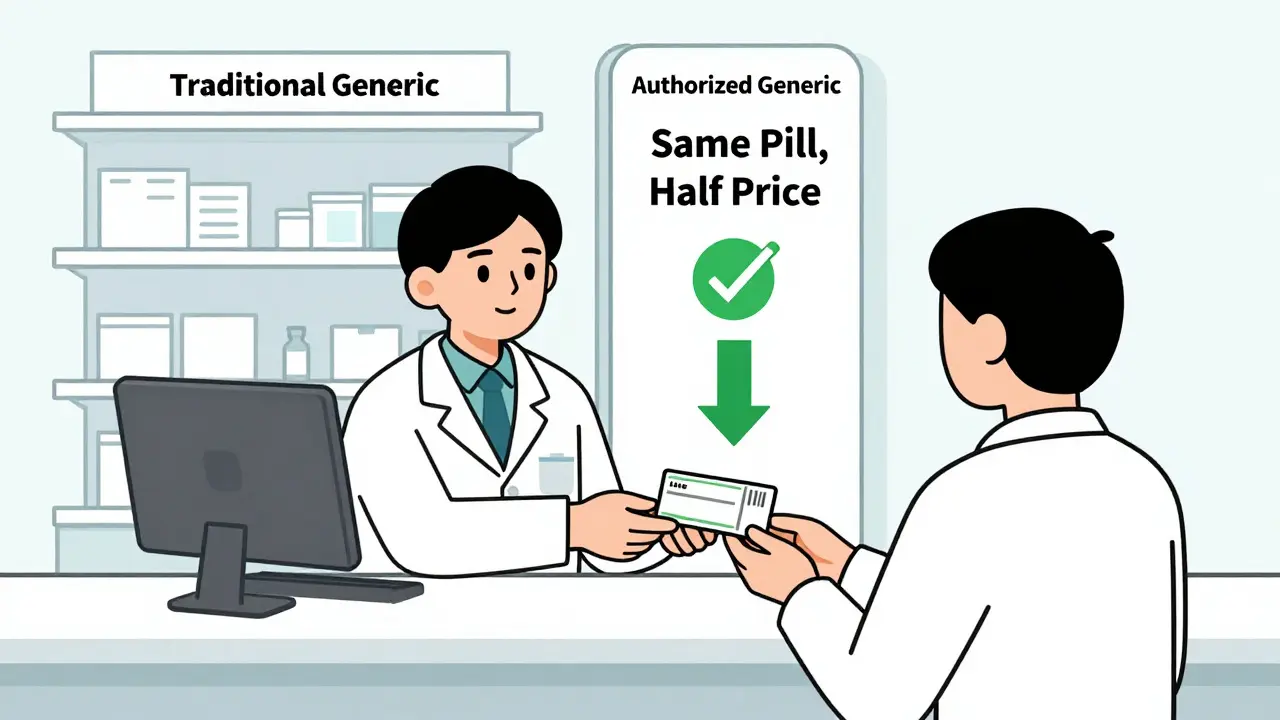
On Reddit, users share stories about how authorized generics saved them. One person wrote: "My insurance denied Synthroid because it was brand, but approved the authorized generic with a $10 copay. My thyroid levels stabilized within weeks. I didn’t even notice the switch."
But confusion is common. A 2022 GoodRx survey found that 34% of patients didn’t know they’d been switched to an authorized generic. Some thought their medication changed and panicked. Others got denied coverage because their pharmacy’s system didn’t recognize the NDC code. One woman’s claim was rejected because the system labeled the authorized generic as "brand"-even though it cost half as much.
Pharmacy systems are catching up. Express Scripts reported that 89% of authorized generic claims were approved on the first try in 2023. That’s close to the 92% approval rate for traditional generics. But Walgreens admitted they had a 12% error rate in early processing. It took specialized training and updated software to fix it.
What Insurers and PBMs Are Doing Now
Major PBMs are changing their policies. OptumRx launched an "Authorized Generic First" rule in January 2023 for 47 high-cost drugs. That means if an authorized generic exists, it’s the default covered option. Express Scripts added a special flag to their formulary system in late 2022 to automatically route claims correctly.
The Inflation Reduction Act of 2022 is pushing this further. Medicare Part D is expected to see a 15-20% increase in authorized generic use by 2025. Why? Because lowering out-of-pocket costs is a top goal. The Centers for Medicare & Medicaid Services (CMS) already confirmed that authorized generics qualify for the same coverage as traditional generics.
Employers are watching too. According to the Kaiser Family Foundation’s 2023 survey, 68% of large employers plan to treat authorized generics differently from traditional generics in their 2024 health plans. Some may lower copays even more. Others might make them the preferred option.
Challenges and Controversies
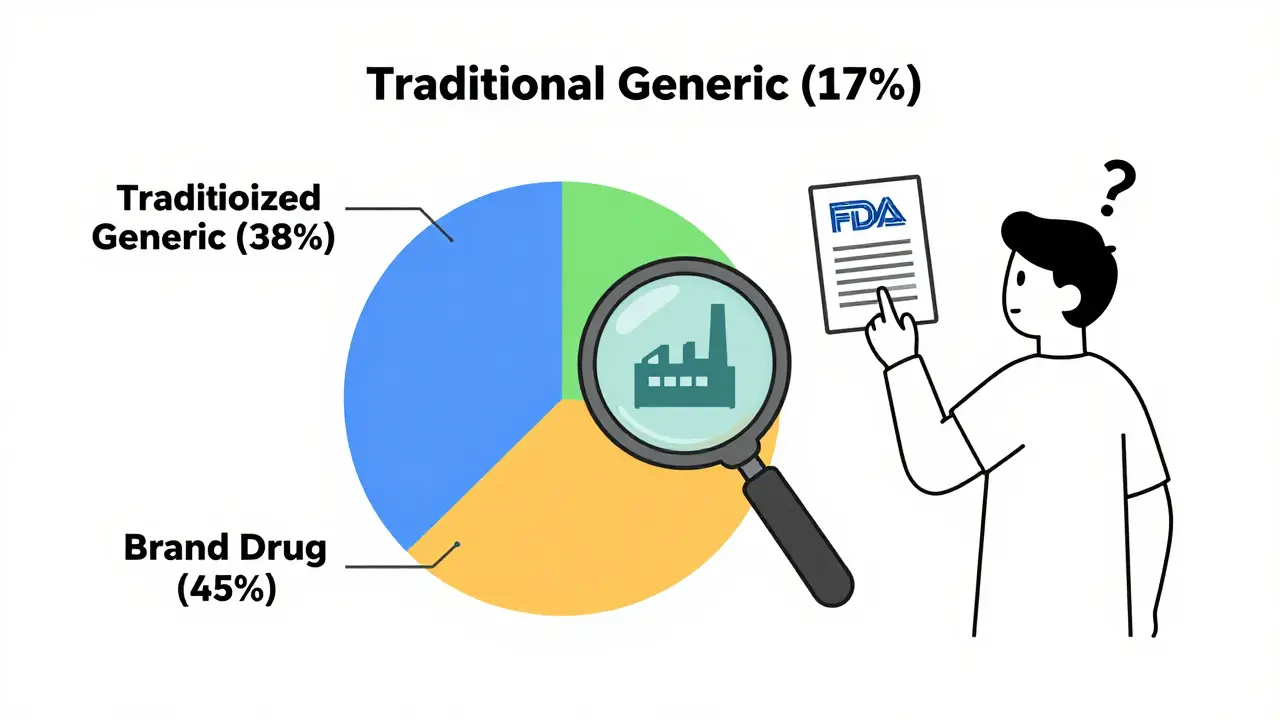
Not everyone sees authorized generics as a win. Critics argue they’re a tactic to block real competition. Dr. Peter Bach from Memorial Sloan Kettering found that in 22% of cases, a brand company launching its own generic delayed other generic manufacturers from entering the market. That keeps prices higher longer.
The FTC has taken notice. Their 2022 report flagged authorized generics as a potential anti-competitive tool. If a brand manufacturer owns the authorized version, they can control pricing and timing. That’s why the FDA added new reporting rules in 2023 under GDUFA III-to make the market more transparent.
And availability is still limited. Only about 1 in 5 brand-name drugs have an authorized generic. Cardiovascular drugs lead the way, with 28% coverage. Oncology drugs? Only 7%. That means for many patients, the choice is still between expensive brands and traditional generics-with all their risks.
What You Need to Do
If you’re on a medication with an authorized generic:
- Check your formulary. Ask your insurer: "Is the authorized generic covered at the generic tier?"
- When you pick up your prescription, ask the pharmacist: "Is this the authorized version?"
- If you have allergies or sensitivities, make sure the inactive ingredients match your brand.
- If your claim gets denied, appeal. Use the FDA’s list of authorized generics as proof.
For prescribers: When writing a prescription, specify "dispense as written" if you want the authorized version. Otherwise, the pharmacy might default to the cheapest generic-even if it’s not the same.
The Bottom Line
Authorized generics aren’t magic. But they’re one of the few tools that lets patients get the exact same drug they’ve been on-without paying brand prices. For insurers, they’re a smart way to cut costs without risking health outcomes. The real problem? Too many people don’t know they exist. Too many systems still don’t recognize them. And too many patients are stuck paying more because their plan doesn’t treat them like what they are: the same drug, cheaper.
The future? More coverage. More clarity. More savings. But only if everyone-from insurers to pharmacists to patients-learns how to use them right.
Are authorized generics the same as brand-name drugs?
Yes. Authorized generics contain the exact same active and inactive ingredients as the brand-name drug. They’re made in the same factory, under the same approval, and meet the same FDA standards. The only difference is the label and packaging-no brand name.
Why are authorized generics cheaper than brand-name drugs?
They’re cheaper because they don’t carry the brand’s marketing, advertising, or R&D costs. Since they’re made by the original manufacturer under the same NDA, they bypass the expensive approval process that traditional generics go through. That allows them to be priced like generics-typically 15-25% below the brand price.
Do all insurance plans cover authorized generics?
Most do-but not all. Around 87% of Medicare Part D plans cover them at the same tier as traditional generics. However, some commercial plans still classify them as brand-name drugs due to outdated systems or lack of awareness. Always check your plan’s formulary or call customer service to confirm.
Can I ask my pharmacist for an authorized generic?
Yes, and you should. If your drug has an authorized version, ask specifically for it. Some pharmacies automatically substitute the cheapest generic, which might not be the authorized one. Requesting it by name ensures you get the identical drug at a lower cost.
Why don’t all brand-name drugs have authorized generics?
Manufacturers only create them if it makes financial sense. They’re most common for high-demand drugs with long patent life and high profit margins. For drugs with low sales or complex manufacturing, it’s not worth the effort. As of 2023, only 15-20% of brand-name drugs have an authorized generic version.


Written by Felix Greendale
View all posts by: Felix Greendale