

Imagine walking through a sunny meadow or a wooded trail, only to find a tiny bug the size of a poppy seed attached to your skin. It seems harmless, but if that bug is a nymph tick, you might be dealing with a complex bacterial infection. Lyme disease is a tick-borne illness caused by the spirochete bacterium Borrelia burgdorferi. It's the most common vector-borne disease in the US, and while it's highly treatable, the window for a quick recovery depends entirely on how fast you act.
The Clock is Ticking: How Infection Happens
You don't get Lyme disease the second a tick touches you. The bacteria have to travel from the tick's gut to its salivary glands before they can enter your bloodstream. This biological process takes time. According to the CDC, the tick usually needs to be attached for more than 24 hours to transmit the infection. In some cases, it can happen as early as 15 hours, but the 24-hour mark is the critical threshold.
The main culprits are Blacklegged ticks also known as Ixodes scapularis, prevalent in the eastern US and the Western blacklegged ticks (Ixodes pacificus). The real danger comes from the nymph stage. These ticks are so small they're almost invisible, making them much harder to spot than the larger adult ticks. Because they're most active during spring and summer-exactly when we're all outdoors-the risk of a bite peaks during these seasons.
Stage 1: Early Localized Infection (Day 1 to 28)
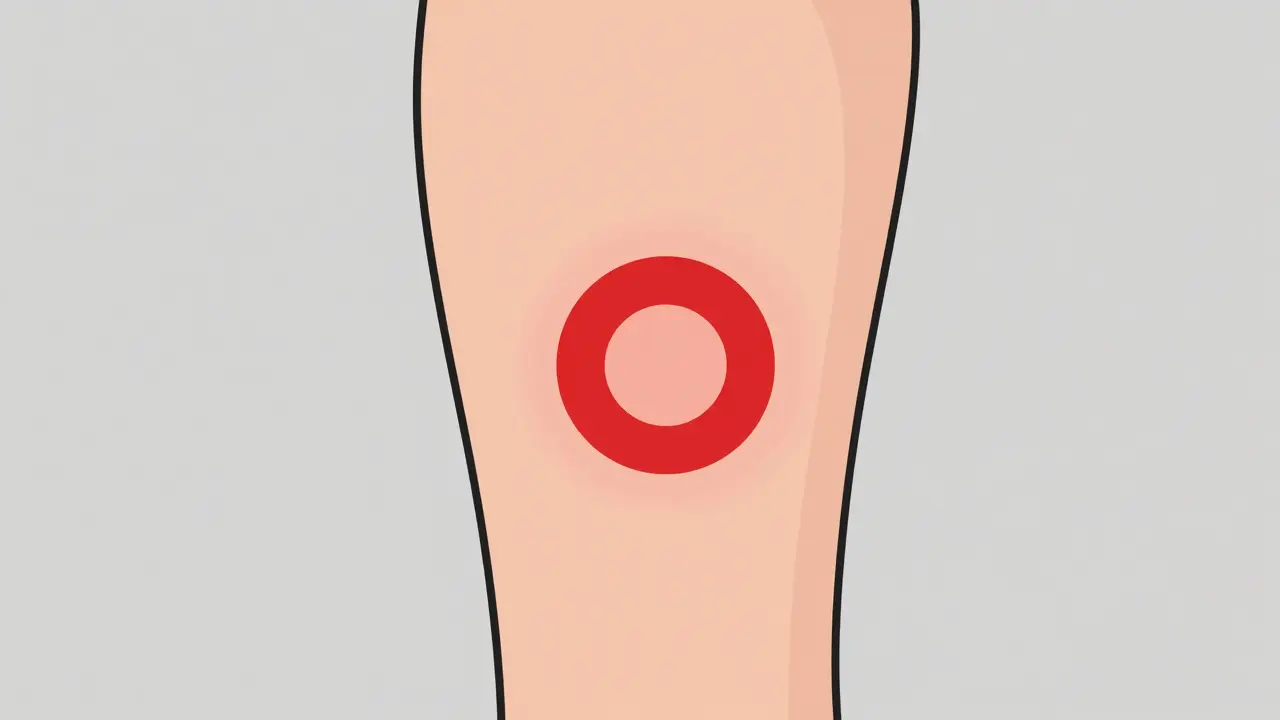
Within a few days to a month after the bite, the first signs appear. For about 70-80% of people, this shows up as erythema migrans a characteristic bull's-eye rash that expands over time . This rash isn't just a red spot; it often develops concentric rings. If you see this, you don't need a blood test to know what's happening-the rash itself is a diagnostic giveaway.
Along with the rash, you might feel like you've come down with a sudden flu. Common symptoms include:
- Fatigue (reported by 70% of patients)
- Headaches (61% of cases)
- Fever and chills (45% of cases)
At this stage, Lyme disease treatment is straightforward. A short course of oral antibiotics, typically 10 to 21 days of doxycycline for adults or amoxicillin for children, usually clears the infection completely.
Stage 2: Early Disseminated Infection (Weeks to Months)
If the bacteria aren't stopped in the first stage, they start traveling through the blood to other parts of the body. This is the disseminated phase. You might notice new "bull's-eye" rashes appearing in areas far from the original bite. But the more serious concerns are neurological and cardiac.
Some people develop facial palsy, where one side of the face droops. Others may experience Lyme carditis an inflammation of the heart tissues that can interfere with heart rhythms , affecting up to 10% of untreated patients. Because the infection has spread, the treatment often shifts from oral pills to intravenous (IV) antibiotics, such as ceftriaxone, for 14 to 28 days.
Stage 3: Late Disseminated Infection (Months to Years)
When Lyme goes undetected for months or years, it settles into the joints and the nervous system. The most common hallmark of late-stage Lyme is severe joint pain and swelling, particularly in the knees. About 60% of untreated patients eventually face this struggle.
Neurological issues also become prominent, ranging from neuropathy (tingling or numbness in the extremities) to "brain fog" and cognitive difficulties. Recovering from late-stage infection is much harder and often requires a combination of targeted antibiotic therapy and long-term symptom management.
| Stage | Timeline | Key Symptoms | Typical Treatment |
|---|---|---|---|
| Early Localized | 1-28 Days | Bull's-eye rash, fever, fatigue | Oral Antibiotics (Doxycycline) |
| Early Disseminated | Weeks to Months | Multiple rashes, facial palsy, heart palpitations | IV Antibiotics (Ceftriaxone) |
| Late Disseminated | Months to Years | Chronic joint swelling, cognitive impairment | Long-term targeted antibiotics |
The Diagnostic Struggle and the "Chronic" Debate
Getting a diagnosis isn't always a straight line. Many patients report a frustrating journey; data shows that 63% of patients saw three or more doctors before getting the right answer, with some waiting nearly two years. This happens because standard serological tests (like ELISA and Western blot) are only 29-40% sensitive in the early stages. Your body simply hasn't produced enough antibodies for the test to pick up yet.
This delay leads to a heated debate in the medical community. The Infectious Diseases Society of America (IDSA) argues that once the standard antibiotic course is finished, the infection is gone. They don't recognize "chronic Lyme" as a persisting bacterial infection. On the other hand, the International Lyme and Associated Diseases Society (ILADS) believes some patients need longer, individualized antibiotic treatment because the bacteria can persist in the body.
Then there is Post-Treatment Lyme Disease Syndrome (PTLDS) a condition where fatigue and joint pain persist for over 6 months after antibiotic treatment . About 10-20% of patients experience this. It's not necessarily an active infection, but rather a lingering effect of the illness on the body's immune system.
How to Protect Yourself and What to Do After a Bite
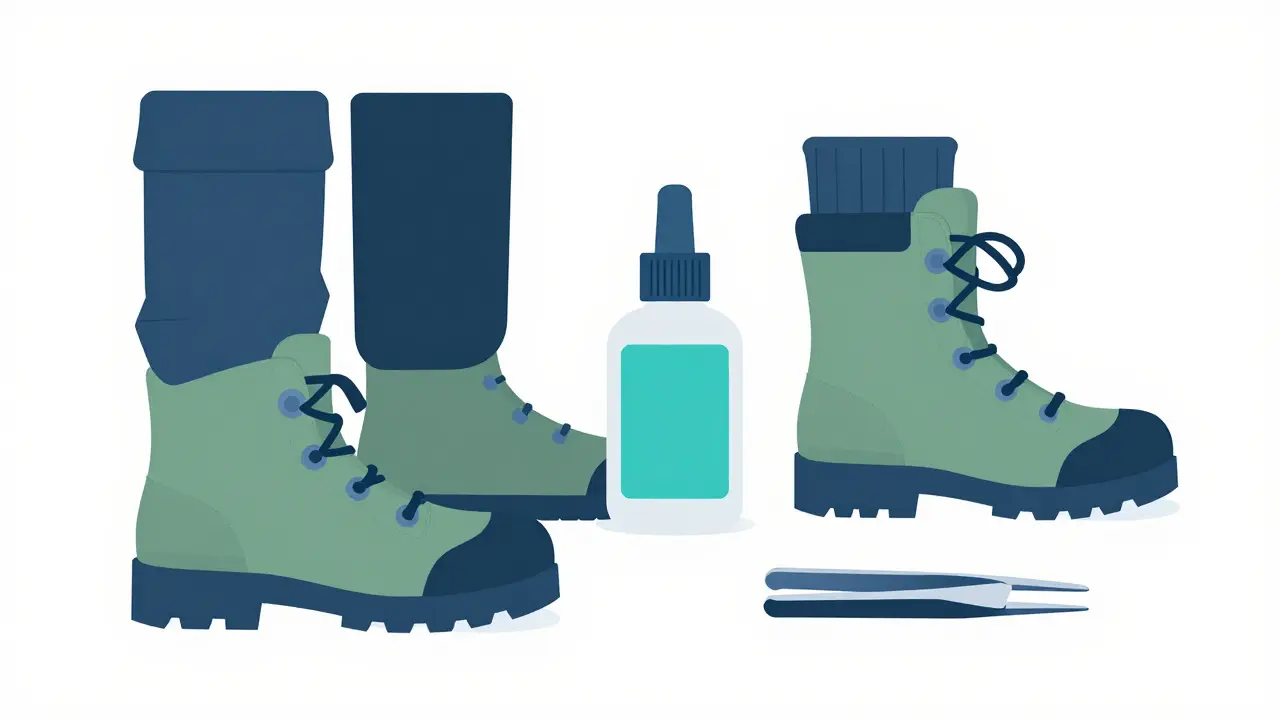
Prevention is your best defense. Since ticks love tall grass and leaf litter, wear long sleeves and tuck your pants into your socks when hiking. Use repellents containing DEET or treat your gear with permethrin.
If you find a tick, the goal is speed. Removing a tick within 24 hours can reduce your infection risk by 95%. After you get home, shower within two hours to wash off any unattached ticks and perform a full-body check. Use a fine-tipped tweezer to pull the tick straight out by the head.
In high-risk areas, if you find an engorged Ixodes scapularis tick that has been attached for 36 hours or more, doctors may recommend a single prophylactic dose of 200mg of doxycycline within 72 hours of the bite to stop the infection before it even starts.
The Future of Lyme Diagnostics and Prevention
We are finally seeing a shift in how we detect this disease. In 2023, the FDA approved the MiQLick test, which looks for the bacteria's DNA in urine. This is a game-changer because it's 92% sensitive even in the early stages, bypassing the need to wait for the body's antibody response.
Vaccines are also on the horizon. The VLA15 vaccine is currently in late-stage trials, showing promising efficacy across different strains of Borrelia. Additionally, mRNA-based vaccines are being developed, which could provide a faster way to protect people in tick-heavy regions.
How long does a tick need to be attached to transmit Lyme disease?
Generally, a tick must be attached for more than 24 hours to transmit the Borrelia bacteria. While some research suggests it can happen as early as 15 hours, removing the tick before the 24-hour mark significantly lowers your risk of infection.
Is the bull's-eye rash the only sign of early Lyme disease?
No, although erythema migrans (the bull's-eye rash) appears in 70-80% of cases. Some people never develop a rash but still experience flu-like symptoms such as extreme fatigue, fever, and joint aches.
Can Lyme disease be cured with antibiotics?
Yes, the vast majority of patients recover completely when diagnosed early and treated with the appropriate course of antibiotics like doxycycline or amoxicillin. The key is starting treatment before the infection enters the disseminated stage.
What is the difference between chronic Lyme and PTLDS?
Chronic Lyme is a controversial term used to describe a persisting active infection that some believe requires long-term antibiotics. Post-Treatment Lyme Disease Syndrome (PTLDS) refers to lingering symptoms like joint pain and fatigue that last more than 6 months after the antibiotic treatment has successfully cleared the bacteria.
Why are standard blood tests sometimes inaccurate?
Standard tests like ELISA and Western blot look for antibodies, not the bacteria itself. In the first few weeks of infection, your immune system may not have produced enough antibodies for the test to detect, leading to a false negative.
Next Steps for Your Health
If you suspect you've been bitten by a tick, don't wait for a rash to appear. Start a symptom diary and monitor your temperature. If you develop a fever or a circular rash, contact a healthcare provider immediately and mention the tick exposure. For those in high-risk areas, consider a yearly check-up to discuss preventative measures or the latest diagnostic options available in your region.


Written by Felix Greendale
View all posts by: Felix Greendale