
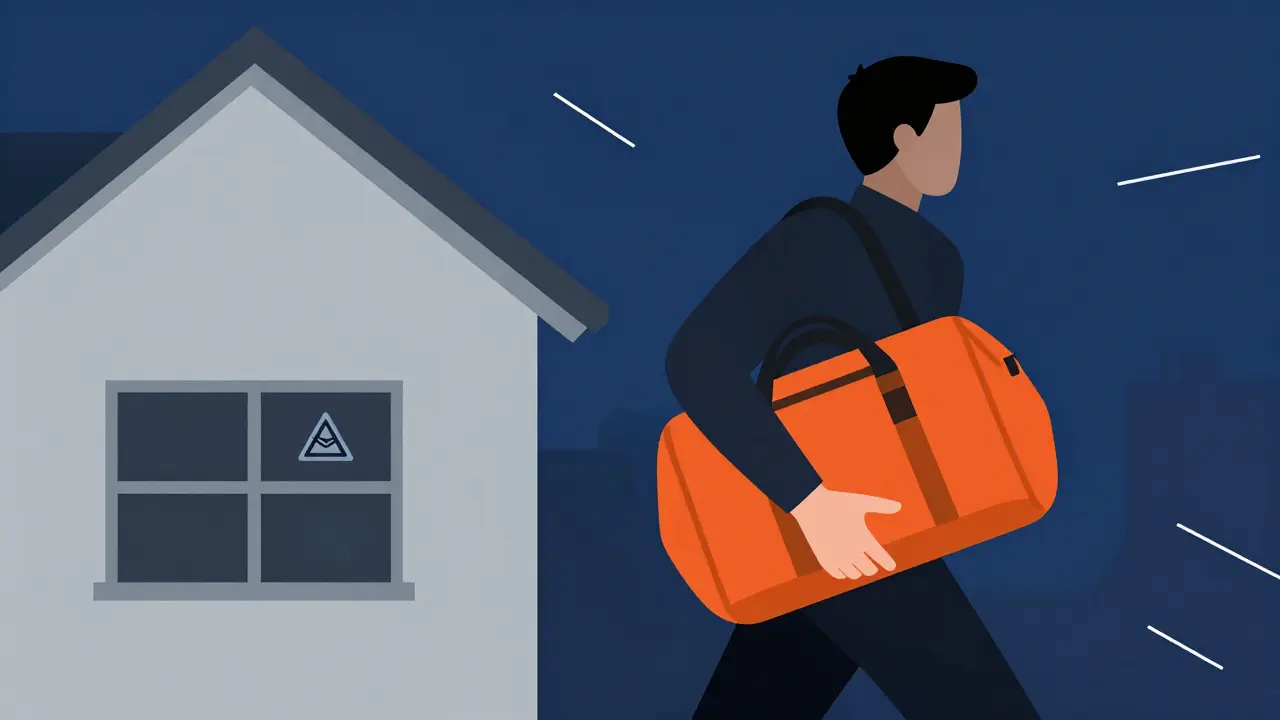
Imagine the power goes out. The water stops running. And then comes the knock on the door telling you to leave now. In that panic, do you know where your life-saving pills are? If not, you are not alone. Most people keep their medications in a bathroom cabinet or a nightstand drawer-places that get flooded, burned, or locked behind closed doors when disaster strikes.
A medication go-bag is a portable collection of essential medications and medical information designed for immediate access during emergencies or disasters. It is not just a plastic bin; it is a lifeline. According to Geoffrey C. Wall, Pharm.D., from Drake University, waiting until a hurricane warning hits to gather your meds is a dangerous gamble. The goal is simple: ensure you have continuity of care during the critical first 72 hours-or longer-when pharmacies are closed and roads are blocked.
How Many Days of Medication Should You Pack?
The biggest debate in emergency prep circles isn't about water or food-it's about time. How long will you be cut off from help?
The Federal Emergency Management Agency (FEMA) traditionally recommends a 7-day supply of essential medications. This covers the standard "golden window" after a disaster before aid organizations can fully mobilize. However, reality often bites harder than guidelines suggest.
If you live in a high-risk zone like California, Alert San Diego advises keeping a two-week supply of prescription and over-the-counter medications. Why the difference? Earthquakes and wildfires can isolate communities for much longer than typical storms. Real-world data backs this up. During Hurricane Ian, many evacuees found themselves stranded for 11 days, far exceeding the FEMA baseline. User 'MedPrepRN' shared on Reddit that having only seven days of meds left them vulnerable during those extra four days of isolation.
| Organization | Recommended Duration | Context/Rationale |
|---|---|---|
| FEMA | 7 Days | Standard national guideline for initial evacuation response. |
| Alert San Diego | 14 Days | Tailored for earthquake/wildfire zones with prolonged isolation risks. |
| CDC | 14 Days | Specifically for individuals with chronic conditions requiring strict adherence. |
For most people, aiming for two weeks is safer. It accounts for traffic jams, shelter capacity issues, and delayed restocking. If space is tight, prioritize your most critical drugs: heart medication, insulin, inhalers, and psychiatric medications.
What Exactly Goes Into the Bag?
Packing a go-bag is more than shoving pill bottles into a backpack. You need a system. The American Red Cross specifies that your kit must include medications plus copies of personal documents. But let’s break that down into actionable items.
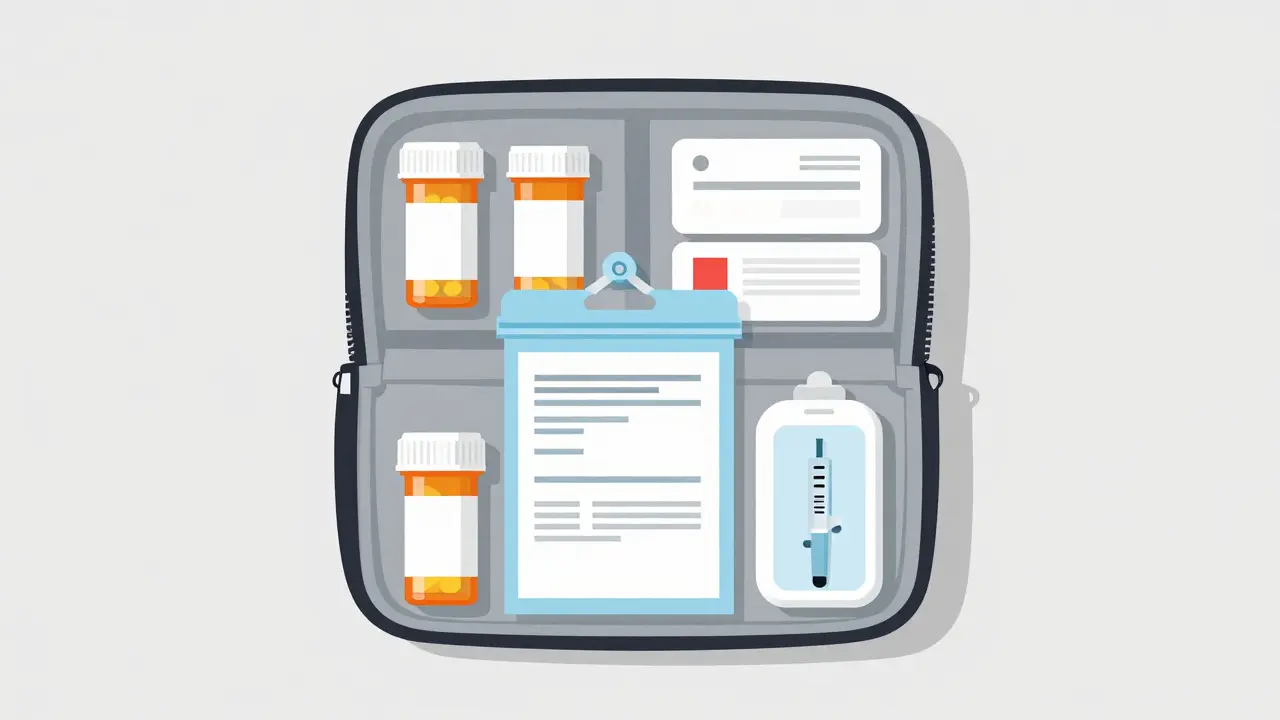
- Prescription Medications: Keep these in their original containers. Never strip labels. Emergency doctors need to see the dosage, frequency, and prescribing doctor’s name instantly.
- Over-the-Counter (OTC) Essentials: Include pain relievers (acetaminophen or ibuprofen), anti-diarrheals, antacids, and allergy meds. These treat common ailments that flare up under stress.
- Medical Documentation: A waterproof folder containing a list of all medications, dosages, allergies, and your primary care physician’s contact info. Westchester County Emergency Services emphasizes listing *why* you take each drug. This helps medics avoid dangerous interactions if you’re unconscious.
- Advance Directives: Copies of living wills or power-of-attorney forms. In chaos, legal authority matters.
- Identification & Insurance Cards: Photocopies or photos on your phone (stored offline) of IDs and insurance cards.
Don’t forget the small things. Adhesive bandages, sterile gauze, and antibiotic ointment are part of the "medical items" category mentioned by the Red Cross. They handle minor injuries so you don’t waste precious resources on cuts and scrapes.
Storage Secrets: Keeping Meds Safe and Fresh
You can pack the perfect bag, but if your meds expire or melt, it’s useless. Storage is where most people fail.
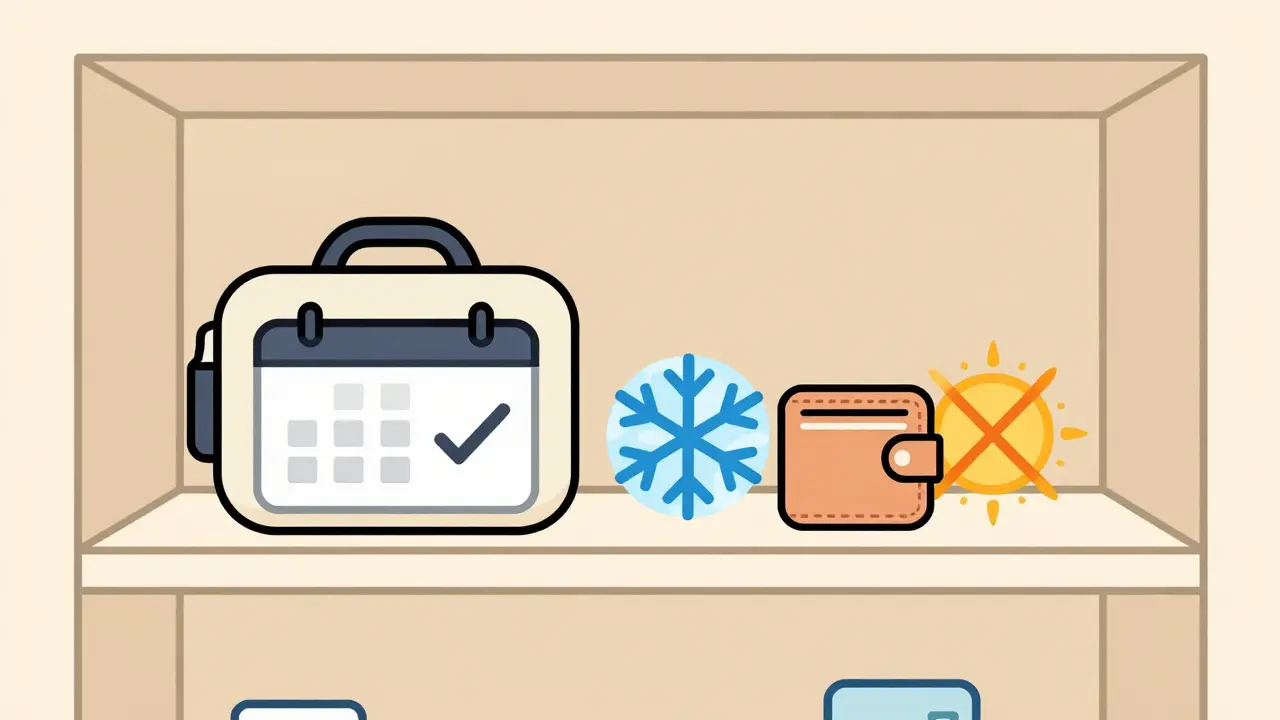
First, location matters. Consumer Reports advises storing your go-bag in a dry, cool place that is easy to access but away from children. A high shelf in a bedroom closet works well. Avoid garages or attics where temperatures swing wildly.
Second, moisture is the enemy. Use a water-resistant container. Ziploc bags inside a hard-shell case add an extra layer of protection against floods or rain. The U.S. Department of State notes that grab-and-go bags should be easily portable, so test the weight. Can you carry it while running?
Third, rotation. Medications expire. Epinephrine auto-injectors lose potency rapidly after their date. Set a reminder on your phone to check your go-bag every six months. When you refill prescriptions, replace the oldest stock in your bag with the new batch. As Geoffrey C. Wall suggests, ask your doctor for 60- or 90-day refills rather than monthly ones. This makes rotating your supply easier without constant pharmacy visits.
The Refrigeration Problem: Insulin and Biologics
This is the hardest challenge. Millions of Americans rely on temperature-sensitive medications like insulin, certain antibiotics, and biologics. The American Diabetes Association estimates 1.2 million people depend on these cold-chain drugs.
During the California wildfires, users reported diabetic emergencies because their insulin degraded in non-cooled go-bags. Heat ruins insulin faster than cold does. So, what do you do?
Invest in passive cooling technology. Products like the Frio Wallet use evaporative cooling to maintain temperatures below 86°F for up to 48 hours without electricity. Consumer Reports tested this device and confirmed its effectiveness for short-term storage. For longer trips, consider a small battery-powered cooler or ice packs that last 24-48 hours.
Newer tech includes the MedAngel ONE, an FDA-cleared temperature monitoring system that alerts your smartphone if meds exceed safe ranges. While pricier, it offers peace of mind for high-value, life-sustaining drugs.
Documentation: Your Medical Passport
In a hospital triage line, you won’t have time to explain your history. Your documentation acts as your medical passport.
Create a one-page summary for each family member. Include:
- Name, date of birth, and blood type.
- Current medications with doses.
- Known allergies (drug and food).
- Chronic conditions (e.g., Type 1 Diabetes, Hypertension).
- Emergency contacts (not just family, but your pharmacist and doctor).
Print this on waterproof paper or laminate it. Store it in a separate pocket from your meds so it doesn’t get damaged if a bottle leaks. AdventHealth Children’s Hospital specifically recommends including advance directives here. If you are unable to speak, this paper speaks for you.
Legal Access: Can Pharmacists Help?
What if you forget your bag? Or it gets stolen? Don’t panic completely. Laws have evolved since Hurricane Katrina exposed gaps in medication access.
In 42 states, pharmacists can dispense emergency supplies of maintenance medications without a prior prescription during declared disasters. The National Association of Boards of Pharmacy tracks these laws. However, this varies by state and medication type. Controlled substances (like ADHD meds or opioids) are rarely included in these emergency dispensing rules.
Geoffrey C. Wall warns that relying on this is risky. "Certainly if a known potential disaster, such as a hurricane, is predicted, make sure you have prescription meds and supplies before it hits." Pharmacies may run out, or roads may be impassable. Your go-bag is your primary defense; local pharmacy laws are your backup plan.
Common Mistakes to Avoid
Learning from others’ errors saves lives. Here are pitfalls identified in post-disaster reports:
- Ignoring Expiration Dates: Expired nitroglycerin or epinephrine won’t work. Check dates biannually.
- Packing Too Much: A go-bag must be carried. If it weighs 30 pounds, you won’t carry it. Prioritize essentials.
- Leaving Kids Unprotected: Pediatric dosages differ. Include child-specific OTC meds and liquid formulations if needed.
- Forgetting Mental Health Meds: Anxiety and depression medications are critical. Withdrawal symptoms can impair decision-making during crises.
The CDC notes that 89% of Americans over 65 take at least one prescription medication. For younger adults, adoption rates are lower (18%), creating a vulnerability gap. Chronic conditions aren’t just for seniors. If you take daily meds, you need a plan.
How often should I update my medication go-bag?
You should check your go-bag at least twice a year, ideally when daylight saving time changes. Replace any expired medications, update your medication list if prescriptions change, and ensure documents are current. Rotate your stock so you always have fresh supplies.
Can I put loose pills in a go-bag instead of original bottles?
It is strongly recommended to keep medications in their original containers. Labels provide crucial information for emergency responders, including dosage, prescriber details, and lot numbers. Loose pills in unlabeled organizers can lead to misidentification and dangerous errors in a crisis.
What if I take injectable medications like insulin?
Injectables require special attention. Use a passive cooling wallet (like Frio) or insulated case with ice packs. Ensure you also pack needles, alcohol swabs, and sharps disposal containers. Keep a backup supply of syringes in case some are damaged. Monitor temperature closely using devices like MedAngel ONE if possible.
Do I need a go-bag if I have health insurance?
Yes. Health insurance does not guarantee immediate access to medications during a disaster. Pharmacies may be closed, destroyed, or out of stock. Your go-bag ensures you have treatment available immediately, regardless of insurance status or pharmacy availability.
Where is the best place to store a go-bag at home?
Store your go-bag in a dry, cool, and easily accessible location, such as a high shelf in a bedroom closet. It should be secure enough to keep away from children but reachable quickly during an evacuation. Avoid garages, basements, or attics where extreme temperatures or flooding could damage contents.
Written by Felix Greendale
View all posts by: Felix Greendale