
Wakefulness Aid Selection Tool
Choose Your Needs
Recommended Options
When you hear the name Modafinil is a wakefulness‑promoting medication originally approved for narcolepsy, you probably picture a pill that keeps you sharp for hours. Modafinil has become a household word among students, shift workers, and anyone chasing extra focus, but the market is crowded with other options that promise similar benefits.
What is Modafinil?
Modafinil (sometimes sold under the brand name Provigil) belongs to a class called wake‑promoting agents. It works by nudging several neurotransmitters - especially dopamine, norepinephrine, and orexin - toward a more alert state. The drug typically kicks in within 30‑60 minutes and can last 10‑12 hours, depending on dosage and individual metabolism.
Key attributes:
- Prescription‑only in most countries.
- Standard dose for adults: 200 mg once daily.
- Low risk of severe cardiovascular events when used as directed.
Common Wakefulness Alternatives
Below are the most frequently mentioned alternatives, each with its own niche.
Armodafinil is the R‑enantiomer of Modafinil, marketed as Nexstim. It offers a slightly longer half‑life and is often preferred for late‑night shifts.
Adrafinil is a pro‑drug that the body converts into Modafinil. Because it doesn’t need a prescription in some regions, it’s popular among self‑experimenters, though liver strain can be a concern.
Caffeine is the world’s most widely consumed stimulant. A typical 200 mg cup of coffee can lift alertness for 3‑5 hours, but tolerance builds quickly.
Amphetamine (e.g., Adderall) is a powerful central nervous system stimulant prescribed for ADHD. Its effects are stronger and shorter‑lasting than Modafinil, with a higher abuse potential.
Methylphenidate (e.g., Ritalin) shares a similar profile to amphetamines but works through dopamine reuptake inhibition.
Pitolisant is a newer histamine‑H3 receptor antagonist approved for narcolepsy. It promotes wakefulness without directly acting on dopamine, resulting in a different side‑effect spectrum.
Nootropic blends (e.g., Alpha‑GPC, L‑theanine, Bacopa) target cognition rather than pure alertness, often combined with caffeine for a smoother boost.
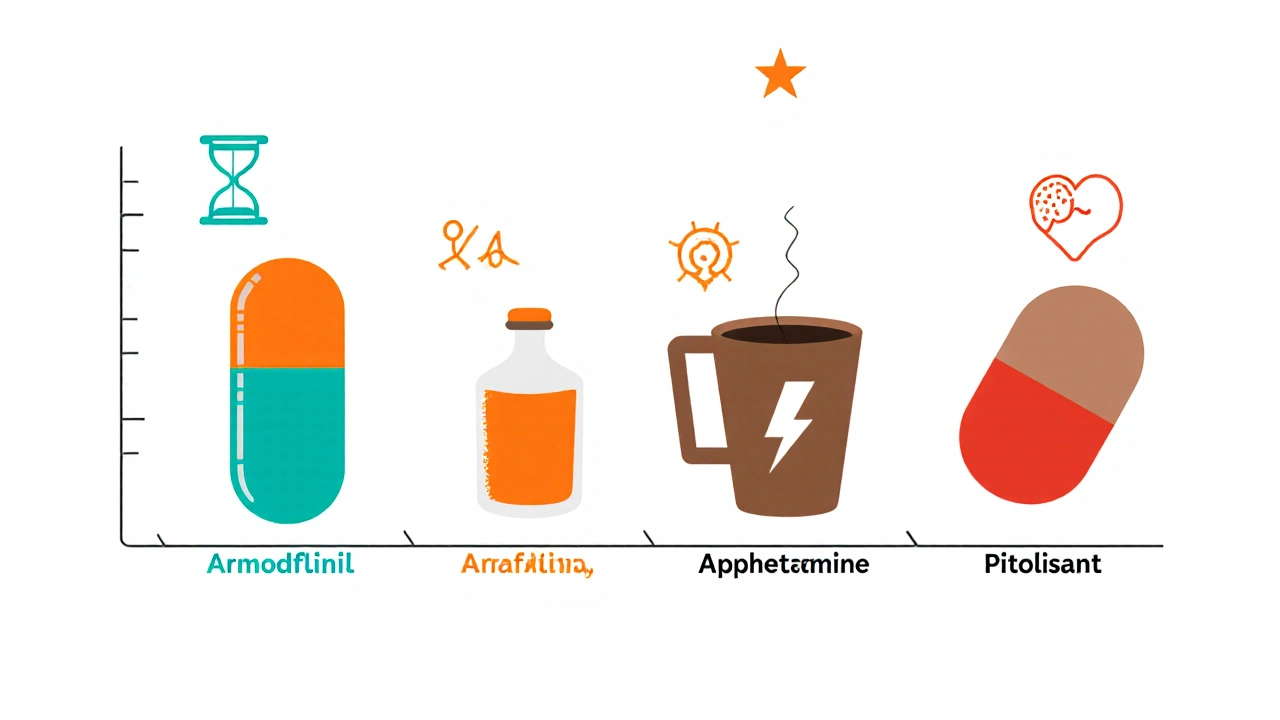
How They Stack Up: Efficacy
When you compare the wake‑promoting power of each option, three factors matter most: onset speed, peak alertness, and duration.
| Drug | Typical Dose | Time to Peak | Duration of Effect | Prescription Status | Common Side Effects |
|---|---|---|---|---|---|
| Modafinil | 200 mg | 30‑60 min | 10‑12 h | Prescription | Headache, insomnia |
| Armodafinil | 150‑250 mg | 45‑90 min | 12‑14 h | Prescription | Dry mouth, anxiety |
| Adrafinil | 300‑600 mg | 60‑120 min | 8‑10 h | OTC (in some countries) | Liver enzyme elevation |
| Caffeine | 100‑200 mg | 15‑30 min | 3‑5 h | OTC | Jitters, increased heart rate |
| Amphetamine | 5‑30 mg | 15‑45 min | 4‑6 h | Prescription | Appetite loss, high BP |
| Methylphenidate | 10‑40 mg | 20‑60 min | 3‑5 h | Prescription | Insomnia, mood swings |
| Pitolisant | 5‑20 mg | 1‑2 h | 8‑10 h | Prescription | Nausea, insomnia |
In a nutshell, Modafinil sits in the sweet spot: a fast onset, long coverage, and a relatively tame side‑effect profile. Armodafinil nudges the duration a bit higher, while Adrafinil offers a legal loophole at the cost of liver health. Stimulants like amphetamine and methylphenidate pack more punch but introduce cardiovascular worries.
Side‑Effect Profiles
Choosing a drug isn’t just about staying awake; it’s also about how your body reacts.
- Modafinil: mild headaches and occasional insomnia; rare skin rash (Stevens‑Johnson syndrome).
- Armodafinil: similar to Modafinil but reports of dry mouth and mild anxiety are a tad higher.
- Adrafinil: liver enzyme elevation in up to 15 % of regular users; recommended to rotate off every few months.
- Caffeine: tolerance builds quickly, leading to higher daily intake and possible jitteriness.
- Amphetamine: appetite suppression, increased blood pressure, risk of dependence.
- Methylphenidate: sleep disruption, mood swings, potential for misuse.
- Pitolisant: nausea and occasional insomnia; generally well‑tolerated compared to dopaminergic stimulants.
People with a history of heart disease should steer clear of amphetamines and methylphenidate. Those with liver concerns should avoid Adrafinil.
Legal and Access Issues
Regulation varies widely across the globe.
- Modafinil and Armodafinil are Schedule IV in the U.S., requiring a prescription.
- Adrafinil is unscheduled in many countries, but import limits apply in the EU.
- Caffeine is freely sold everywhere, but high‑dose tablets are sometimes restricted.
- Amphetamine and methylphenidate are Schedule II in the U.S., with strict prescription controls.
- Pitolisant holds a prescription‑only status in Europe and the U.S., but is newer on the market.
Online pharmacies often market “research chemicals” that blur the line. Always verify legitimacy to avoid counterfeit pills.

Choosing the Right Option - A Quick Checklist
- Do you need a short‑term boost (e.g., exam day) or a full‑day cover? Choose caffeine for brief needs; Modafinil or Armodafinil for all‑day.
- Is prescription access a barrier? Adrafinil can fill the gap, but schedule liver tests.
- Do you have cardiovascular or liver concerns? Avoid amphetamines and Adrafinil respectively.
- Are you sensitive to anxiety or insomnia? Start with the lowest Modafinil dose and avoid late‑day caffeine.
- Do you prefer a non‑dopaminergic route? Pitolisant offers a different mechanism with fewer mood effects.
Take note of the dosage guidelines, and consider a trial period of one week to gauge tolerance before committing long term.
Bottom Line
If you’re after a reliable, long‑lasting alertness aid with a manageable side‑effect profile, Modafinil remains the benchmark. Armodafinil edges it out on duration, while Adrafinil provides a legal workaround at the cost of liver health. Classical stimulants deliver stronger peaks but bring cardiovascular and dependence risks. Caffeine works for short bursts, and Pitolisant offers a newer, dopamine‑light path.
Ultimately, match the drug’s pharmacokinetics to your schedule, health status, and legal environment. A short trial, blood work for liver enzymes (if using Adrafinil), and a chat with a healthcare provider will smooth the decision.
Can I take Modafinil without a prescription?
In most countries, Modafinil is a prescription‑only medication, so you need a doctor’s order. Some online vendors claim to sell it over the counter, but those sources are often risky.
How does Adrafinil differ from Modafinil?
Adrafinil is a pro‑drug that your liver converts into Modafinil. It’s legal in more places, but the conversion can strain liver enzymes, so periodic testing is advised.
Is caffeine a safe alternative for night‑shift workers?
Caffeine works quickly but fades after a few hours. For long night shifts, it often leads to a crash. Pairing it with a slower‑acting agent like Modafinil can smooth the energy curve.
Do stimulant medications cause dependence?
Amphetamines and methylphenidate have a higher potential for psychological dependence than Modafinil. Using the lowest effective dose and taking breaks reduces risk.
What is the best way to start a Modafinil trial?
Begin with a single 100 mg dose in the morning, monitor sleep quality, and note any side effects. If tolerated, increase to 200 mg after a few days.


Written by Felix Greendale
View all posts by: Felix Greendale