
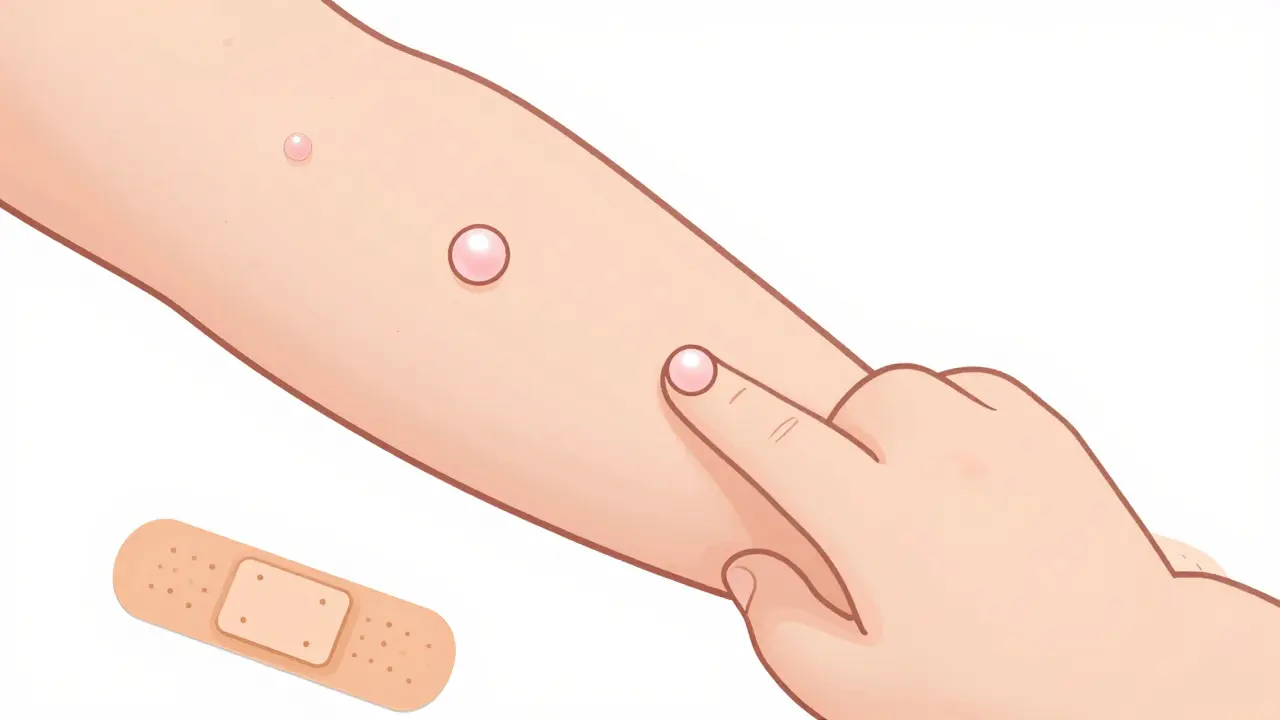
Imagine your child comes home from swimming class with a few tiny bumps on their arm. They don’t hurt. They don’t itch much. But they’re there - round, pearly, with a little dip in the center. You Google it. And suddenly, you’re deep into a rabbit hole of scary forums, conflicting advice, and doctors who seem unsure themselves. This isn’t just a rash. It’s molluscum contagiosum.
It’s not dangerous. It’s not cancer. It won’t turn into something worse. But it’s contagious, it lingers, and it makes parents - and adults with genital lesions - anxious. The good news? Most cases go away on their own. The bad news? That could take months, sometimes years. And in the meantime, you’re stuck wondering: Do I treat it? Or just wait?
What Molluscum Contagiosum Actually Looks Like
Molluscum contagiosum shows up as small, firm bumps on the skin. They’re usually 2 to 6 millimeters across - about the size of a pencil eraser. The key sign? A tiny dimple or dot right in the middle. That’s called an umbilication. It’s not always obvious, but it’s the hallmark doctors look for.
The bumps can be white, pink, or skin-colored. Sometimes they look shiny or pearly. They don’t hurt. They might itch a little, especially if the person has eczema. In kids, they often show up on the face, arms, legs, or groin. In adults, especially those who caught it through sex, they’re more likely to appear on the genitals, inner thighs, or lower abdomen.
Unlike warts - which are rough and thick - molluscum bumps are smooth. They’re not filled with fluid like chickenpox blisters. And they don’t spread in clusters like herpes. If you’ve seen one before, you’ll recognize it. If you haven’t, it’s easy to mistake for a bug bite, a pimple, or even a mole.
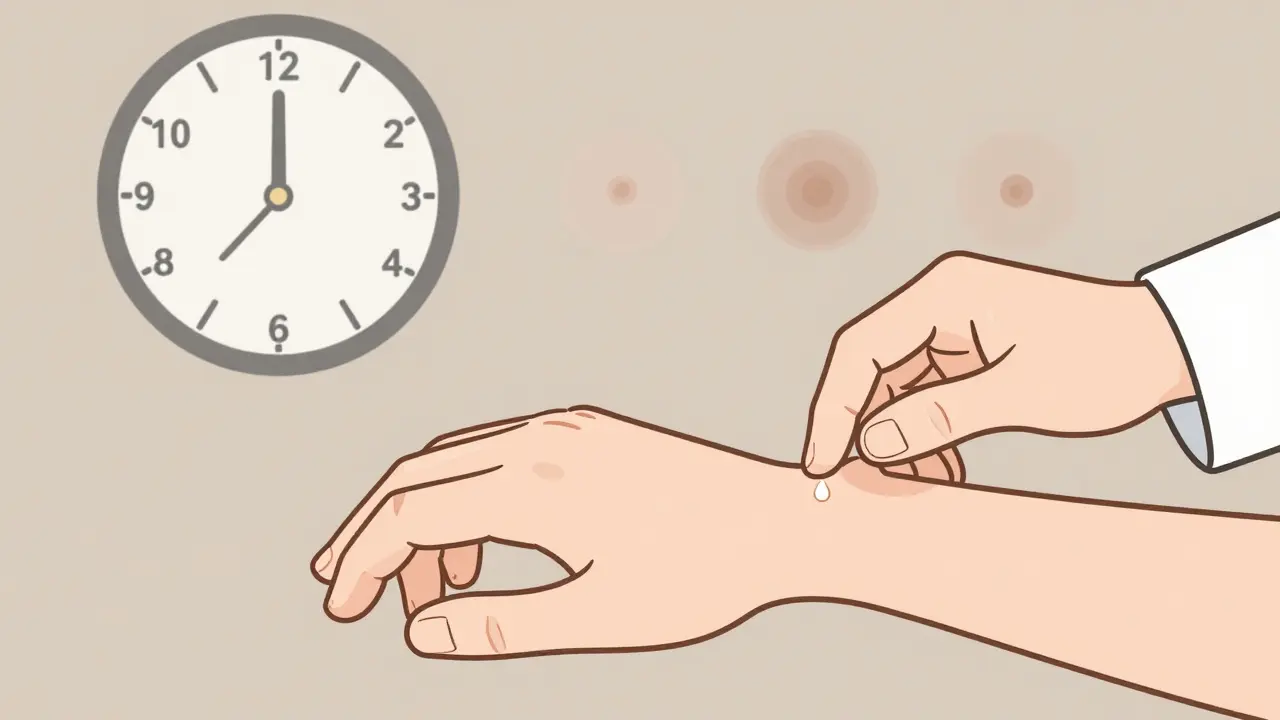
These bumps don’t appear right after contact. There’s a delay. The virus takes 2 to 6 weeks to show up after skin-to-skin contact or touching something contaminated - like a towel, toy, or poolside bench. That’s why it’s hard to trace where it came from.
How It Spreads - And How to Stop It
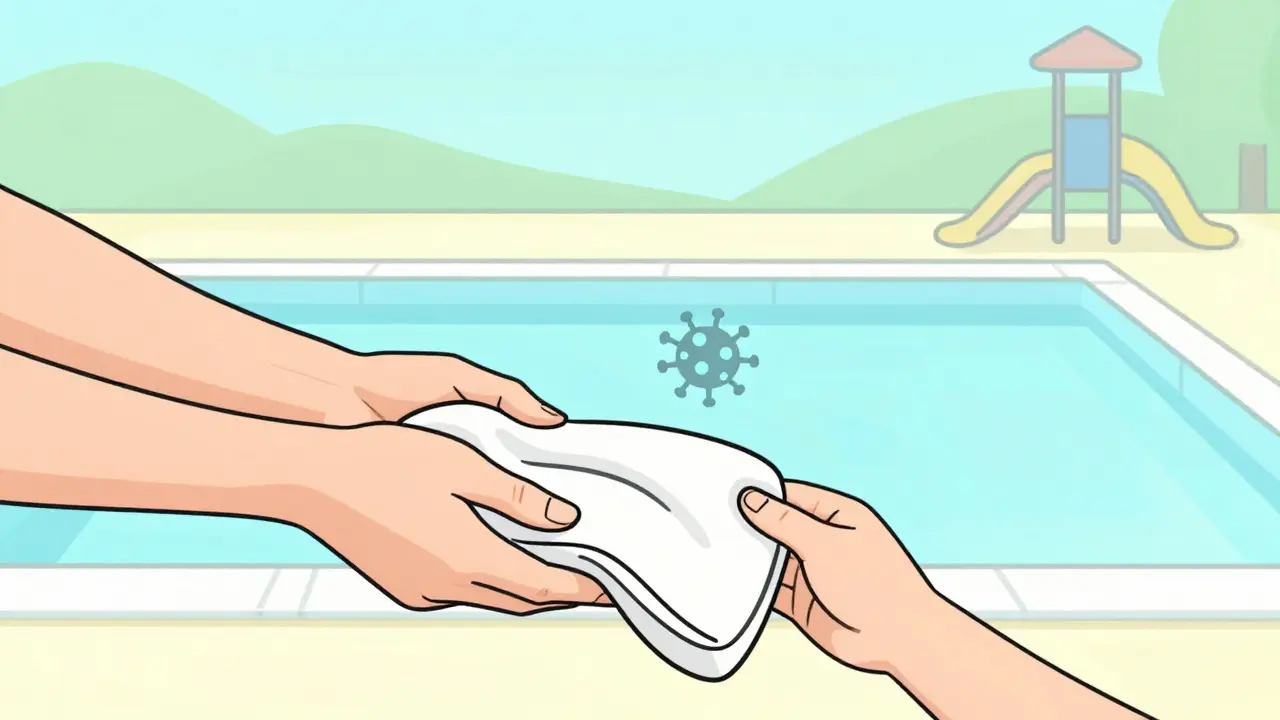
Molluscum spreads easily. It’s not airborne. It doesn’t float in the air. It needs direct contact. That means:
- Touching someone else’s bumps
- Sharing towels, clothing, or bath sponges
- Swimming in a pool with someone who has it
- Scratching your own bumps and then touching another part of your body
It’s not rare. Around 5% to 12% of children between 1 and 10 get it. In places with warm, humid weather - like Florida or parts of Australia - the rate goes up to 18%. Kids with eczema are 30% more likely to get it, probably because their skin barrier is already damaged.
Adults usually get it through sexual contact. That’s why it’s sometimes classified as a sexually transmitted infection. But it can also spread through non-sexual skin contact - like wrestling, sharing gym equipment, or even hugging.
The biggest mistake people make? Trying to cover it up and pretend it’s not there. That doesn’t stop the spread. The real prevention is simple:
- Don’t share towels, clothes, or razors
- Keep lesions covered with clothing or waterproof bandages during swimming
- Avoid scratching or picking at bumps
- Wash hands often, especially after touching the bumps
Studies show that avoiding shared towels cuts household transmission by 57%. That’s huge. And if you have a child with molluscum, you don’t need to keep them out of school or swimming lessons. The CDC updated its guidelines in 2023 to say exactly that: no exclusion needed.
Why Most Doctors Say: Just Wait
Here’s the surprising truth: most cases of molluscum go away without treatment.
A long-term study from UC San Francisco found that 92% of healthy children cleared the infection within 18 months. In many cases, it takes 6 to 12 months. In others, it can stretch to 2 or even 4 years. But almost always, it fades without leaving scars - if you don’t mess with it.
The American Academy of Dermatology says observation is the preferred approach for healthy kids and adults. Why? Because most treatments cause more problems than the bumps themselves.
Cryotherapy (freezing with liquid nitrogen) is common. But it’s painful. It can blister, burn, and scar - especially on a child’s face. Topical acids and creams can irritate sensitive skin. And if you’re treating a 3-year-old, forcing daily applications of something stinging is a battle most parents don’t win.
Dr. Adam Friedman, a leading dermatologist, puts it bluntly: “Aggressive treatment often causes more discomfort than the lesions themselves.”
That’s why in the UK and much of Europe, doctors almost never treat molluscum in kids. They watch. They wait. They reassure. In the US, treatment rates are higher - around 45% of cases - mostly because parents are anxious about appearance and social stigma.
When Treatment Might Make Sense
There are times when treating molluscum is worth the hassle:
- Lesions on the face: Especially in school-aged kids. A 2021 study found 45% of children with visible facial bumps were teased or bullied.
- Large or numerous bumps: If there are 50+ lesions, or if they’re growing bigger than 10mm, treatment may help.
- Immunocompromised patients: People with HIV, cancer, or eczema on steroids can develop giant, persistent lesions that don’t heal. These need medical attention.
- Genital molluscum in adults: While it can resolve on its own, many choose treatment to reduce transmission risk and anxiety.
The most effective treatment backed by science? Cantharidin. It’s a blistering agent applied by a doctor. In clinical trials, it cleared lesions in 73% of patients after 12 weeks - far better than placebo (26%). It’s not FDA-approved for this use, but dermatologists compound it and apply it safely in-office. It doesn’t hurt during application, and the blisters that form help lift out the virus.
Other options include:
- Topical potassium hydroxide: Found in over-the-counter products like MolluDab. Used daily, it cleared lesions in 63% of users within 8 weeks, according to Amazon reviews from over 300 users.
- Imiquimod cream: Used for genital warts, it can help trigger the immune system to fight molluscum. Works slowly, but avoids scarring.
- Laser therapy: Used rarely, mostly for stubborn cases. Expensive and not always covered by insurance.
What doesn’t work? Tea tree oil, duct tape, apple cider vinegar. No solid evidence supports them. And they can irritate skin, making things worse.
The Emotional Toll - It’s Real
Molluscum isn’t just a skin problem. It’s a social one.
On Reddit, users with genital molluscum describe months of anxiety, avoiding dating, skipping showers, and feeling “dirty.” One user wrote: “I thought I had herpes. I didn’t tell anyone for 14 months.”
Parents feel guilty. They think they did something wrong. They blame themselves for letting their child swim, or for not noticing the bumps sooner.
But here’s the truth: you didn’t cause this. The virus is everywhere. It’s not a sign of poor hygiene. It’s not linked to being “unclean.” Even kids in clean homes with perfect baths get it.
What helps? Talking. Finding support. The American Academy of Dermatology’s “Molluscum Manager” app lets you track bumps over time, take photos, and get reminders for hygiene tips. Seeing progress - even slow progress - reduces anxiety.
What Not to Do
Don’t:
- Try to pop or squeeze the bumps
- Use sharp objects to scrape them off
- Apply harsh chemicals like bleach or undiluted vinegar
- Send your child home from school or cancel swimming lessons
- Believe every “miracle cure” you see on TikTok
Scratching is the biggest problem. It spreads the virus to other parts of the body. Studies show scratching can triple the number of lesions. Keep nails short. Use cotton gloves at night if your child is a scratcher.
Also, don’t assume it’s gone just because the bumps disappeared. The virus can linger under the skin for weeks. Wait at least 3 months after the last bump is gone before assuming you’re clear.
What’s Next? New Treatments on the Horizon
Science is moving forward. A new topical cream, tested in a 2023 clinical trial, showed 82% clearance in 12 weeks - nearly double the rate of older treatments. It works by boosting the skin’s own immune response. It’s not available yet, but it’s in Phase 3 trials. Expect it to hit the market in 2026.
Another shift? Doctors are starting to treat molluscum in people with eczema differently. Since the two conditions feed off each other - eczema makes molluscum spread faster, and molluscum makes eczema itch worse - they’re now combining moisturizers, anti-itch meds, and gentle lesion removal in one plan.
And globally, climate change may mean more cases. Warmer, wetter weather helps the virus survive longer on surfaces. Experts predict a 22% rise in cases over the next decade - especially in areas that are becoming more tropical.
But for now, the best tool you have is patience. And knowledge.
Is molluscum contagiosum dangerous?
No, it’s not dangerous. It’s a benign viral infection that doesn’t cause cancer or long-term health problems in healthy people. The main risks are spreading it to others, secondary skin infections from scratching, and emotional distress - especially if lesions are visible on the face or genitals.
How long does molluscum last?
Most cases clear up on their own within 6 to 18 months. Some last up to 2 years, and in rare cases, up to 4 years. The longer it lasts, the more likely the person has a weakened immune system - like from eczema, HIV, or steroid use.
Can adults get molluscum contagiosum?
Yes. While it’s most common in children, adults get it too - usually through sexual contact. Genital molluscum is considered a sexually transmitted infection. It can also spread through close skin contact, like wrestling or sharing towels.
Should I treat molluscum or just wait?
For healthy children, waiting is usually best. Treatment can cause pain, scarring, and stress. But if lesions are on the face, genitals, or are growing large, treatment may help reduce discomfort or social impact. Always talk to a dermatologist before starting anything.
Can my child go to school or swim with molluscum?
Yes. The CDC updated its guidelines in 2023 to say children should not be excluded from school, daycare, or swimming pools because of molluscum. Covering lesions with waterproof bandages reduces transmission risk. No child should be punished for a common, harmless virus.
What’s the most effective treatment?
Cantharidin, applied by a doctor, has the highest success rate at 73%. Over-the-counter potassium hydroxide creams (like MolluDab) work well for mild cases, with 63% of users reporting clearance in 8 weeks. Avoid freezing, scraping, or unproven home remedies - they often cause more harm.
Final Thought: You’re Not Alone
Molluscum contagiosum feels isolating. But you’re not the only parent stressing over tiny bumps. You’re not the only adult scared to show your skin. It’s common. It’s harmless. And it will go away.
Focus on what you can control: hygiene, avoiding scratching, covering lesions when needed, and talking to a doctor - not the internet. The rest? Let time do its job.


Written by Felix Greendale
View all posts by: Felix Greendale