
Oral Mucositis Prevention Planner
Prevention Strategy Calculator
Select your treatment type to see the most effective prevention options for oral mucositis (mouth sores).
Why Some Medications Give You Mouth Sores
It’s not just about being sick - sometimes the medicine meant to help you makes things worse. Mouth sores and ulcers from medications, known as oral mucositis, are a real and painful side effect of cancer treatments like chemotherapy and radiation. These aren’t simple canker sores. They’re deep, burning ulcers that make eating, talking, and even swallowing unbearable. Up to 100% of patients on high-dose chemo develop them, and they’re not random - they’re predictable. The drugs attack fast-growing cells, and the lining of your mouth is one of the fastest-growing tissues in your body. That’s why it gets hit first.
What Makes These Sores Different
Not all mouth sores are the same. A regular canker sore might pop up once a year and heal on its own in a week. Oral mucositis from chemo or radiation is worse: it starts as redness, then breaks open into raw, bleeding sores. It can last weeks. In severe cases, it forces patients to stop treatment, delays recovery, and increases hospital stays by thousands of dollars. The National Cancer Institute grades it from 0 (no sores) to 4 (unable to eat or drink). Grade 3 or 4 means you’re in serious pain and need medical help.
Prevention Is the Only Real Strategy
Doctors don’t wait for sores to appear. They act before treatment starts. That’s because once the ulcers form, they’re hard to heal fast. The best approach? Stop them before they start. Studies show that up to 78% of severe cases can be avoided with the right prep. This means seeing a dentist 2-4 weeks before chemo or radiation. Any loose teeth, infections, or gum disease need to be fixed first. A bad tooth during treatment can turn into a life-threatening infection.
Proven Ways to Prevent Mouth Sores
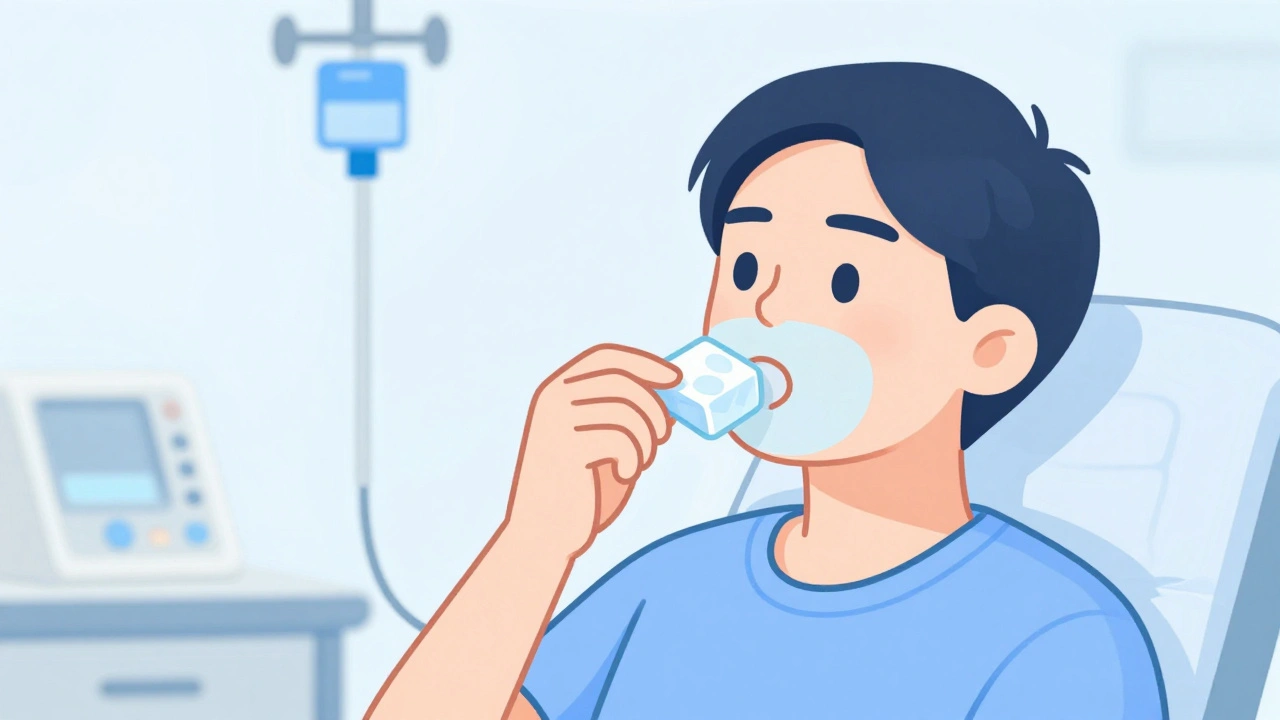
- Cryotherapy (ice chips): If you’re getting melphalan or 5-fluorouracil, suck on ice chips for 30 minutes - starting 5 minutes before your infusion and keeping them in your mouth the whole time. This cools the tissues, slowing down how much drug reaches your mouth. It cuts severe sores by half. Many patients hate it because it’s freezing, but 78% say it helped. If you can’t handle the cold, ask about alternatives.
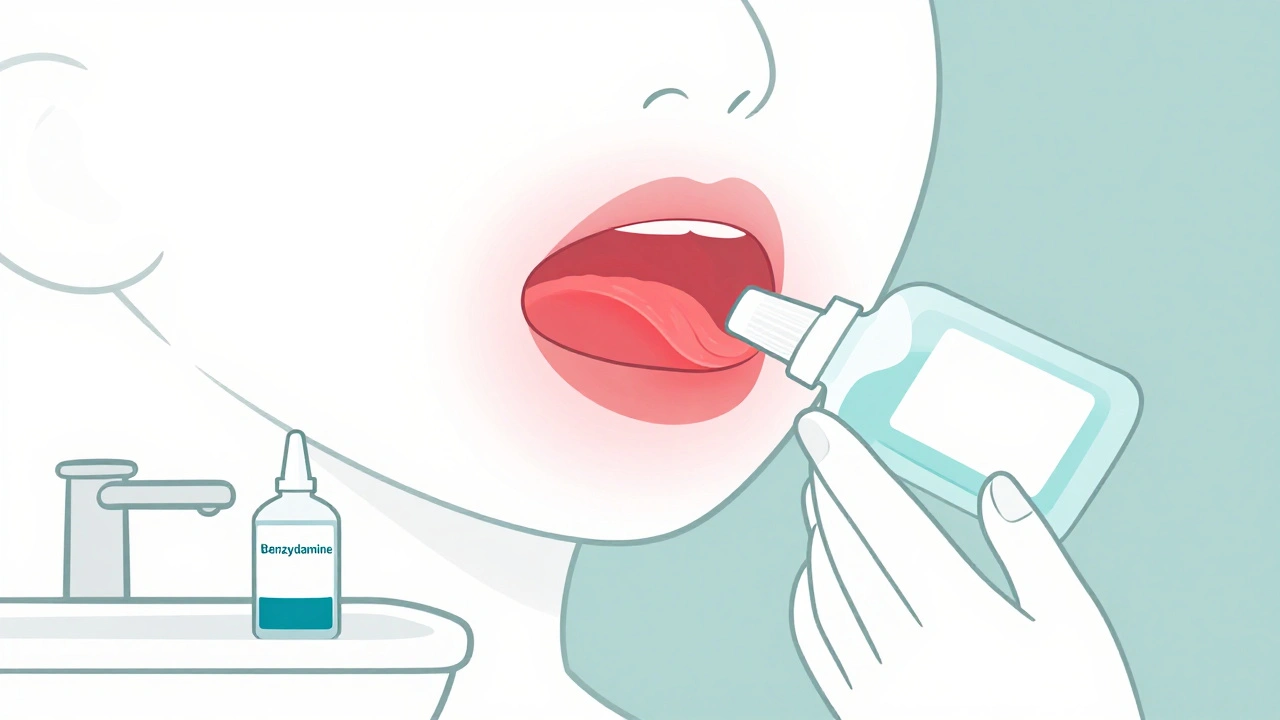
- Benzydamine mouthwash: This is the go-to for radiation patients. It’s an anti-inflammatory rinse that reduces severe sores by 34%. Use it 3-4 times a day, starting before treatment. It stings at first, but most people stick with it because the pain relief is real. Cost? Around $15-$25 per course. It’s one of the most cost-effective tools doctors have.
- Palifermin: This is a powerful drug for stem cell transplant patients. Given as an IV injection before and after chemo, it cuts severe mouth ulcers from 63% to just 20%. But it costs over $10,000 per course. Only used when the risk is highest and insurance covers it.
- Glutamine rinse: Mix 15 grams of glutamine powder in water, swish for 2 minutes, then swallow. Do this 4 times a day. Some studies show it shortens healing time by 43%, especially for head and neck cancer patients. But it doesn’t work for everyone - results are mixed. Still, many patients report less pain.
- Low-level laser therapy (LLLT): Newer but promising. A dentist or oncology team uses a gentle red light on your mouth before and after treatment. A 2023 study showed it cut severe mucositis from 41% to 18%. It’s painless, non-drug, and becoming more common in major cancer centers.
What Doesn’t Work - and Why
Chlorhexidine mouthwash is everywhere. Dentists hand it out like candy. But here’s the truth: it only reduces risk by 15%. That’s barely better than nothing. Worse, long-term use can stain your teeth brown or cause taste changes. A 2020 patient survey found 28% of users hated the metallic aftertaste. Many doctors still prescribe it out of habit - but experts now say it’s overused.
Antibiotics? Don’t take them to prevent sores. A 2021 study found they increase your risk of C. diff infection by 27%. That’s a dangerous, hard-to-treat gut infection. No one should be on antibiotics just to avoid mouth ulcers.
Benzocaine gels? Avoid them. The FDA warns against them for kids under 2, and they’re risky for adults too. They can cause methemoglobinemia - a rare but serious blood condition that stops oxygen from reaching tissues. You might get quick numbing, but the danger isn’t worth it.
Day-to-Day Care When Sores Are Already There
Even with prevention, sores can still happen. When they do, the goal is comfort and healing.
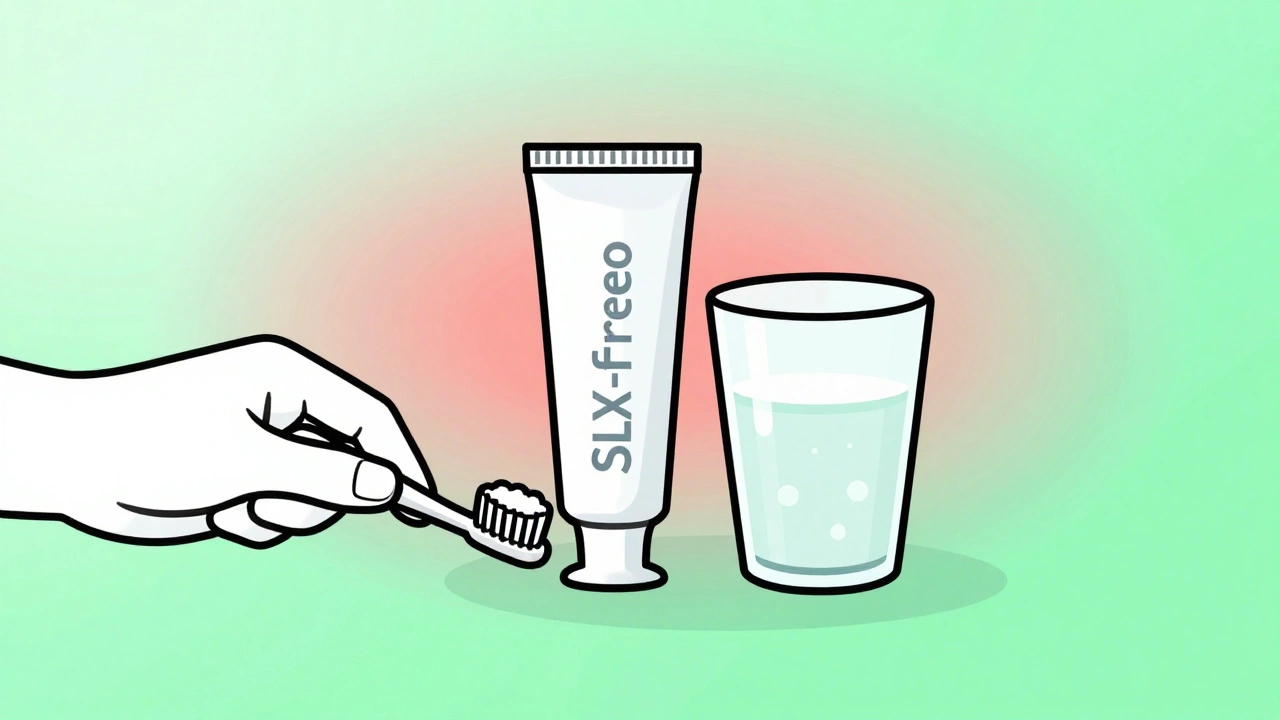
- Soft toothbrush: Use one with ultra-soft bristles (under 0.008 inches). Brush gently twice a day with fluoride toothpaste. Avoid anything with sodium lauryl sulfate (SLS) - it’s in most toothpastes and makes sores worse.
- Baking soda rinse: Mix 1 teaspoon of baking soda in 8 ounces of water. Swish after meals. It neutralizes acid and keeps your mouth clean without irritation.
- Gelclair: This is a sticky gel that coats your sores like a bandage. It doesn’t heal them, but it blocks pain for up to 4 hours. Many patients rate it 4.2 out of 5. The downside? It feels slimy. Some say it makes talking hard. But if you’re in pain, that’s a small price.
- Dexamethasone rinse: A steroid mouthwash (0.5mg in 5mL water) used 4 times a day can cut pain scores by 37%. It’s prescribed for moderate to severe cases. Don’t swallow it - just swish and spit.
- Hydration and saliva: Dry mouth makes everything worse. Use Biotene spray or lozenges. If dryness is bad, your doctor may prescribe pilocarpine tablets. They boost natural saliva by 47%.
What Patients Actually Say
Real people, real experiences. On CancerCare’s forum, 78% of patients using ice chips said it helped. But 42% quit because it was too cold. On Reddit, Gelclair got 71% positive reviews - but 33% said the texture ruined their appetite. Benzydamine stings at first, but 82% kept using it because the pain relief was worth it. One patient wrote: “I’d rather have my mouth burn from the rinse than not be able to eat for a week.”
Cost is a huge issue. Palifermin is out of reach for uninsured patients - 92% said they couldn’t afford it. That’s why prevention with low-cost tools like ice chips and benzydamine matters so much. You don’t need the most expensive treatment to avoid the worst outcomes.
What’s Changing in 2025
New tools are coming. A drug called GC4419, still in trials, showed a 38% drop in severe sores for head and neck cancer patients. A risk-prediction tool from Memorial Sloan Kettering now uses 12 factors - like age, cancer type, and chemo dose - to predict who’s most at risk. That means doctors can tailor prevention exactly to you.
Insurance and hospitals are catching up. Medicare now ties reimbursement to how many patients develop mouth sores. That’s why 87% of cancer centers have formal oral care protocols today - up from 42% in 2015. Prevention isn’t optional anymore. It’s part of the standard of care.
Final Advice: Start Early, Stay Consistent
If you’re about to start chemo or radiation, don’t wait for your mouth to hurt. Ask your oncologist: “What’s my plan to prevent oral mucositis?” Get a dental checkup. Ask about ice chips if your drug is melphalan or 5-FU. Request benzydamine if you’re getting radiation. Bring up Gelclair or glutamine if you’re worried about pain.
These sores don’t have to be a normal part of treatment. They’re preventable. And with the right steps, you can keep eating, talking, and living - even while fighting cancer.


Written by Felix Greendale
View all posts by: Felix Greendale