
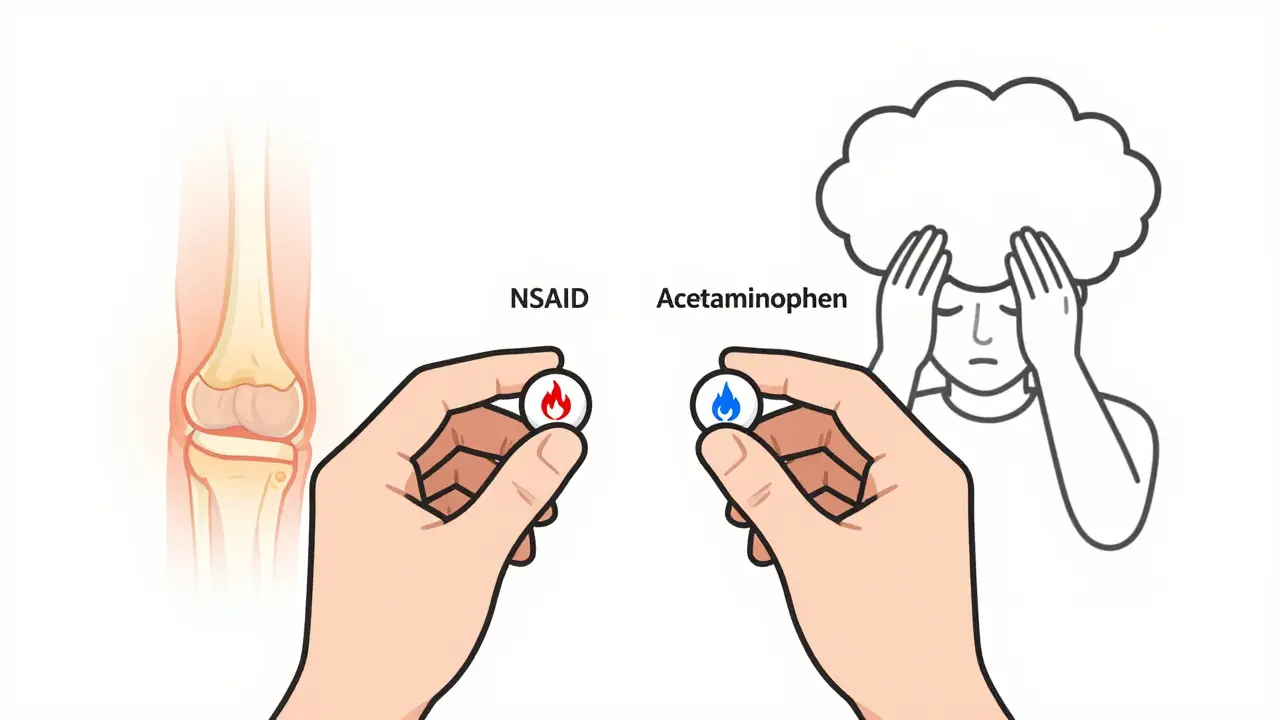
When you have a headache, a sore back, or achy knees, you reach for the medicine cabinet. But which pill should you grab? NSAIDs or acetaminophen? It’s not just about what’s on the shelf-it’s about what your body actually needs.
Many people think all pain relievers work the same. They don’t. NSAIDs like ibuprofen (Advil, Motrin) and naproxen (Aleve) fight pain and swelling. Acetaminophen (Tylenol) fights pain and fever-but not swelling. That difference changes everything.
How They Work (And Why It Matters)
NSAIDs block enzymes called COX-1 and COX-2. These enzymes make chemicals that cause pain, fever, and inflammation. By stopping them, NSAIDs reduce swelling in injured muscles, joints, or tendons. That’s why they’re the go-to for sprains, arthritis, or menstrual cramps.
Acetaminophen works differently. Scientists still aren’t 100% sure how. But we know it mainly affects pain signals in the brain and spinal cord. It doesn’t touch inflammation at the injury site. So if your knee is swollen and hot, acetaminophen might help the ache, but it won’t calm the swelling.
This is why a pulled muscle or stiff neck often responds better to ibuprofen. The inflammation is the real problem. But for a simple headache or fever? Acetaminophen does the job just fine.
Dosage: Less Is More
Both drugs have strict limits-and people regularly exceed them.
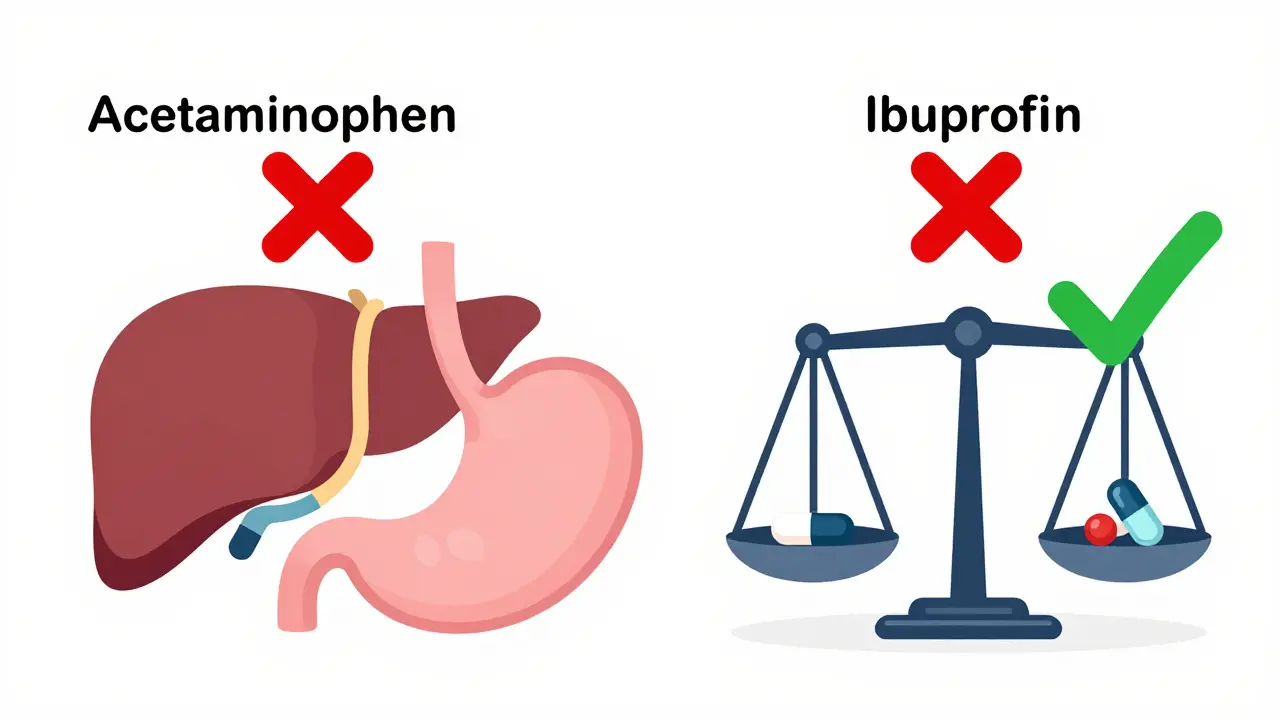
For acetaminophen, the max daily dose is 4,000 milligrams. That’s eight extra-strength tablets. But experts now recommend staying under 3,000 mg to protect your liver. Why? Because too much acetaminophen can cause sudden, severe liver damage. The FDA says over 56,000 ER visits each year are from accidental overdoses. Most of those happen because people take Tylenol for a headache, then take a cold medicine that also has acetaminophen. Two pills, two sources-one overdose.
NSAIDs have their own risks. Ibuprofen (OTC) max is 1,200 mg per day (six 200 mg tablets). Naproxen is 660 mg (three 220 mg tablets). Go over that, and you’re asking for stomach bleeding, ulcers, or even a heart attack. Long-term use? Talk to your doctor. The risk goes up fast.
Who Should Avoid What?
If you have liver disease, avoid high-dose acetaminophen. Even one extra tablet a day can be dangerous if your liver is already stressed.
If you have a history of stomach ulcers, kidney disease, or heart problems, NSAIDs are risky. They can raise blood pressure, reduce kidney function, and interfere with heart medications. People on blood thinners like warfarin should also skip NSAIDs-they can increase bleeding risk. Acetaminophen is safer here.
And don’t forget: aspirin is an NSAID too. If you take daily low-dose aspirin for heart protection, mixing it with ibuprofen can cancel out that benefit. If you need pain relief, talk to your doctor before combining them.
Which One Works Best for What?
Here’s the real-world breakdown:
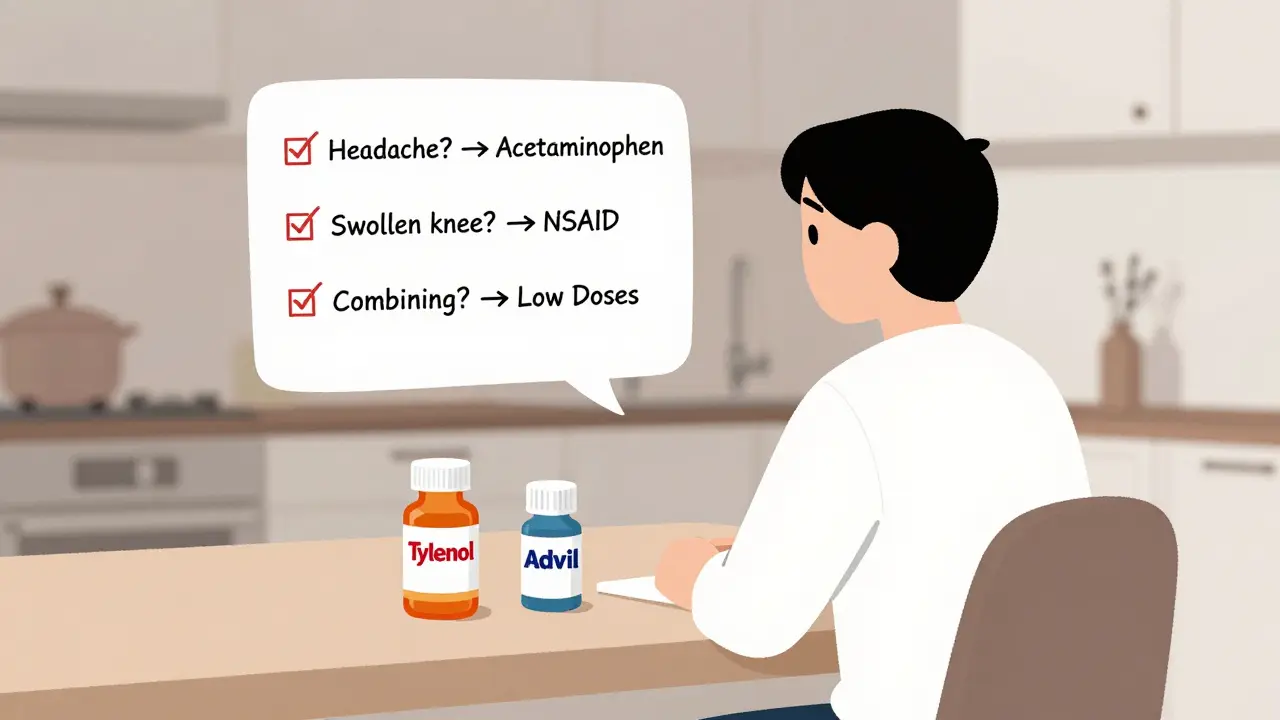
- Headaches, colds, fevers: Acetaminophen. It’s gentle on the stomach and works well.
- Arthritis, joint pain, sprains: NSAIDs. Swelling is the enemy-ibuprofen or naproxen tackles it head-on.
- Back or neck pain: NSAIDs. Most of this pain comes from inflamed muscles or discs.
- Muscle soreness after exercise: NSAIDs. They reduce the inflammation that causes delayed soreness.
- Menstrual cramps: NSAIDs. They cut down on the prostaglandins that trigger uterine contractions.
Some people swear by acetaminophen for migraines. Others swear by ibuprofen. It varies. But if you’ve tried both and one works better? Stick with it.
Combining Them? Here’s the Smart Way
Doctors often recommend taking both together-not to double the dose, but to lower each one.
Example: Take 650 mg acetaminophen at 8 a.m. and 8 p.m. Take 200 mg ibuprofen at 2 p.m. and 10 p.m. You’re getting round-the-clock relief without maxing out either drug. Studies show this combo works as well as higher doses of either alone-and with fewer side effects.
It’s not magic. It’s math. Lower doses = lower risk. You still get pain control. You just avoid the worst side effects.
What About Long-Term Use?
If you’re taking pain meds daily, you need a plan-not just a bottle.
NSAIDs used long-term? Watch for kidney damage, high blood pressure, and stomach bleeding. Even OTC versions add up. A 2023 study from the Mayo Clinic found that people taking daily ibuprofen for more than three months had a 20% higher chance of kidney problems.
Acetaminophen long-term? Keep it under 3,000 mg daily. Avoid alcohol. Don’t take it with other medications that contain it. Liver damage doesn’t come with warning signs-it just happens.
There’s no safe long-term solution without medical oversight. If you need daily pain relief, talk to a doctor. There might be better options: physical therapy, weight management, or targeted treatments.
What You Should Never Do
- Don’t mix acetaminophen with alcohol. Even one drink a day increases liver risk.
- Don’t take NSAIDs on an empty stomach. Always eat something first.
- Don’t assume "natural" pain relief is safer. Some herbal supplements interact with both drugs.
- Don’t use OTC painkillers for more than 10 days without seeing a doctor.
- Don’t give acetaminophen to kids without checking the right dose. It’s easy to overdose with children’s liquid formulas.
And if you’re unsure? Check the labels. Every OTC bottle now has bold warnings. Read them. They’re there for a reason.
Bottom Line: Pick Based on Your Pain, Not Your Habit
You don’t need to choose one forever. Use the right tool for the job.
Swelling? Go NSAID. Fever or headache? Acetaminophen. Need to protect your stomach or liver? Use the safer option. Need to manage chronic pain? Combine them smartly. Always start low. Never guess.
These aren’t just pills. They’re tools. Use them wisely-or risk making things worse.


Written by Felix Greendale
View all posts by: Felix Greendale