
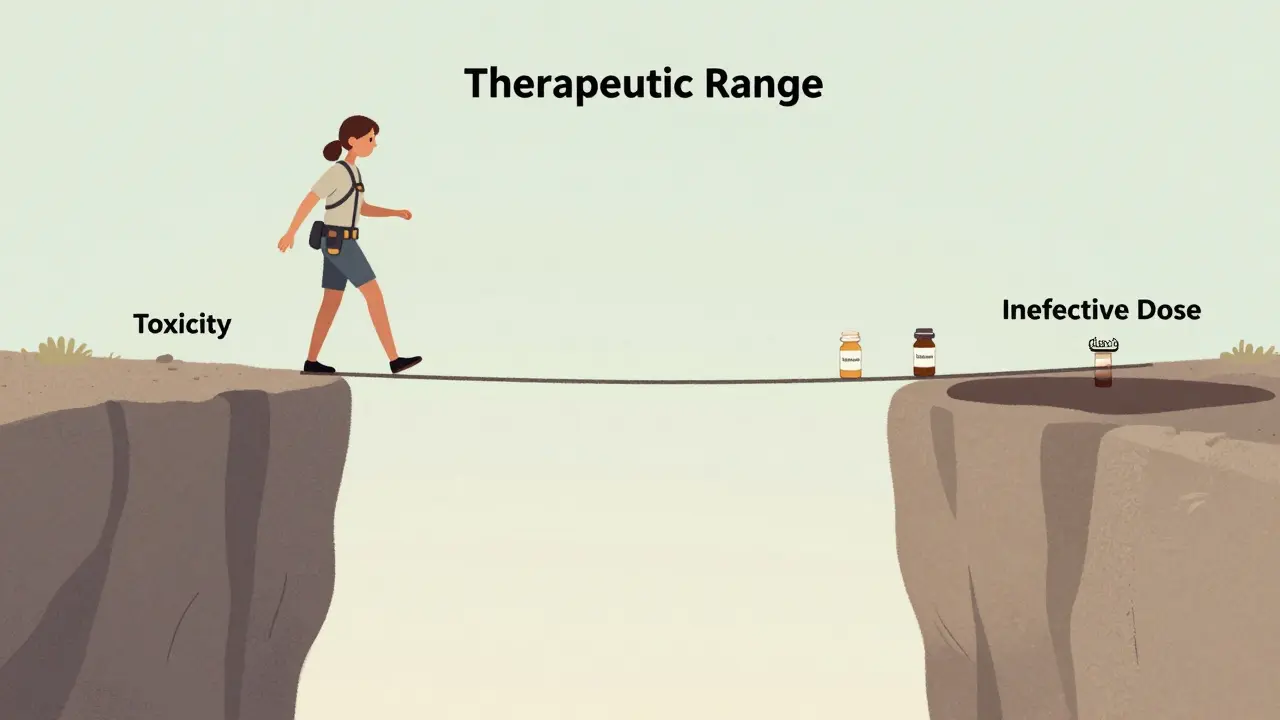
Some medications are like walking a tightrope. Take one step too far, and you could crash. Too little, and you get no benefit. These are NTI drugs - Narrow Therapeutic Index drugs - and they’re not your average prescriptions. A tiny change in dose can mean the difference between healing and hospitalization. If you’re on one of these, your doctor isn’t just prescribing a pill; they’re managing a high-stakes balance.
What Makes a Drug an NTI Drug?
NTI stands for Narrow Therapeutic Index. That means the gap between a dose that works and a dose that harms is razor-thin. The U.S. Food and Drug Administration (FDA) defines it as a drug where small changes in blood concentration can cause serious side effects or treatment failure. For most medicines, a 20% overdose might just cause a headache. For NTI drugs, it could cause a seizure, a heart rhythm problem, or internal bleeding.
These drugs usually have a therapeutic range measured in nanograms per milliliter - think of it like a tiny needle in a haystack. Digoxin, for example, works between 0.5 and 2.0 ng/mL. Go above 2.0? Risk of poisoning. Drop below 0.5? The heart condition won’t be controlled. That’s why blood tests aren’t optional - they’re essential.
The Core NTI Drug List: What You’re Likely to Encounter
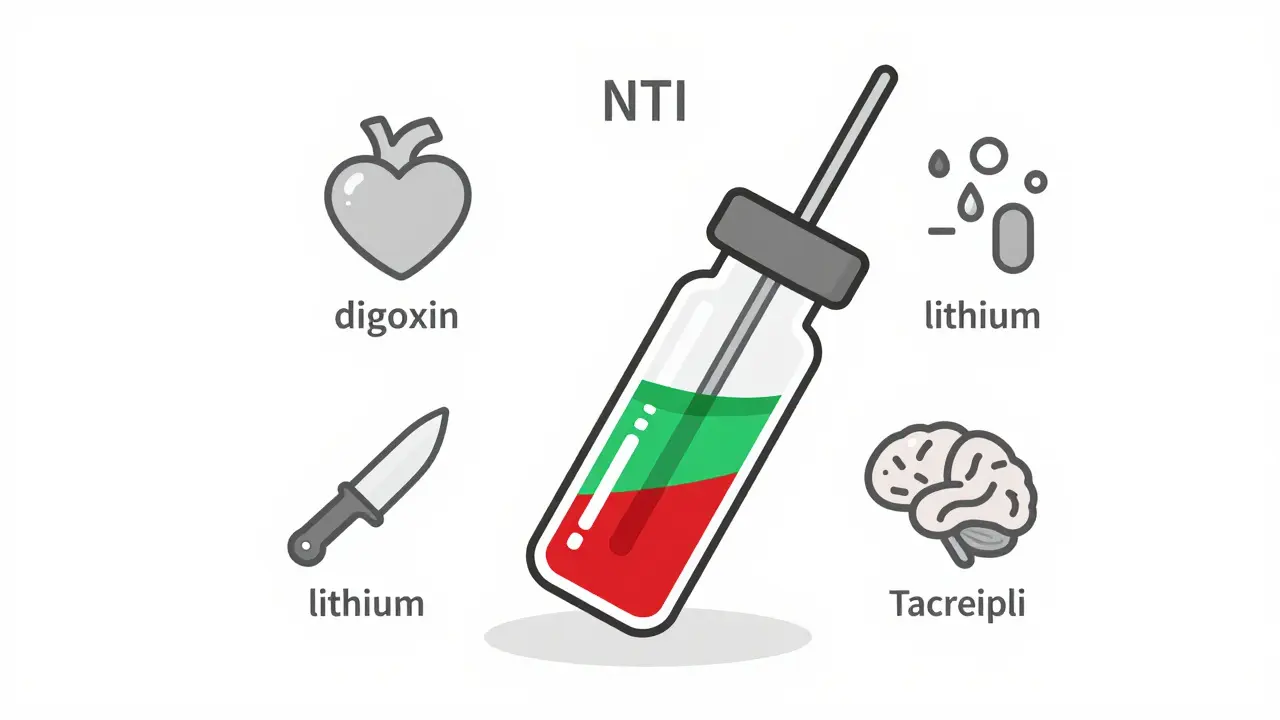
There’s no single official FDA list, but dozens of drugs are widely recognized as NTI by hospitals, pharmacists, and state health boards. Here are the most common ones you’ll see in clinical practice:
- Warfarin - The classic anticoagulant. Its target is the INR (International Normalized Ratio), which should stay between 2.0 and 3.0 for most patients. A single INR of 5.0 can mean uncontrolled bleeding. Even small changes in diet, antibiotics, or supplements can throw it off.
- Lithium - Used for bipolar disorder. The therapeutic range is 0.6 to 1.2 mmol/L. At 1.5 mmol/L, you start getting tremors, confusion, and kidney stress. At 2.0+, you risk coma or death. Patients need blood tests every 3-6 months, even when they feel fine.
- Digoxin - For heart failure and atrial fibrillation. As mentioned, 0.5-2.0 ng/mL is the sweet spot. Too high? Nausea, blurred vision, dangerous heart rhythms. Too low? No control over heart rate.
- Phenytoin - An older but still used seizure medication. Therapeutic range: 10-20 mcg/mL. Levels above 20 can cause slurred speech, dizziness, and even loss of coordination. Levels below 10? Seizures return.
- Carbamazepine - Another antiepileptic, also used for nerve pain. Effective at 4-12 mcg/mL. Higher levels cause drowsiness, double vision, and liver toxicity.
- Tacrolimus - A transplant drug. After a kidney or liver transplant, levels must stay between 5-15 ng/mL. Even a 2 ng/mL drop can trigger organ rejection. A 3 ng/mL rise can cause kidney damage or seizures.
- Levothyroxine - For hypothyroidism. It’s not measured in blood concentration but by TSH levels (0.5-4.5 mIU/L). A small change in brand or formulation can cause TSH to spike from 1.2 to 8.7, as documented in real cases. Patients report fatigue, weight gain, or heart palpitations after switching generics.
- Valproic acid - Used for seizures and mood disorders. Therapeutic range: 50-100 mcg/mL. Toxicity can include liver failure, pancreatitis, and tremors.
- Sirolimus and Cyclosporine - Also transplant drugs. Both require frequent monitoring. Cyclosporine levels can vary wildly between brands, making generic switches risky.
- Phenytoin, Flecainide, Procainamide - Antiarrhythmics. These control heart rhythm, but even small overdoses can cause fatal arrhythmias.
Why Generic Substitutions Can Be Dangerous
For most drugs, switching from brand to generic is safe. For NTI drugs? Not always. The FDA requires stricter bioequivalence standards for NTI generics - 90% to 111% similarity in blood levels, compared to 80%-125% for regular drugs. But even that isn’t foolproof.
A 2023 Reddit thread from a pharmacist described a 62-year-old woman who switched from one brand of levothyroxine to a generic. Her TSH jumped from 1.2 to 8.7 in six weeks. She gained 15 pounds, felt exhausted, and had a slow heart rate. It took three months of dose tweaks to get back to normal. She never knew the switch was the cause.
Twenty-eight U.S. states require a doctor to explicitly approve generic substitution for NTI drugs. In others, pharmacists can switch them automatically - a practice many experts warn against.
Monitoring Isn’t Optional - It’s Lifesaving
Therapeutic drug monitoring (TDM) isn’t a luxury. It’s standard care. For warfarin, INR checks happen weekly at first, then monthly. For lithium, blood tests every 3-6 months. For tacrolimus, levels are checked three times a week after transplant.
But here’s the problem: only 45% of hospital systems have automated alerts when NTI drug levels go out of range. Many patients miss appointments. One JAMA study found 32% of lithium patients skip their blood tests. And each test costs $25-$150 - not always fully covered by insurance.
Pharmacists are often the last line of defense. A 2022 survey found 73% of hospital pharmacists had intervened to stop a dangerous NTI drug error in the past year. That could mean catching a duplicate dose, spotting a drug interaction, or refusing to dispense a generic without approval.
Emerging NTI Drugs: The New Frontier
It’s not just old drugs. Newer cancer treatments are increasingly NTI. Drugs like axitinib (target 15-30 ng/mL), ponatinib (20-50 ng/mL), and olaparib (AUC 30-60 mcg*h/mL) are designed to target cancer cells precisely - but they leave little room for error.
The FDA is now considering expanding NTI classification to newer anticoagulants like apixaban and rivaroxaban, even though they’re often marketed as “safer than warfarin.” The Institute for Safe Medication Practices still flags them as narrow-window drugs because bleeding risk rises sharply with higher doses.
Biologics like biosimilar infliximab are also under scrutiny. Some studies say they’re just as safe as the original. Others - especially transplant teams - say even tiny differences can trigger organ rejection. The debate continues.
What You Should Do If You’re on an NTI Drug
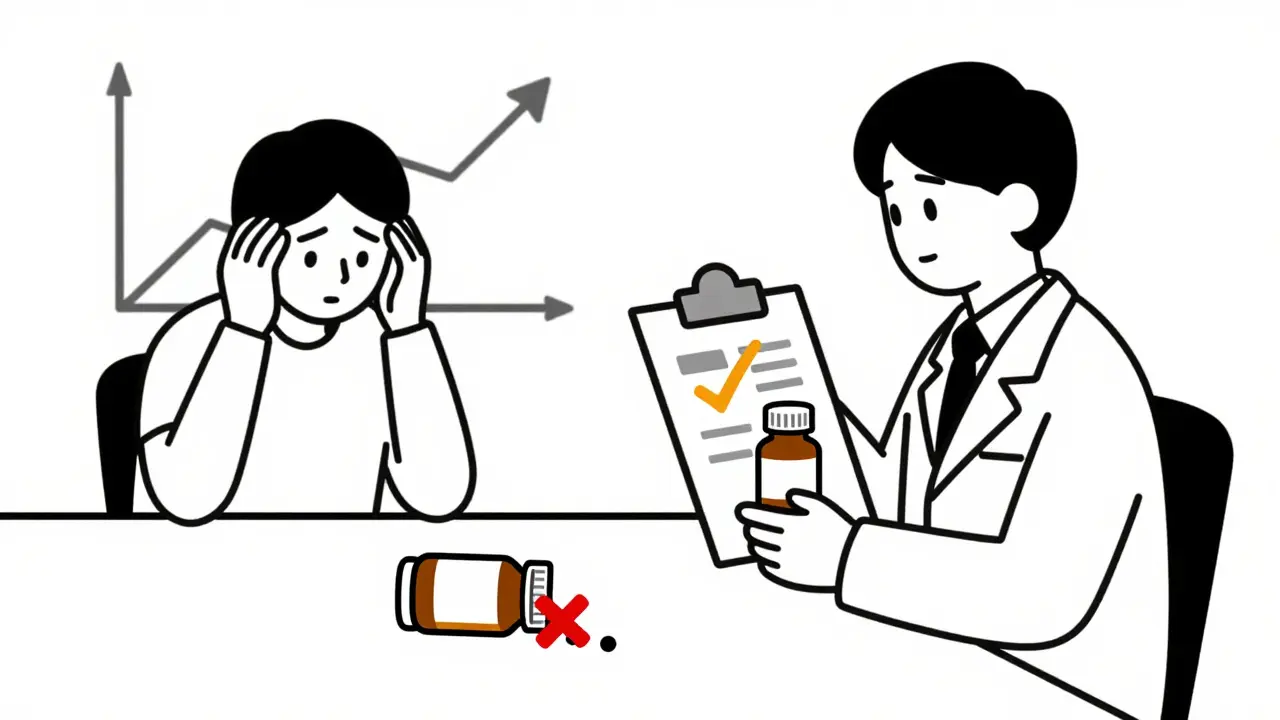
If you’re prescribed one of these drugs, here’s what to do:
- Know your drug’s target range - Ask your doctor or pharmacist what the safe levels are for your medication.
- Never switch brands without talking to your doctor - Even if the label says “generic,” it might not be interchangeable for NTI drugs.
- Keep all blood test appointments - Missing one can be dangerous.
- Report new symptoms immediately - Dizziness, nausea, irregular heartbeat, confusion, or unusual bruising could mean your level is off.
- Keep a list of all medications and supplements - Many NTI drugs interact with antibiotics, antifungals, grapefruit juice, or herbal products like St. John’s wort.
There’s no shame in needing extra monitoring. These drugs save lives - but only when handled with precision.
Why NTI Drugs Are More Common Than You Think
NTI drugs make up only about 15% of all medications requiring blood monitoring, but they cause 30% of dosing-related hospitalizations. That’s because they’re used for serious conditions - heart failure, epilepsy, organ transplants, bipolar disorder - where there’s no room for trial and error.
The global market for NTI drugs hit $48.7 billion in 2022 and is expected to grow to $72.3 billion by 2028. Why? Because more targeted therapies are being developed - especially in cancer - and they’re designed to hit a very specific biological target. That precision comes with a narrow margin.
Researchers are now testing AI tools that adjust doses based on real-time data from wearable sensors. Early results show a 28% drop in adverse events. And the NIH is funding a $15 million study on using genetics to predict the right dose for warfarin and phenytoin - already showing a 40% faster time to stable dosing.
NTI drugs aren’t going away. They’re becoming more common. The key isn’t avoiding them - it’s understanding them.
Are all generic drugs unsafe for NTI medications?
No, not all generics are unsafe. The FDA requires stricter bioequivalence standards for NTI drugs - 90% to 111% similarity in blood levels. But even within that range, small differences can matter for some patients. That’s why many doctors and pharmacists prefer to stick with the same brand unless a switch is carefully monitored. Always consult your prescriber before switching.
Can I stop taking my NTI drug if I feel fine?
Never stop or change the dose of an NTI drug without medical supervision. Feeling fine doesn’t mean your levels are safe. For example, lithium can build up in your body over time, and you might not feel symptoms until it’s too late. Stopping warfarin suddenly can cause a stroke. These drugs require ongoing management, even when you feel well.
Why do I need blood tests so often for lithium?
Lithium is cleared by your kidneys, and even small changes in hydration, salt intake, or kidney function can change how much stays in your blood. A level of 1.4 mmol/L might cause tremors and confusion, while 0.5 mmol/L might not control your mood. Regular testing ensures you’re in the safe zone - not too low, not too high.
Is there a list of NTI drugs I can check?
There’s no single official list, but state pharmacy boards like North Carolina and Oklahoma publish recognized NTI drug lists. The FDA’s Orange Book lists 12 designated NTI drugs, but experts recognize many more. Your pharmacist or doctor can tell you which of your medications fall into this category. If you’re unsure, ask: “Is this an NTI drug?”
Can I use over-the-counter supplements with NTI drugs?
Many supplements can interfere. St. John’s wort can lower levels of tacrolimus and cyclosporine. Garlic and ginkgo can increase bleeding risk with warfarin. Even high doses of vitamin K can make warfarin less effective. Always tell your doctor and pharmacist about every supplement you take - even “natural” ones.


Written by Felix Greendale
View all posts by: Felix Greendale