
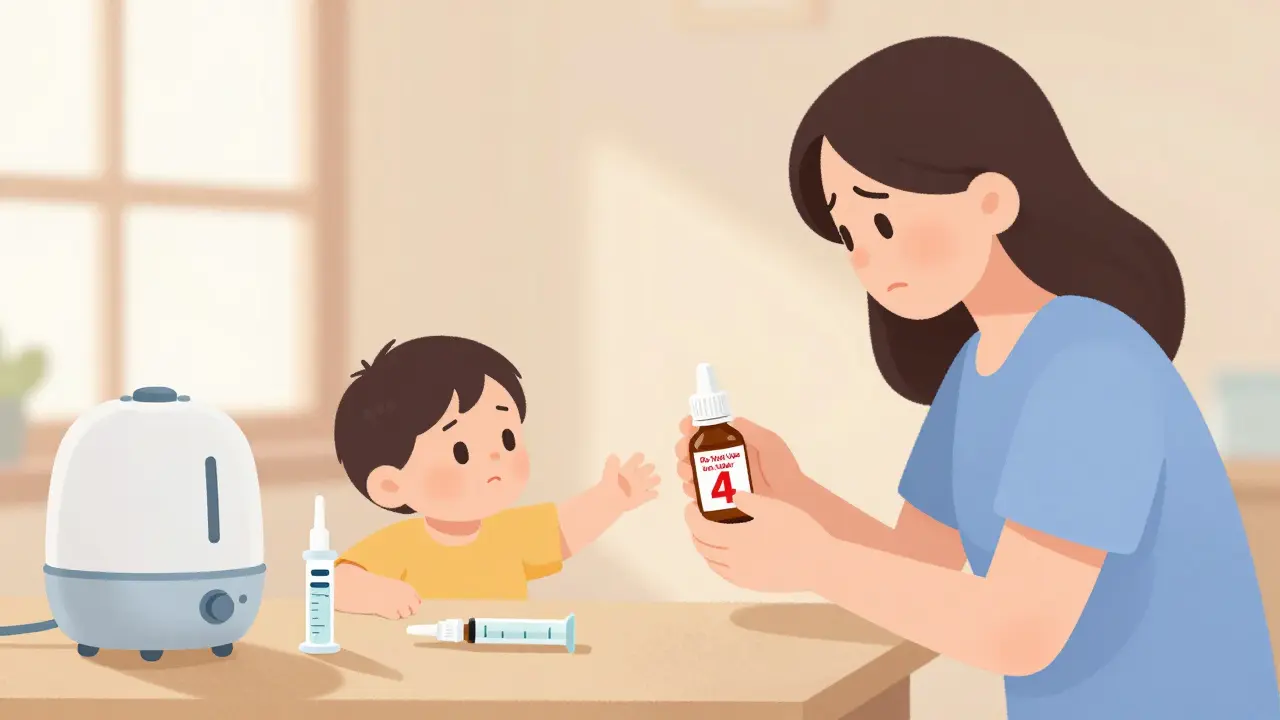
Every winter, parents face the same dilemma: their child is coughing, congested, and can’t sleep. The medicine cabinet seems like the obvious fix. But here’s the hard truth-OTC cold medicine for young kids isn’t just ineffective. It can be dangerous.
Why OTC Cold Medicines Don’t Work for Kids Under 4
If you’ve ever given your 2-year-old a drop of Children’s Robitussin because the cough wouldn’t stop, you’re not alone. But you’re also not helping. The FDA, the American Academy of Pediatrics, and major drug manufacturers all agree: these medicines don’t work for children under 4. Not because they’re poorly made, but because they simply don’t do what they claim. Studies from the early 2000s showed that dextromethorphan (a common cough suppressant) and pseudoephedrine (a decongestant) had no measurable effect on cough or nasal congestion in kids under 6. Yet, manufacturers kept selling them. It wasn’t until over 1,500 emergency room visits linked to these drugs between 2004 and 2015 that things changed. The data didn’t lie: kids were getting hurt, not helped. These products often contain multiple active ingredients-antihistamines, decongestants, cough suppressants, expectorants-all in one bottle. That’s a problem. Parents don’t realize they’re giving their child more than one drug at a time. One bottle of Children’s Dimetapp might have diphenhydramine (an antihistamine) and phenylephrine (a decongestant). Another bottle might have dextromethorphan and guaifenesin. Mix them? You’re doubling the risk.The Real Danger: Accidental Overdose
The biggest threat isn’t misuse-it’s accident. Kids get into bottles. They find them on the counter. They think they’re candy. Between 2019 and 2022, poison control centers in the U.S. handled over 12,000 calls about children exposed to OTC cold medicines. Over 40% of those cases involved kids aged 1 to 2. Children under 4 are especially vulnerable. Their bodies process drugs differently. A dose that’s safe for a 5-year-old might be toxic for a 3-year-old. And because these products use age-based dosing-not weight-based-the math is flawed. Two kids who are both 3 years old can weigh 25 pounds or 40 pounds. Giving them the same amount? That’s like giving one adult a full dose and another half a dose, just because they’re both 30. A 2020 study in Pediatric Emergency Care found that 68% of dosing errors happened because parents used household spoons instead of the measuring cup that came with the medicine. A teaspoon isn’t a milliliter. A tablespoon isn’t 15 mL. And a “full cap” isn’t a standard dose. These tiny mistakes add up to seizures, rapid heart rate, coma, and even death.What the Experts Say
The American Academy of Pediatrics (AAP) gives OTC cold medicines a “D” rating for kids under 6. That’s their lowest possible score. It means: “We have high confidence this does more harm than good.” Dr. Matthew M. Davis from the University of Michigan put it plainly: “The evidence base for efficacy of these products in children is virtually nonexistent, while the potential for harm is well-documented.” Even the manufacturers know. In 2008, companies like Johnson & Johnson, GlaxoSmithKline, and Procter & Gamble voluntarily stopped marketing these products for children under 4. Today, every bottle says: “Do not use in children under 4 years.” But here’s the catch-many parents still ignore it. A 2021 AAP survey found that 38% of parents still gave OTC cold medicine to kids under 4. Why? Because they thought their pediatrician recommended it. But when researchers checked medical records, only 17% had actually asked a doctor.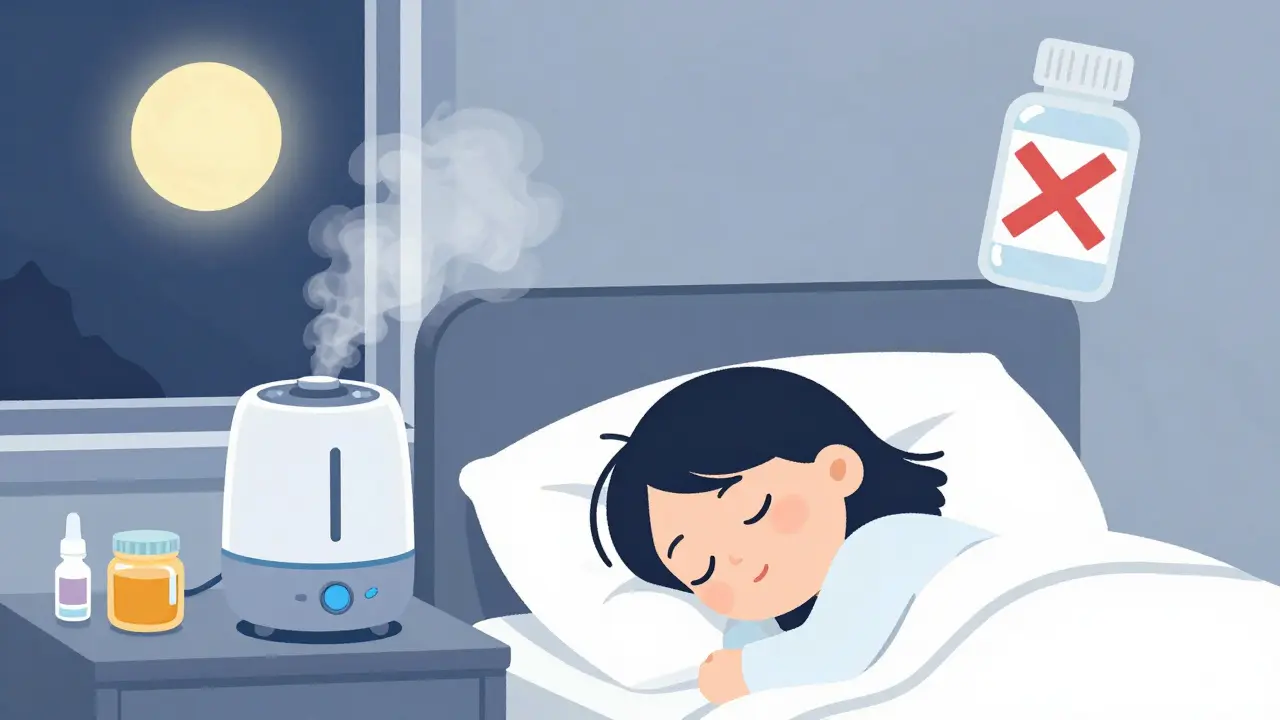
What You Can Do Instead
You don’t need medicine to help your child feel better. Here’s what actually works:- Saline nasal drops: Use 2-3 drops of saltwater (0.9% sodium chloride) in each nostril, then gently suction with a bulb syringe. Do this 3-4 times a day, especially before meals and sleep. It clears mucus without side effects.
- Honey: For kids over 1 year old, give 2.5 mL (half a teaspoon) of honey before bed. A 2018 Cochrane review found it reduced cough frequency by 36% compared to placebo. It’s safer than any cough syrup.
- Hydration: Offer extra fluids-water, breast milk, formula, or broth. Kids need about 50 mL per kilogram of body weight extra per day when sick. Dehydration makes congestion worse.
- Humidified air: Run a cool-mist humidifier in their room. Keep humidity between 40% and 60%. Dry air irritates airways. Moist air helps.
- Fever and pain: If your child has a fever or sore throat, use acetaminophen (10-15 mg/kg every 4-6 hours) or ibuprofen (5-10 mg/kg every 6-8 hours) if they’re over 6 months. These are safe when dosed by weight.
Why Some Parents Still Use These Medicines
It’s not just ignorance. It’s desperation. One parent on Reddit wrote: “I gave my 2-year-old Robitussin DM against the label because the coughing was so severe he couldn’t sleep.” That sentiment shows up in 42% of negative reviews on Drugs.com for kids’ cold meds. Parents aren’t reckless-they’re exhausted. But here’s what they don’t realize: the cough isn’t the enemy. It’s the body’s way of clearing the virus. Suppressing it doesn’t speed up recovery. It just hides the symptom. And that’s dangerous. The real problem? We’ve been sold a myth-that medicine equals relief. But for young kids, that myth costs lives.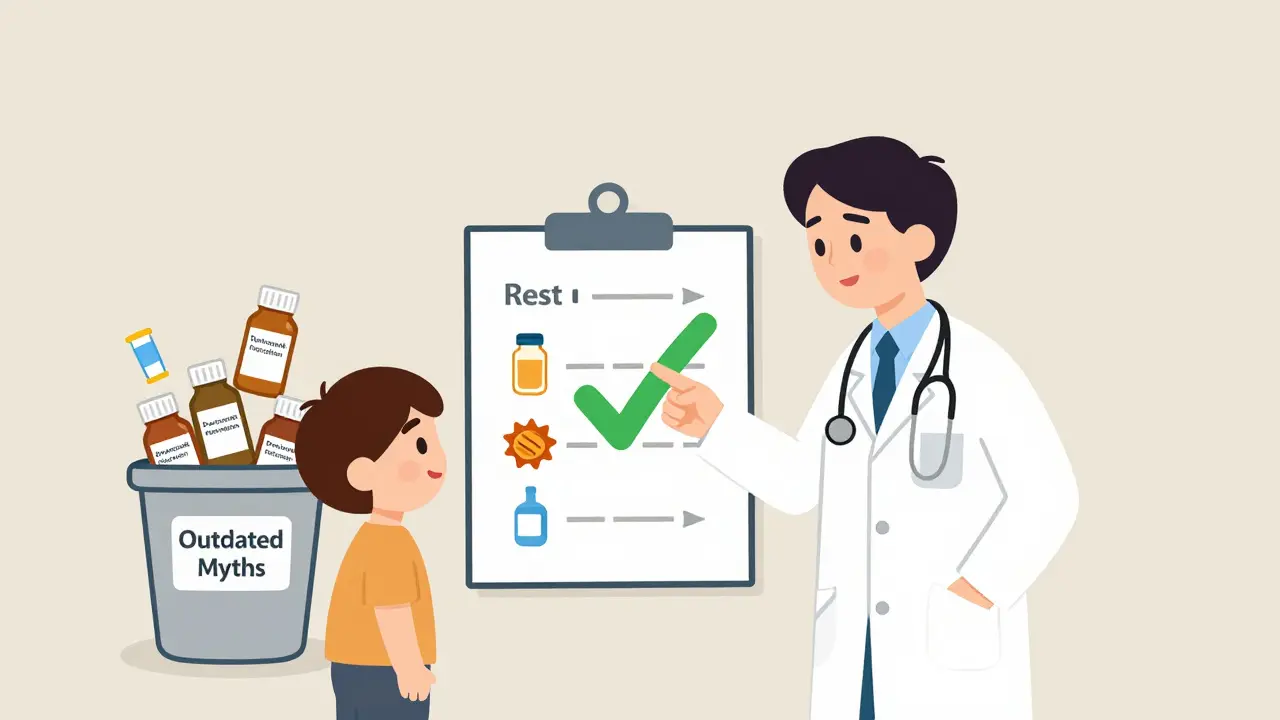
What’s Changing Now?
The FDA is pushing for even stricter rules. By 2025, new regulations may require all pediatric OTC medications to prove safety and effectiveness in clinical trials. That’s a big shift. For decades, these products were grandfathered in-no real testing required. The European Medicines Agency banned OTC cold medicines for kids under 6 in 2009. Switzerland banned dextromethorphan entirely for kids under 12 in January 2022. The U.S. is finally catching up. Meanwhile, companies are pivoting. The market for children’s cold medicine has dropped from $1.2 billion in 2007 to $840 million in 2022. Sales are expected to keep falling. Instead, they’re investing in saline sprays, nasal aspirators, and humidifiers. The future of pediatric cold care isn’t in bottles-it’s in simple, safe tools.What to Do Right Now
If your child is under 4 and has a cold:- Do not give any OTC cough or cold medicine.
- Use saline drops and a bulb syringe for congestion.
- Give honey if they’re over 1 year old.
- Keep them hydrated.
- Use a humidifier.
- Call your doctor if they have trouble breathing, a fever over 102°F for more than 2 days, or seem unusually sleepy or irritable.
Final Thought: Trust the Science, Not the Label
The label says “for children 4 and up.” But the science says: even then, the benefit is tiny and the risk remains. There’s no magic pill for a cold. Time, rest, and simple care are the only proven treatments. Your child will get better without medicine. They always do. The question isn’t whether you can help them feel better-it’s whether you’ll choose safety over the illusion of speed.Can I give my 3-year-old OTC cold medicine if I cut the dose in half?
No. Even half a dose can be dangerous. Children’s bodies process drugs differently than adults, and age-based dosing doesn’t account for weight differences. A 3-year-old weighing 28 pounds and one weighing 42 pounds may both be given the same amount on the label, but one could get too much. There’s no safe way to adjust these medicines for young kids. Avoid them entirely under age 4.
Is honey really safe for toddlers?
Yes-but only for children over 1 year old. Honey can contain spores of Clostridium botulinum, which can cause infant botulism in babies under 12 months. That’s why it’s strictly not recommended for infants. For kids 1 and older, honey is a safe, effective cough suppressant. Studies show it works better than many OTC cough syrups.
What’s the difference between a cough suppressant and an expectorant?
A cough suppressant, like dextromethorphan, tries to stop the cough reflex. An expectorant, like guaifenesin, thins mucus so it’s easier to cough up. Neither works well in young children. Suppressing a cough doesn’t help recovery-it just hides the symptom. Expectorants don’t actually clear congestion in kids; they just make them spit more. Neither is recommended for children under 6.
Can I give my child adult cold medicine if I use less?
Never. Adult cold medicines contain higher concentrations of active ingredients and often include substances not meant for children, like alcohol or caffeine. Even a small amount can cause serious side effects. Always use products labeled for children-and even then, avoid them under age 4.
My child has a fever. Should I give them acetaminophen or ibuprofen?
Both are safe and effective for reducing fever and discomfort. Use acetaminophen (10-15 mg per kg of body weight) every 4-6 hours, or ibuprofen (5-10 mg per kg) every 6-8 hours. Only use ibuprofen if your child is over 6 months old. Always dose by weight, not age. Use the measuring tool that comes with the bottle.
Are natural remedies like essential oils or vapor rubs safe for kids?
Essential oils are not recommended for young children. Products like Vicks VapoRub contain camphor, menthol, and eucalyptus oil, which can irritate airways and cause breathing problems in kids under 2. Even applying it to the chest can be risky. Stick to saline drops, humidifiers, and honey. They’re proven, safe, and free of chemicals.
When should I call the doctor?
Call your pediatrician if your child has trouble breathing, a fever over 102°F lasting more than 2 days, is unusually sleepy or hard to wake, refuses to drink, has blue lips or nails, or shows signs of dehydration (dry mouth, no tears when crying, fewer wet diapers). These aren’t normal cold symptoms-they need medical attention.


Written by Felix Greendale
View all posts by: Felix Greendale