
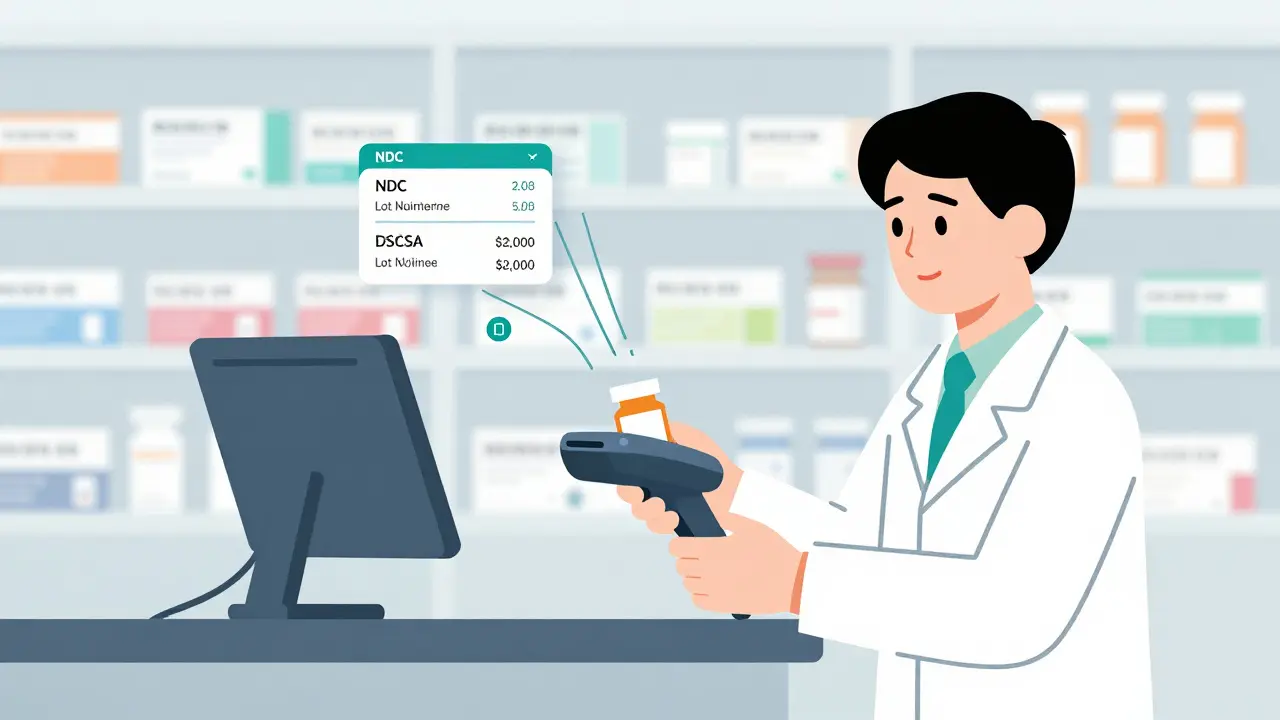
Every pill, injection, or inhaler that ends up on a pharmacy shelf didn’t just appear out of nowhere. It traveled through a complex web of manufacturers, distributors, and wholesalers - each step monitored by strict rules designed to keep fake, expired, or contaminated drugs out of your hands. In the U.S., these rules aren’t suggestions. They’re federal law. And if you work in a pharmacy, whether it’s a hospital, a corner drugstore, or a specialty clinic, you’re on the front line of this system.
What Makes Drug Procurement Legitimate?
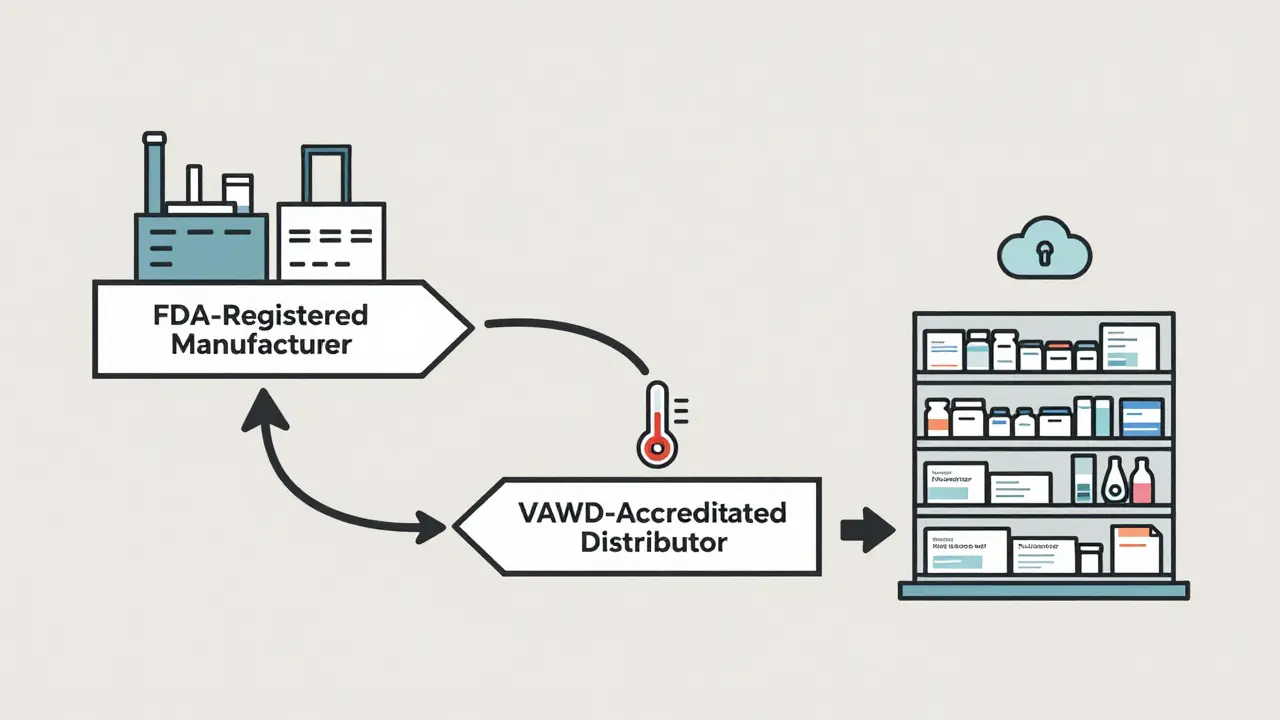
Legitimate drug procurement isn’t about finding the cheapest supplier. It’s about tracing every single package from the factory to the patient. The backbone of this system is the Drug Supply Chain Security Act (DSCSA) a federal law passed in 2013 that requires electronic tracking of prescription drugs at every point in the supply chain. By November 27, 2023, every pharmacy, wholesaler, and manufacturer had to be able to exchange digital transaction data - including product details, lot numbers, and expiration dates - with their trading partners. This isn’t just paperwork. It’s a digital trail that lets you know if a shipment is real or if it came from a shady source.
Alongside DSCSA, pharmacies must follow 21 CFR Part 203 federal regulations that control how drugs are distributed and prevent reimportation of drugs from countries with weaker safety standards. States also have their own rules. Forty-nine states participate in the Verified-Accredited Wholesale Distributors (VAWD) a program run by the National Association of Boards of Pharmacy that certifies distributors meet strict licensing and security standards. If a supplier isn’t VAWD-accredited, you should question why.
The Supplier Vetting Checklist
You can’t just order drugs from any company that emails you a good price. The American Society of Health-System Pharmacists (ASHP) a leading professional organization that sets standards for pharmacy practice in the U.S. outlines seven non-negotiable criteria for choosing suppliers:
- Current FDA registration - every manufacturer must be registered with the FDA.
- State pharmacy licenses - distributors must be licensed in every state they ship to.
- Compliance with cGMP - current Good Manufacturing Practices ensure quality control at the production level.
- History of recalls or adverse events - if a supplier has had multiple recalls in the past year, walk away.
- Security measures against diversion - legitimate suppliers use tamper-evident packaging and track inventory to prevent theft.
- Financial stability - a supplier that’s about to go bankrupt might cut corners on quality to stay afloat.
- DSCSA compliance - they must be able to provide full electronic transaction history.
ASHP recommends verifying at least three years of compliance history before signing a contract. One pharmacy in Ohio had to quarantine $87,000 worth of medication in 2023 because their distributor couldn’t produce complete DSCSA data. That’s not a glitch - that’s a failure in supplier vetting.
How to Verify What You Receive
Once the drugs arrive, you need to check them before they go on the shelf. Barcode scanning isn’t optional anymore. ASHP recommends scanning every single package as it comes in. The scanner compares the National Drug Code (NDC), lot number, and expiration date against your purchase order. If it doesn’t match, the shipment is flagged. This simple step catches mislabeled products, expired batches, or counterfeit items before they reach patients.
Temperature-sensitive drugs - like insulin, vaccines, or certain cancer treatments - need special handling. Refrigerated products must stay between 2°C and 8°C from the moment they leave the warehouse until they’re dispensed. Pharmacies must log temperatures daily and keep records for at least six years. One hospital in Texas lost an entire shipment of flu shots in 2023 because their cooler failed during transport and no one noticed until it was too late.
What Happens When the System Breaks?
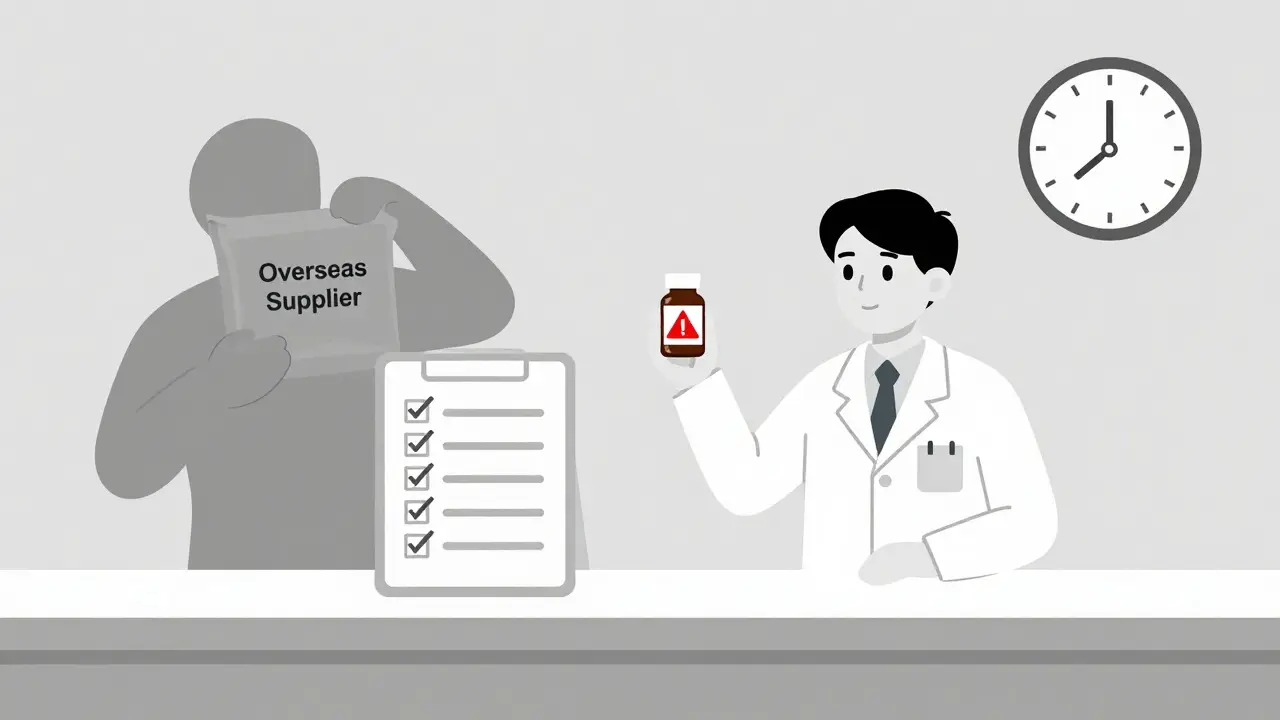
Even with strong rules, gaps exist. The FDA U.S. Food and Drug Administration, the federal agency responsible for regulating pharmaceuticals estimates that 1% of global pharmaceuticals are counterfeit. That might sound small, but it adds up to $200 billion in fake drugs sold every year. Most of these come from overseas suppliers or through unauthorized online pharmacies.
Specialty drugs - the expensive ones used for cancer, multiple sclerosis, or rare diseases - are especially vulnerable. They often move through complex, multi-step distribution chains. A 2022 ASHP survey found that 42% of health systems using nontraditional supply chains (like "brown bagging" or "white bagging") had at least one medication error tied to improper handling or lack of verification.
Small pharmacies feel the pressure most. The National Community Pharmacists Association (NCPA) an organization representing independent U.S. pharmacies reports that 65% of independent pharmacies spend over 10% of their budget just on compliance - things like software, training, audits, and staff time. Chain pharmacies, with their centralized systems, spend only 6%. That’s why many small shops are joining Group Purchasing Organizations (GPOs) consortia that pool buying power and provide shared compliance services. Hospitals using GPOs with dedicated compliance teams reported 89% fewer supply chain incidents in 2022.
The Technology Gap
Legitimate sourcing isn’t just about rules - it’s about systems. Pharmacies need three tools working together: an Electronic Medical Record (EMR) digital patient record system used in healthcare facilities, an Enterprise Resource Planning (ERP) software that manages inventory, billing, and procurement, and a pharmaceutical traceability platform specialized software that handles DSCSA data exchange. But here’s the problem: only 35% of health systems can get all three to talk to each other in 2023.
That means pharmacists often have to manually enter data or chase down missing records. One pharmacy director in Michigan said it takes her team 17 hours a week just to verify supplier documentation. That’s 17 hours not spent counseling patients or checking prescriptions.
Things are changing. Companies like TraceLink a SaaS platform that helps pharmaceutical companies comply with DSCSA through digital traceability and rfxcel a technology provider offering supply chain visibility tools for drug manufacturers are building cloud-based platforms that automate DSCSA reporting. By 2025, 73% of health systems plan to adopt blockchain-based verification - a system that makes it nearly impossible to alter transaction records.
Who’s in Charge?
Pharmacy compliance isn’t something you assign to a new hire. The ASHP American Society of Health-System Pharmacists recommends every large facility appoint a Chief Pharmacy Officer (CPO) a senior pharmacy leader responsible for overseeing procurement, compliance, and operations. By 2023, 92% of academic medical centers had done exactly that. The CPO doesn’t just sign off on orders - they audit suppliers, train staff, and respond to FDA inspections.
Training matters too. New staff need 120 hours of specialized education on DSCSA, cGMP, and state regulations. Certification through the Certified Health Care Supply Chain Professional (CHCSCP) a credential offered by the Healthcare Supply Chain Association for professionals in pharmaceutical logistics program takes six months. It’s not easy. But it’s necessary.
What’s Coming Next?
The federal government is doubling down. In 2024, the Biden administration proposed $150 million more for FDA drug supply chain security - a 35% increase. The FDA received over 2,100 reports of suspicious drug activity in 2022, up 28% from the year before. That’s not progress - that’s a warning.
Meanwhile, AI is starting to play a role. By 2026, 90% of pharmaceutical transactions are expected to use artificial intelligence to flag anomalies - like a sudden spike in orders from an unknown supplier or a mismatched lot number. Early tests show this could cut counterfeit incidents by 75%.
But technology alone won’t fix this. The real solution is vigilance. Every pharmacist, every pharmacy technician, every inventory manager - you’re the last line of defense. If a shipment feels off, if the paperwork doesn’t add up, if a supplier can’t answer your questions - don’t accept it. The system is designed to protect you. But it only works if you use it.
What happens if a pharmacy receives counterfeit drugs?
If counterfeit drugs are discovered, the pharmacy must immediately quarantine the product and report it to the FDA through the MedWatch system. The pharmacy must also notify its state board of pharmacy and the supplier. Failure to report can result in fines, loss of license, or criminal charges. In 2022, the FDA issued 147 warnings to pharmacies for failing to report suspicious products.
Can I buy drugs from overseas suppliers to save money?
No. Importing drugs from outside the U.S. is illegal under FDA rules unless the drug is FDA-approved and imported by an authorized distributor. Most overseas suppliers bypass U.S. safety standards. Even if the drug looks identical, it may contain incorrect dosages, harmful fillers, or no active ingredient at all. The FDA seized over 1.2 million counterfeit drug packages in 2023 - 70% came from overseas sources.
Do I need to scan every single pill bottle?
Yes - for all prescription drugs, ASHP recommends scanning every unit. The DSCSA requires product tracing at the package level. Scanning catches mismatches, expired lots, and counterfeit items. One pharmacy in Florida prevented a major incident in 2023 when a scanner flagged a batch of metformin with a fake NDC. The pills were later confirmed to be counterfeit.
How often should I audit my suppliers?
Quarterly audits are the industry standard. You should review each supplier’s FDA registration, state licenses, DSCSA compliance documentation, and recall history every three months. Keep records for at least six years. Many pharmacies use automated systems to flag when documents are about to expire.
What’s the difference between 503A and 503B compounders?
503A pharmacies compound custom prescriptions for individual patients under state oversight. 503B outsourcing facilities produce larger batches of sterile drugs for hospitals and clinics under stricter FDA cGMP standards. 503B facilities must register with the FDA and are subject to routine inspections. Many counterfeit drugs have been traced back to unregistered 503B facilities posing as legitimate compounders.
Are generic drugs more likely to be counterfeit?
Not inherently. But because generics are cheaper and sold in higher volumes, they’re more attractive targets for counterfeiters. In 2023, 62% of seized counterfeit drugs were generics. Always verify the manufacturer, lot number, and packaging - even for generics. Many fake generics mimic brand-name packaging to trick pharmacists and patients.


Written by Felix Greendale
View all posts by: Felix Greendale