
Medication Photosensitivity Risk Calculator
How Risky Are Your Medications?
Select medications you're currently taking to see your sun sensitivity risk level and recommended protection.
Sun Protection Recommendations
Your Photosensitivity Risk Level
Required Protection
Important Notes
- Medication-induced photosensitivity can last for years after stopping the drug
- Not all sunscreens provide adequate UVA protection
- Mineral sunscreens (zinc oxide, titanium dioxide) are safer for photosensitive skin
When you take a medication, you expect it to help. You don’t expect it to turn a short walk outside into a painful, blistering burn. Yet for millions of people, common prescriptions like antibiotics, blood pressure drugs, or even acne treatments can make their skin dangerously sensitive to sunlight. This isn’t rare. Photosensitivity from medications affects 8-20% of the population, and most people have no idea they’re at risk until it’s too late.
What Exactly Is Medication-Induced Sun Sensitivity?
It’s not just getting sunburned faster. When certain drugs interact with ultraviolet A (UVA) rays - the kind that penetrate clouds and windows - they trigger chemical reactions in your skin. These reactions can cause everything from a bad sunburn to long-term skin damage, and even raise your risk of skin cancer by up to 60%. There are two main types: phototoxic and photoallergic reactions.
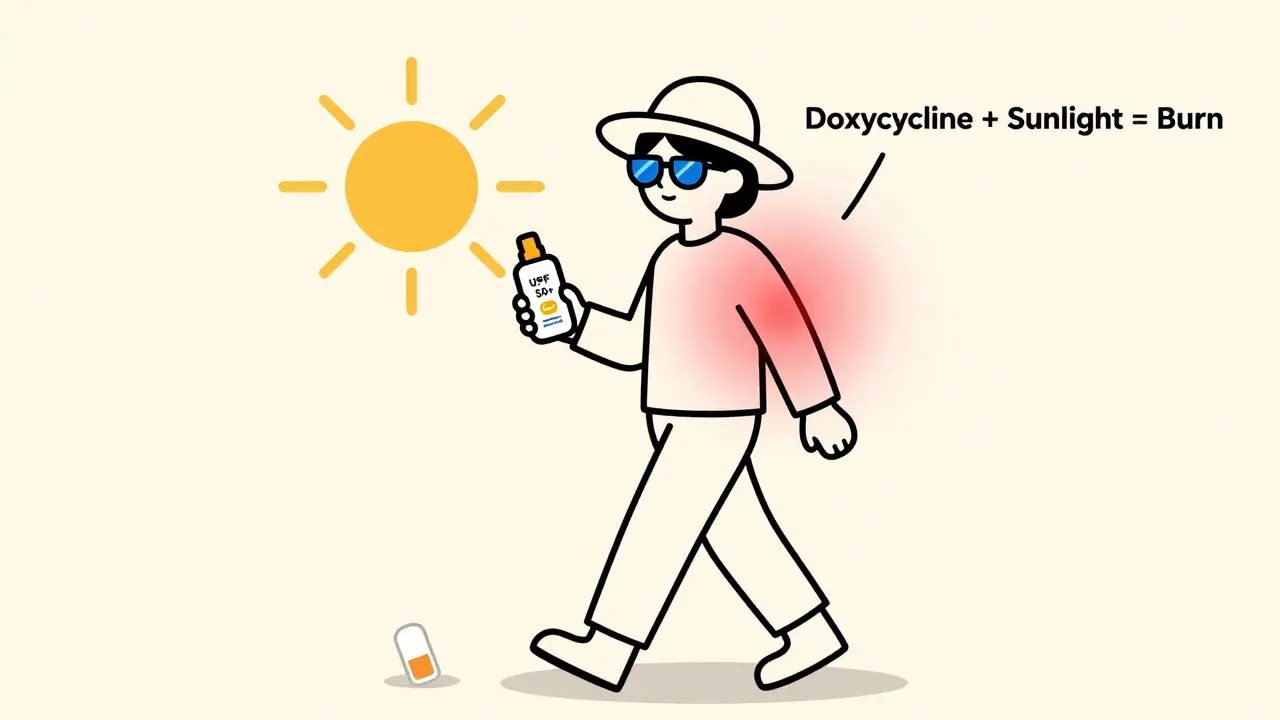
Phototoxic reactions make up 95% of cases. They happen fast - within 30 minutes to 2 hours after sun exposure. Think of it like your skin being fried from the inside out. Symptoms include redness, swelling, burning, and sometimes blisters. It looks exactly like a sunburn, but worse. The drug molecule absorbs UV light, creates harmful free radicals, and those destroy skin cells. No matter who you are, if you take enough of the drug and get enough sun, this will happen.
Photoallergic reactions are rarer, but trickier. Only about 0.1-0.5% of users get them. They don’t show up right away. It takes 24 to 72 hours. Your immune system gets involved. The drug changes under sunlight, becomes a foreign invader, and your body attacks it. The result? An itchy, spreading rash that can show up even on skin that wasn’t in the sun. It often looks like eczema. Once you’re sensitized, even tiny amounts of sun and the drug can trigger it again.
Which Medications Cause This?
Over 1,000 medications are known to cause photosensitivity. Some are obvious - antibiotics, especially tetracyclines like doxycycline. Up to 20% of people on doxycycline get phototoxic burns. NSAIDs like ketoprofen (found in some pain creams) are another big one. Fluoroquinolones like ciprofloxacin can also trigger reactions. But it’s not just pills. Topical creams, eye drops, and even some sunscreens can do it.
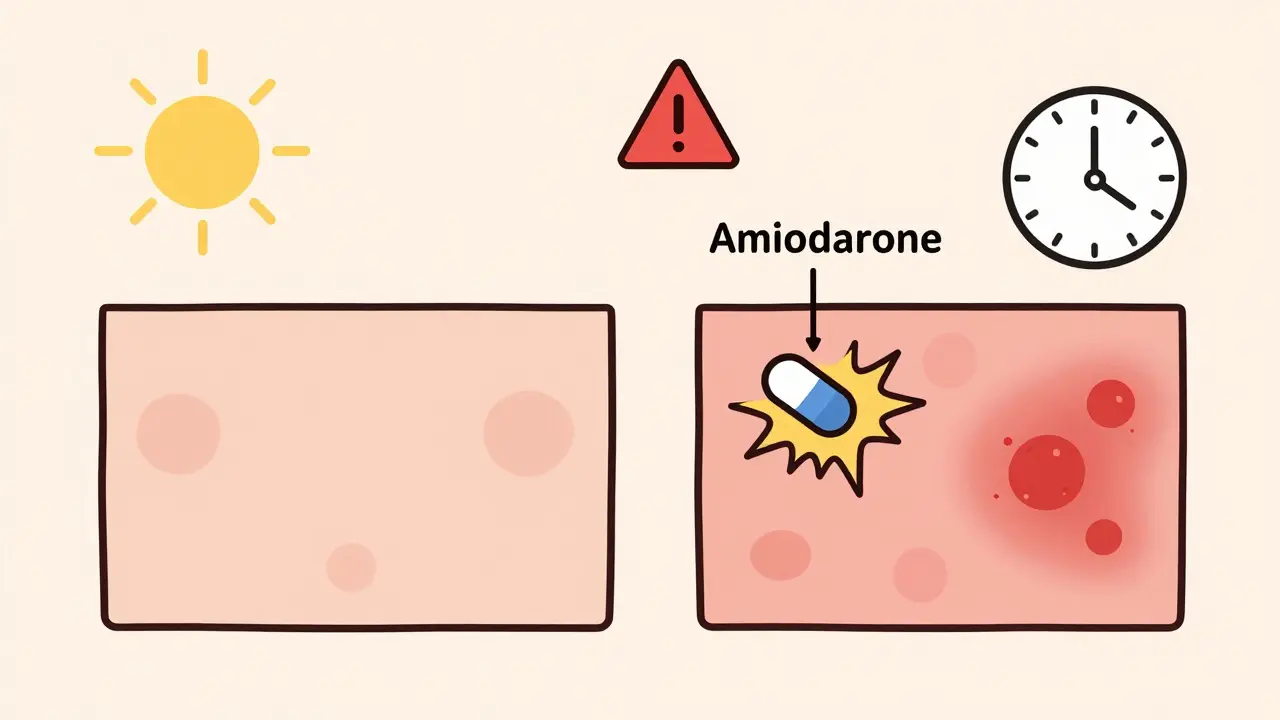
Cardiovascular drugs are a silent threat. Amiodarone (Cordarone), used for heart rhythm problems, causes photosensitivity in 25-75% of long-term users. And here’s the scary part: the reaction can last for years after you stop taking it. Some people still burn decades later.
Photoallergens are different. Sulfonamide antibiotics, certain antidepressants like phenothiazines, and even ingredients in sunscreen - like oxybenzone - can cause allergic reactions. Women are twice as likely to get photoallergic reactions, mostly because they use more topical products and cosmetics that contain these triggers.
According to the Skin Cancer Foundation, 40% of photosensitivity cases come from antibiotics, 25% from heart meds, and 15% from painkillers. If you’re on more than one medication, your risk adds up.
Why Most People Don’t Know They’re at Risk
Doctors rarely warn patients. A survey of 1,200 people with medication-induced sun sensitivity found that 68% received zero counseling when they started their prescription. One Reddit user, a pharmacist named ‘SunburnedPharmD,’ shared how she got severe burns through her shirt during a 15-minute walk after starting doxycycline. Her doctor never mentioned it.
Even worse, many patients don’t recognize the symptoms. They think they’re just getting sunburned. Or they blame their skin for being sensitive. Dermatologists say up to 70% of cases are misdiagnosed as something else - like polymorphic light eruption. Without a full medication history, it’s easy to miss.
And sunscreen? Most people use it wrong. Studies show patients apply only 25-50% of the amount they need. A standard SPF 30 sunscreen might not even block enough UVA. And here’s the truth: not all SPF 50+ sunscreens are equal. Only 35% meet the UVA protection standard needed to prevent phototoxic reactions.
How to Actually Protect Yourself
Forget the old advice. “Just wear sunscreen” doesn’t cut it anymore. You need a layered defense.
- Use mineral sunscreen - zinc oxide or titanium dioxide, SPF 50+, with at least 15% zinc oxide. Avoid chemical filters like oxybenzone if you’re prone to reactions. Mineral sunscreens sit on top of the skin and reflect UV instead of absorbing it.
- Apply enough - you need about one ounce (a shot glass full) to cover your whole body. Reapply every two hours, or right after sweating or swimming. Most people apply too little and think they’re protected.
- Wear UPF 50+ clothing - this blocks 98% of UV rays. Regular cotton? Only 3-20%. Brands like Solbari, Coolibar, and UV Skinz are tested and proven. A long-sleeve shirt, wide-brim hat, and UV-blocking sunglasses are non-negotiable.
- Check the UV index - if it’s 3 or higher, take extra care. Apps like UVLens give real-time alerts. Avoid being outside between 10 a.m. and 4 p.m. when UV is strongest.
- Stay in the shade - even under umbrellas or trees, up to 80% of UV can reflect off sand, water, or concrete. Don’t assume shade = safe.
Patients who got full sun safety education - including specific sunscreen types, clothing rules, and UV index tracking - had 57% fewer severe reactions, according to the Cleveland Clinic. Knowledge isn’t just helpful. It’s protective.
What’s Changing in 2026?
The field is evolving. In 2023, the FDA approved the first targeted photoprotective medication - Lumitrex (photoprotectin). It reduces UV-induced skin damage by 70% in trials. It’s not a cure, but it’s a breakthrough.
Genetic testing is getting into the game. 23andMe launched a photosensitivity risk panel in 2023 that checks for gene variants linked to higher reaction risk. If you’ve had bad sunburns before, it’s worth considering.
Regulations are tightening too. The European Union now requires all sunscreens to show UVA protection with a PA++++ rating. By 2024, U.S. sunscreens may follow. And 200+ high-risk medications now carry mandatory photosensitivity warnings.
Health systems like Kaiser Permanente have started automated screening in their electronic records. When a doctor prescribes doxycycline or amiodarone, the system pops up a warning and links patients to sun safety resources. Since 2022, phototoxic reactions in their patient group dropped by 28%.
What to Do If You Think You Have It
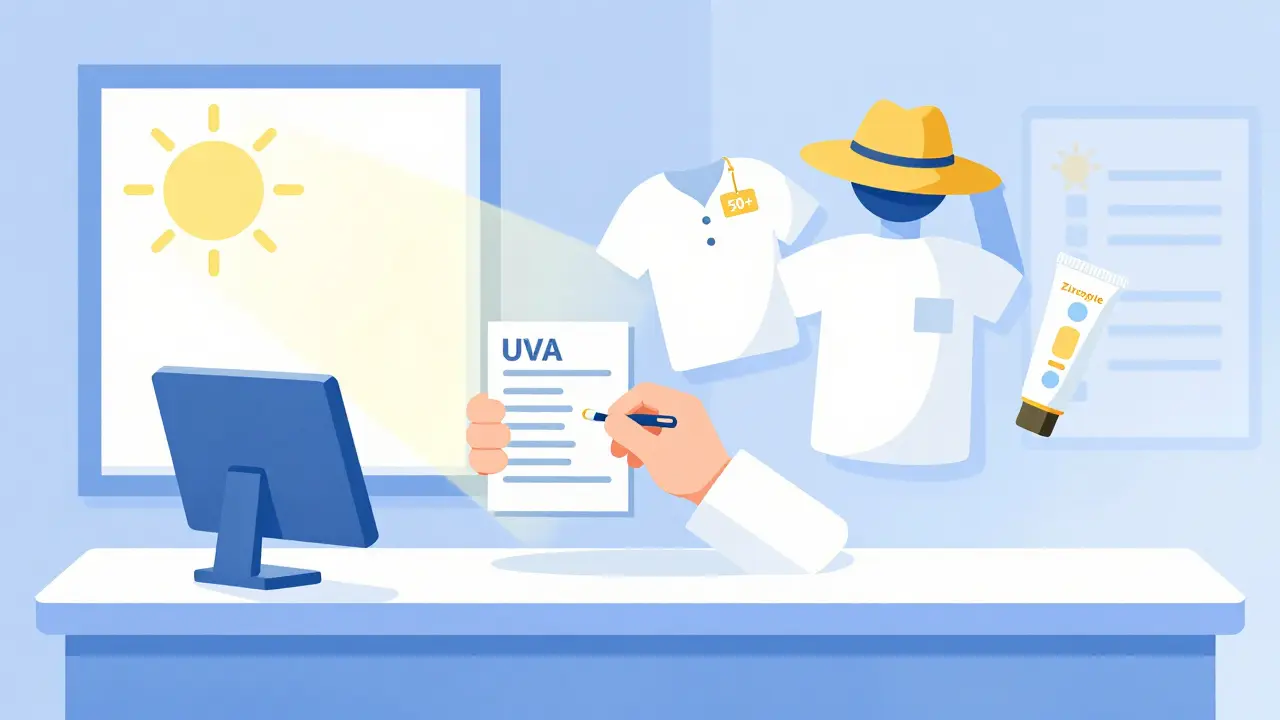
If you’ve had an unusual sunburn after starting a new medication, stop the sun exposure immediately. Take a picture of the reaction. Bring your full medication list - including supplements and creams - to your dermatologist. Ask about photopatch testing. It’s not perfect (it only confirms 30-40% of cases), but it helps.
Don’t just stop the drug unless your doctor says so. Some meds, like amiodarone, are life-saving. The goal isn’t to avoid treatment - it’s to protect your skin while you’re on it.
And if your provider dismisses your concerns? Get a second opinion. Photosensitivity is real. It’s underdiagnosed. And it can change your life.
Long-Term Risks You Can’t Ignore
Chronic exposure to UV light while on photosensitizing drugs doesn’t just cause rashes. It accelerates skin aging and significantly raises your risk of squamous cell carcinoma and basal cell carcinoma. The American Cancer Society estimates that better management of medication-related photosensitivity could prevent 2,000-3,000 skin cancer cases in the U.S. every year by 2025.
With climate change increasing UV levels by 0.5-1% annually, the problem is getting worse. By 2030, an estimated 5 million more Americans could be affected without better awareness and protection.
This isn’t about avoiding the sun forever. It’s about being smart. You can still enjoy the outdoors. You just need the right tools - and the right information.
Can I still go outside if I’m on a photosensitizing medication?
Yes, but you need to be extra careful. Limit time in direct sun, especially between 10 a.m. and 4 p.m. Wear UPF 50+ clothing, a wide-brimmed hat, and sunglasses. Use a zinc oxide-based SPF 50+ sunscreen and reapply every two hours. Check the UV index daily - if it’s 3 or higher, take extra precautions.
Is sunscreen enough to prevent a reaction?
No. Most sunscreens don’t block enough UVA, and people apply too little. Sunscreen alone is not sufficient. You need a combination of physical barriers - clothing, hats, shade - and a high-quality mineral sunscreen. Think of sunscreen as your last line of defense, not your first.
How long does photosensitivity last after stopping the medication?
It varies. For most drugs, sensitivity fades within days to weeks. But with amiodarone and some other drugs, reactions can last for years - even decades. If you’ve taken one of these medications long-term, continue sun protection even after stopping the drug.
Are there any medications that are safe for sun exposure?
Many medications are not photosensitizing. But it’s impossible to know without checking. Always ask your doctor or pharmacist when you start a new drug. If you’re unsure, assume it’s risky and take precautions until you confirm otherwise.
Can I use tanning beds if I’m on a photosensitizing drug?
Never. Tanning beds emit concentrated UVA radiation - the exact wavelength that triggers phototoxic reactions. Using them while on a photosensitizing medication can cause severe burns, blistering, and long-term skin damage. This is not a risk worth taking.


Written by Felix Greendale
View all posts by: Felix Greendale