
Probiotic Timing Calculator
This calculator helps you determine the optimal timing between your antibiotic dose and probiotic intake. Research shows taking probiotics 2-3 hours after antibiotics maximizes effectiveness and reduces risk of antibiotic-associated diarrhea.
Key evidence: Probiotics reduce C. diff diarrhea risk from 11.6% to 3.1% when used correctly.
Proven benefit: Taking probiotics 2-3 hours after antibiotics reduces C. diff diarrhea risk from 11.6% to 3.1%.
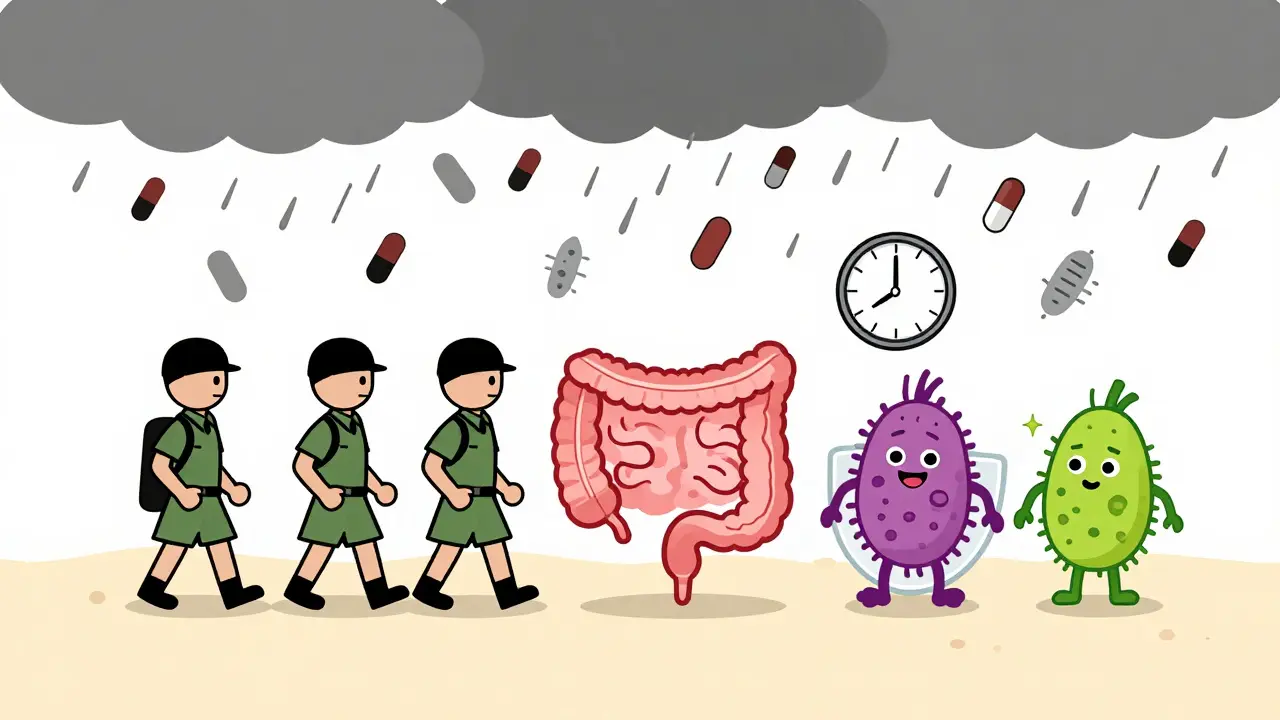
When you're on antibiotics, your gut knows it. You might feel bloated, gassy, or worse - suddenly running to the bathroom multiple times a day. This isn't just bad luck. Antibiotics don’t just kill the bad bacteria causing your infection. They wipe out the good ones too. And when your gut microbiome gets thrown off balance, antibiotic-associated diarrhea isn’t far behind.
Why Your Gut Suffers During Antibiotics
Your gut holds over 100 trillion bacteria. These tiny organisms help digest food, make vitamins, train your immune system, and keep harmful bugs in check. When you take an antibiotic - even a simple one like amoxicillin or doxycycline - it doesn’t pick and choose. It hits everything. That’s why up to 30% of people on antibiotics end up with diarrhea. For hospitalized patients, the risk jumps higher, with some developing a serious infection called Clostridioides difficile (C. diff), which can cause severe cramping, fever, and even life-threatening inflammation.What Do Probiotics Actually Do?
Probiotics are live bacteria or yeasts that can help restore the balance. Think of them as reinforcements sent in after the antibiotic storm. The most studied strains include Lactobacillus rhamnosus GG, Saccharomyces boulardii, and certain Bifidobacterium species. These don’t just sit there. They produce short-chain fatty acids that feed your gut lining, crowd out harmful bacteria, and help your immune system calm down. A 2020 Cochrane review of 2454 patients found that those who took probiotics during antibiotics had less than one-third the risk of developing C. diff diarrhea compared to those who didn’t. The numbers? 3.1% vs. 11.6%. That’s not a small difference. For general antibiotic-associated diarrhea, the benefit is still clear - probiotics cut the risk by about half in many cases, especially when you use the right strains.Which Probiotics Work Best?
Not all probiotics are created equal. A generic multi-strain supplement from the grocery store might not do much. The science points to two standouts:- Saccharomyces boulardii - a yeast, not a bacteria. It’s heat-stable, survives stomach acid, and has been shown to reduce antibiotic diarrhea by up to 50% in clinical trials.
- Lactobacillus rhamnosus GG - one of the most researched strains. Found in products like Culturelle, it’s been linked to fewer cases of diarrhea and faster recovery.
How and When to Take Them
Timing matters. Antibiotics can kill probiotics if they’re taken together. The sweet spot? Take your probiotic 2 to 3 hours after your antibiotic dose. That gives the antibiotic time to do its job without wiping out the good guys you’re trying to bring back. Dosing? Most studies use 5 to 10 billion CFUs (colony-forming units) per day. Some use up to 20 billion - especially for high-risk patients. Stick with a product that lists the strain and CFU count clearly. If it just says “probiotic blend” with no details, you’re guessing. Take them daily during your antibiotic course - and keep going for at least a week after you finish. Your gut doesn’t recover overnight. Stopping too soon means the good bacteria don’t get a real chance to reestablish.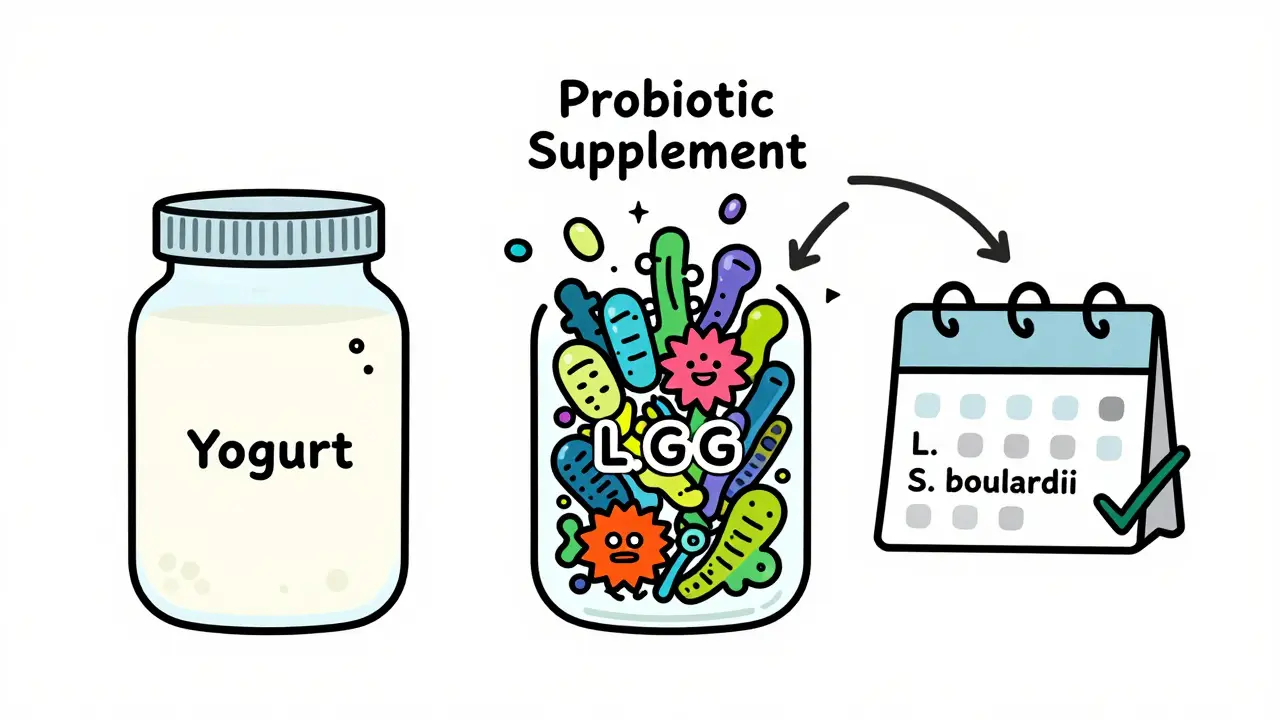
What About Food vs. Supplements?
Yogurt, kefir, sauerkraut, and kimchi contain live cultures. Great for everyday gut health. But when you’re on antibiotics, you need more than what a spoonful of yogurt can give you. Most fermented foods have far fewer live bacteria than a standard supplement - and often lack the specific strains proven to help with antibiotic side effects. Supplements give you a controlled, concentrated dose. That’s why most doctors and researchers recommend them in this situation. If you want to eat yogurt too? Fine. But don’t rely on it alone.The Risks: Are Probiotics Safe?
For most healthy people, probiotics are safe. The most common side effect? A little extra gas or bloating in the first few days. That usually fades as your gut adjusts. But there are real risks - especially for certain groups. There have been documented cases of people developing bloodstream infections from probiotics, especially those with weakened immune systems, recent surgery, or central lines. Lactobacillus and Saccharomyces boulardii have both caused sepsis in rare cases. If you’re on chemotherapy, have HIV, are on immunosuppressants, or are critically ill - talk to your doctor before taking anything. The FDA doesn’t regulate probiotics like drugs. In the U.S., they’re sold as dietary supplements. That means manufacturers don’t have to prove they work or are safe before selling them. Independent testing by ConsumerLab found that 30% of probiotic products didn’t contain the number of live organisms they claimed. Some even had harmful contaminants.What Do Real People Say?
On Amazon, Culturelle (L. GG) has over 12,500 reviews with a 4.2-star rating. Many users write: “Didn’t get diarrhea like last time.” “Saved me from a hospital trip.” Others say: “Nothing changed.” “Made me gassier.” Reddit threads are full of people sharing their timing tricks - “I take mine at 8 a.m. and my antibiotic at 11 a.m.” or “I wait until bedtime.” There’s no one-size-fits-all, but consistency matters. If you’re sensitive, start with a lower dose (1-5 billion CFUs) and see how you feel.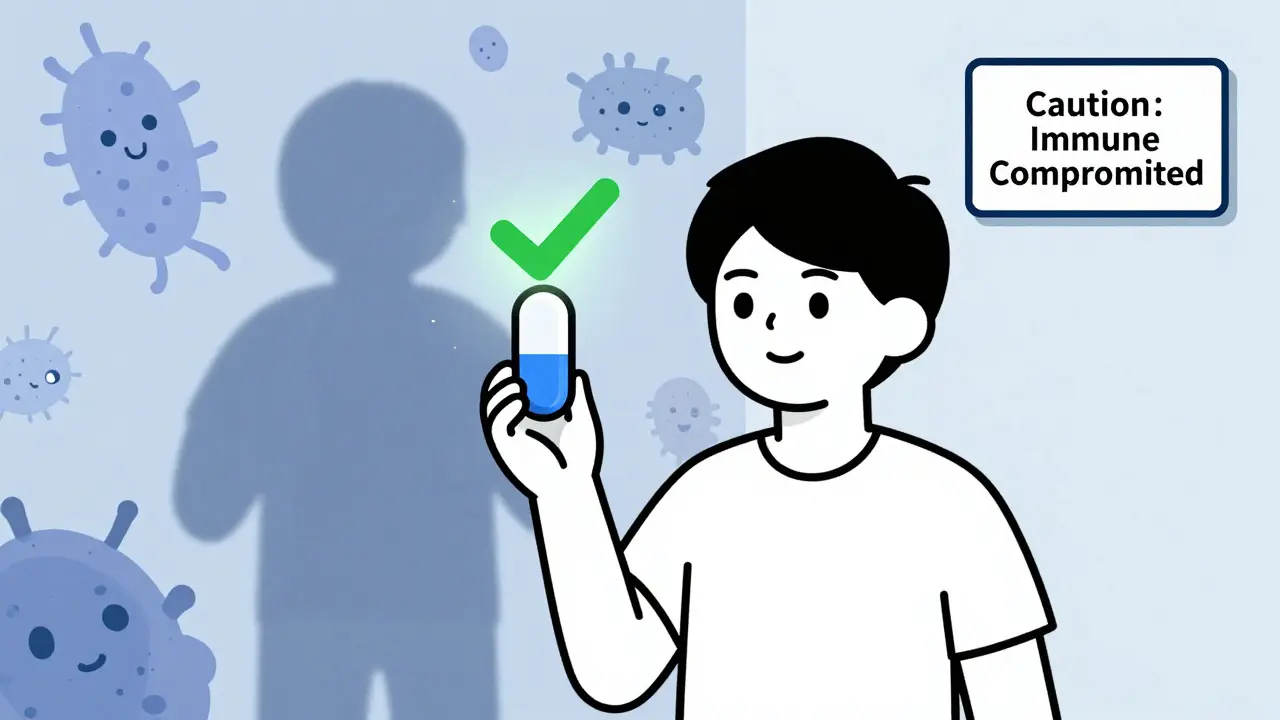
What’s Next?
Science is moving fast. New studies are looking at whether certain probiotics might actually slow down gut recovery after antibiotics - a surprising twist. The NIH just funded $12.5 million in research to figure out which strains work best for which antibiotics and patient types. In 2023, the FDA released draft guidance that could lead to stricter rules for probiotics by 2026. That’s a good thing. Right now, you’re shopping in a wild west.Your Action Plan
If you’re about to start antibiotics and want to protect your gut:- Ask your doctor if a probiotic is right for you - especially if you have a weakened immune system.
- Choose a product with Lactobacillus rhamnosus GG or Saccharomyces boulardii - and check the CFU count (aim for 5-10 billion).
- Take it 2-3 hours after your antibiotic, once a day.
- Keep taking it for at least a week after your antibiotics end.
- Stop immediately if you feel worse - fever, severe pain, or swelling - and call your doctor.
Final Thought
Probiotics aren’t magic. But for many people, they’re one of the few tools we have to reduce a very common, very unpleasant side effect of antibiotics. The evidence is strong enough to try - if you pick the right strain, take it at the right time, and know your limits. Don’t treat them like candy. Treat them like medicine. Because, in many ways, they are.Can probiotics prevent C. diff infection entirely?
No, probiotics don’t prevent C. diff infection itself - they reduce the risk of the diarrhea it causes. Studies show they lower the chance of C. diff-associated diarrhea from 11.6% to 3.1% in high-risk groups, but they don’t stop the bacteria from colonizing your gut. That’s why hand hygiene and infection control still matter.
Is it okay to take probiotics with food?
It depends on the strain. Acid-resistant strains like L. rhamnosus GG can be taken with food. Others, like S. boulardii, work fine either way. Some manufacturers recommend taking them on an empty stomach for faster delivery. Always check the label. If unsure, take them 20-30 minutes before a meal.
How long should I take probiotics after antibiotics?
At least one to two weeks after finishing your antibiotic course. Your gut microbiome can take months to fully recover, but the first few weeks are critical for preventing lingering diarrhea or overgrowth of bad bacteria. Don’t stop just because you feel better.
Can I get probiotics from yogurt instead of supplements?
Yogurt and fermented foods contain beneficial bacteria, but usually not enough - or the right strains - to reliably prevent antibiotic diarrhea. Most yogurts have 1-5 billion CFUs, while studies show you need 5-10 billion daily for effect. Supplements give you a targeted, reliable dose.
Are probiotics safe for kids and older adults?
For healthy children and older adults, yes - especially with strains like L. rhamnosus GG, which are used in pediatric studies. But older adults with chronic illness, recent surgery, or weakened immunity should talk to a doctor first. Children under 1 should not take probiotics without medical advice.
What if I forget to take my probiotic at the right time?
If you accidentally take it right after your antibiotic, don’t panic. Just wait until your next dose and space them out then. Missing one dose won’t ruin everything. Consistency over time matters more than perfect timing every single day.
Do probiotics interact with other medications?
There’s no strong evidence they interact with most medications. But if you’re on antifungals (like fluconazole), they can kill S. boulardii. Immunosuppressants may increase infection risk. Always tell your doctor what supplements you’re taking - even if they seem harmless.


Written by Felix Greendale
View all posts by: Felix Greendale