
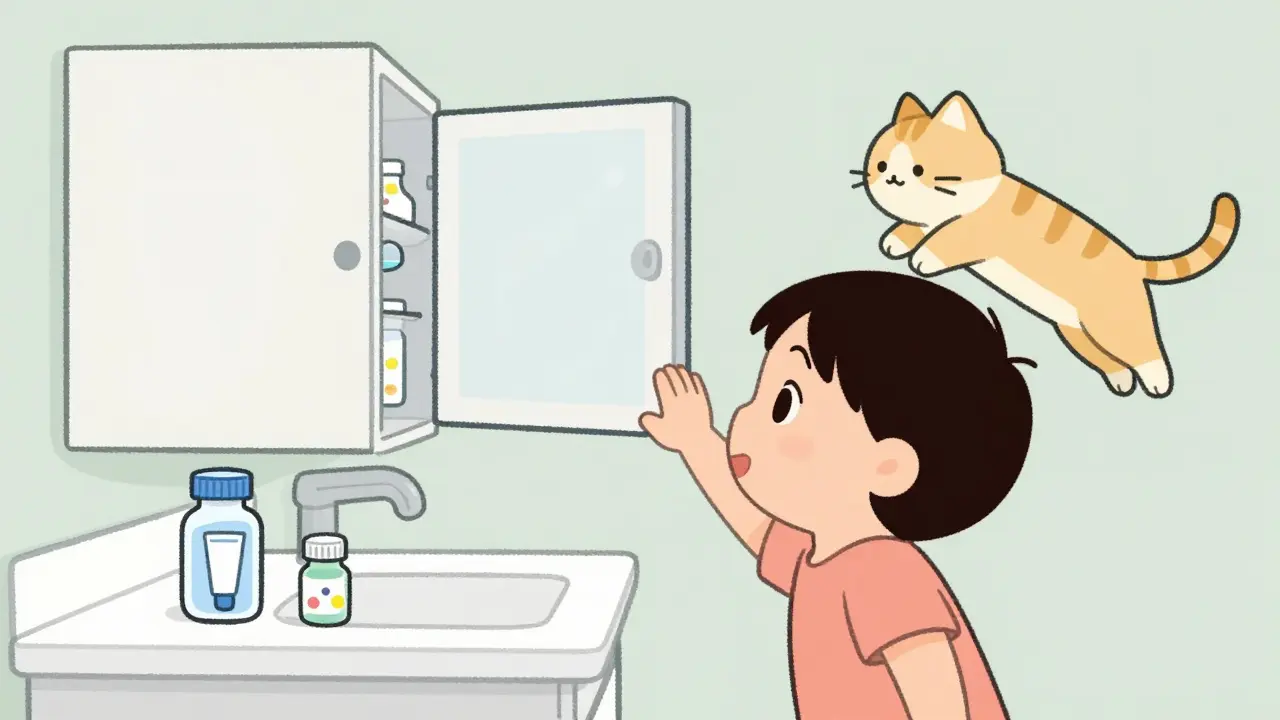
Every year, 60,000 children under five end up in emergency rooms because they found and swallowed medicine they weren’t supposed to. And it’s not just kids - pets are at risk too. Dogs, cats, even horses have died from eating human pills or veterinary meds left within reach. This isn’t rare. It’s preventable. And the fix is simple: lock it up, separate it, and keep it out of sight.
Why Your Medicine Cabinet Isn’t Enough
Most people think child-resistant bottles are enough. They’re not. The Consumer Product Safety Commission found these caps stop only half to 80% of kids. A determined 18-month-old can climb a chair, pull open a drawer, and find that bottle of liquid ivermectin you left on the nightstand after giving it to your dog. And if your cat gets into it? A tiny drop of 5-fluorouracil cream - used for skin conditions - can be fatal. The CDC says 20% of all pediatric poisonings come from prescription meds. And pets? VCA Animal Hospitals found that 65% of dogs can open standard pill bottles in under two minutes. Flavored pet meds - banana, strawberry, chicken - are basically candy to kids. One study showed they’re 300% more likely to be mistaken for treats than plain human pills.Where You’re Probably Storing Medications Wrong
You’re not alone. A CDC survey of 10,000 U.S. households found only 22% use locked storage. Most keep meds where it’s convenient: bathroom counters, bedside tables, kitchen drawers. That’s dangerous. Bathrooms are humid. That moisture ruins 40% of medications within 30 days. Nightstands? Kids reach for them. Kitchen counters? Pets jump up. One family in 2021 stored horse dewormer paste in the same drawer as baking soda. Their dog ate it. He needed 14 days of intensive care. Even worse? Mixing human and pet meds. PetMD documented over 1,200 cases of mix-ups. Heartworm pills look like regular vitamins. A child might swallow one thinking it’s a gummy. A 5mL dose of veterinary ivermectin contains ten times the toxic amount for a toddler.The Locked Storage Rule: No Exceptions
The single most effective thing you can do? Lock your meds away. Dr. Gary Smith from Nationwide Children’s Hospital says locked storage cuts pediatric poisonings by 92%. That’s not a guess - it’s data. You don’t need a fancy safe. A $25 wall-mounted lockbox from a hardware store works. Or repurpose an old gun safe, toolbox, or even a locked filing cabinet. Put it at least 4 feet off the ground - higher if your child is a climber. Seattle Children’s Hospital now recommends 5 feet. Either way, it must be locked. Latches don’t count. Kids figure those out fast. For controlled substances like opioids, DEA rules require UL TRTL-30x6-certified containers - ones that resist drilling and prying for 30 minutes. If you’re storing these, don’t cut corners.Separate Human and Pet Medications - Completely
Store pet meds in a different room. Not just a different shelf. Not just a different drawer. A different room. CDC research shows co-storing human and pet meds increases accidental ingestion risk by 4.7 times. Keep pet meds in the garage, basement, or a closet far from the kitchen. If you only have one cabinet? Use two separate lockboxes. Label them clearly: "HUMAN MEDS ONLY" and "PET MEDS ONLY." Why? Because 40% of pet medication exposures happen when kids think they’re candy. And some vet meds - like ivermectin paste or permethrin spot-on - are deadly to cats and dogs if ingested by humans. But humans can also die from pet meds. A single drop of 5-fluorouracil cream can kill a cat. And if a child gets into it? That’s an emergency.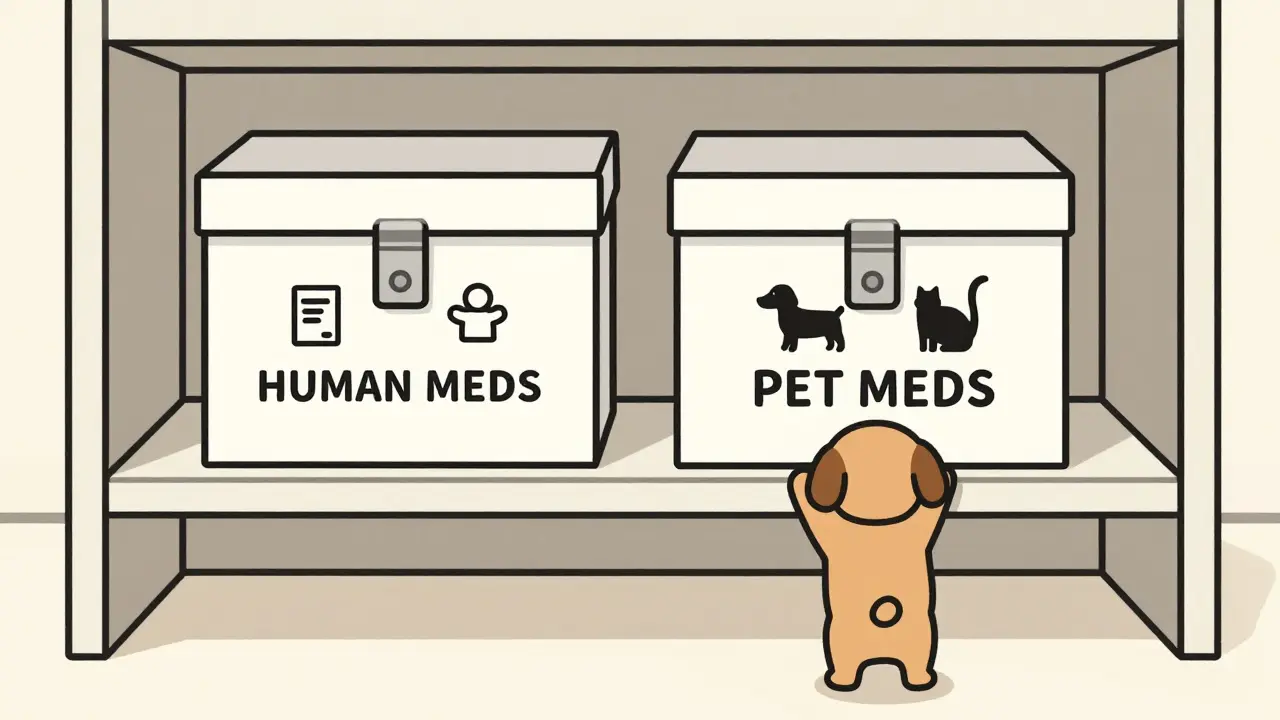
Keep Original Packaging - Always
Never transfer pills into unmarked containers. Not even for travel. The CDC says 35% of medication errors happen because labels are missing. You might think you’ll remember that blue pill is your blood pressure med. But in a rush, or after a sleepless night, you won’t. Original bottles have:- Drug name and strength
- Prescriber info
- Expiration date
- Usage instructions
Temperature and Humidity Matter More Than You Think
Your meds aren’t just dangerous if they’re accessible - they’re useless if they’re ruined. The FDA says 70% of human medications need to be stored between 68-77°F (20-25°C). That’s room temperature. Not the steamy bathroom. Not the hot garage. And 25% need refrigeration - insulin, some antibiotics, eye drops. Keep those in a locked fridge, not the one with the milk. Pets? Their meds are more forgiving. Most can handle 50-85°F. But that doesn’t mean you can stash them together. Different storage needs mean different locations. Store pet meds in a cool, dry place - like a kitchen pantry - but away from food. Humidity is the silent killer. Moisture degrades meds fast. A pill left on a sink for a week? It might still look fine. But it’s losing potency. And that’s risky.What to Do With Expired or Unused Meds
Don’t flush them. Don’t toss them in the trash. Don’t leave them in a drawer "just in case." The FDA says 70% of households keep expired meds. That’s a time bomb. Kids find them. Pets eat them. You forget what’s what. Use a drug take-back program. The DEA’s National Take Back Day happens twice a year - next one is October 2025. Over 11,000 drop-off sites nationwide. Pharmacies, police stations, hospitals. Find yours at dea.gov/takebackday. No take-back nearby? Mix pills with kitty litter, coffee grounds, or dirt. Put them in a sealed bag. Toss in the trash. Remove labels first. This makes them unappealing and unrecognizable.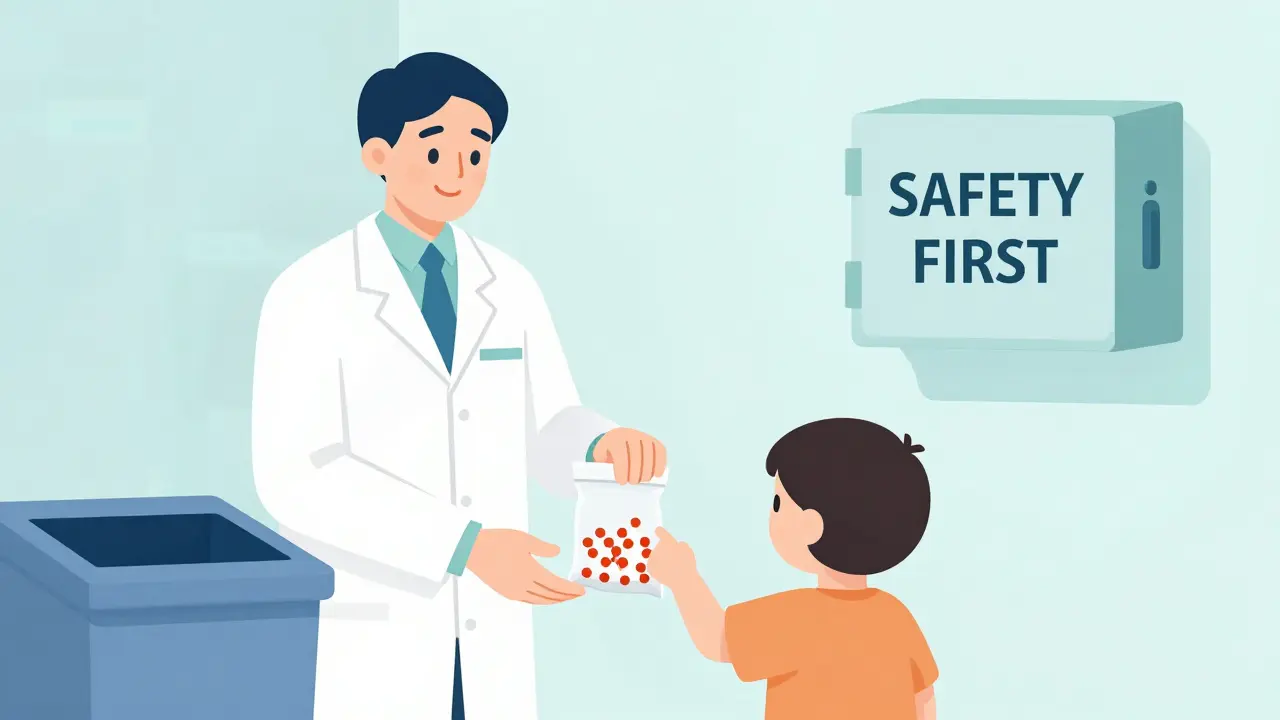
Real People, Real Mistakes, Real Fixes
On Reddit’s r/Parenting, 78% of 1,200 parents admitted they didn’t lock their meds. One mom said her 2-year-old got into her thyroid pills. She didn’t notice until he turned blue. He survived. She now keeps everything in a $40 lockbox mounted high on the closet wall. Another family stored their dog’s heartworm pill next to the cereal. Their 3-year-old ate it. They rushed to the ER. The child needed an IV. The vet said the pill had ivermectin - a neurotoxin. He was lucky. The fix? Simple. They bought two lockboxes. One for human meds. One for pet meds. They put them in the bedroom closet - out of reach, out of sight. They check weekly. No more accidents.It’s Not Just About Locking - It’s About Habits
Locking the box isn’t enough. You need a system. - Do a weekly audit. Check expiration dates. Toss what’s old.- Use visual reminders. Stick a note on the fridge: "Medicines locked. No exceptions."
- Train everyone. Grandparents, babysitters, visitors - show them where the meds are stored.
- If someone has trouble with child-resistant caps? Install a lower lockbox with an emergency release.
- For elderly users: consider a smart dispenser with a timer and lock. They’re getting cheaper.
The CDC says it takes 21-30 days to build a new habit. Start small. Lock one box. Then another. Soon, it’s automatic.
What You Can Do Today
1. Walk through your home. Find every pill bottle, patch, liquid, cream.2. Move them all to one locked box.
3. Buy a second lockbox for pet meds. Put it in a different room.
4. Throw out expired meds using a take-back site or trash method.
5. Tell everyone in your house: "Medicines are locked. Never open them without asking." You don’t need to spend hundreds. You don’t need to be perfect. You just need to be consistent. One locked box can save a life. Two can save two.
Can child-resistant caps alone protect my kids?
No. Child-resistant caps stop only 50-80% of children, according to the Consumer Product Safety Commission. Many kids as young as 18 months can open them with persistence. Locked storage is the only reliable protection.
Is it safe to store human and pet medications together?
No. Storing them together increases the risk of accidental ingestion by 4.7 times. Human medications can be deadly to pets, and pet meds - especially flavored ones - are often mistaken for candy by children. Always use separate, locked containers in different rooms.
Where’s the best place to store medications in my home?
The safest spot is a locked box mounted at least 4 feet high, away from bathrooms and kitchens. Kitchen pantries are 3.2 times safer than bathrooms because they’re drier and less tempting to pets. Avoid nightstands, countertops, and drawers.
What should I do with expired or unused medications?
Use a DEA National Take Back Day drop-off site - there are over 11,000 nationwide. If that’s not possible, mix pills with coffee grounds or kitty litter, seal them in a bag, and throw them in the trash. Always remove labels first. Never flush them.
How much does safe medication storage cost?
You don’t need to spend much. A basic wall-mounted lockbox costs as little as $24.99. Many households already have suitable containers like old toolboxes or gun safes. The key isn’t price - it’s consistency.
Are there any medications that are especially dangerous if ingested by children or pets?
Yes. Ivermectin (used in heartworm preventatives), 5-fluorouracil cream (for skin cancer), and opioid painkillers are extremely dangerous. Even tiny amounts can be fatal. Veterinary paste formulations are especially risky - they’re sweetened and designed to be palatable to animals, making them attractive to children.
How long does it take to build a safe storage habit?
It takes about 21 to 30 days of consistent practice to make safe storage automatic, according to the CDC. Start by locking one box, then add another. Use reminders. Involve everyone in the house. After a month, it becomes second nature.


Written by Felix Greendale
View all posts by: Felix Greendale