
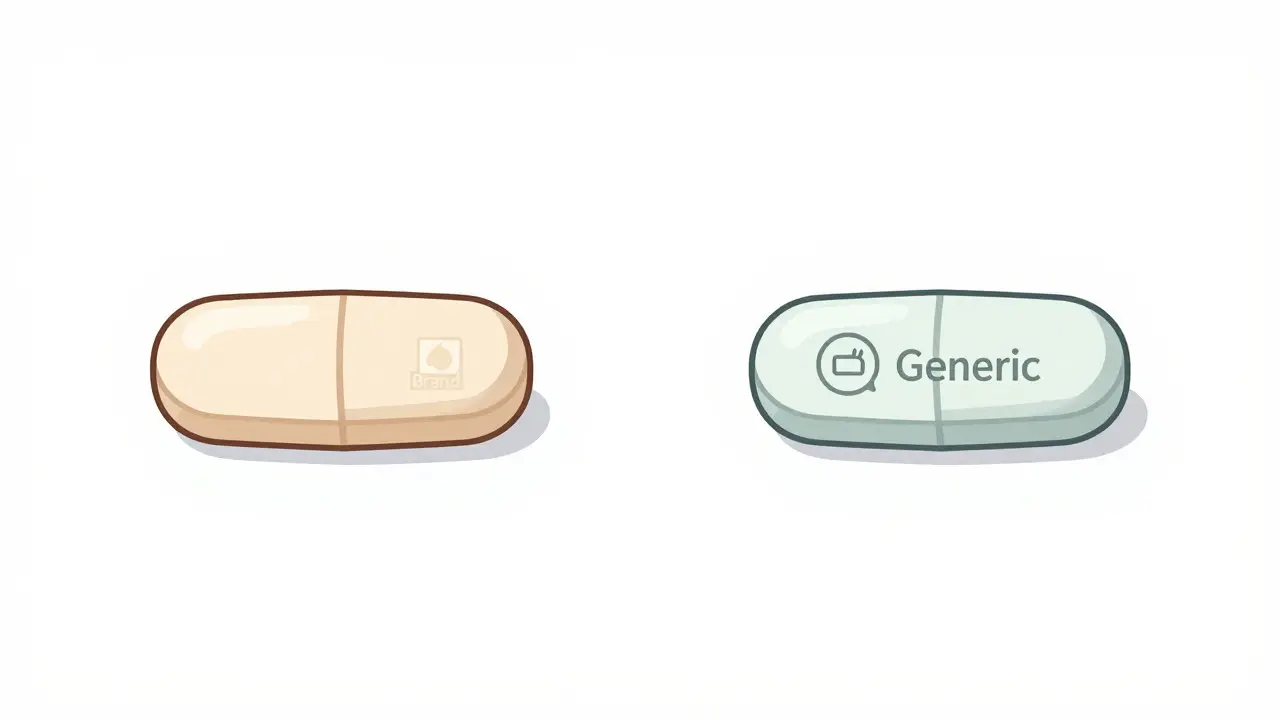
Have you ever switched from a brand-name drug to a cheaper generic version and suddenly felt like something was 'off'? Maybe your headache didn't go away as fast, or you noticed a new stomach ache. You aren't alone in feeling this way. It is a common worry among patients: are generic medications less safe? Do they cause more adverse reactions than the expensive originals?
The short answer is that for the vast majority of people, generics are just as safe and effective as brand-name drugs. However, the reality is a bit more nuanced. While major health organizations agree on their equivalence, individual experiences can vary due to factors like inactive ingredients, manufacturing differences, and even our own psychology. Let's break down what the science actually says about side effects with generics.
What Makes a Generic Drug 'Equivalent'?
To understand why some people report issues, we first need to look at how Generic Drugs are defined by regulators like the U.S. Food and Drug Administration (FDA). A generic drug must contain the same active ingredient as the brand-name drug. It must also have the same strength, dosage form (like a tablet or liquid), and route of administration.
The key requirement here is bioequivalence. This means the generic must deliver the same amount of active ingredient into your bloodstream within roughly the same timeframe as the brand-name drug. The FDA allows a statistical range where the generic’s performance falls between 80% and 125% of the brand-name drug’s pharmacokinetic parameters. For most medications, this small window is clinically insignificant. Your body processes them effectively the same way.
However, generics often differ in inactive ingredients. These are the fillers, binders, dyes, and preservatives that give the pill its shape and color. If you have an allergy to a specific dye or gluten sensitivity, a change in these inactive components could theoretically trigger a reaction. This is one of the primary reasons why some patients feel different after switching.
The Nocebo Effect: When Expectation Creates Symptoms
One of the most fascinating aspects of generic drug safety is the role of psychology. There is a well-documented phenomenon called the Nocebo Effect. This occurs when negative expectations about a treatment lead to actual physical symptoms. It is the opposite of the placebo effect.
Research supports this strongly. A 2012 study published in PubMed found that significantly more side effects were attributed to medication when patients knew they were taking a generic compared to when they thought they were taking a brand-name drug. In fact, another study showed that 54% of patients given placebos labeled as "generics" discontinued the medication early due to perceived side effects, compared to only 33% of those given identical pills labeled as "brand-name."
This suggests that for many people, the fear that a generic is "weaker" or "different" can actually manifest as real discomfort. If you believe the drug won't work, your brain may amplify minor sensations into significant complaints. Understanding this bias is crucial for interpreting personal experiences with medication changes.
When Manufacturing Origin Matters
While the active ingredient is the same, where and how a drug is made can influence quality control. The global supply chain for pharmaceuticals is complex. As of 2022, the FDA oversees approximately 1,700 generic drug manufacturing facilities worldwide, with 63% located outside the United States, including significant portions in India and China.
A controversial but important finding came from Ohio State University researchers in 2022. They analyzed data and found that generic drugs manufactured in India were linked to 54% higher rates of severe adverse events-including hospitalization and death-compared to equivalent drugs produced in the United States. The researchers noted this disparity was primarily driven by "mature" generic drugs that had been on the market for longer periods.
It is important to note that the FDA disputes the idea that location equals lower quality, pointing out that regulatory inspections have increased dramatically under initiatives like GDUFA (Generic Drug User Fee Amendments). Still, for patients concerned about consistency, knowing the source of their medication might provide peace of mind, especially if they have experienced issues before.

Narrow Therapeutic Index Drugs: The Exception to the Rule
Not all medications are created equal when it comes to substitution. Some drugs have what is known as a Narrow Therapeutic Index (NTI). These are medications where a small difference in blood concentration can lead to treatment failure or toxicity. Common examples include:
- Warfarin (blood thinner)
- Levothyroxine (thyroid hormone)
- Phenytoin (anti-seizure medication)
- Lithium (mood stabilizer)
For NTI drugs, the standard 80-125% bioequivalence range might be too wide. A slight variation in absorption could push a patient out of their therapeutic window. This is why many doctors recommend sticking with one manufacturer for these specific drugs. The American Medical Association suggests that physicians should specify "Dispense as Written" for NTI medications to maintain consistency in the manufacturing source, reducing the risk of unstable levels in the body.
| Feature | Brand-Name Drug | Generic Drug |
|---|---|---|
| Active Ingredient | Original proprietary formula | Identical chemical structure |
| Inactive Ingredients | Consistent formulation | May vary by manufacturer |
| Bioequivalence Standard | N/A (Reference standard) | 80-125% of brand absorption rate |
| Cost | High (R&D recovery costs) | Low (Market competition) |
| Adverse Event Reporting | Baseline reporting | Sometimes higher due to nocebo effect |
Real-World Data: What Do Studies Show?
When we look at large-scale clinical data, the picture becomes clearer. A comprehensive 2018 study published in PLOS Medicine examined 38 clinical trials involving cardiovascular drugs. The researchers found no evidence of inferior efficacy or safety for generic versions compared to brand-name drugs. Patients taking generic statins, beta-blockers, and ACE inhibitors had similar outcomes regarding heart attacks, strokes, and hospitalizations.
However, some studies highlight nuances. A 2020 Nature Scientific Reports study reported that patients receiving branded medicines experienced higher rates of major cardiac events compared to those using generics in certain contexts. Conversely, for simvastatin, treatment discontinuation rates were significantly higher with branded versions, suggesting better tolerance of the generic formulation in that specific case.
These mixed results often stem from "residual confounding." In real-world settings, it is hard to isolate the drug itself from other factors like lifestyle changes, adherence to dosage, or underlying health conditions. The consensus among experts like Dr. Aaron Kesselheim from Harvard Medical School is that observed differences are likely explained by perception bias or confounding variables rather than actual pharmacological flaws in generics.

How to Manage Switching Safely
If you are worried about side effects when switching to a generic, there are practical steps you can take. First, communicate openly with your pharmacist. Ask if the generic comes from the same manufacturer as your previous prescription. Pharmacies often switch suppliers based on price contracts, which can mean a different batch of inactive ingredients.
Second, monitor your body closely for the first two weeks after a switch. Keep a simple log of any new symptoms, such as headaches, dizziness, or digestive issues. If you notice a pattern, bring it up with your doctor. They may be able to prescribe a specific generic brand or authorize a brand-name exception if medically necessary.
Finally, educate yourself about the nocebo effect. Knowing that anxiety can create physical symptoms can help you approach the switch with a neutral mindset. Patient education has been shown to reduce adverse effect reports by 37% in controlled studies. Simply understanding that the drug is scientifically equivalent can improve your experience.
Frequently Asked Questions
Are generic drugs exactly the same as brand-name drugs?
They contain the same active ingredient, strength, and dosage form. However, they may differ in inactive ingredients like fillers and dyes. Regulatory agencies require them to be bioequivalent, meaning they perform similarly in the body, but they are not molecularly identical in every aspect.
Why do I feel worse after switching to a generic?
This could be due to several factors. You might be sensitive to a specific inactive ingredient in the new formulation. Alternatively, the "nocebo effect"-where negative expectations cause physical symptoms-can play a significant role. In rare cases, the bioequivalence variance might affect individuals with narrow therapeutic index conditions.
Which medications should not be switched to generics?
Medications with a Narrow Therapeutic Index (NTI) require careful consideration. These include warfarin, levothyroxine, phenytoin, and lithium. For these drugs, small variations in absorption can lead to serious health risks, so doctors often recommend staying with a consistent manufacturer.
Do generic drugs have more side effects than brand names?
Large-scale studies generally show no significant difference in safety profiles. However, adverse event reporting systems sometimes show higher numbers for generics, which researchers attribute largely to the nocebo effect and heightened patient awareness rather than actual pharmacological differences.
Can I ask my pharmacy to keep me on the same generic manufacturer?
Yes, you can request this. While pharmacies often choose the lowest-cost option, you can ask your doctor to write "Dispense as Written" or "Brand Medically Necessary" if you have had issues with a specific generic manufacturer. Note that this may increase your out-of-pocket cost.


Written by Felix Greendale
View all posts by: Felix Greendale