

The Hidden Link Between Allergies and Chronic Sinus Pressure
Here is a reality that often surprises patients: treating your stuffy nose with decongestants alone won't fix the problem if allergies are the root cause. You might feel temporary relief, but the cycle of inflammation usually returns. Research indicates that up to 70% of acute sinusitis cases resolve on their own, but for those with underlying allergies, the recurrence rate is shockingly high. This happens because your immune system reacts to environmental triggers like pollen, dust mites, or mold, causing continuous swelling in the paranasal sinuses.
This swelling blocks drainage pathways, creating a perfect environment for bacteria to thrive. It creates a vicious loop where Allergic Rhinitis causes inflammation that leads to Sinusitis (often called rhinosinusitis), and the resulting pressure makes the allergic response even worse. In 2026, medical experts emphasize breaking this cycle requires a dual approach: treating the infection symptomatically while aggressively managing the underlying allergy. Without addressing the allergy, you are simply putting a bandage on a broken pipe.
First-Line Defenses: Medications That Actually Work
Most people reach for antibiotics immediately when they have thick yellow mucus and pain. However, if your sinus issue stems primarily from an allergic reaction, antibiotics will likely fail. Studies show antibiotic effectiveness drops to roughly 35-45% in allergy-triggered cases compared to over 75% in pure bacterial infections. Instead, the gold standard starts with controlling the inflammation.
| Treatment Type | Primary Action | Time to Effect | Efficacy Rate |
|---|---|---|---|
| Nasal Corticosteroids | Reduces mucosal swelling | 2-4 weeks | 65% symptom reduction |
| Saline Irrigation | Flushes allergens and mucus | Immediate relief | Improves cilia function |
| Oral Antihistamines | Blocks histamine receptors | 1 hour | 42% symptom reduction |
| Antibiotics | Kills bacterial superinfection | 3-7 days | 35-45% (if allergy-driven) |
Nasal corticosteroids are the heavy lifters here. Brands like fluticasone, budesonide, or mometasone work directly on the inflamed tissue. They don't cure the cold-like symptoms instantly; you usually need to spray them consistently for two to four weeks to see maximum benefit. Adherence is the biggest hurdle-studies suggest that nearly 60% of patients stop using these sprays before week four because they expect instant magic like a painkiller. But unlike oral meds, these sprays target the exact site of the blockage. Pair this with saline irrigation.
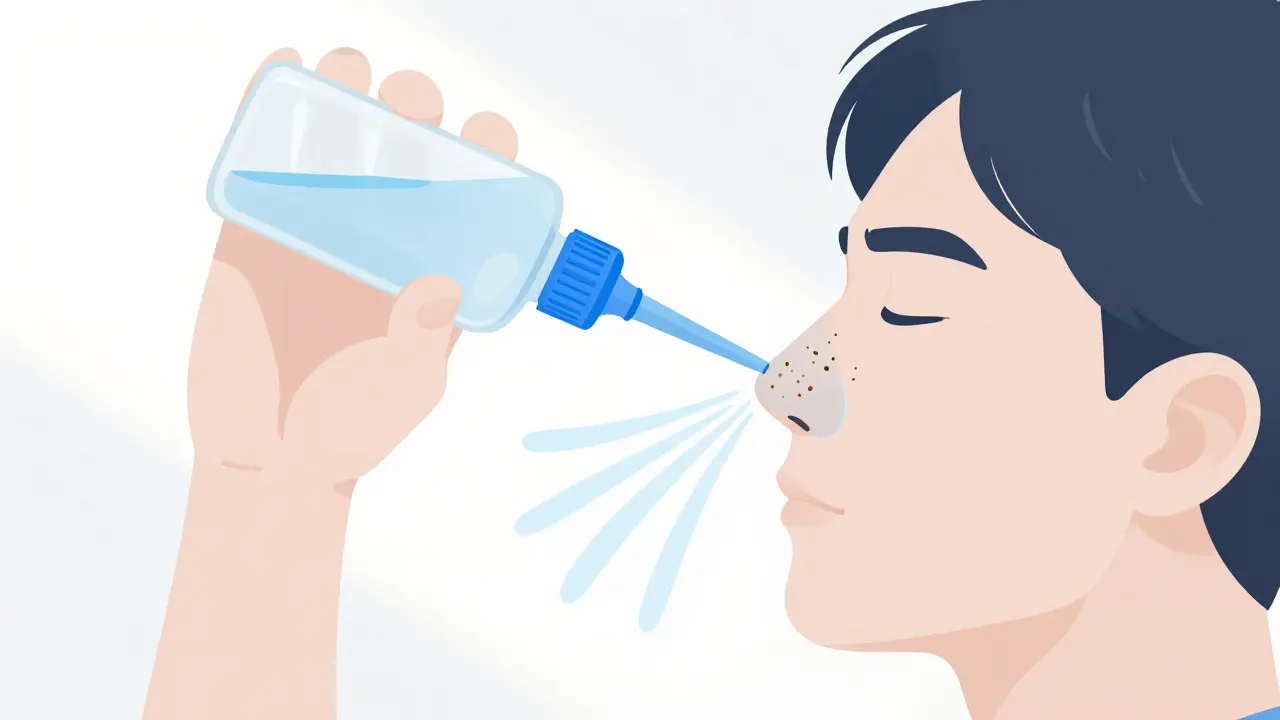
Using a neti pot or squeeze bottle isn't just folk remedy wisdom anymore; it's clinical protocol. The mechanics are simple but vital: use distilled or previously boiled water mixed with 240mL of solution. Using tap water is dangerous due to potential pathogens. Doing this once or twice a day physically washes away the pollen and dander particles sitting on your sinus lining, reducing the workload on your immune system significantly. It acts as a mechanical reset button for your nasal passages.
Advanced Options: When Standard Meds Fall Short
Imagine trying to open a swollen, blocked airway with just a steroid spray. Sometimes, the anatomy or severity is too extreme. This is where modern medicine has stepped up with "biologics." These are targeted injections that intercept the specific immune signals causing the inflammation. For example, Dupilumab A biologic therapy targeting inflammatory proteins like interleukin-4 and interleukin-13, often known by brand names such as Dupixent.
If you have severe chronic sinusitis accompanied by nasal polyps-flesh-like growths inside your nose-these drugs change the game entirely. Clinical trials indicate a 73% reduction in nasal polyp size after treatment begins. Another option is omalizumab (Xolair) or mepolizumab (Nucala). While highly effective, the barrier is cost. Without insurance support, these therapies can run approximately $3,500 per month. Insurance companies now more frequently approve these for chronic conditions, especially after other treatments fail, making them accessible to many who would otherwise face permanent surgery.
Surgical Intervention: The Mechanical Solution
Sometimes, medicine cannot unblock the drainage pathways permanently, especially if there are structural deformities or thick scar tissue. Functional endoscopic sinus surgery (FESS) allows doctors to remove obstructions through the nostrils using tiny cameras and instruments. Success rates hover around 85% for resolving symptoms. However, if the underlying allergy is ignored, those tissues will swell again.
In non-allergic patients, surgery cures the problem for about 90% long-term. In allergy sufferers, recurrence reaches 20-30% within five years. This stark difference highlights why post-surgery care involves continuing allergy management. It isn't a "fix and forget" procedure. Surgeons also check for aspirin-exacerbated respiratory disease (AERD), a condition affecting about 10-15% of chronic sinusitis patients with polyps, requiring specialized desensitization protocols rather than just cutting.
Immunotherapy: Rewiring Your Immune System
Think of allergy shots or sublingual tablets as training your body to ignore the threat. You expose your system to tiny doses of the allergen, slowly building tolerance. It requires patience. You start weekly injections for several months, then move to maintenance every few weeks for three to five years. The payoff is substantial: a 60-70% reduction in sinusitis recurrence compared to taking medications alone.
This isn't just about preventing sneezes; it prevents the sinus blockages that lead to painful infections later. If you hate needles, there are dissolvable tablet versions available for certain allergens like grass or ragweed pollen. This long-term strategy addresses the root cause rather than masking symptoms, offering the best chance at staying sinus-free in environments like Brighton where pollination counts are high.

Know the Red Flags: When to See a Specialist
You manage mild symptoms at home, but knowing when to refer yourself to an Ear, Nose, and Throat (ENT) specialist saves you from complications. Don't wait until your vision blurs or your skull becomes tender. Use this checklist to decide when your General Practitioner needs to escalate care.
- Persistent Symptoms: If you have treated your condition for 4-6 weeks with proper steroids and irrigation and feel no improvement, it is time to ask for a referral.
- Recurrent Episodes: Experiencing four or more significant infections in a single year suggests anatomical issues or unmanaged allergies.
- Foul Odor: A distinct bad smell from the nose or throat often indicates fungal involvement or severe bacterial buildup.
- Visual Changes: Any double vision, eye swelling, or reduced vision is a medical emergency indicating orbital involvement.
- Polyps Detected: If your primary doctor sees polyps during a quick exam, an ENT scope check is necessary to measure extent.
- Neurological Symptoms: Severe headaches, fever over 39°C, or stiff neck require immediate attention to rule out intracranial complications.
Specialists can perform nasal endoscopy, a quick procedure where a thin camera looks deep into your sinus cavities. They identify purulent drainage or blocked osteomeatal complexes that a regular exam misses. Early referral ensures you avoid invasive surgery later by catching manageable issues sooner.
Creating a Sustainable Home Environment
Finally, treating the disease means managing the environment. If you live in a humid area or spend time near construction sites, indoor air quality matters. Keep humidity levels between 30-50% to prevent mold growth in your shower or basement. Regularly wash bedding in hot water to kill dust mites. Air filters rated HEPA can significantly lower particulate matter in your bedroom. These steps reduce the daily burden on your nasal passages, allowing your medication to work more effectively. Remember, consistency with your prevention plan beats reacting to flare-ups constantly.
Frequently Asked Questions
How do I tell the difference between a virus and allergy sinusitis?
Viral sinusitis usually lasts less than 10 days and comes with a runny nose and congestion at the same time as a sore throat or fatigue. Allergy sinusitis persists longer (over 10-12 weeks), often includes itchiness in the roof of the mouth or eyes, and worsens with exposure to specific triggers like pets or pollen without the typical viral exhaustion.
Can antibiotics cure allergy-related sinus pain?
Generally, no. Antibiotics only kill bacteria. Since allergies cause the inflammation and swelling initially, antibiotics do not treat the root cause. They are only helpful if a secondary bacterial infection sets in, which occurs in less than 2% of uncomplicated cases. Overusing them contributes to resistance and side effects without resolving the allergy cycle.
Is nasal irrigation safe to do daily?
Yes, provided you use the right water. You must use distilled, sterile, or previously boiled water. Using tap water carries a very small risk of infection from amoebas found in the water supply. Performing this routine 1-2 times daily helps keep the sinus lining clean and hydrated.
How long does it take for steroid sprays to work?
Unlike over-the-counter drops, prescription nasal steroids take time. Most patients notice significant improvement within 2 to 4 weeks of consistent daily use. Stopping early because symptoms haven't vanished in 2 days is the most common reason for failure. Consistency is key to reducing the underlying inflammation.
When should I ask my doctor for an allergy test?
You should request testing if your sinus issues happen at predictable times (like spring or fall) or in specific places. If you have been diagnosed with chronic rhinosinusitis, guidelines suggest allergy testing is a good option to rule out triggers. Identifying exactly what you react to allows for better avoidance strategies and possible immunotherapy.


Written by Felix Greendale
View all posts by: Felix Greendale