
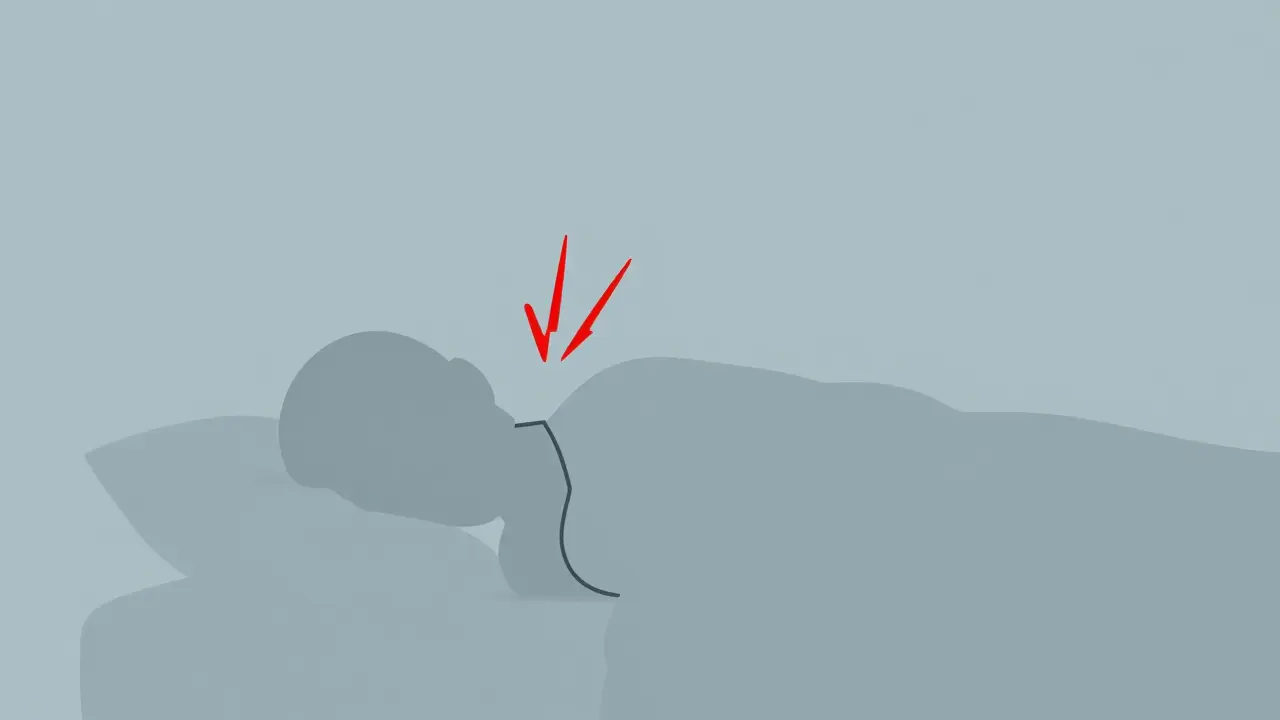
Snoring isn't just a nuisance for your partner. It might be the loudest warning sign your heart is ignoring. For decades, we treated high blood pressure and irregular heartbeats as separate issues from sleep problems. That view is outdated. Obstructive Sleep Apnea is a common sleep disorder where breathing repeatedly stops and starts during sleep. It affects roughly 1 billion adults worldwide, yet most remain undiagnosed. The link between this condition and cardiovascular damage is not just theoretical; it is mechanical, chemical, and immediate.
When you stop breathing, your body panics. This panic triggers a cascade of events that strains your heart muscle and disrupts its electrical rhythm. Understanding this connection is critical because treating sleep apnea can significantly lower your risk of stroke, heart failure, and atrial fibrillation. Let’s look at exactly how this happens and what you can do about it.
The Mechanics of Nightly Heart Stress
To understand why sleep apnea damages the heart, you have to look at what happens inside your chest when an airway obstruction occurs. During an apneic episode, your upper airway collapses. You try to breathe against a closed door. This creates massive negative pressure in your chest cavity-swings of -60 to -80 cm H2O. Think of it like trying to suck milk through a clogged straw with all your might. Your heart has to work exponentially harder to pump blood against this vacuum.
This physical strain increases cardiac afterload, forcing the left ventricle to thicken and stiffen over time. Research indicates that 35-45% of people with severe sleep apnea show signs of impaired diastolic function on echocardiograms. But the physical pull is only half the story. The other half is chemical. When oxygen levels drop, your body activates chemoreflexes. This causes sympathetic nervous system activity to spike by 200-300%. In plain English, your body floods with adrenaline. Your blood pressure jumps by 20-40 mmHg within seconds. Imagine riding a rollercoaster every night for eight hours. That is the reality for untreated patients.
Blood Pressure: The Silent Spike
Hypertension is often called the "silent killer," but in the context of sleep apnea, it is anything but silent-it is violent and intermittent. Traditional hypertension management focuses on daytime readings. However, sleep apnea causes nocturnal hypertension that persists into the day. The American Heart Association identifies this pattern as a major driver of resistant hypertension, defined as blood pressure remaining above 140/90 mmHg despite taking three different medications.
Here is the hard data: severe sleep apnea (defined as 30 or more events per hour) correlates with a 40-50% higher risk of cardiovascular events compared to those without the condition. If you are struggling to control your blood pressure despite lifestyle changes and medication, sleep apnea is likely the missing piece. Studies show that 30-40% of hypertensive patients have undiagnosed sleep apnea. Treating the airway obstruction doesn't just improve sleep quality; it directly lowers systolic blood pressure by 5-10 mmHg on average. For many, this reduction is enough to reduce or eliminate the need for heavy antihypertensive drugs.
Arrhythmia and Atrial Fibrillation Links
If high blood pressure is the strain, arrhythmia is the short circuit. Sleep apnea creates perfect conditions for electrical instability in the heart. The cycle of oxygen deprivation followed by sudden reoxygenation generates oxidative stress and inflammation. This damages the endothelial lining of blood vessels and promotes platelet activation. More critically, it alters the autonomic balance of the heart. Vagal withdrawal (the calm signal) is replaced by sympathetic surges (the fight-or-flight signal).
This imbalance is particularly dangerous for the atria, the upper chambers of the heart. Research from UT Southwestern Medical Center published in 2024 shows that patients with sleep apnea experience 3 to 5 times more frequent episodes of Atrial Fibrillation, a common type of irregular and often rapid heart rate that can lead to blood clots, stroke, and heart failure. Furthermore, recent imaging studies reveal that sleep apnea patients have 2.3 times more atrial fibrosis (scarring) on cardiac MRI scans than controls. This scarring provides a substrate for chaotic electrical signals to loop endlessly, causing AFib. Severe sleep apnea increases the risk of AFib by 140%, a figure that dwarfs the 50% increase associated with standard hypertension alone.
| Risk Factor | Impact on Atrial Fibrillation Risk | Impact on Stroke Risk | Mechanism of Damage |
|---|---|---|---|
| Severe Sleep Apnea (AHI ≥30) | +140% | +60% | Intermittent hypoxia, sympathetic surge, atrial fibrosis |
| Hypertension | +50% | +High (Dose-dependent) | Vascular stiffness, increased afterload |
| Obesity | +Moderate | +Moderate | Inflammation, metabolic syndrome |
| Diabetes | +Moderate | +High | Microvascular damage, neuropathy |
Diagnosis: Beyond the Snore Test
You cannot diagnose sleep apnea by snoring alone. Many people snore without having apnea. Conversely, some have "silent" apnea where no sound is made, but breathing still stops. The gold standard for diagnosis is polysomnography, an overnight sleep study that monitors brain waves, oxygen levels, heart rate, and breathing effort. However, this is resource-intensive. The American Academy of Sleep Medicine now recommends home sleep apnea testing for 80% of suspected cases, provided there are no complex comorbidities like severe lung disease or neuromuscular disorders.
Diagnosis relies on the Apnea-Hypopnea Index (AHI). An AHI of 5 or more events per hour, combined with symptoms like excessive daytime sleepiness, constitutes a diagnosis. Severity is graded as mild (5-14), moderate (15-29), and severe (30+). If you have been diagnosed with hypertension, atrial fibrillation, or stroke, screening for sleep apnea should be routine. Current guidelines suggest that 45-65% of these patient populations have undiagnosed OSA. Yet, only 20-25% of at-risk patients are currently screened in primary care settings. This gap represents a significant missed opportunity for prevention.
Treatment: CPAP and Cardiovascular Recovery
Continuous Positive Airway Pressure (CPAP) is the first-line treatment for moderate to severe obstructive sleep apnea. A machine delivers a steady stream of air through a mask, keeping the airway open like a pneumatic splint. The benefits for the heart are profound and relatively quick. Clinical data shows that consistent CPAP use reduces systolic blood pressure by 5-10 mmHg. More impressively, it decreases atrial fibrillation recurrence by 42% after 12 months of consistent use.
Adherence is the biggest hurdle. About 25-30% of patients quit within the first year due to mask discomfort or claustrophobia. However, modern devices offer ramp features (starting at low pressure and increasing gradually), heated humidification, and quieter motors. Users who stick with it report dramatic improvements. One patient shared that their blood pressure dropped from 160/95 to 128/82 within three months of consistent use. Another reported AFib episodes dropping from weekly to once every few months. The key is consistency: aiming for at least 4 hours of nightly use. About 78% of adherent users report improved daytime energy, and 65% note reduced need for blood pressure medication.
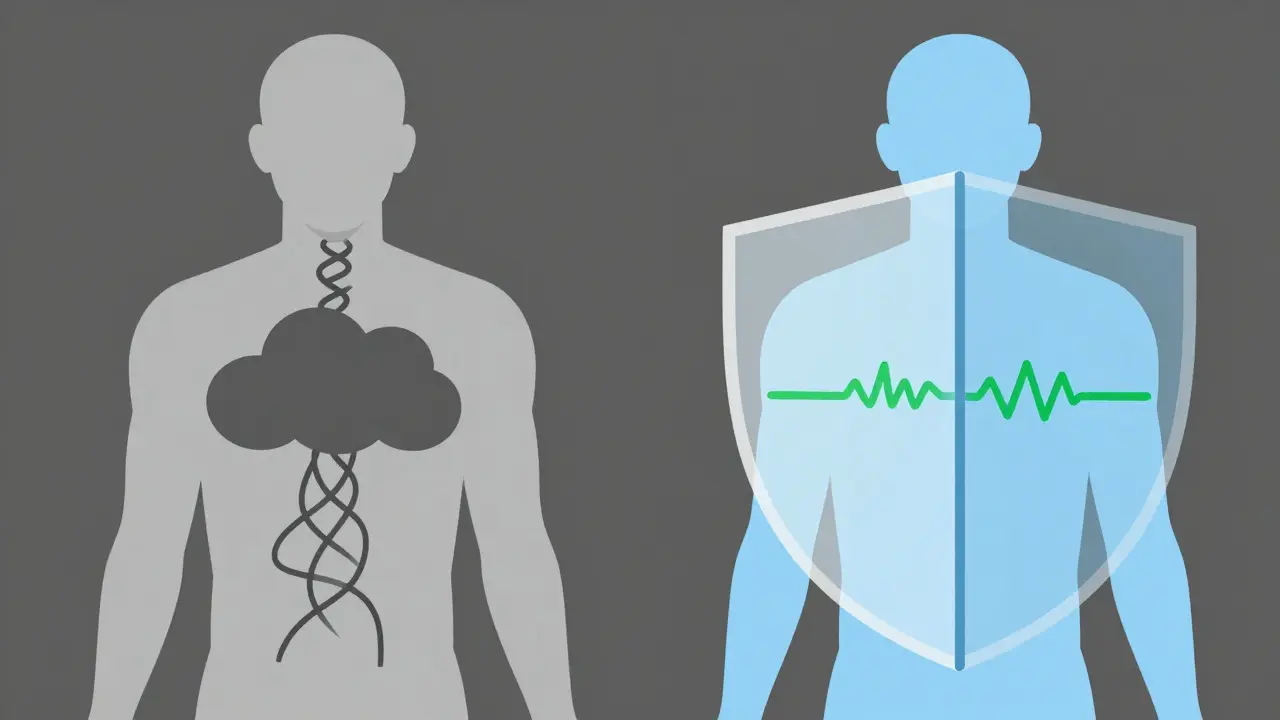
Emerging Therapies and Future Directions
For those who cannot tolerate CPAP, new options are emerging. Hypoglossal nerve stimulation, marketed as Inspire Therapy, involves implanting a device that stimulates the tongue nerve to keep the airway open during sleep. Trials show a 79% reduction in AHI and significant improvement in daytime sleepiness. While expensive, it offers a viable alternative for selected patients. Additionally, oral appliances designed to advance the jaw can help mild to moderate cases by mechanically opening the airway.
The medical community is shifting its stance. The American Heart Association now classifies sleep apnea as a Class I risk factor for atrial fibrillation, placing it on par with obesity and hypertension. The upcoming 2025 guidelines from the American College of Cardiology are expected to elevate sleep apnea to a "major risk factor" category. This means your cardiologist should be asking about your sleep just as rigorously as they ask about your cholesterol. Early intervention, especially in younger adults under 40, can prevent decades of cumulative cardiovascular damage.
Actionable Steps for Heart Health
If you suspect you have sleep apnea, do not wait for a heart event to force action. Start by tracking your symptoms: loud snoring, gasping for air, morning headaches, and unexplained fatigue. Discuss these with your primary care provider. Request a sleep study if you have any of the following risk factors:
- Resistant hypertension (high BP despite medication)
- History of atrial fibrillation or stroke
- Obesity (BMI >30)
- Neck circumference greater than 17 inches for men or 16 inches for women
If diagnosed, commit to treatment. View CPAP not as a burden, but as a pacemaker for your lungs. The investment in comfort and consistency pays dividends in reduced stroke risk, lower blood pressure, and a stronger, more rhythmic heart. Your heart beats 100,000 times a day. Don't let blocked breathing make it work harder than it needs to.
Can sleep apnea cause a heart attack?
Yes, indirectly. Sleep apnea increases the risk of coronary artery disease by 30% and contributes to hypertension and inflammation, which are major precursors to heart attacks. The repetitive stress on the cardiovascular system weakens arterial walls and promotes plaque buildup.
How quickly does CPAP improve blood pressure?
Improvements can be seen within weeks. Studies show that consistent use leads to a reduction in systolic blood pressure by 5-10 mmHg. Some patients notice changes in their home monitoring readings within the first month of regular nightly use.
Is sleep apnea reversible?
While the anatomical predisposition may remain, the severity and symptoms are highly manageable. Weight loss can significantly reduce AHI scores in obese patients. CPAP manages the symptoms effectively, preventing cardiovascular damage even if the underlying anatomy doesn't change completely.
What is the difference between central and obstructive sleep apnea?
Obstructive sleep apnea (OSA) is caused by physical blockage of the airway. Central sleep apnea (CSA) occurs when the brain fails to send proper signals to the muscles that control breathing. OSA is far more common and has stronger, more direct links to hypertension and atrial fibrillation than CSA.
Should young adults get tested for sleep apnea?
Yes, especially if they have risk factors like obesity or family history. Recent research highlights that sleep apnea increases cardiovascular risk even in adults under 40. Early detection and treatment can prevent long-term heart damage before it becomes irreversible.


Written by Felix Greendale
View all posts by: Felix Greendale