
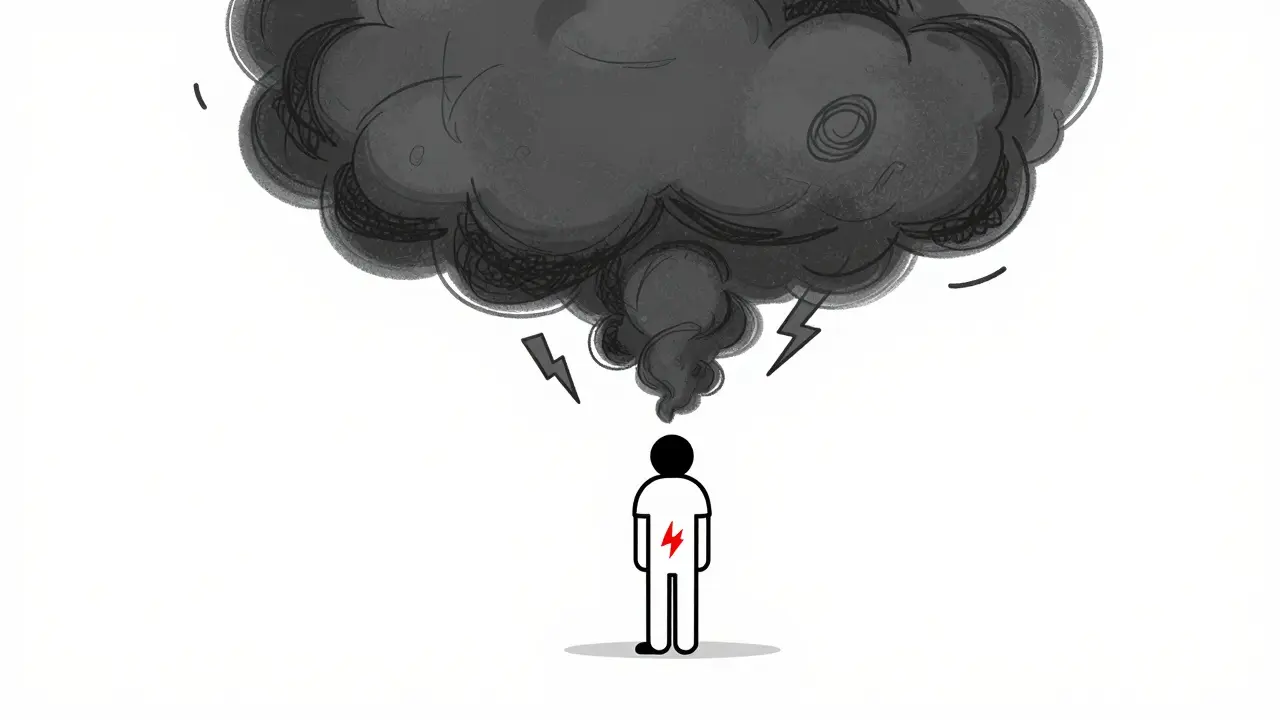
Key Takeaways for Managing Pain Distress
- Catastrophizing is a learned mental habit, not a character flaw.
- Cognitive Behavioral Therapy (CBT) helps "unravel" the link between physical sensation and mental panic.
- The goal isn't to ignore the pain, but to change how you interpret it.
- Small, consistent shifts in thinking can lead to a measurable drop in pain intensity.
The Three Faces of the Pain Spiral
To stop catastrophizing, you first have to recognize its different forms. Most people don't just "panic"; they experience a specific set of mental patterns. Experts generally break these down into three main dimensions. Recognizing which one you lean toward is the first step in breaking the cycle.
First, there is rumination. This is the "broken record" effect. You spend hours thinking about your pain, wondering why it's happening, or obsessing over the exact location of the ache. Your mind becomes a magnet for every single sensation in your body.
Then there is magnification. This is where you blow the threat out of proportion. A mild flare-up isn't just annoying; it's a sign that your body is failing. You view the pain as a catastrophe, which triggers a fight-or-flight response, increasing muscle tension and-ironically-making the pain worse.
Finally, there is helplessness. This is the feeling that nothing will ever work. You've tried the creams, the meds, and the stretches, and since they didn't "fix" it, you feel powerless. This sense of defeat often leads to avoiding activity, which weakens your muscles and further increases your vulnerability to pain.
Why Your Brain Amplifies the Pain
It might seem like your mind is just playing tricks on you, but there is a biological basis for this. Neuroimaging studies show that when you catastrophize, there is increased activity in the prefrontal cortex-the area of your brain responsible for complex thinking and emotion. Essentially, your brain's "alarm system" stays on high alert, which lowers your pain threshold.
Think of it like a home security system. If the system is calibrated correctly, it only goes off when a window is broken. But if the system is hypersensitive (catastrophizing), it goes off every time a leaf blows past the sensor. The alarm is real, and the noise is loud, but there is no actual intruder. Cognitive behavioral therapy works by recalibrating that sensor so you can tell the difference between a "leaf" (a normal fluctuate in pain) and a "broken window" (a genuine medical emergency).
CBT Tools to Break the Cycle
The gold standard for treating this is Cognitive Behavioral Therapy (or CBT). Rather than trying to "wish away" the pain, CBT focuses on the relationship between your thoughts, your feelings, and your actions. Here are the most effective tools used in this process.
Self-Monitoring and Labeling
The first tool is simple but powerful: labeling. When you feel a spike in pain, instead of saying "I can't handle this," try to describe it objectively. You move from a global emotional statement to a specific physical observation. For example, "I feel a tight, warm sensation in my lower back" is a somatic observation. "This is the end of my career" is a catastrophic cognition. By separating the two, you begin to unravel the knot of physical and mental distress.
Cognitive Restructuring
This is the process of "unhooking" from negative thoughts. When a catastrophic thought pops up, you put it on trial. Ask yourself: What evidence do I have that this is true? What evidence do I have that it is not true? What would I tell a friend in this situation?
Instead of the thought "My back is giving out," you replace it with a coping thought: "I am experiencing a flare-up. It is uncomfortable, but I have survived this before, and I know how to manage it." This isn't "positive thinking"-it's accurate thinking.
Behavioral Activation
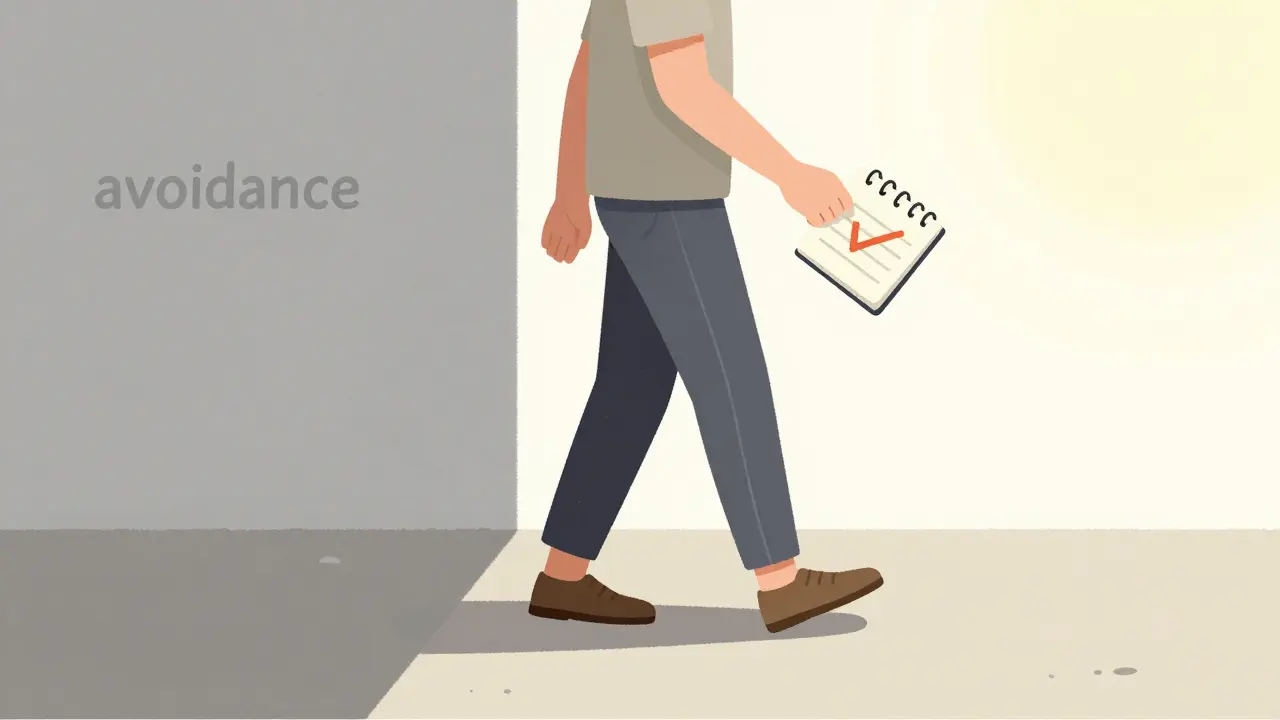
Catastrophizing often leads to avoidance. You stop gardening because you're afraid you'll hurt yourself. This leads to stiffness and depression, which makes the pain feel even worse. Behavioral activation involves setting tiny, achievable goals. If walking a mile feels catastrophic, start with walking to the end of the driveway and back. Proving to your brain that you can move safely without a disaster occurring is the fastest way to reduce helplessness.
| Strategy | Mental Process | Typical Outcome | CBT Alternative |
|---|---|---|---|
| Catastrophizing | Magnifying threat & feeling helpless | Increased pain & anxiety | Cognitive Restructuring |
| Avoidance | Fear of future pain | Physical stiffness & isolation | Behavioral Activation |
| Rumination | Repetitive focus on symptoms | Mental exhaustion & hyper-vigilance | Self-Monitoring/Labeling |
Putting it into Practice: A Step-by-Step Approach
If you're trying this on your own or with a therapist, don't expect a miracle overnight. It usually takes about 3 to 4 weeks just to get good at spotting the thoughts, and 6 to 8 weeks to feel like you have a handle on the tools. Here is a practical workflow for a high-pain day:
- Pause and Label: As soon as the panic hits, stop. Say out loud: "I am having a catastrophic thought. This is my brain's alarm system overreacting."
- Somatic Check: Describe the physical feeling. "My hip feels like a dull ache on a scale of 6/10." This moves the process from the emotional center of the brain back to the logical center.
- Challenge the Narrative: Ask, "Is this actually a catastrophe, or is it just uncomfortable?" Remind yourself that discomfort is not the same as danger.
- Micro-Movement: Do one small thing that you normally avoid. Stretch your arms for 30 seconds or walk to another room. Prove the fear wrong through action.
Common Pitfalls and How to Handle Them
One of the biggest hurdles is the "cognitive load." When your pain is an 8 or 9 out of 10, your brain doesn't have the energy to perform complex logic puzzles. This is where many people give up, feeling like the tools "don't work." To get around this, build your "toolbox" during the low-pain hours. You can't learn to swim while you're drowning; you learn to swim in the shallow end so that when you're in deep water, the movements are automatic. If you practice labeling when your pain is a 3, it will be much easier to trigger that response when the pain hits an 8.
Another common issue is the desire for immediate results. Some people stop treatment because they don't feel 100% better after two weeks. But the goal of CBT isn't to delete the pain-it's to delete the distress caused by the pain. When the distress goes down, the perceived intensity of the pain usually follows.
Is pain catastrophizing the same as anxiety?
Not exactly, though they are closely related. Anxiety is a general state of apprehension. Pain catastrophizing is a specific response to a painful stimulus. It's essentially a subset of anxiety focused entirely on the threat and helplessness associated with physical pain.
Can CBT actually lower my physical pain levels?
Yes. Because catastrophizing activates the prefrontal cortex and increases muscle tension, it effectively "turns up the volume" on pain. By reducing the mental distress, you lower that amplification, which often results in a measurable decrease in the pain you actually feel.
How long does it take for CBT tools to work?
Most structured protocols last 8 to 12 weeks. Patients typically spend the first few weeks learning to identify thought patterns and the following weeks mastering restructuring techniques. Consistent practice is more important than the total number of hours spent in therapy.
What if I can't find a therapist who specializes in pain?
Look for providers trained in CBT or Acceptance and Commitment Therapy (ACT). Many general CBT therapists can apply these principles to pain. Additionally, digital platforms and apps that focus on pain neuroscience education can provide a good starting point for self-monitoring.
Does this mean the pain is "all in my head"?
Absolutely not. The physical sensation-the nerve firing, the inflammation, the injury-is very real. What is "in the head" is the interpretation of that sensation. CBT doesn't deny the pain; it just stops the mind from adding an extra layer of suffering on top of the physical sensation.
Next Steps for Your Recovery
If you're feeling overwhelmed, start with a simple a pain diary for one week. Don't just track the intensity of the pain, but track the thoughts that come with it. Note every time you think "I'll never get better" or "This is a disaster." Once you see these patterns on paper, they lose their power over you. You'll start to realize that these aren't facts-they are just habits of thought that you can change.


Written by Felix Greendale
View all posts by: Felix Greendale