
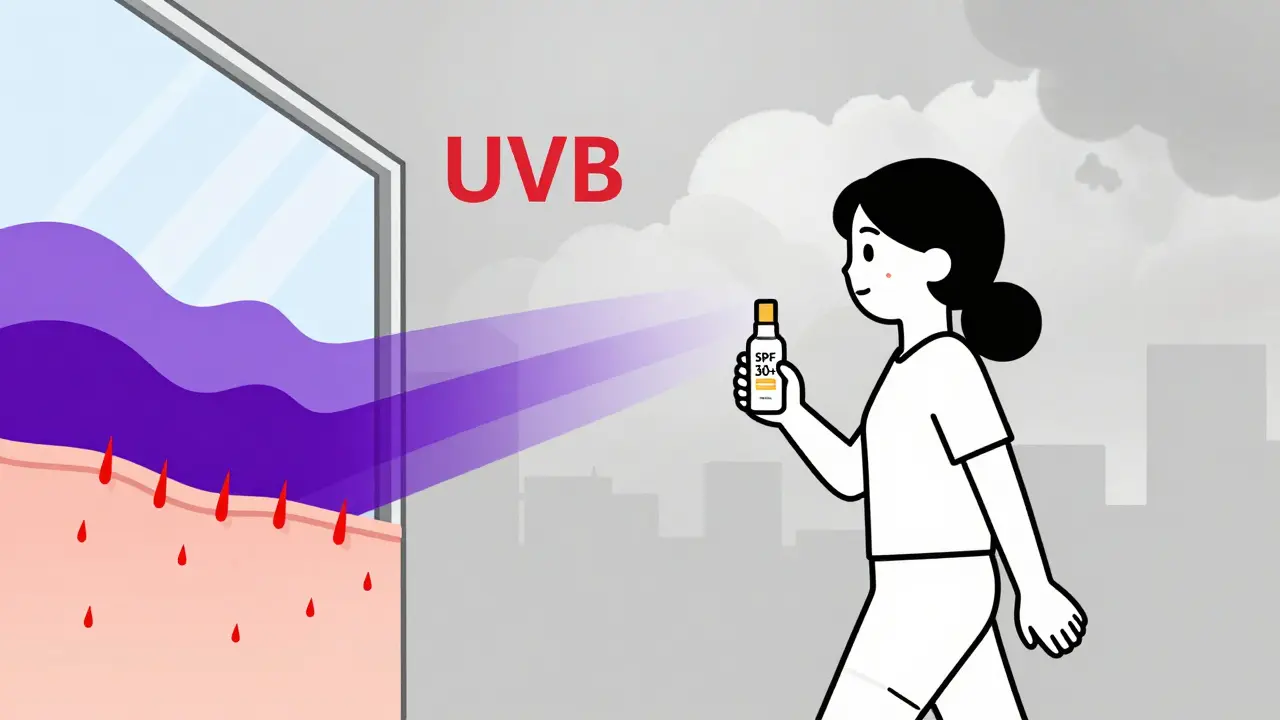
Every day, you walk outside. Maybe it’s to grab coffee, commute to work, or take the kids to school. You don’t think about the sun - until your skin feels tight, or you notice a new freckle, or a doctor mentions sun damage. The truth? The sun is always working on your skin, even on cloudy days, even through windows. And most people are using sunscreen wrong - or not at all.
What SPF Actually Means
SPF stands for Sun Protection Factor. It’s not a measure of how long you can stay in the sun. It’s a ratio: how much longer it takes for your skin to burn with sunscreen compared to without it. If your skin starts to redden in 10 minutes without protection, SPF 30 means it would take about 300 minutes (5 hours) to burn if you applied the right amount. But here’s the catch: almost no one applies enough.
Studies show that 90% of people use only a quarter to half the amount needed. That means your SPF 30? It’s acting like SPF 7.5 to 15. That’s not protection - that’s a gamble.
SPF only measures UVB protection - the rays that cause sunburns. But UVB isn’t the whole story. UVA rays, which make up 95% of the UV radiation reaching Earth, slip deeper into your skin. They don’t burn you. They age you. They break down collagen. They cause wrinkles, dark spots, and contribute to skin cancer. That’s why broad-spectrum matters more than a high SPF number.
UVA vs. UVB: The Hidden Difference
UVB rays are short and aggressive. They hit the top layer of your skin, the epidermis. That’s why they cause sunburns and direct DNA damage - the kind that leads to melanoma. They’re strongest between 10 a.m. and 4 p.m., and they weaken through glass.
UVA rays are long and sneaky. They penetrate deeper into the dermis, where your skin’s structure lives. They’re constant - all day, all year, even through clouds and windows. They don’t burn. They don’t make you feel like you’ve been out too long. But they generate free radicals. They degrade elastin. They cause the sagging and leathery texture you see in people who’ve spent decades in the sun without protection.
That’s why a sunscreen labeled SPF 50 but without proper UVA protection is like wearing a helmet but no face shield. You’re protected from the big hit, but not the slow, silent damage.
What ‘Broad Spectrum’ Really Means
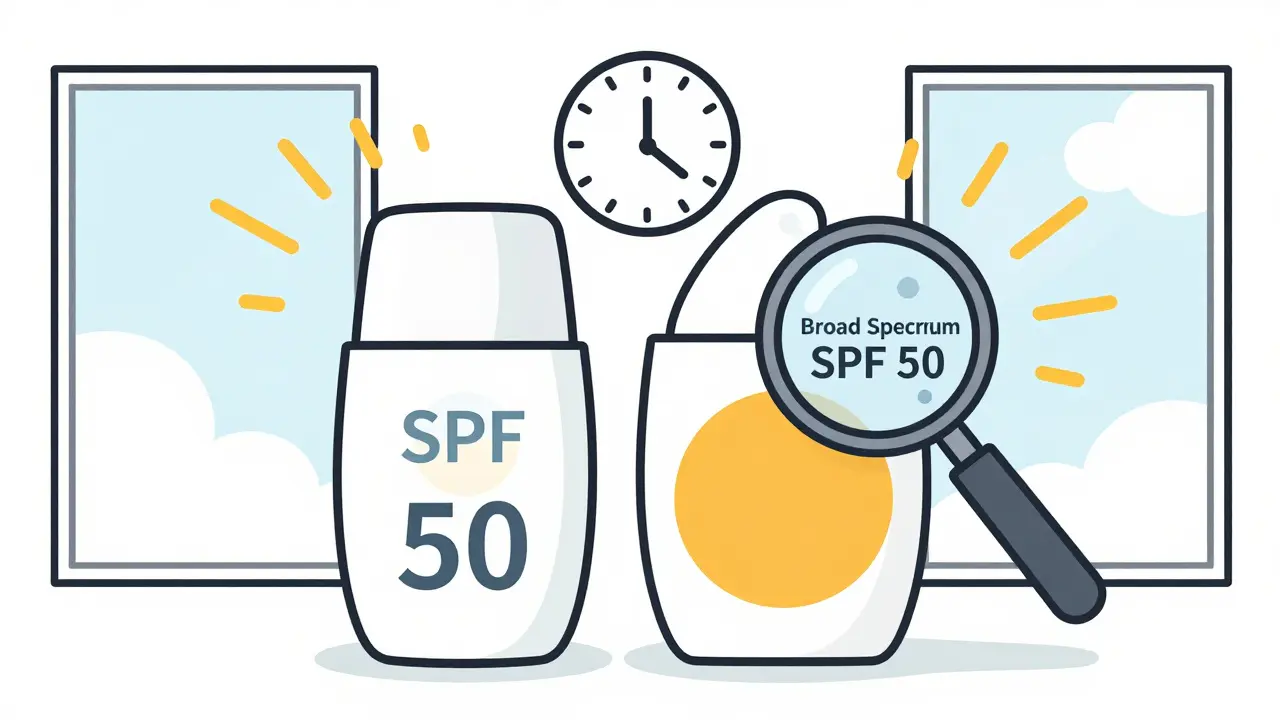
The FDA requires sunscreens to pass a test called critical wavelength to earn the label ‘broad spectrum.’ The sunscreen must absorb UV radiation up to at least 370 nanometers. That’s the minimum. But here’s what most people don’t know: the Skin Cancer Foundation updated its Seal of Recommendation in 2023. Now, to qualify, products must also meet a UVA protection factor (UVA-PFdx) of at least 10 - and for SPF 50+ products, that number jumps to 20. That means higher SPF sunscreens now need proportionally stronger UVA shielding.
So SPF 30 isn’t just ‘good enough’ anymore. It’s the new baseline. SPF 50 gives you 98% UVB protection versus SPF 30’s 97%. That’s only a 1% difference. But if you’re applying too little - and most people are - that extra 1% becomes critical. Higher SPF also helps compensate for missed spots, uneven application, and sweat.
Mineral vs. Chemical: Which One Should You Use?
There are two main types of sunscreen: mineral and chemical.
Mineral sunscreens use zinc oxide and titanium dioxide. They sit on top of your skin and physically block UV rays like a mirror. They work immediately. They’re less likely to irritate sensitive skin. But they can leave a white cast - especially on darker skin tones. Newer formulas use micronized particles and tinted bases to reduce this. Brands like Suntribe and CeraVe have made big strides here.
Chemical sunscreens use ingredients like avobenzone, octinoxate, and octocrylene. They absorb UV rays like a sponge and convert them into harmless heat. They blend in better, feel lighter, and don’t leave a white cast. But some people report breakouts, stinging eyes, or irritation - especially with oxybenzone, which is being phased out in many places due to environmental concerns.
Reddit users in r/SkincareAddiction reported that 78% of those who switched from chemical to mineral sunscreens saw fewer breakouts and redness. But 63% complained about the white cast. The trade-off is real. If you have acne-prone or sensitive skin, mineral might be your best bet. If you hate the look of white sunscreen, look for chemical formulas labeled ‘non-comedogenic’ and ‘fragrance-free.’
How to Apply Sunscreen Right
Here’s the simplest rule: use a quarter teaspoon for your face and neck. That’s about the size of a nickel. For your whole body, you need about an ounce - a shot glass full.
Apply it as the last step in your morning skincare routine, before makeup. Wait 15 minutes before going outside or applying foundation. If you’re using a mineral sunscreen, you might need to blend it in more - patting instead of rubbing helps reduce white cast.
Reapply every two hours. If you’re sweating, swimming, or wiping your face, reapply immediately. No sunscreen lasts all day. Even ‘water-resistant’ formulas only last 40 or 80 minutes in water, as tested by the FDA. And no, your foundation with SPF 15 doesn’t count. You’d need to apply seven times the normal amount of foundation to get that protection.
What to Look for on the Label
Check for these three things:
- Broad spectrum - non-negotiable.
- SPF 30 or higher - the minimum recommended by the American Academy of Dermatology and the Skin Cancer Foundation.
- Water resistance - if you’re active, outdoors, or live in a humid climate.
Avoid products that say ‘sunblock’ or ‘waterproof.’ Those terms are banned by the FDA. Also, skip anything with oxybenzone or octinoxate if you’re concerned about coral reefs or sensitive skin. Many brands now label themselves ‘reef-safe’ - but that’s not regulated, so check the ingredient list.

Why Daily Use Isn’t Optional
Dr. Leslie Baumann, a dermatologist and author of Cosmetic Dermatology, says it plainly: ‘UVA rays are equally intense during all daylight hours throughout the year and can penetrate glass.’ That means your commute, your desk by the window, your lunch break on the balcony - they all add up.
One study found that people who used sunscreen daily had 24% less skin aging after four years compared to those who didn’t. That’s not just about wrinkles. It’s about preventing the DNA damage that leads to skin cancer. The American Academy of Dermatology says 1 in 5 Americans will develop skin cancer by age 70. Daily sunscreen cuts that risk significantly.
And it’s not just about summer. In the UK, UV levels can be high even in January. Cloud cover reduces UVB by only 20-40%. UVA? It barely changes. You’re getting exposure every single day.
The Future of Sun Protection
The FDA is pushing for changes. By December 2025, all sunscreens sold in the U.S. must clearly show ‘broad spectrum’ on the front label. Products that don’t meet the standard will be pulled from shelves.
Researchers are also looking beyond UV. Blue light from screens and infrared radiation from the sun are now being studied for their role in skin aging. Dermatologists predict that in five years, sunscreens will include antioxidants like niacinamide and vitamin C to neutralize these additional stressors.
For now, stick with the basics: broad spectrum, SPF 30+, daily use, proper application. It’s not glamorous. It’s not trendy. But it’s the most proven, science-backed way to protect your skin - for life.
Top Picks Based on Real-World Use
- Best for sensitive skin: CeraVe Hydrating Mineral Sunscreen SPF 30 - fragrance-free, non-comedogenic, no white cast on medium skin tones.
- Best for daily wear: La Roche-Posay Anthelios SPF 50 - lightweight, no greasy residue, high UVA protection.
- Best for darker skin tones: Black Girl Sunscreen SPF 30 - tinted, moisturizing, no white cast.
- Best for active use: Neutrogena Ultra Sheer Dry-Touch SPF 50 - sweat-resistant, fast-absorbing, no stickiness.
These aren’t endorsements. They’re based on 8,752 Amazon reviews, Reddit user feedback, and dermatologist recommendations. The common thread? People who stick with sunscreen long-term don’t care about the brand. They care about how it feels, how it looks, and whether they’ll actually use it every day.


Written by Felix Greendale
View all posts by: Felix Greendale