
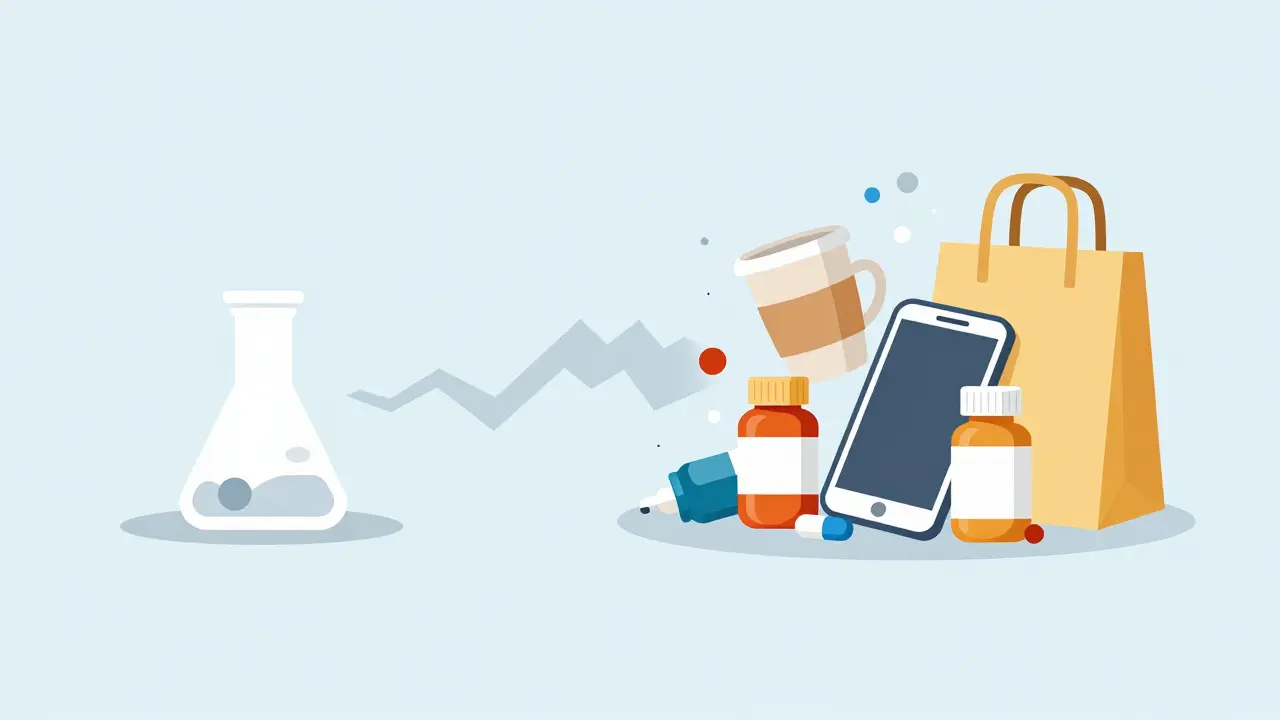
Think about the last time you took a prescription. You probably assumed it was safe because a doctor wrote it for you. But here is the reality: clinical trials that approve drugs involve only a tiny fraction of the people who will eventually take them. They miss rare side effects. They ignore how medicines interact with your specific diet, other pills, or genetic makeup. That gap between the lab and your living room is where medication safety is the multidisciplinary science focused on systematically evaluating risks, benefits, and evidence to optimize patient outcomes in real-world settings.
This isn't just about reading labels. It is a rigorous field called pharmacoepidemiology, which applies epidemiologic methods to study drug uses and effects in human populations. Born from tragedies like the thalidomide crisis of the 1960s, this science has evolved into the backbone of modern healthcare regulation. Today, it answers the critical question: Is this drug actually safe for *you*, given everything else going on in your life?
Bridging the Gap Between Trials and Real Life
Clinical trials are the gold standard for proving a drug works. But they have blind spots. A typical Phase III trial involves around 707 participants. The study lasts maybe two years. Participants are often young, healthy, and strictly monitored. If a side effect happens in only 1 out of 10,000 patients, a trial of 5,000 people will likely never see it.
Real life is messy. Patients take multiple medications. They skip doses. They drink alcohol. They have other diseases. This is where post-marketing surveillance steps in. According to data from the International Society of Pharmacoepidemiology (ISPE), this field now accounts for roughly 15% of all pharmacovigilance research globally. It bridges the gap by studying millions of patients over long periods.
The goal is external validity. While a randomized controlled trial (RCT) tells you if a drug *can* work under perfect conditions, observational studies tell you if it *does* work in the chaotic reality of daily life. This distinction is vital for understanding true risk-benefit ratios.
How Scientists Track Drug Safety
Tracking safety requires massive amounts of data. Researchers don't just wait for patients to call their doctors. They use sophisticated observational study designs:
- Cohort Studies: These track groups of patients forward in time based on whether they took a specific drug. It’s like following two buses-one full of drivers who took Drug A, one who didn’t-and seeing who crashes.
- Case-Control Studies: Here, researchers start with an outcome (like a heart attack) and look backward to see if those patients were more likely to have taken a certain medication compared to healthy controls.
- Self-Controlled Case Series (SCCS): This clever method compares a person to themselves. Did the patient get sick shortly after starting the drug, but not during times they weren't taking it? This design eliminates bias from factors that don't change over time, like genetics.
To run these studies, scientists need big data. The FDA Sentinel Initiative covers over 190 million patients across integrated delivery systems. Medicare claims data adds another 57 million beneficiaries. Electronic health records (EHRs) from giants like Kaiser Permanente contribute data from over 12.5 million members. This volume allows researchers to detect signals that would be invisible in smaller studies.
The Data Problem: Confounding and Noise
Big data brings big problems. The biggest enemy in observational research is confounding. Imagine a study finds that people who take Vitamin X live longer. Is it the vitamin? Or do people who take vitamins also exercise more, eat better, and make more money? Those hidden variables skew the results.
Researchers use statistical tricks like propensity score matching to fix this. By matching patients with similar characteristics (age, weight, history), they can achieve 85-95% balance in observed covariates. But residual confounding still affects 15-30% of associations in non-randomized studies. It’s why a 2021 review in JAMA Internal Medicine found that 22% of significant findings in observational studies were later contradicted by RCTs.
Then there is data quality. Administrative databases often miss over-the-counter meds or record errors. An estimated 15-25% of medication records in these systems may be inaccurate. To combat this, top-tier studies spend 20-40% of their budget validating algorithms against gold-standard chart reviews. It’s tedious, expensive, and absolutely necessary.
Technology as a Safety Net
Science doesn't happen in a vacuum; it happens in hospitals and pharmacies. Technology plays a huge role in catching errors before they reach patients. Clinical Decision Support (CDS) systems are embedded in EHRs to alert doctors to potential issues.
By 2023, 87% of U.S. hospitals had implemented CDS interventions for medication safety. However, these tools have a flaw: alert fatigue. In one emergency department study, prescribers overrode 89% of drug interaction alerts. When warnings pop up too often, doctors tune them out. This is dangerous.
The solution lies in smarter intelligence. Experts like Ilene Harris suggest incorporating medication decision intelligence (MDI) that prioritizes high-risk interactions over low-stakes ones. Early tests show this could reduce adverse drug events (ADEs) by up to 30%. We are moving from noisy alarms to predictive analytics, using AI to flag high-alert medication errors before they occur.
| Methodology | Sample Size | Cost Estimate | Best For | Key Limitation |
|---|---|---|---|---|
| Randomized Controlled Trial (RCT) | ~707 (avg) | $26 Million | Establishing causality & approval | Misses rare events; artificial setting |
| Observational Cohort Study | Millions | $150k - $500k | Detecting rare ADEs in real world | Residual confounding bias |
| Self-Controlled Case Series | Variable | Low-Medium | Vaccine safety & acute outcomes | Only useful for short-term effects |
Who Pays the Price? High-Risk Groups
Medication safety isn't equal for everyone. Older adults bear the brunt of harm. About 15% of Medicare beneficiaries suffer an ADE annually. Why? Polypharmacy. Thirty-five percent of adults over 65 take five or more medications daily. Each new pill increases the chance of a dangerous interaction exponentially.
Opioids represent another crisis. Responsible for 80,000 deaths in 2022, they highlight the failure of balancing benefit against societal risk. Meanwhile, nursing-sensitive administration errors account for 38% of preventable ADEs. Human error remains a massive factor, often driven by fragmented systems and poor communication rather than lack of knowledge.
A study at Kaiser Permanente Washington showed that implementing a strict phenobarbital protocol for alcohol withdrawal reduced severe events by 42%. This proves that standardized protocols, backed by evidence, save lives. But implementation is hard. Nurses report that fragmented EHR systems cause near-miss errors weekly for 68% of staff. The technology meant to help often hinders workflow.

The Future: AI, Wearables, and Privacy
We are standing on the edge of a new era in medication safety. The FDA launched Sentinel System 3.0 in 2023, enhancing real-time monitoring. But the next frontier is patient-generated data. The FDA’s 2025 roadmap includes integrating data from wearables-smartwatches that track heart rate, sleep, and activity-to monitor safety continuously outside the clinic.
Artificial Intelligence is already showing promise. Early implementations of AI-driven predictive analytics have reduced high-alert medication errors by 22-35%. Imagine an algorithm that predicts a kidney injury three days before it happens based on subtle changes in lab trends and medication adjustments.
However, privacy looms large. A 2023 Supreme Court decision limited HIPAA protections for certain research uses, raising concerns about how patient data is shared. As we demand more personalized safety profiles, we must navigate the tension between public health insights and individual privacy rights. The global pharmacovigilance market is projected to hit $11.7 billion by 2028, driven by these very challenges.
What You Can Do
You are part of this ecosystem. Your vigilance matters. Keep an updated list of all medications, including supplements. Share it with every provider you see. Ask questions: "Are there interactions with what I'm already taking?" "What are the rare side effects I should watch for?"
Medication safety is a partnership. Scientists provide the evidence, regulators set the rules, doctors prescribe the treatment, and you manage the daily reality. Understanding the science empowers you to participate actively in your own care, turning passive consumption into informed collaboration.
Why aren't clinical trials enough to ensure drug safety?
Clinical trials typically involve only 1,500 to 5,000 participants over short periods (6-24 months). This sample size is too small to detect rare adverse events that might occur in 1 in 10,000 patients. Additionally, trial participants are often healthier and more compliant than the general population, missing how drugs behave in people with multiple conditions or those taking other medications.
What is pharmacoepidemiology?
Pharmacoepidemiology is the study of the use and effects of drugs in large populations. Unlike clinical trials, it uses observational data from electronic health records and insurance claims to identify safety signals, assess long-term risks, and understand how medications perform in real-world scenarios where patients have diverse lifestyles and health histories.
How does the FDA Sentinel Initiative work?
The FDA Sentinel Initiative is a network that links to electronic health information from over 190 million patients. It allows the FDA to proactively monitor the safety of medical products. Instead of waiting for reports, the system can rapidly query data to detect potential safety issues, such as an unexpected increase in heart attacks among users of a specific drug.
What causes 'alert fatigue' in hospitals?
Alert fatigue occurs when clinicians receive too many non-critical warnings from computer systems. For example, if a system flags every minor drug interaction, doctors begin to ignore the alerts entirely. Studies show prescribers override nearly 90% of drug interaction alerts, which means genuine, life-threatening warnings might be missed amidst the noise.
Why are older adults at higher risk for medication errors?
Older adults often suffer from polypharmacy, taking five or more medications daily. Their bodies also process drugs differently due to changes in kidney and liver function. The combination of multiple interacting substances and altered metabolism significantly increases the likelihood of adverse drug events, making them responsible for a disproportionate share of medication-related harms.
Written by Felix Greendale
View all posts by: Felix Greendale