
Levothyroxine Absorption Risk Checker
Enter the time you take your medication and when you consume interfering substances.
Enter your routine details and click "Check Absorption Risk" to see how your habits affect your medication.
If you take levothyroxine, a synthetic form of thyroxine (T4) used for thyroid hormone replacement therapy, you might have noticed that your energy levels fluctuate wildly depending on how you start your morning. You aren't imagining it. This medication has a notoriously narrow therapeutic index, meaning even tiny changes in how much of the drug your body absorbs can cause significant swings in your health. For millions of people with hypothyroidism, getting the timing wrong doesn't just mean a slightly off lab result-it means fatigue, brain fog, weight gain, and heart palpitations return.
The core problem is simple but frustrating: levothyroxine is extremely sensitive to what else is in your stomach. It needs an empty environment to be absorbed properly in the upper small intestine. If you eat, drink coffee, or take other supplements too soon after your dose, you block its absorption. The American Thyroid Association estimates that roughly 20 million Americans deal with some form of thyroid disease, making this a massive public health issue. Understanding exactly how food, supplements, and daily routines interfere with this drug is the key to stabilizing your symptoms.
Why Timing Matters More Than You Think
Levothyroxine works by replacing the hormone your thyroid gland isn't producing enough of. To work effectively, it must enter your bloodstream in consistent amounts every day. The primary metric doctors use to check if this is happening is your TSH level, or thyroid-stimulating hormone. When your thyroid hormone levels are correct, your pituitary gland produces less TSH. If absorption drops, TSH rises, signaling that your body is starving for thyroid hormone.
Research published in the Journal of Clinical Endocrinology & Metabolism showed just how drastic this effect can be. In a study involving 65 patients, those who took their medication in a fasting state had a mean TSH concentration of 1.06 mIU/L. However, when they took the same dose with breakfast, their TSH jumped to 2.93 mIU/L-a 176% increase. That’s not a minor blip; it’s the difference between feeling normal and feeling like you’re moving through mud. The study also found that bedtime administration resulted in higher TSH levels than fasting morning doses, though still lower than taking it with food.
This sensitivity exists because levothyroxine requires specific pH conditions in the gut to dissolve and absorb. Food alters gastric pH and slows down stomach emptying, trapping the medication or changing its chemical structure before it reaches the absorption site in the small intestine. This is why consistency is non-negotiable. Whether you choose morning or evening, doing it the exact same way every day is more important than the time itself.
The Coffee and Breakfast Trap
For many people, the ritual of morning coffee is sacred. But for thyroid patients, that first cup can be a major hurdle. A 2017 study in the journal Thyroid documented that drinking coffee immediately after taking levothyroxine decreases absorption by 36%. This isn't just about caffeine; it's about the compounds in coffee that bind to the medication. Milk, cream, and sugar also contribute to the problem by adding fat and protein that slow digestion.
Breakfast itself is another common culprit. Even light meals can significantly impair absorption. The general rule from endocrinologists is to wait at least 30 to 60 minutes after taking your pill before consuming anything other than water. Some experts suggest waiting up to two hours for optimal results, especially if you have a history of erratic TSH levels. If you struggle with nausea on an empty stomach, this window can feel impossible, but skipping it often leads to subtherapeutic dosing.
Consider this scenario: You take your pill at 7:00 AM, sip your latte at 7:15 AM, and eat eggs at 8:00 AM. You’ve likely blocked nearly half of your dose. Your doctor sees your TSH creeping up and increases your dosage. Now you’re taking more medication than you actually need, which can lead to side effects like anxiety, tremors, and bone loss over time. The solution isn’t necessarily a higher dose-it’s better timing.
| Substance | Absorption Reduction | Required Separation Time |
|---|---|---|
| Coffee | 36% | Wait 60+ minutes after dose |
| Calcium Supplements | 27-36% | Separate by 4 hours |
| Iron Supplements | 39% | Separate by 4 hours |
| Fiber Supplements | Significant | Separate by 3-4 hours |
| Soy Products | Moderate to High | Separate by 3-4 hours |
Supplements and Medications: The Hidden Blockers
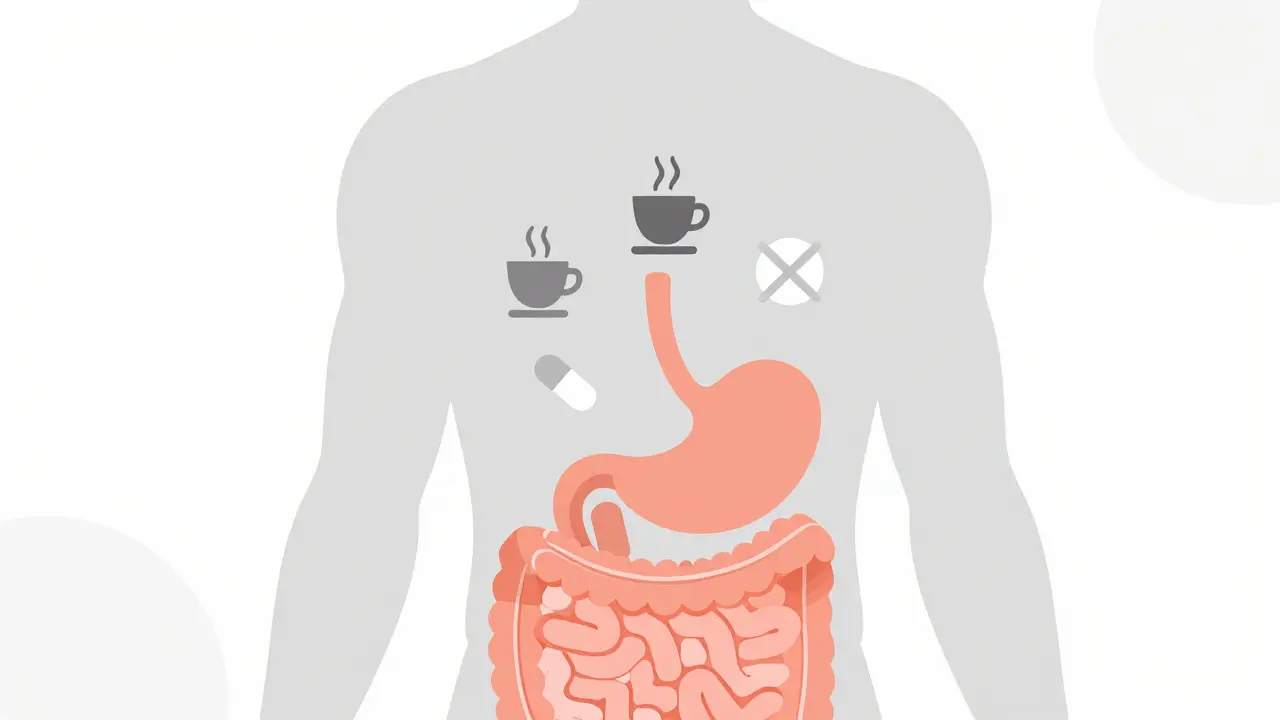
Food isn't the only thing that interferes with levothyroxine. Many common supplements and prescription drugs bind to the medication in the gut, preventing it from entering your bloodstream. Calcium and iron are the biggest offenders. Studies show calcium supplements can reduce absorption by up to 36%, while iron supplements cut it by 39%. This is particularly relevant for women over 60, who often take calcium for bone health, and adults over 65, who may take iron for anemia.
You don't have to stop taking these essential nutrients, but you must schedule them carefully. The standard recommendation is to separate levothyroxine from calcium, iron, antacids, and multivitamins containing minerals by at least four hours. If you take your thyroid medication at 7:00 AM, wait until at least 11:00 AM or later to take your calcium or iron. Taking them together renders both medications less effective, potentially leading to nutrient deficiencies and uncontrolled hypothyroidism.
Proton pump inhibitors (PPIs) like omeprazole and lansoprazole, commonly used for acid reflux, also pose a challenge. These drugs raise the pH of your stomach, making it less acidic. Since levothyroxine needs a certain acidity to dissolve properly, PPIs can reduce its absorption. If you rely on PPIs, your doctor may need to monitor your TSH levels more frequently or adjust your dose accordingly. Similarly, soy products and high-fiber diets can bind to the hormone, so spacing out these foods or supplements is crucial.
Morning vs. Evening Dosing: Finding What Works
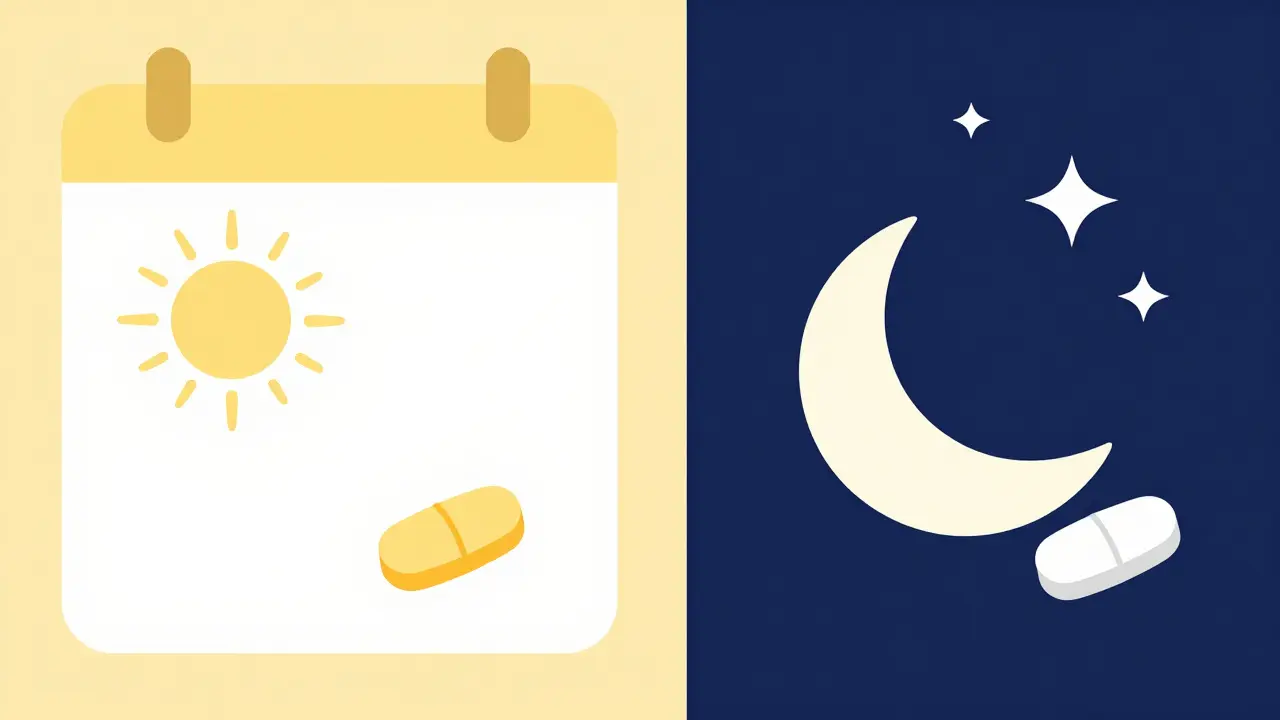
Traditionally, doctors prescribed levothyroxine to be taken in the morning on an empty stomach. About 80% of U.S. patients follow this routine. However, life gets in the way. Morning rushes, gastrointestinal discomfort, and forgetfulness make adherence difficult for many. This has led to growing interest in evening dosing.
Some studies suggest that taking levothyroxine at bedtime, at least three to four hours after dinner, can improve absorption. A 2020 systematic review found that evening administration resulted in significantly lower TSH levels compared to morning dosing. The logic is that your stomach is truly empty at night, and there’s no risk of accidental food interference. Additionally, some patients report fewer gastrointestinal side effects when taking the pill at night.
However, the evidence is mixed. Other studies show no significant difference between morning and evening dosing, provided the patient is consistent. The key takeaway is not that evening is universally better, but that consistency is paramount. If you switch from morning to evening, do not assume your dose will remain the same. Your TSH levels may change, requiring a dose adjustment. Always consult your doctor before switching times, and expect to have your blood tested six to eight weeks after the change to ensure stability.
For pregnant women, the stakes are higher. The American Thyroid Association recommends strict adherence to the morning fasting protocol during pregnancy because thyroid hormone is critical for fetal brain development. TSH targets are tighter in the first trimester (often below 2.5 mIU/L), leaving little room for error caused by poor absorption. Pregnant patients should avoid experimenting with timing and stick to the proven morning routine.
Practical Strategies for Better Adherence
Knowing the rules is one thing; living them is another. Here are practical steps to integrate proper timing into your daily life:
- Create a visual cue: Place your medication bottle next to your toothbrush or keys. Seeing it triggers the habit before you leave the house.
- Use technology: Set a daily alarm on your phone specifically for your thyroid medication. Studies show that smartphone reminders increase adherence by nearly 40% compared to pillboxes alone.
- Track your routine: Keep a simple log of when you take your pill and what you eat/drink afterward. This helps identify patterns where absorption might be compromised.
- Prepare the night before: Fill a glass of water and place it by your bedside if you take your pill in the morning. Hydration helps wash the pill down quickly without interacting with food.
- Communicate with your pharmacist: Ask about potential interactions with any new prescriptions or over-the-counter drugs you pick up.
If you consistently struggle with the 30-60 minute wait, talk to your doctor. There are alternative formulations available, such as Tirosint-SOL, an oral solution that appears to be less affected by food intake. While these options are more expensive and not covered by all insurance plans, they can be a lifeline for patients who cannot adhere to strict fasting protocols.
Monitoring and Adjusting Your Treatment
Your TSH test is the ultimate feedback loop. If you feel tired, anxious, or experience weight changes despite taking your medication, your absorption might be inconsistent. Don't just accept a dose increase; investigate your habits. Did you start drinking coffee sooner? Did you begin taking a new supplement?
Doctors typically recommend monitoring TSH every six to eight weeks when starting therapy or changing doses/timing. Once stable, annual checks are usually sufficient. However, if you have thyroid cancer or are pregnant, more frequent monitoring is essential. Remember, the goal is not just a number on a page-it’s how you feel. If your labs look good but you still feel awful, discuss further testing for free T4 and T3 levels, or explore whether other factors like stress or sleep are impacting your well-being.
Stabilizing thyroid medication absorption is a marathon, not a sprint. By respecting the chemistry of the drug and creating a consistent routine, you can take control of your health and enjoy the energy and clarity that comes with properly managed hypothyroidism.
Can I take levothyroxine with breakfast?
It is generally not recommended. Taking levothyroxine with breakfast can reduce absorption by up to 30-40%, leading to higher TSH levels and potential symptom recurrence. Wait at least 30-60 minutes after taking your pill before eating.
How long should I wait after taking levothyroxine before drinking coffee?
You should wait at least 60 minutes. Studies show that coffee can decrease levothyroxine absorption by 36%. Waiting an hour ensures most of the medication has been absorbed before the coffee compounds interfere.
Is it better to take thyroid medication in the morning or at night?
Both can be effective if done correctly. Morning dosing requires a 30-60 minute fast before eating. Evening dosing requires taking the pill at least 3-4 hours after your last meal. Consistency is more important than the specific time. Consult your doctor before switching.
What supplements interfere with levothyroxine?
Calcium, iron, magnesium, and aluminum-based antacids significantly interfere with absorption. Multivitamins containing these minerals should also be separated. Wait at least 4 hours between taking levothyroxine and these supplements.
Does food affect all types of thyroid medication equally?
Most standard levothyroxine tablets are highly sensitive to food. However, newer formulations like Tirosint-SOL (oral solution) have shown less variability in absorption regardless of food intake. Check with your pharmacist about your specific brand.
Written by Felix Greendale
View all posts by: Felix Greendale