

When you’re living with rheumatoid arthritis, psoriatic arthritis, or Crohn’s disease, the idea of taking a drug that suppresses your immune system can feel scary. Especially when you hear the word cancer. But here’s the truth: for millions of people, TNF inhibitors have been life-changing. They stop joint destruction, clear up skin plaques, and let people return to work, play, and life. The big question isn’t whether they work-it’s whether they put you at higher risk for cancer. And the answer isn’t simple.
What Are TNF Inhibitors, Really?
TNF inhibitors are a type of biologic drug. They block tumor necrosis factor-alpha, a protein that drives inflammation in autoimmune diseases. Think of it like turning off a faulty alarm system that’s screaming “attack!” when there’s no real threat. Your immune system starts attacking your own joints or gut, and TNF inhibitors quiet that noise. There are five FDA-approved TNF inhibitors: infliximab, etanercept, adalimumab, certolizumab pegol, and golimumab. They’re not pills. You get them as injections or IV infusions. Some you take weekly, others every few weeks. They cost between $4,500 and $6,500 a month. That’s expensive. But for many, the trade-off is worth it. These drugs don’t just reduce pain. They change the course of disease. In rheumatoid arthritis, up to 70% of patients see at least a 20% improvement in symptoms within six months. That’s not just relief-it’s prevention. Without these drugs, joint damage can become permanent. That’s why they’re still the first-line biologic for moderate-to-severe cases, even with newer options on the market.The Cancer Fear: Where Did It Come From?
The concern about cancer started in the early 2000s. Early clinical trials showed a small number of lymphomas in patients taking TNF inhibitors. The FDA added a black box warning in 2008. That’s the strongest warning they give. It said: “May increase risk of lymphoma and other malignancies.” It made sense on paper. Your immune system fights cancer. If you’re suppressing it, could that let tumors grow? It’s a logical fear. But logic doesn’t always match real-world data. A 2012 meta-analysis in JAMA looked at 62 trials and found a big red flag: monoclonal antibody TNF inhibitors (like adalimumab and infliximab) had nearly three times the cancer risk compared to placebo. Etanercept, however, showed no increase. That sparked a debate: Is it the drug? Or how it works? Turns out, etanercept is different. It’s not a full antibody. It’s a fusion protein that binds TNF differently. That small difference might matter a lot.What Does the Real-World Data Say Now?
Since 2012, we’ve had over a decade of real-world tracking. The Swedish ARTIS registry followed 15,700 rheumatoid arthritis patients for up to 12 years. The result? No overall increase in cancer risk compared to patients on older, non-biologic drugs. The hazard ratio was 0.98-basically zero difference. But here’s the nuance. In the first year of treatment, adalimumab showed a 62% higher risk of cancer. Etanercept showed a 22% lower risk. That’s not a typo. Etanercept may actually be safer in this regard. Why the spike in the first year? Experts think it’s not the drug causing cancer-it’s cancer causing the drug. People with undiagnosed tumors often have high inflammation. When their RA symptoms flare, doctors start biologics. The cancer was already there. The drug didn’t cause it. It just got started around the same time. This is called “protopathic bias.” For skin cancer, the picture is clearer. A 2021 meta-analysis of over 32,000 psoriasis patients found a 32% higher risk of non-melanoma skin cancer (basal cell and squamous cell carcinomas) with TNF inhibitors. But no increase in melanoma, lung, breast, or colon cancer. And here’s something surprising: a 2023 study of 1,872 RA patients who developed lung cancer found those on TNF inhibitors had a 42% lower risk of dying within five years than those on older drugs. Why? Maybe because TNF inhibitors reduce chronic inflammation, which fuels cancer growth. The immune system isn’t just a cancer fighter-it’s also a healer.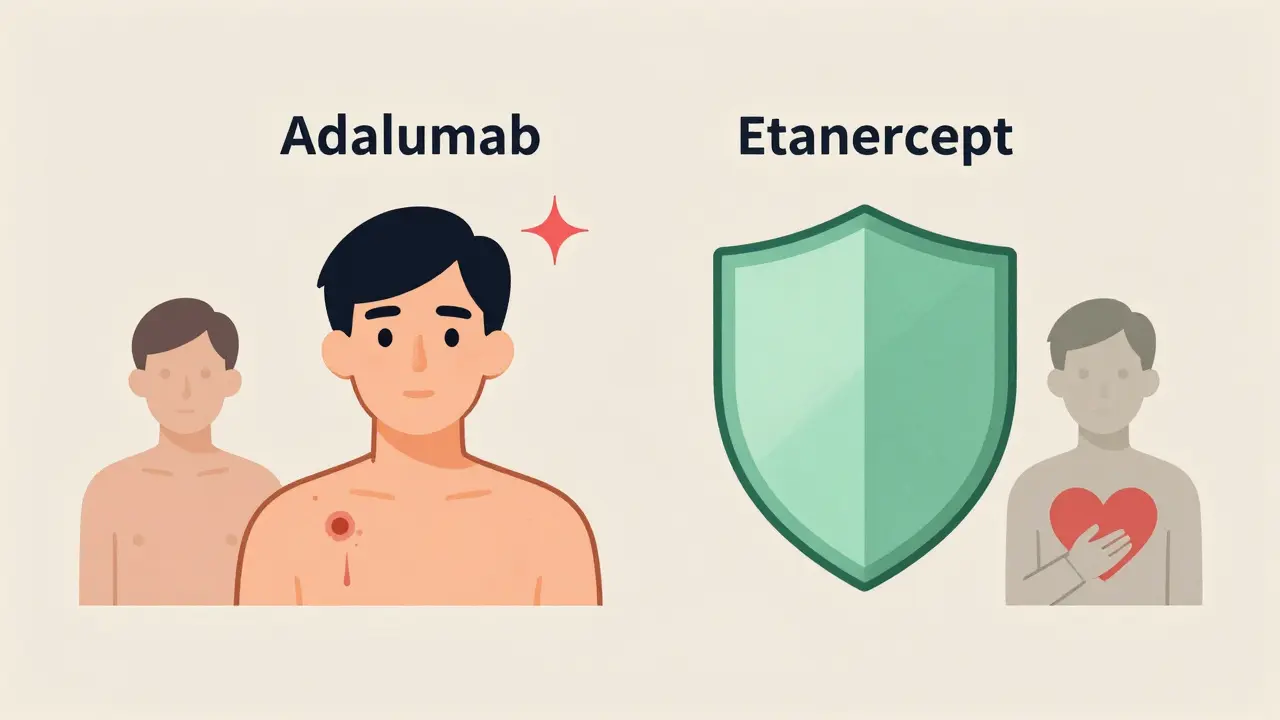
Who’s at Highest Risk?
Not everyone is equally at risk. Certain factors raise the stakes:- Prior skin cancer: If you’ve had basal cell carcinoma, your risk of another one goes up. Dermatologists now recommend skin checks every 6 months if you’re on TNF inhibitors.
- Older age: Cancer risk rises naturally with age. The 65+ group has higher baseline risk, so any small increase matters more.
- Smoking: Smoking increases lung cancer risk. Combine that with immunosuppression, and you’re stacking the odds.
- High-dose steroids: Taking more than 7.5 mg of prednisone daily doubles your cancer risk. Many patients are on both steroids and TNF inhibitors. That’s a dangerous combo.
- History of lymphoma or melanoma: Most rheumatologists won’t start TNF inhibitors in patients with active or recent high-risk cancers. The rule? Wait at least 5 years after treatment for melanoma or lymphoma. For breast or prostate cancer, 2 years is often enough.
Adalimumab vs. Etanercept: The Real Difference
This isn’t just academic. It affects your choice. Adalimumab (Humira) is the most prescribed TNF inhibitor. It’s also the most profitable. But data shows it carries a higher risk of non-melanoma skin cancer than etanercept (Enbrel). A 2021 British Journal of Dermatology meta-analysis found adalimumab users had 1.3 times the risk. Etanercept, on the other hand, has consistently shown lower cancer risk in multiple studies. It’s also less likely to cause antibody formation. That means it stays effective longer without losing power. If you’re worried about skin cancer-or you’ve had it before-etanercept might be the smarter first choice. It’s not a guarantee, but the data leans in its favor.What Do Doctors Actually Do?
In real clinics, this isn’t a yes-or-no decision. It’s a conversation. A 2024 audit of U.S. rheumatology practices found 92% now document cancer risk discussions with patients. The average counseling session lasts over 12 minutes. That’s a lot for a 15-minute appointment. Most rheumatologists will continue TNF inhibitors if a patient develops a low-risk, early-stage cancer-like Stage I breast cancer or a small basal cell carcinoma. A 2023 Corrona registry study showed 87% of doctors kept the drug going after oncology clearance. And 92% of those patients had no cancer recurrence linked to the drug. The key? Coordination. You need your rheumatologist and oncologist talking. On average, that adds 3.2 weeks to the start of treatment. That delay matters. But it’s worth it.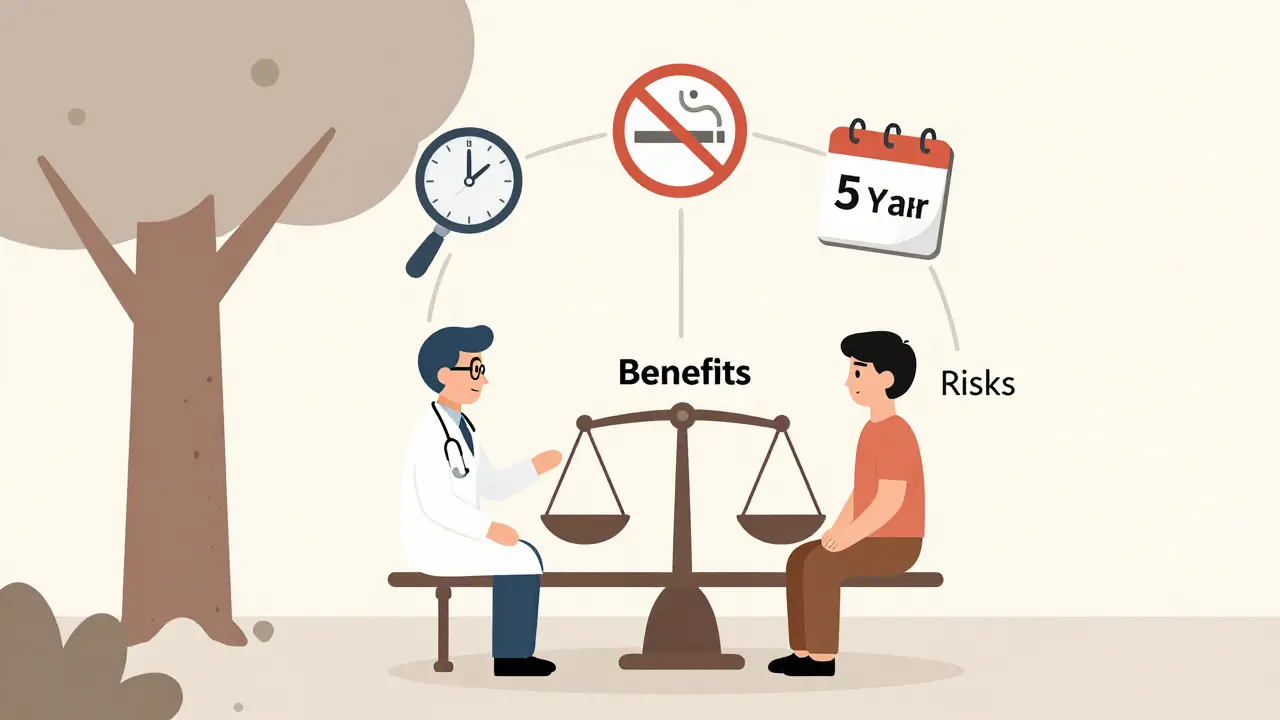
What About the Future?
The field is changing fast. By 2027, doctors may use genetic tests to predict your personal cancer risk from TNF inhibitors. A 2023 Nature Genetics study found people with certain gene patterns had 3.2 times higher risk of lymphoma when taking these drugs. Imagine knowing your risk before you start. Newer drugs like JAK inhibitors and IL-17 blockers are gaining ground. But they’re not better for cancer risk. In fact, JAK inhibitors carry their own black box warning for cancer and blood clots. TNF inhibitors still have the longest, cleanest safety track record. The 20-year data is reassuring. No cumulative increase in cancer risk over time. No rising danger as you take the drug longer. That’s huge.What Should You Do?
If you’re considering a TNF inhibitor-or already on one-here’s what to do:- Get a full skin exam before starting. Document any moles or lesions.
- Ask your doctor: “Am I on adalimumab or etanercept? Why?”
- If you’ve had cancer, know your timeline. Was it low-risk? How long since treatment?
- Stop smoking. Cut back on steroids if possible.
- Get annual skin checks. More often if you’ve had skin cancer.
- Don’t panic over headlines. The risk is small. The benefit is huge.


Written by Felix Greendale
View all posts by: Felix Greendale