

Prescription drugs can eat up your budget fast if you don't know how your insurance handles them. For millions of service members, retirees, and their families, TRICARE is the comprehensive military health insurance program administered by the Defense Health Agency provides a specific set of rules for covering medications. The biggest money saver? Generics. But "generic" doesn't always mean "covered automatically." If you grab the wrong bottle or skip a step in the approval process, you could be staring down a bill you didn't expect.
This guide breaks down exactly how TRICARE covers generic drugs, what you'll pay at different pharmacies, and how to navigate the formulary without getting stuck in red tape. We’ll look at the current costs for 2025 and the changes kicking in during 2026, so you can plan your next refill with confidence.
Key Takeaways
- Military pharmacies are free: Active duty members and eligible beneficiaries often pay $0 copay for generics at base pharmacies.
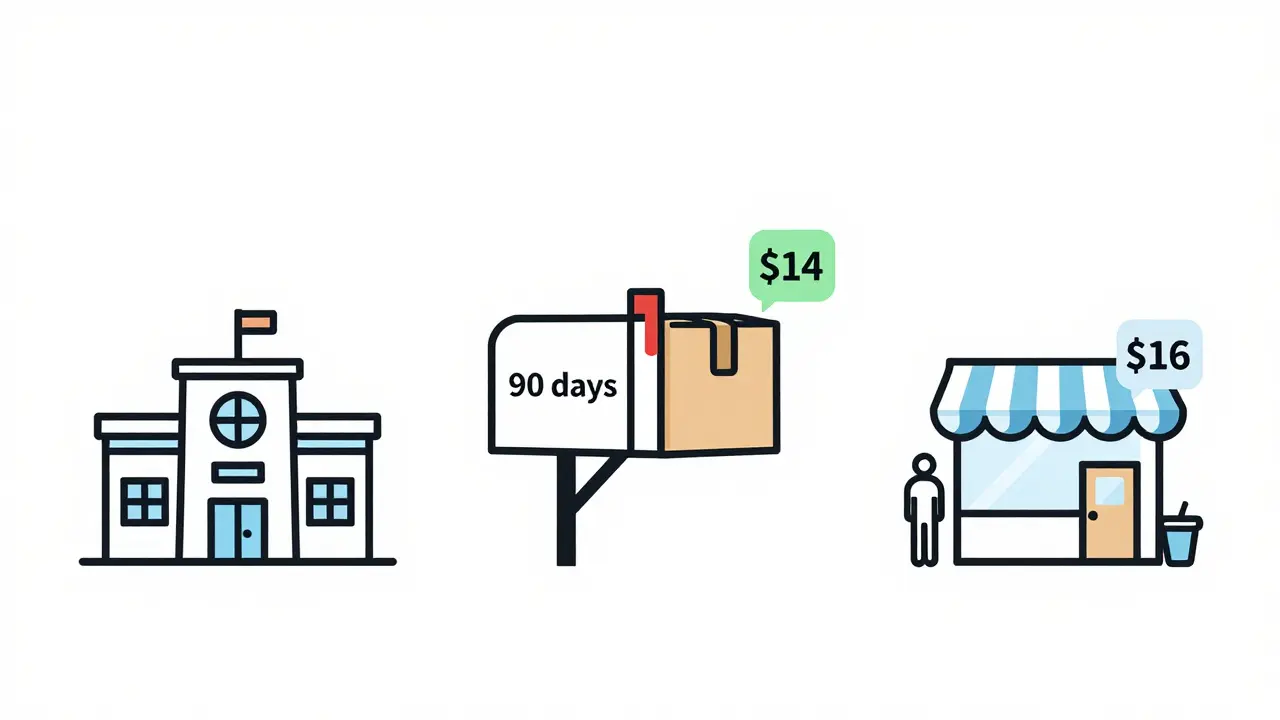
- Home delivery is cheapest for retail users: In 2026, home delivery for generics costs $14 per 90-day supply, compared to $16 for a 30-day supply at local retail stores.
- Not all generics are covered: Even generic drugs must be on the TRICARE Formulary. Non-formulary generics require prior authorization.
- Weight loss exclusions apply: As of August 2025, weight loss medications are generally excluded for TRICARE For Life beneficiaries.
- Check before you fill: Use the TRICARE Formulary Search tool to verify coverage status and tier before picking up your prescription.
How TRICARE Covers Generic Drugs
TRICARE operates on a tiered system. Think of it like a menu where some items are cheaper because they’re standard fare, while others cost more because they’re specialty dishes. Generic formulary drugs sit at the bottom of this hierarchy as Tier 1. These are medications that contain the same active ingredients as brand-name drugs but cost significantly less-often 80-85% less according to FDA data.
The program covers approximately 5,500 generic and brand-name prescription drugs approved by the U.S. Food and Drug Administration (FDA). About 92% of all prescriptions filled through TRICARE are for generic medications. This high usage rate shows that most beneficiaries stick to these cost-effective options when possible.
However, being a generic drug isn’t enough on its own. It must also be on the TRICARE Formulary is a monthly updated list of covered generic and brand-name prescription drugs managed by Express Scripts. If your doctor prescribes a generic that isn’t on this list, it falls into Tier 3 (Non-formulary drugs). You can still get it covered, but you’ll need to jump through hoops, specifically a medical necessity determination.
| Tier | Drug Type | Coverage Requirement | Typical Cost Share |
|---|---|---|---|
| Tier 1 | Generic Formulary Drugs | None (Preferred) | $0 - $16 |
| Tier 2 | Brand-Name Formulary Drugs | None | Higher than Tier 1 |
| Tier 3 | Non-Formulary Drugs | Prior Authorization Required | Higher out-of-pocket |
| Tier 4 | Non-Covered Drugs | Not Covered | 100% Patient Responsibility |
What You Pay: Pharmacy Options and Copays
Where you fill your prescription matters just as much as which drug you take. TRICARE offers three main channels for getting your meds, and the price tag varies wildly between them. Knowing these numbers helps you decide whether to drive to the base, wait for mail delivery, or run to the corner pharmacy.
Military Pharmacies are the clear winner for savings. For most beneficiaries, including active duty service members, the copayment for any covered drug-generic or brand-is $0. There’s no deductible to meet first for these visits. This makes base pharmacies incredibly popular; about 76% of active-duty fills happen here.
TRICARE Home Delivery, managed by Express Scripts is the pharmacy benefit manager responsible for administering TRICARE's pharmacy program since 2018, is great for maintenance meds like blood pressure or cholesterol drugs. You get a 90-day supply instead of 30. For 2025, the copay for generic formulary drugs was $13. Starting January 1, 2026, this increases slightly to $14. While that’s an extra dollar, getting three months of meds in one box usually saves time and hassle.
Retail Network Pharmacies charge $16 for a 30-day supply of generic formulary drugs in both 2025 and 2026. If you need your meds immediately and can’t go to a military pharmacy, this is your backup. Just remember, doing the math, $16 x 3 = $48 for 90 days at retail versus $14 via home delivery. That’s $34 saved by ordering online.
If you use a non-network pharmacy within U.S. territories, the costs jump significantly. TRICARE Prime beneficiaries pay 50% of the cost after meeting deductibles, while other plans may charge $48 or 20% of the total cost, whichever is greater. Stick to network providers whenever possible.
Navigating the Formulary and Prior Authorizations
You might assume that if a drug is generic, it’s automatically covered. That’s a common trap. Roughly 12% of generic drugs require prior authorization even if they are technically available. This happens when a drug is considered non-formulary or requires step therapy.
Step therapy means TRICARE wants you to try a cheaper, preferred generic first before approving a different option. If your doctor skips this step, the claim gets denied. To avoid surprises, always check the TRICARE Formulary Search Tool is an online database at esrx.com/tform that allows beneficiaries to check drug coverage status and requirements. Enter the drug name and strength to see its tier and any restrictions.
If your medication isn’t on the formulary, your provider must submit a request for medical necessity. According to 2024 data from Express Scripts, about 78% of these requests are approved. However, the process takes time. The average approval window is 48 hours, and 23% of cases require additional clinical documentation from your doctor. This delay can be stressful if you’re running low on meds. Plan ahead and start the authorization process as soon as the prescription is written.
Exclusions and Special Cases
Not everything is covered, even if it’s generic. One major change took effect on August 31, 2025. Under provisions from the National Defense Authorization Act (NDAA), TRICARE excluded most weight loss medications for TRICARE For Life beneficiaries. This affects over 1 million elderly beneficiaries who previously had access to these drugs. Even if a generic version exists, it won’t be covered under this exclusion unless there are specific therapeutic exceptions approved by a specialist.
Another area of complexity involves generic biologics. These aren’t your typical pill-in-a-bottle generics. They are complex biological products that face stricter interchangeability standards. Data shows that generic biologics face 22% higher prior authorization rates than small-molecule generics. If you’re managing conditions like rheumatoid arthritis or Crohn’s disease, expect more paperwork.
Practical Steps for Beneficiaries
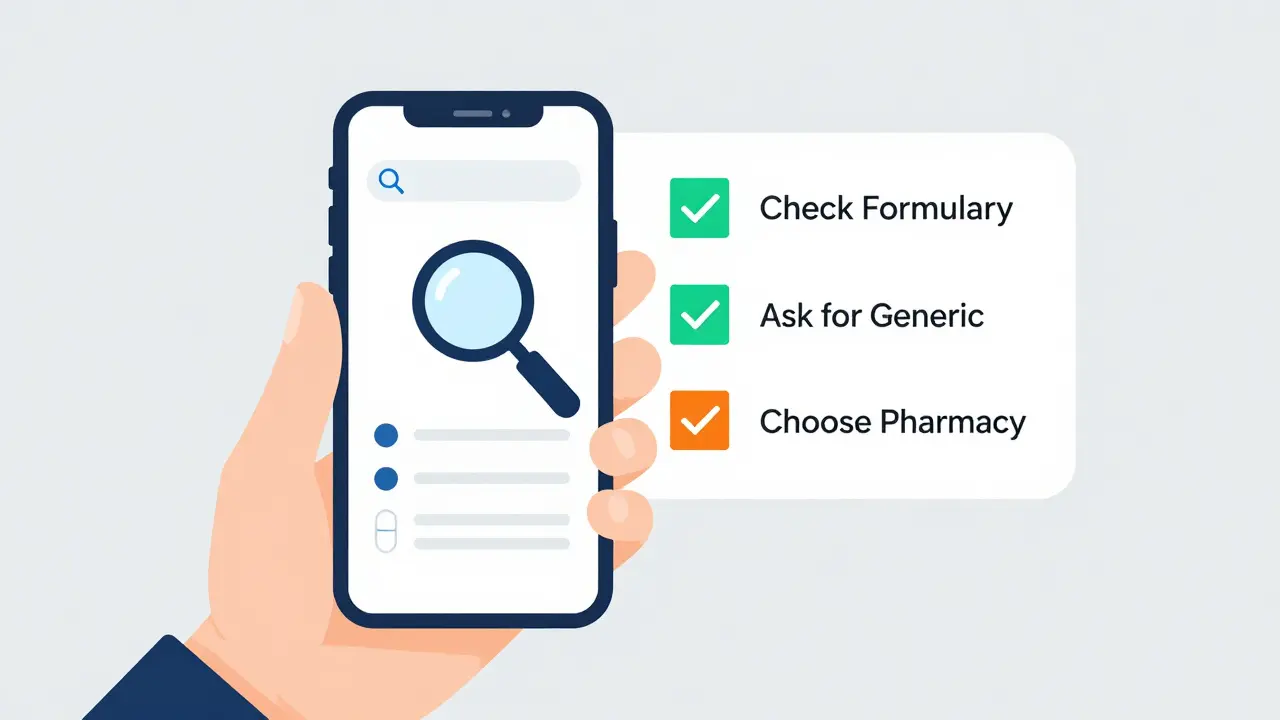
Getting your meds covered smoothly comes down to preparation. Here is a simple workflow to follow every time you get a new prescription:
- Check the Formulary First: Before leaving the doctor’s office, ask if the prescribed drug is on the TRICARE Formulary. If you have your phone handy, look it up yourself using the search tool.
- Ask for Generics Explicitly: Tell your provider, "Please prescribe the generic formulary option if available." Doctors sometimes write brand names out of habit. A quick reminder ensures you stay in Tier 1.
- Choose Your Pharmacy Wisely: For chronic conditions, sign up for home delivery to save money and ensure you never run out. For acute issues like antibiotics, use a military or retail pharmacy for speed.
- Monitor Deductibles: If you’re on TRICARE Select or Extra, you have annual deductibles. Once met, your copays drop. Keep track of your spending throughout the year.
- Appeal Denials Quickly: If a prior authorization is denied, ask your doctor for the reason immediately. Often, providing one extra lab result or letter of medical necessity can flip the decision.
The learning curve for new beneficiaries typically takes one or two prescription cycles. Don’t get discouraged by the first denial. Use the TRICARE Pharmacy Helpline is a support service reachable at 1-877-363-1303 that assists with coverage questions and claims issues if you’re stuck. They handle millions of calls annually and can clarify why a specific generic was flagged.
Future Changes to Watch
TRICARE is evolving. The 2026-2028 Pharmacy Benefit Roadmap outlines several shifts that will affect how you access generics. By Q3 2026, real-time benefit tools will be implemented, allowing providers to see exact costs and coverage info right at the point of prescribing. This should reduce surprise denials.
Additionally, the step therapy program is expanding to 15 additional therapeutic classes by 2027. This means more medications will require trying a preferred generic first. While this controls costs for the program, it may add steps for patients seeking specific treatments. Stay informed by checking the Defense Health Agency website for updates on formulary changes, which occur monthly.
Does TRICARE cover all generic drugs?
No. TRICARE only covers generic drugs that are listed on the TRICARE Formulary. If a generic is not on the formulary, it is considered a non-formulary drug and requires prior authorization based on medical necessity. Additionally, certain categories like weight loss medications have been excluded for specific beneficiary groups as of August 2025.
How much is the copay for generic drugs in 2026?
For 2026, the copay for generic formulary drugs is $0 at military pharmacies, $14 for a 90-day supply via TRICARE Home Delivery, and $16 for a 30-day supply at retail network pharmacies. These rates apply to most beneficiaries, though active duty members often pay nothing regardless of location.
What happens if my doctor prescribes a brand-name drug instead of a generic?
If a brand-name drug is prescribed when a generic alternative exists on the formulary, TRICARE may deny the claim or require prior authorization. You will likely face a higher copay (Tier 2) compared to the generic (Tier 1). Always ask your provider to write "Dispense as Written" only if medically necessary; otherwise, allow substitution to save money.
Can I use any pharmacy with TRICARE?
You can use any pharmacy, but costs vary drastically. Using in-network retail pharmacies, military pharmacies, or TRICARE Home Delivery ensures the lowest copays. Out-of-network pharmacies may charge higher percentages of the drug cost, especially if you haven't met your annual deductible. Always verify network status before filling.
Why was my generic drug denied?
Common reasons for denial include the drug not being on the formulary, failure to complete step therapy (trying a preferred generic first), or missing prior authorization. Check the TRICARE Formulary Search tool to confirm coverage status and contact your provider to initiate the necessary appeals or authorizations.


Written by Felix Greendale
View all posts by: Felix Greendale