
Ever picked up a prescription and wondered why the pill looks different from last time? Or seen two names on the label and thought, Which one actually matters? You’re not alone. Most people don’t realize that the name on their pill bottle isn’t just random-it’s a key to understanding what’s inside, how much it costs, and whether it’s really the same as the drug they remember.
What’s Really in Your Pill?
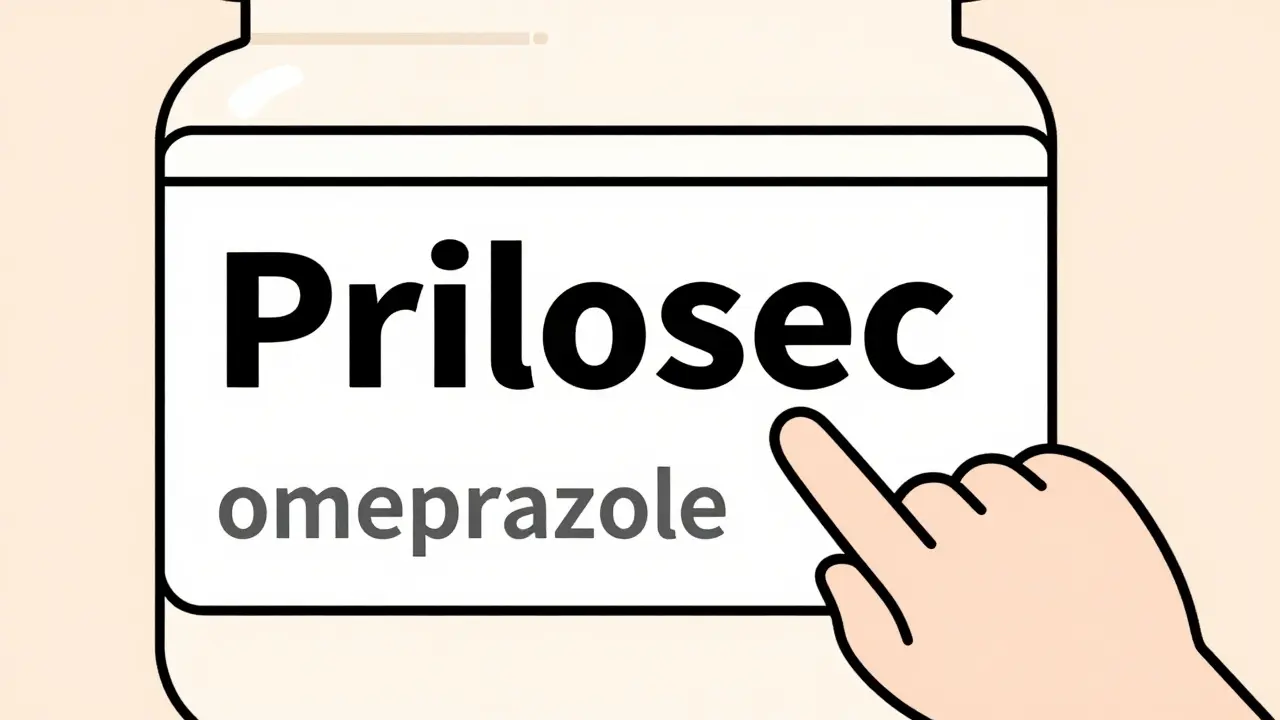
Every prescription medication has two names: the generic name and the brand name. The generic name is the actual chemical compound-the active ingredient that does the work. For example, if your doctor prescribes omeprazole, that’s the generic name. The brand name? That’s what the company calls it when they sell it: Prilosec. Same medicine. Same effect. Just different labels.
The FDA requires that generic drugs contain the exact same active ingredient as the brand-name version, in the same strength, dosage form (tablet, capsule, liquid), and route of administration. That means if you take 20 mg of omeprazole once daily, whether it’s Prilosec or the generic, your body gets the same amount of medicine. The FDA’s standard for bioequivalence is strict: the generic must deliver the drug into your bloodstream within 80-125% of the brand’s performance. In plain terms? It works the same way.
Why Do They Look Different?
If generics are identical in effect, why do they look so different? Color, shape, size, even the imprint on the pill-all of these can vary. That’s not a mistake. It’s the law.
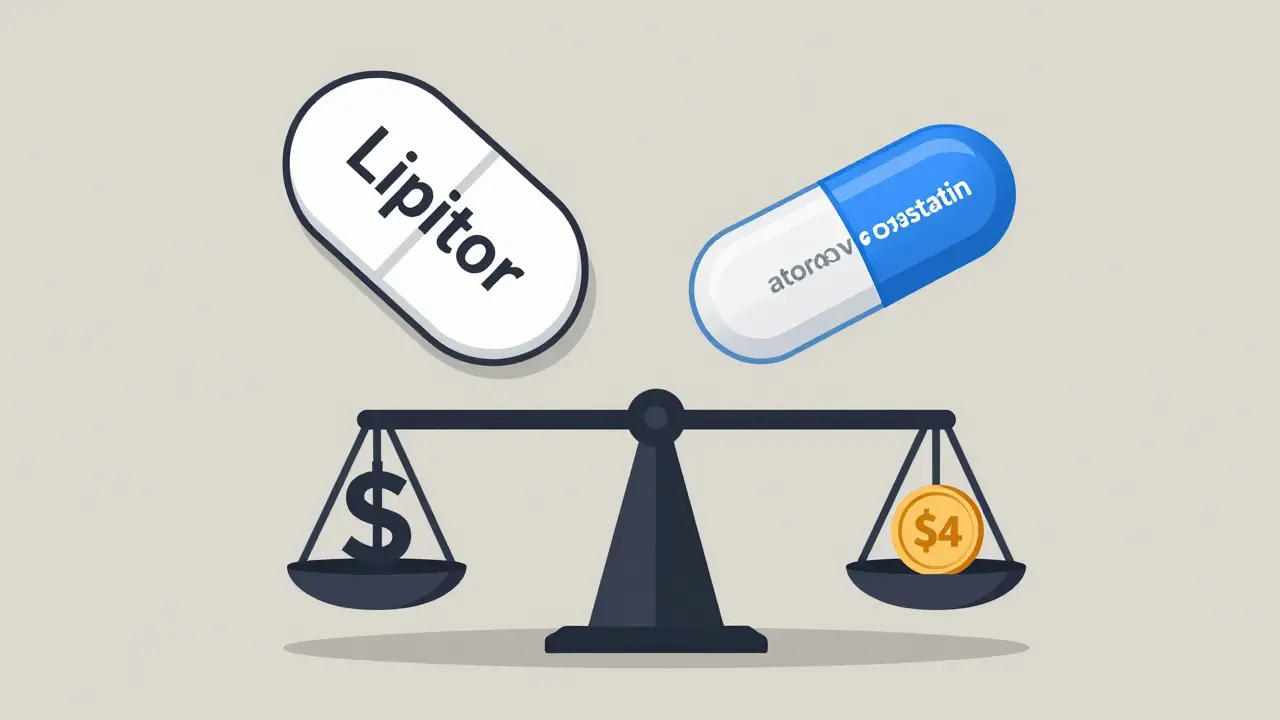
Trademark rules prevent generic manufacturers from copying the exact appearance of brand-name pills. That’s why one company’s generic version of atorvastatin (Lipitor) might be a white oval, while another’s is a blue capsule. These differences don’t affect how well the drug works. But they can confuse patients. One study from Cedars-Sinai found that 15% of medication errors happen because people mistake a new-looking pill for the wrong drug.
On your prescription label, you’ll usually see the brand name first-bigger, bolder. Below it, in smaller print, is the generic name. That’s standard across 92% of U.S. pharmacies. If you’re unsure, ask your pharmacist. They’re required to tell you both names if you ask.
Why Is the Generic So Much Cheaper?
Let’s say your brand-name medication costs $300 a month. The generic? $4. That’s not a scam. That’s the system.
Brand-name companies spend years and billions developing a new drug-clinical trials, patents, marketing. The average cost to bring a new drug to market? Around $2.6 billion. Once the patent expires, other companies can make the same drug. They don’t need to repeat those expensive trials. They just prove their version works the same. That cuts costs dramatically.
The result? Generic drugs save the U.S. healthcare system about $1.67 trillion every decade. In 2022, generics made up 90% of all prescriptions filled, but only 22% of total drug spending. That’s because they’re so much cheaper. GoodRx reports that for many common drugs-like sertraline (Zoloft), metformin (Glucophage), or lisinopril (Zestril)-switching to generic can cut your monthly cost by 80-85%.
Are Generics Really Just as Good?
Yes. And no. Mostly yes.
The FDA, NIH, and major health systems like Kaiser Permanente and UCSF all agree: generics are as safe and effective as brand-name drugs. They’re held to the same manufacturing standards. They’re tested for purity, potency, and stability. The FDA inspects generic factories just like brand-name ones.
But there’s one exception: drugs with a narrow therapeutic index (NTI). These are medications where even a tiny change in blood level can cause problems. Think warfarin (Coumadin), levothyroxine (Synthroid), or certain seizure drugs. For these, some doctors still prefer the brand version-even though the FDA says generics are acceptable. Why? Because small differences in how the body absorbs the drug might matter more here. It’s rare-less than 1% of all drugs-but real.
If you’re on one of these, talk to your doctor. Don’t assume the generic is unsafe. But do ask if switching is okay for your specific situation.
Why Do Some People Say They Feel Different?
You’ve probably heard stories: “I switched to the generic and felt awful.” “The brand version worked better.”
It’s not all in their head. While the active ingredient is identical, the inactive ingredients-fillers, dyes, coatings-can vary. These don’t treat your condition, but they can affect how fast the drug dissolves or how your stomach reacts. For example, someone with a sensitive gut might notice a change in side effects if the coating on a generic pill is different.
A 2022 CVS Health survey found that 24% of patients reported confusion or discomfort after switching, mostly due to appearance or texture changes. But when researchers looked at clinical outcomes, there was no difference in effectiveness. The perception of change didn’t match reality.
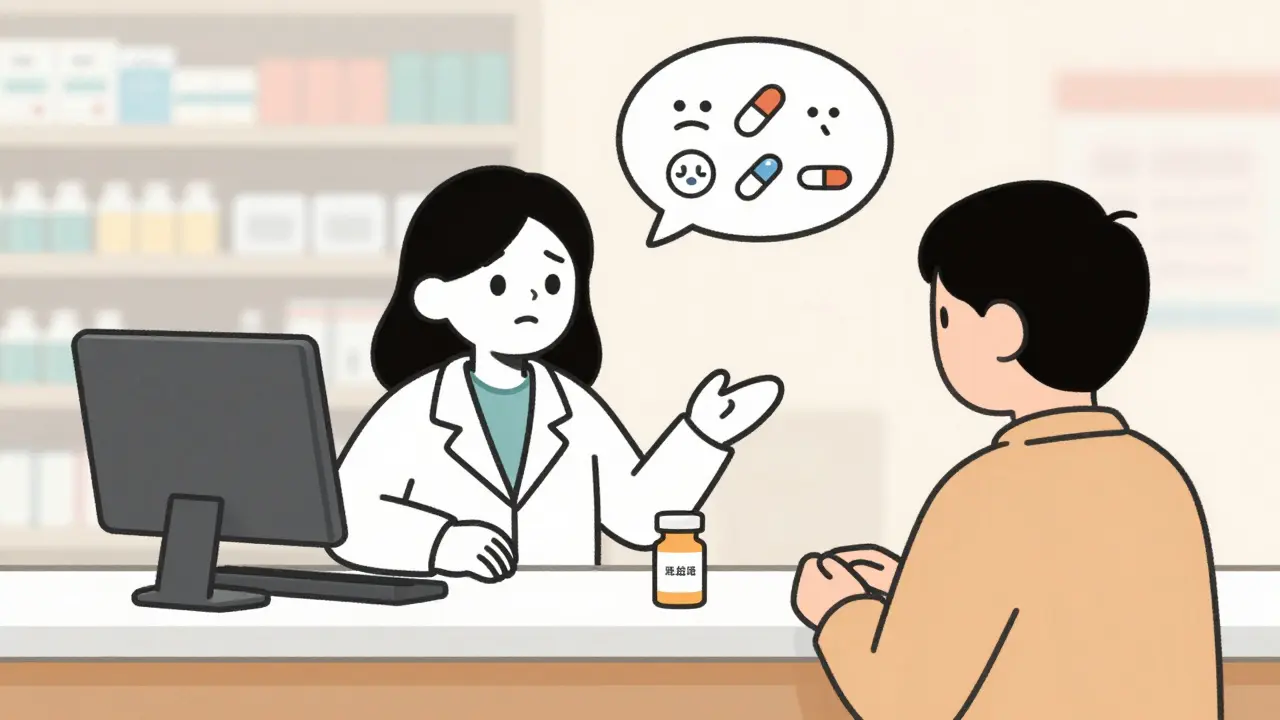
Still, if you feel off after switching, don’t ignore it. Talk to your pharmacist. They can check if it’s an inactive ingredient issue, or if you need to go back to the brand.
What Happens When You Fill a Prescription?
When your doctor writes a prescription, they can choose whether to allow substitution. Most don’t. In fact, 28 states let pharmacists automatically swap in a generic unless the doctor writes “dispense as written” or “no substitution.” Insurance plans usually push for generics too-they save money, and you save money.
But here’s something most people don’t know: about half of all generic drugs are made by the same companies that make the brand versions. Pfizer, Johnson & Johnson, and other big names often produce generics under different names. It’s the same factory, same equipment, same quality control. The only difference? The label.
What You Should Do
- Always check the label for both names. The generic name is your key to understanding what you’re taking.
- If cost is an issue, ask for the generic. It’s almost always cheaper and just as effective.
- If you notice a change in how you feel after switching, talk to your pharmacist. It might be the filler, not the drug.
- Don’t assume a pill looks wrong just because it’s not the same color. That’s normal.
- Ask your pharmacist to explain the difference between the brand and generic names on your bottle. A 5-minute chat can cut confusion by two-thirds.
The Bigger Picture
Generic drugs are the backbone of modern healthcare. Without them, millions couldn’t afford their meds. The U.S. spends $400 billion a year on prescriptions. Generics keep that number from ballooning even higher.
And the trend is only growing. By 2026, experts predict 78% of all prescriptions will be for generics. More biologics-complex drugs like insulin or rheumatoid arthritis treatments-are going generic too. These are called biosimilars, and while they’re not as cheap as regular generics (they save 15-30%, not 80%), they’re still a big step forward.
There are risks, though. Supply chains are fragile. Over 80% of active ingredients come from China and India. If something disrupts production-like a pandemic or trade issue-there can be shortages. The FDA is working on faster approvals to fix that, but it’s still a vulnerability.
Still, the bottom line hasn’t changed: generic drugs are safe, effective, and save lives. The only thing that’s different is the price-and the label.
Are generic drugs really as effective as brand-name drugs?
Yes. The FDA requires generic drugs to have the same active ingredient, strength, dosage form, and route of administration as the brand-name version. They must also prove they deliver the same amount of medicine into your bloodstream within a narrow range (80-125% of the brand’s performance). Studies show no meaningful difference in how well they work for the vast majority of drugs.
Why do generic pills look different from brand-name ones?
Trademark laws prevent generic manufacturers from making pills that look exactly like brand-name versions. So they change the color, shape, size, or markings. These differences don’t affect how the drug works-they’re purely cosmetic. But they can confuse patients who expect their pills to look the same every time.
Can I ask my pharmacist to give me the brand-name drug instead of the generic?
Yes, you can request the brand-name version. But your insurance may not cover it, and you’ll likely pay much more out of pocket. If your doctor thinks the brand is medically necessary-for example, with narrow therapeutic index drugs-they can write “dispense as written” on the prescription to block substitution.
Is it true that some generic drugs are made by the same companies as brand-name drugs?
Yes. About half of all generic medications are produced by the same companies that make the brand-name versions. The difference is in the marketing and labeling. The factory, equipment, and quality control are often identical. You’re getting the same product, just under a different name.
Should I be worried about switching from a brand-name drug to a generic?
For most people, no. But if you’re taking a drug with a narrow therapeutic index-like warfarin, levothyroxine, or certain epilepsy meds-talk to your doctor first. Minor differences in absorption can matter here. Also, if you notice new side effects after switching, it could be due to inactive ingredients. Talk to your pharmacist before switching back.
How can I tell if my prescription is generic or brand-name?
Check the label. The brand name is usually printed in larger font at the top. The generic name-the active ingredient-is listed below it in smaller print. You can also ask your pharmacist directly. Most states require them to provide both names if you ask.
Do generic drugs have the same side effects as brand-name drugs?
The active ingredient causes the same side effects, so yes-most are identical. But because generics can use different inactive ingredients (like dyes or fillers), some people report different reactions, like stomach upset or allergic responses. These aren’t caused by the medicine working differently, but by how your body reacts to the coating or filler. If this happens, your pharmacist can help you find a different generic version.
Why do some insurance plans force me to use generics?
Because generics cost 80-85% less. Insurance companies use this to keep premiums lower and reduce out-of-pocket costs for everyone. Most plans have a “formulary” that lists preferred drugs, and generics are almost always the first choice unless there’s a medical reason not to use them.


Written by Felix Greendale
View all posts by: Felix Greendale