
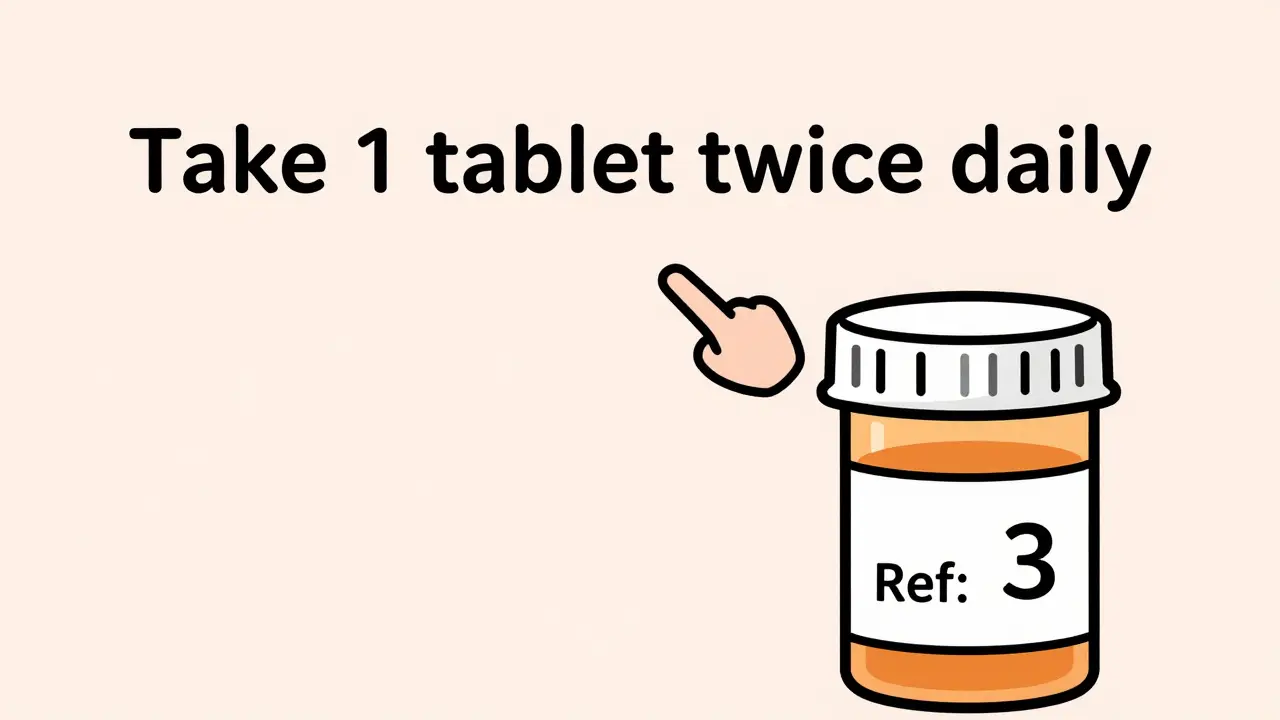
Have you ever looked at your prescription label and wondered what that tiny "Ref: 3" or "Refills: 0" really means? It’s not just extra text - it’s a key part of keeping your treatment on track. Many people miss this detail until they’re out of pills and can’t get a new bottle. That’s when confusion, delays, and even dangerous gaps in medication start to happen.
What Does "Refill" Actually Mean?
When your doctor writes a prescription, they don’t just say "take this daily." They also decide how many times you can refill it without needing to see them again. That number is your refill count. It’s printed on your label as "Ref: X" or "Refills: X," where X is the number of refills left.
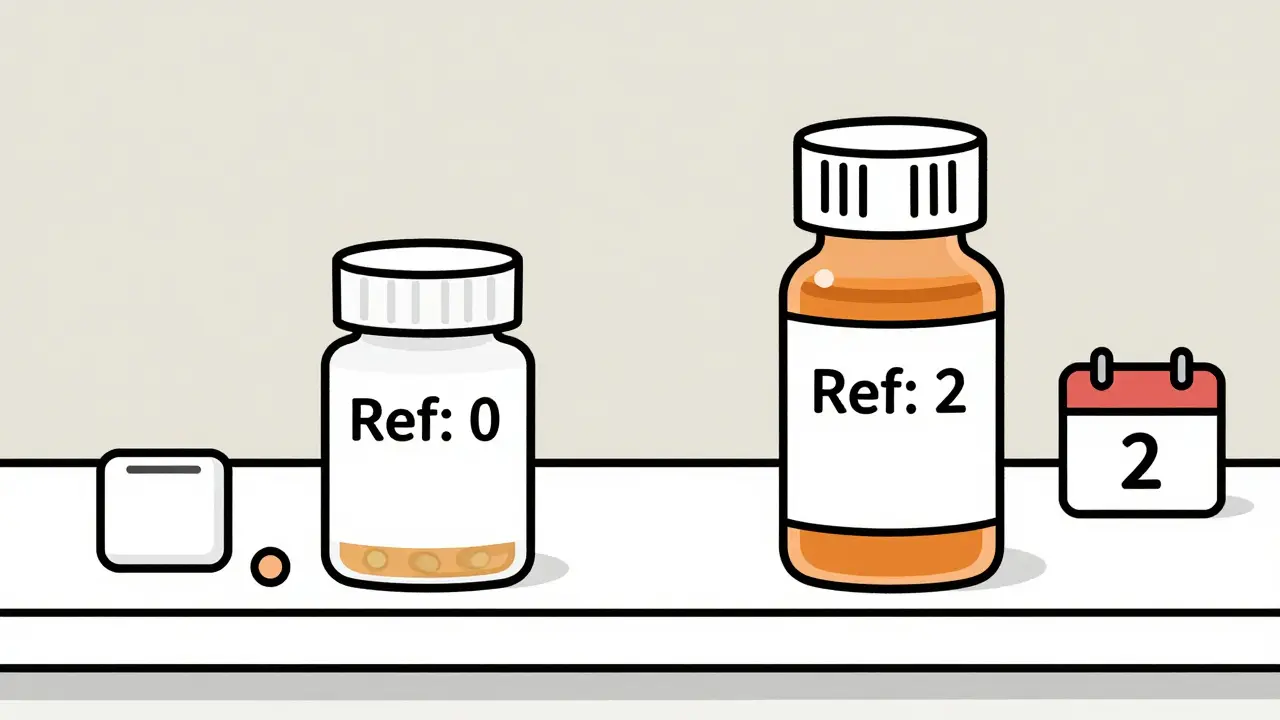
For example, if your label says "Ref: 5," you can get the same medication five more times without calling your doctor. Each time you pick up a refill, that number goes down by one. When it hits "Ref: 0," you can’t get any more until your doctor writes a new prescription.
This isn’t random. The U.S. Pharmacopeial Convention (USP) set clear standards for how this info should appear. It’s placed away from your dosing instructions - like "Take 1 tablet by mouth twice daily" - because those are the most critical parts. You need to see them first. Refill info is important, but it’s not urgent in the same way. That’s why it’s usually at the bottom or side of the label.
Where to Find It on Your Label
Prescription labels follow a standard layout, but there are slight differences between pharmacies. Most include:
- Your name
- Medication name and strength (like "Metformin 500mg")
- Prescription number
- Fill date
- Prescriber name
- Drug Identification Number (DIN)
- Expiration date
- Dosing instructions
- Refill information
Refill info is often grouped with the prescription number and fill date. At CVS, it’s on the middle section of their color-coded labels. At Walgreens, it’s near the bottom. Independent pharmacies usually follow the Pharmacy Association of Nova Scotia’s format, which clearly shows both the total refills allowed and how many are left.
Some labels might say:
- "Ref: 3" - You have three refills left.
- "Refills: 0" - No refills remain. You need a new prescription.
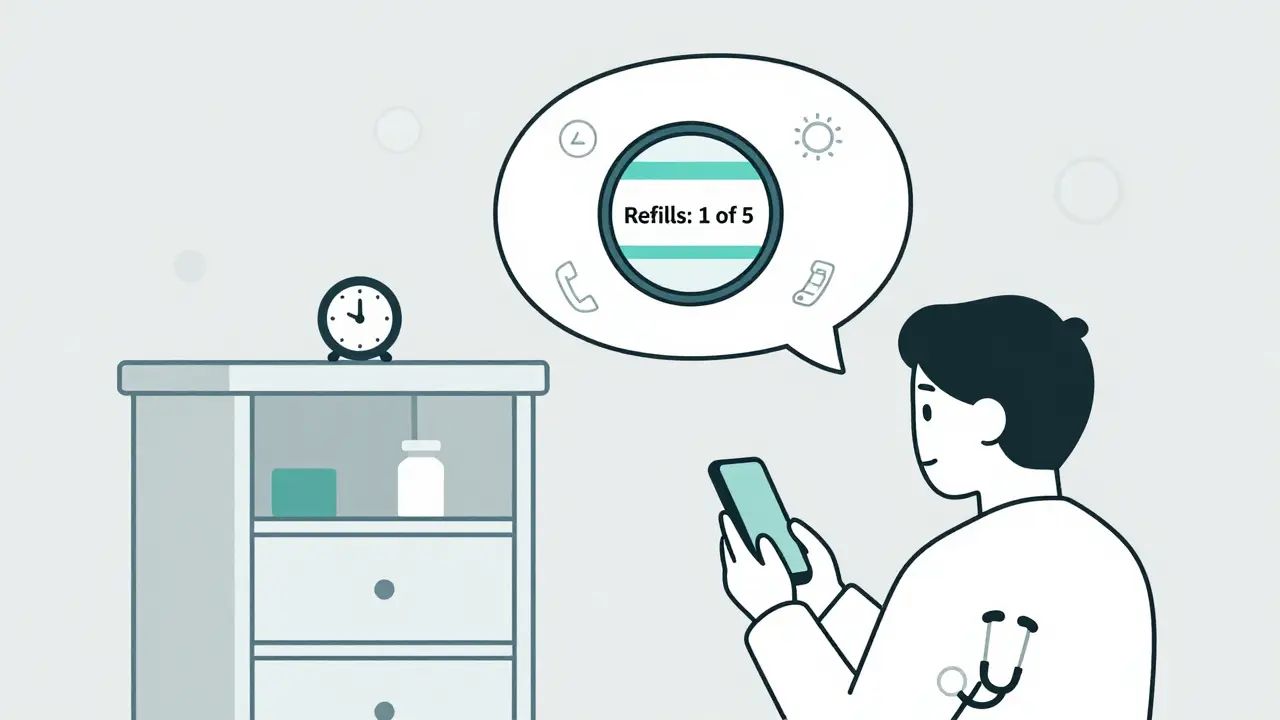
- "Refills: 1 of 5" - You’ve used one, four left.
Don’t assume "Ref: 0" means you’re out of pills. It means you’re out of refills. You might still have 10 pills left in the bottle. But once those are gone, you can’t get more without a new script.
Why This Matters: Safety, Adherence, and Cost
Getting this wrong can have real consequences. A 2022 study tracking over 12,000 patients found that those who understood their refill info were 37% less likely to miss doses or stop taking their meds. That’s huge. Medication non-adherence causes an estimated $300 billion in avoidable healthcare costs every year in the U.S.
One common mistake? Thinking "Ref: 0" means you have zero pills left. A Pharmacy Times survey of 500 pharmacists found that 15-20% of calls to doctors are because patients misread this. They panic, thinking they’re out of medicine, when they just need to schedule a doctor’s visit.
Also, some medications - like insulin, blood pressure pills, or birth control - need to be taken daily. If you don’t know your refill count, you might run out on a weekend or holiday. That’s when emergencies happen. A patient named Maria Rodriguez shared on a diabetes forum: "I almost ran out of my insulin because I didn’t realize my refills had expired - the 'Ref: 0' was printed in tiny text at the bottom of my label."
Clear refill info reduces medication abandonment by 23%, according to Dr. Sarah Thompson of the American Pharmacists Association. That means more people stick with their treatment. More people stay healthy. Fewer hospital visits.
How to Use Refill Info to Stay on Track
Here’s how to turn this small piece of text into a habit that keeps you safe:
- Check it weekly. When you organize your meds, glance at the refill number. Don’t wait until you’re out.
- Call ahead. If you have 1-2 refills left, call your pharmacy 3-5 days before you think you’ll run out. Some controlled substances (like painkillers or ADHD meds) take up to 72 hours to process.
- Know your insurance rules. Medicare Part D lets you refill 30-day prescriptions after 23 days. Most private insurers allow refill at 80% of the supply - so for a 30-day script, that’s around day 24. If you wait until day 28, you might have to wait longer.
- Don’t ignore "Ref: 0". If you see it, call your doctor’s office. They can often send an electronic refill request without you needing an appointment.
Some pharmacies now help you out. CVS’s "Spoken Rx" feature lets you scan your bottle with their app and hear your medication name and refill info read aloud - in English or Spanish. Over 1.7 million people use it. Walgreens and Express Scripts send text reminders when your refill is ready. These tools help, but they’re not foolproof. You still need to know what the label says.
What’s Changing in Prescription Labels
Pharmacies are improving. Since 2020, 68% of U.S. pharmacies have made their refill info bigger and clearer. CVS invested $12.7 million in label redesigns. The Pharmacy Association of Nova Scotia now requires that "remaining refills" be printed in larger font than "total refills" - so you see what matters most.
The American Pharmacists Association is testing a universal refill icon - a small symbol that means "refills left" - to replace text entirely. Early tests in six states showed a 41% drop in refill-related errors. By 2025, 85% of pharmacies are expected to use digital reminders via text or app alerts.
But no matter how fancy the tech gets, you still need to understand the basics. The label is your first and most reliable source.
What to Do If You’re Confused
If you can’t find the refill info, or it’s too small to read:
- Call your pharmacy. They’ll tell you how many refills are left.
- Ask for a printed copy of your prescription details. Most pharmacies will give you one.
- Check your pharmacy app. Most have a digital version of your prescription, including refill status.
- If you’re out of refills and need medicine now, call your doctor. Many offices can send an e-script within hours.
Don’t skip doses. Don’t stretch pills. Don’t use someone else’s meds. Get help.
Final Thought: Your Label Is Your Ally
Your prescription label isn’t just a sticker. It’s a tool. It tells you what to take, when, and how long you can keep getting it. Refill info is one of the simplest things on that label - but it’s also one of the most powerful. Knowing how many refills you have left can prevent a medical emergency. It can save you time, money, and stress.
Next time you pick up your meds, take two seconds. Look for the "Ref: X." Write it down. Set a reminder. Make it part of your routine. Because when it comes to your health, small details make the biggest difference.
What does "Ref: 0" mean on my prescription label?
"Ref: 0" means you have zero refills left. It does NOT mean you’re out of pills. You may still have medicine in your bottle, but you can’t get more refills without a new prescription from your doctor. Once the current supply is gone, you’ll need to schedule a visit or ask for an electronic refill.
Can I refill my prescription before I run out of pills?
Yes, but it depends on your insurance. Medicare Part D allows refills after 23 days for a 30-day supply. Most private insurers let you refill at 80% of the supply - so for a 30-day prescription, that’s around day 24. If you refill too early, the pharmacy may deny it. Always check with your pharmacy or insurer if you’re unsure.
Why is refill info placed at the bottom of the label?
The U.S. Pharmacopeial Convention (USP) recommends placing refill info away from dosing instructions to avoid confusion. Critical details like "Take 1 tablet twice daily" need to be seen first. Refill info is important, but not urgent. Putting it lower helps reduce errors - studies show 68% of medication mistakes happen when patients misread label information.
Do all pharmacies show refill info the same way?
No. While most follow USP guidelines, formats vary. CVS places it in the middle section of their color-coded labels. Walgreens and independent pharmacies often put it near the bottom. Some include "Refills: 1 of 5," while others just say "Ref: 4." The number of refills left is always shown - but the exact wording and placement differ by pharmacy chain and state regulations.
Can I get a refill if my prescription says "No Refills"?
No - if your label says "No Refills," that means your doctor didn’t authorize any. You must see them again to get a new prescription. This is common for controlled substances (like opioids, stimulants, or certain sleep aids) and medications that require regular monitoring. Don’t try to get around it - it’s illegal and unsafe.
How do I know if my refill info is up to date?
Call your pharmacy and ask for your current refill status. You can also check your pharmacy’s app or website - most have real-time updates. If you haven’t picked up a refill in over 30 days, the pharmacy may have canceled it. Always confirm before assuming you have refills left.
What if my refill info is missing or unreadable?
Don’t guess. Call your pharmacy immediately. They can look up your record and tell you how many refills remain. You can also ask for a printed copy of your prescription details. If this happens often, ask if they can print a larger, clearer label. Your health depends on clear communication.
Written by Felix Greendale
View all posts by: Felix Greendale