

Living with Vitiligo is an autoimmune condition characterized by the loss of melanocytes, leading to visible white patches on the skin often means dealing with more than just a physical change. For many, the social anxiety and self-consciousness that come with visible depigmented patches can be overwhelming. While medical treatments like phototherapy or topical corticosteroids work slowly-or sometimes not at all-there is an immediate solution available: camouflage. This isn't about hiding your identity; it’s about regaining control over how you present yourself to the world. Whether you are looking for a quick daily fix or a long-term semi-permanent solution, understanding your options can significantly improve your quality of life.
Understanding Vitiligo Camouflage
Camouflage for vitiligo has evolved far beyond simple makeup application. Clinically recognized since the 1980s, these techniques are now considered a vital complementary approach in dermatology. According to data from the Indian Journal of Dermatology, nearly 78% of patients express interest in using camouflage as part of their treatment plan. The primary goal is psychological relief. By normalizing skin appearance, patients often see a marked improvement in their Dermatology Life Quality Index (DLQI) scores, sometimes dropping by 22-35 points. It bridges the gap between diagnosis and successful repigmentation, offering confidence while medical therapies take effect.
The field is broadly divided into two categories: temporary camouflage, which requires daily application, and permanent camouflage, which lasts months to years. Each serves different needs depending on the stability of your condition, the location of the patches, and your lifestyle preferences.
Temporary Solutions: Foundations and Dyes
For most people, temporary camouflage is the first line of defense. These products are specifically formulated to cover pigment loss more effectively than standard cosmetics. Unlike regular foundation, specialized camouflage products contain up to 25% more pigment. They are designed to be opaque, transfer-resistant, and long-wearing.
| Formulation Type | Best Skin Type | Key Ingredients | Duration & Features |
|---|---|---|---|
| Water-Based | Normal to Dry | Oil-in-water pigments suspended in water | Lasts 6-8 hours; easy to remove; non-greasy finish |
| Oil-Free | Oily/Acne-Prone | Dimethicone or Cyclomethicone | Lasts 6-10 hours; matte finish; prevents clogging pores |
| Anhydrous (Water-Free) | All Types (High Durability) | Vegetable oil, mineral oil, lanolin, waxes | Waterproof; lasts 10-14 hours; difficult to remove without specific solvents |
Leading brands like Dermablend is a high-coverage cosmetic brand founded in 1981, acquired by L'Oréal, specializing in concealing skin imperfections and Dermacolour is a Czech cosmetic brand established in 1968, known for its high-pigment foundations used in theatrical and medical camouflage dominate this space. User feedback indicates that Dermablend receives high marks for color matching accuracy, with many users reporting satisfaction after initial training. However, be aware that waterproof formulas can be stubborn to remove. About 31% of complaints regarding temporary camouflage cite difficulty removing the product without causing skin irritation. Using a pH-balanced cleanser or a dedicated makeup remover is essential to maintain skin health.
Other temporary options include liquid dyes like potassium permanganate or henna pastes. These are less common today because they wash away easily, lasting only 4-6 hours, and often struggle with precise color matching. Indigenous preparations like Loha Bhasma also face challenges, with only 32% of users reporting satisfactory results due to inconsistent hues.
Permanent Camouflage: Micropigmentation
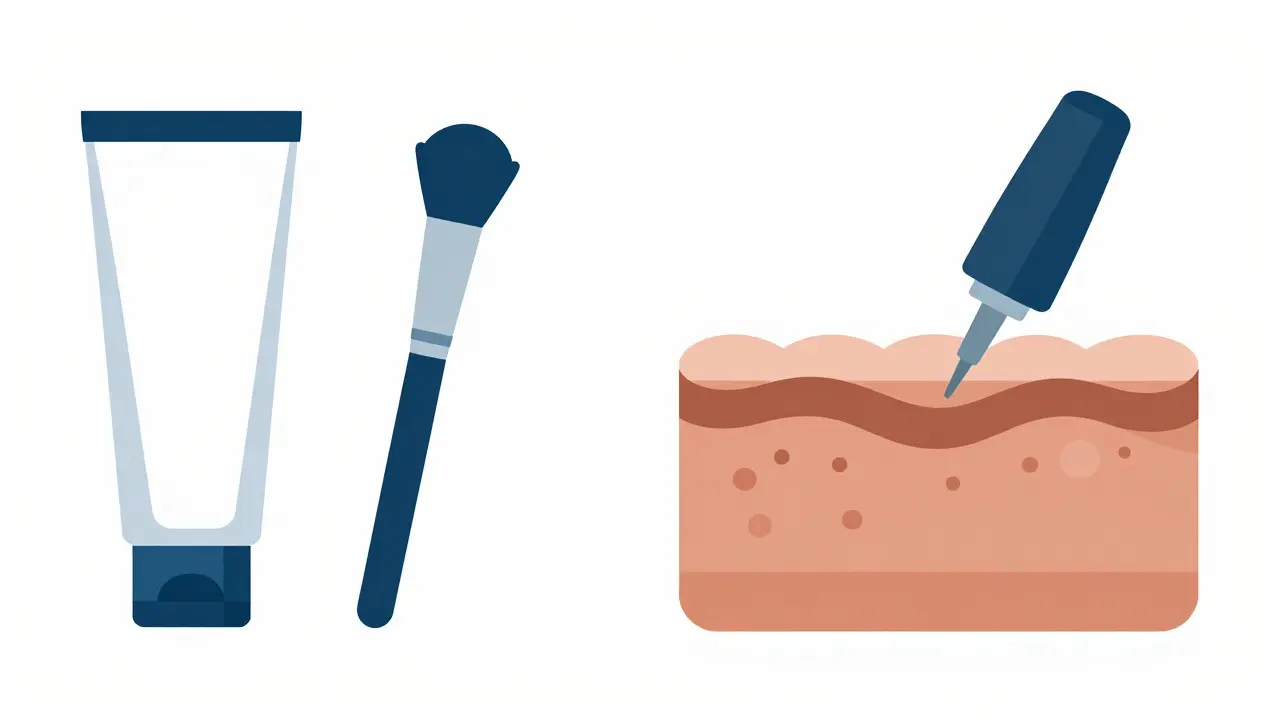
If daily application feels burdensome, permanent camouflage via micropigmentation might be the right choice. This technique involves implanting inert iron oxide pigments into the dermis. The pigments are standardized at 6 microns in size to ensure they are non-toxic and stable within the tissue. The procedure typically requires 15-20 punctures per square centimeter to achieve a natural look.
It is crucial to understand that this is not a tattoo in the traditional sense. It is a medical-grade procedure best suited for stable vitiligo. Clinical guidelines from the Vitiligo Society recommend that patches must remain stable for at least 12 months prior to treatment. If the vitiligo is active, the immune system may attack the new pigment, leading to uneven fading or "halo effects" around the treated areas. In fact, a 2022 case series showed that 18% of patients with unstable vitiligo developed these unwanted halo effects.
Micropigmentation excels in specific areas such as the lips, wrists, axillae, and elbows. However, it performs poorly on high-friction areas like hands and feet. Pigment on the knuckles fades approximately 40% faster than on less mobile areas, often requiring touch-ups every few months. Satisfaction rates reflect this: 74% for facial treatments versus only 48% for hand treatments. Costs also vary significantly, ranging from $300 to $800 per session depending on the area size, making it a significant investment.

Mastering Application Techniques
Even the best products fail if applied incorrectly. Training is essential. Dr. Madhulika Upadhyay, a dermatologist specializing in pigmentary disorders, emphasizes that applying camouflage is different from regular makeup. Here is a step-by-step guide to achieving professional results:
- Skin Preparation: Start with a clean, moisturized base. Use a pH-balanced cleanser to remove oils that might prevent adhesion. Allow the moisturizer to absorb fully.
- Color Matching: This is the hardest part. Match your product under natural daylight, not artificial indoor lighting. Compare the shade against unaffected skin near the patch, not the patch itself. You may need to mix shades to get the perfect tone.
- Application: Apply thin layers. Build coverage gradually rather than slapping on a thick layer. For water-based formulas, allow 90 seconds to set before adding another layer. Anhydrous formulas require 3-5 minutes to dry completely.
- Setting: Use a translucent powder to lock the product in place and reduce shine. This extends wear time and prevents transfer onto clothing.
- Removal: Be gentle. Use an oil-based remover for waterproof formulas to avoid scrubbing the skin raw.
Expect a learning curve. Most users spend 12-15 minutes applying camouflage daily. Initial frustration with color matching is common, affecting 63% of beginners. However, with practice or consultation with a certified specialist, most achieve satisfactory results within 2-4 weeks.
Psychological Impact and Quality of Life
The benefits of camouflage extend well beyond aesthetics. Dr. Davin Lim reports that 68% of his patients experience reduced anxiety about social interactions when using camouflage. The ability to control one's appearance can empower individuals to engage more freely in social, professional, and personal activities. Furthermore, many camouflage products offer SPF protection (typically SPF 2-3), providing an additional layer of defense against sunburn, which vitiligo-prone skin is highly susceptible to. Remember, camouflage is a tool for confidence, not a replacement for medical therapy. Combining both approaches often yields the best overall outcomes.
Is vitiligo camouflage safe for sensitive skin?
Most medical-grade camouflage products are hypoallergenic and non-comedogenic. However, because they are highly pigmented and long-wearing, they can trap bacteria if not removed properly. Always patch-test new products and use a gentle, pH-balanced cleanser to remove them. If you have eczema or active inflammation, consult your dermatologist before starting.
How long does permanent micropigmentation last?
Micropigmentation typically lasts several years but is not truly permanent. Factors like sun exposure, skin metabolism, and friction affect longevity. Areas with high movement, like hands, may fade faster and require touch-ups every 6-12 months. Facial areas generally retain pigment longer, often 3-5 years.
Can I use self-tanners instead of camouflage makeup?
Self-tanners can provide coverage for 4+ days, but they carry a higher risk of uneven application on depigmented patches. Because vitiligo patches lack melanin, they react differently to DHA (the active ingredient in self-tanners). This can result in orange or streaky tones. Specialized camouflage makeup offers more precise color control and opacity.
What is the cost of vitiligo camouflage products?
Premium camouflage foundations like Dermablend range from $25 to $45 per unit. Since these products are highly concentrated, a little goes a long way, so one bottle can last several months. Permanent micropigmentation is more expensive, costing between $300 and $800 per session, depending on the size and location of the patches.
Should I stop medical treatment if I start using camouflage?
No. Camouflage is a cosmetic solution, not a cure. It works alongside medical therapies like phototherapy or topical steroids. In fact, many dermatologists recommend continuing medical treatment while using camouflage to manage the psychological impact during the healing process.
Written by Felix Greendale
View all posts by: Felix Greendale