
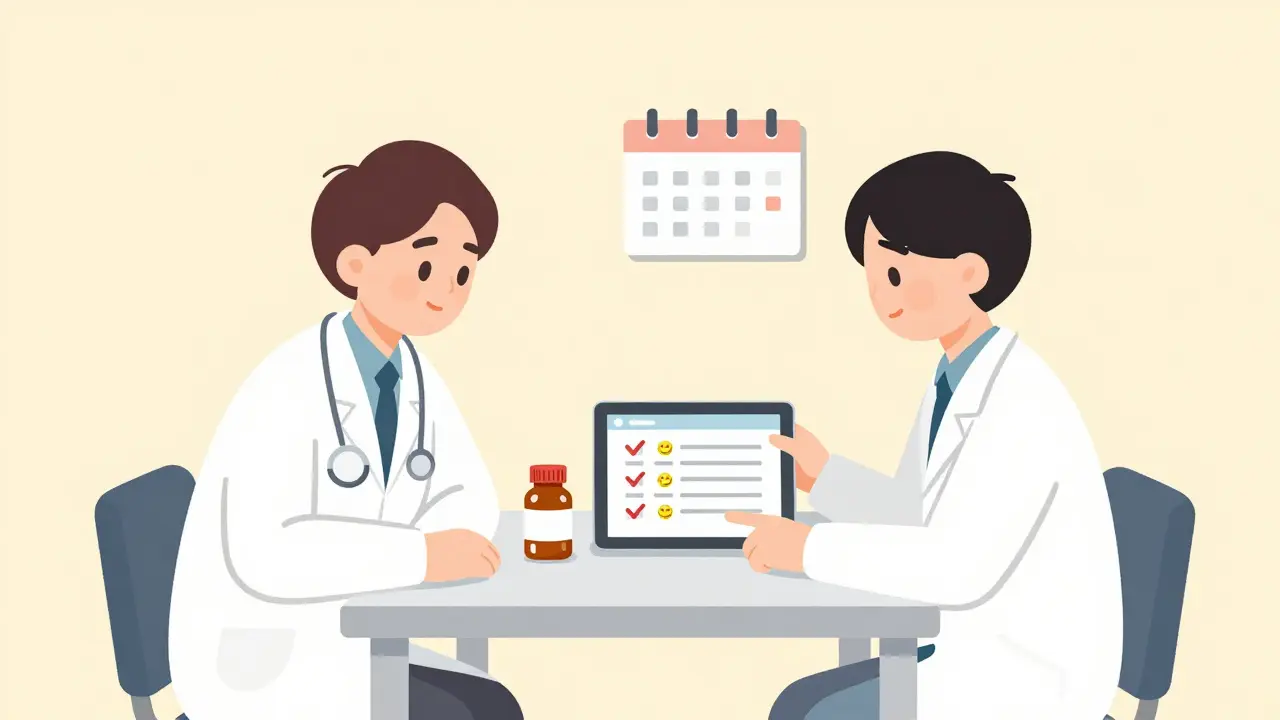
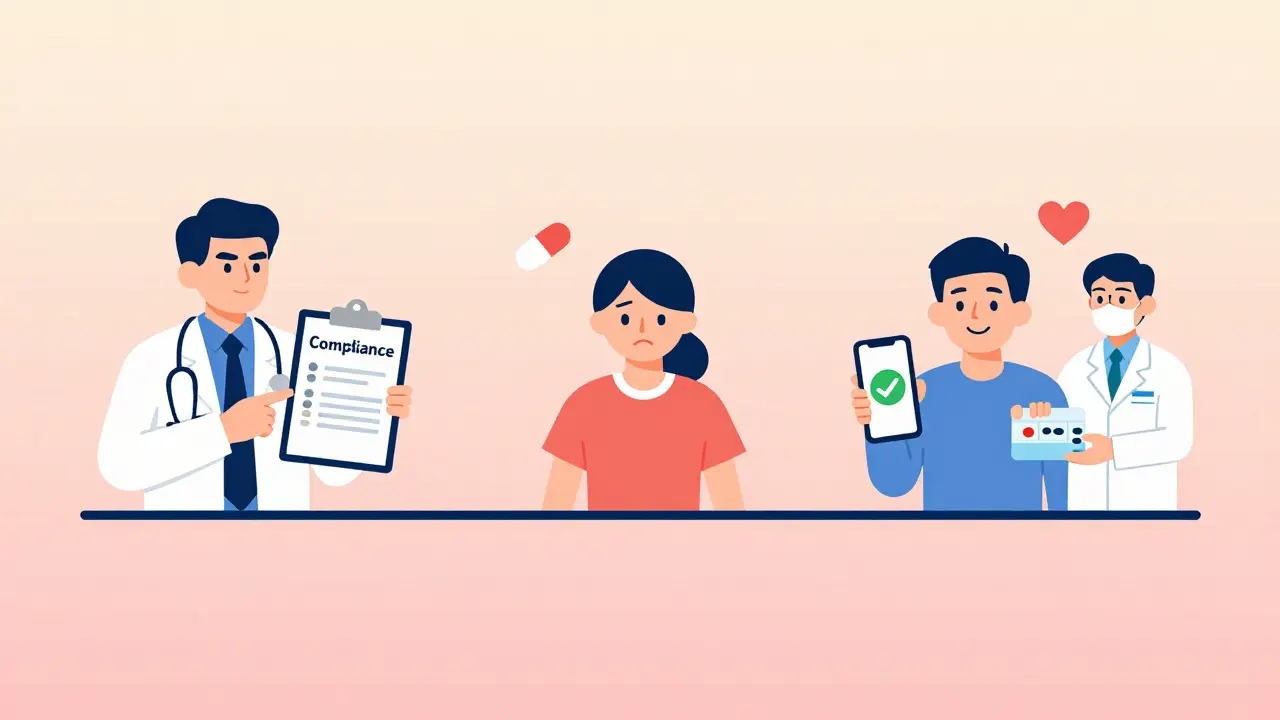
For years, doctors told patients to comply with their prescriptions. Take the pill. Don’t miss a dose. Follow the rules. But that language is outdated-and it’s hurting patient outcomes. Today, the right term isn’t compliance. It’s adherence. And the difference between the two isn’t just semantics. It’s the difference between a patient getting better and one slipping through the cracks of the healthcare system.
Adherence Isn’t Just Taking Pills-It’s a Partnership
The American Pharmacists Association defines medication adherence as the extent to which a patient’s behavior matches agreed-upon recommendations from their provider. Notice the word agreed-upon. That’s the key. Adherence means the patient understands why they’re taking the medicine, feels heard when they raise concerns, and makes an active choice to follow through. It’s not about obedience. It’s about collaboration.
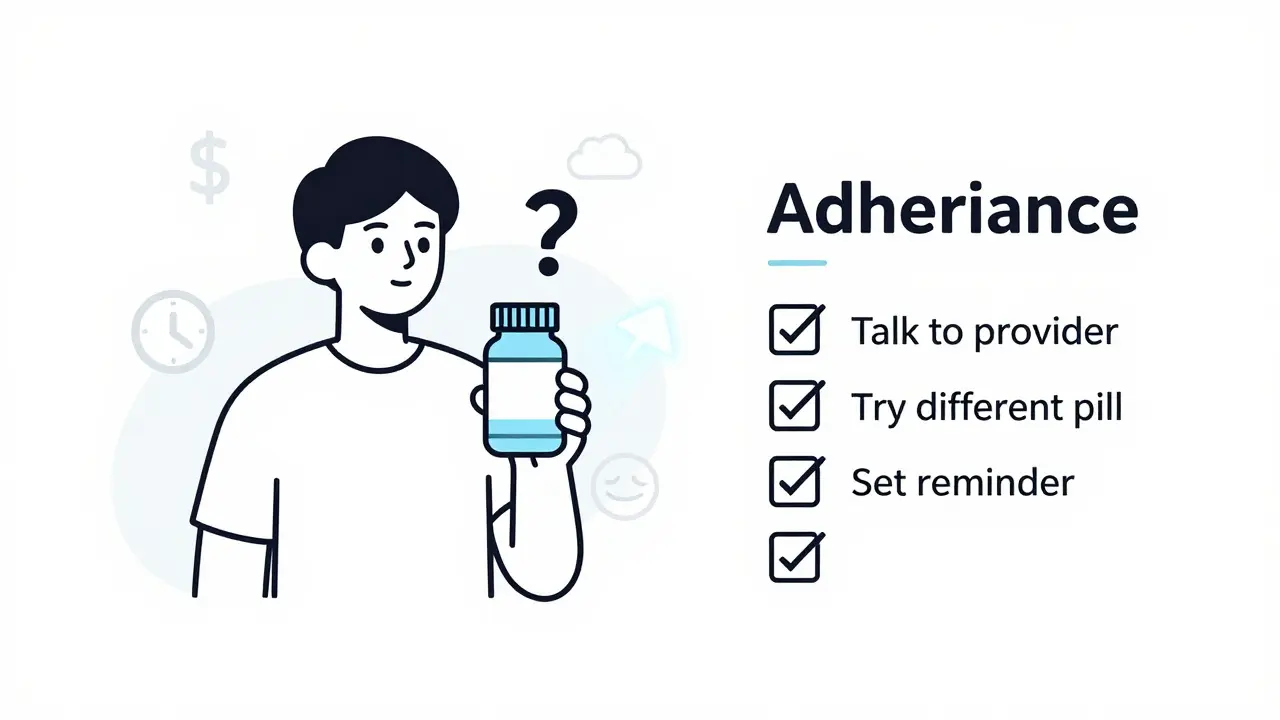
Take someone with high blood pressure. Their doctor prescribes a daily pill. But they skip it on weekends because they forget. Or they stop because the pill gives them dizziness. Or they can’t afford it. Under a compliance model, that’s labeled as non-compliant-a failure of the patient. Under an adherence model, it’s a signal. Why did they skip? What’s getting in the way? Maybe they need a different pill. Maybe they need help remembering. Maybe they need a payment plan. Adherence asks questions. Compliance just counts pills.
The American Medical Association says a patient is considered adherent if they take at least 80% of their prescribed medication over time. That’s not perfection. It’s realistic. It allows for human error, life chaos, and personal choices. And it’s backed by data: patients who are truly adherent have 20-50% better treatment outcomes than those just checked for compliance.
Compliance Is the Old Way-And It’s Failing
Compliance comes from a top-down, paternalistic model of care. The doctor knows best. The patient follows. No questions asked. That mindset dominated healthcare until the late 1990s. But it doesn’t work for chronic diseases like diabetes, heart failure, or asthma-conditions that last years, even decades.
Here’s the hard truth: half of all patients stop taking their prescribed medications within the first year. The World Health Organization says that. And compliance models don’t fix that. They just blame the patient. A 2023 study in the Journal of Clinical Pharmacy and Therapeutics found that patients labeled as ‘non-compliant’ were 3 times more likely to be discharged from care without support-instead of being helped.
Compliance measures only one thing: did they take the pill? It ignores why they didn’t. Did they run out of money? Did they fear side effects? Did they think the medicine wasn’t working? Did their schedule make it impossible? Compliance can’t answer those. Adherence can-and does.
How Adherence Is Measured (And Why It’s More Accurate)
Compliance used to be tracked with pill counts or pharmacy refill records. Simple. But flawed. A patient might refill a prescription but never open the bottle. Or they might take half the dose because they’re scared of side effects. Compliance sees the refill. Adherence asks: did they actually use it?
Modern adherence tools are smarter:
- Electronic monitoring caps (like MEMS) track exactly when a bottle is opened-down to the minute.
- Medication possession ratio (MPR) calculates how much of the prescribed medication a patient actually has on hand over time.
- Digital apps like Hero Health or Dose Packer send reminders, log doses, and even alert providers when doses are missed.
- Self-reporting tools with non-judgmental questions: ‘How often do you find it hard to take your medicine as planned?’
These tools don’t just count-they uncover patterns. A patient misses doses every Tuesday? Maybe they work late. Misses them after weekends? Maybe they forget to refill. Adherence tools help providers adjust-not punish.
Why Adherence Works Better-Real Data
It’s not theory. It’s proven.
A 2023 Kaiser Permanente study using Hero Health’s system found a 42% drop in missed doses among patients with chronic conditions. A 2024 trial with Dose Packer improved medication possession ratios by nearly 29% across 12,000 patients. The National Community Pharmacists Association found that when pharmacists used motivational interviewing and shared decision-making, adherence rates jumped 37.6%.
And it’s not just about taking pills. It’s about avoiding hospital visits. The Centers for Medicare & Medicaid Services (CMS) now tie 8% of hospital reimbursement payments to how well patients stick to their meds. Why? Because non-adherence costs the U.S. healthcare system over $300 billion a year in avoidable ER trips and readmissions.
Meanwhile, the global market for adherence tools is projected to hit $11.7 billion by 2028. That’s not because tech companies are pushing it. It’s because hospitals, insurers, and providers have seen the results.
What’s Changing in Healthcare Right Now
The shift isn’t slow-it’s accelerating.
- The FDA’s 2024 guidance now requires adherence-focused data in clinical trials-not just compliance checks.
- The AMA introduced new CPT billing codes in 2025 (99487-99489) specifically for adherence counseling. Doctors can now get paid for talking to patients about their meds-not just prescribing them.
- 87% of major U.S. health systems switched to ‘adherence’ language by mid-2024, according to HIMSS.
- The European Medicines Agency now demands adherence metrics in drug approvals.
Even the language in clinics is changing. You won’t hear ‘You’re not complying’ anymore. You’ll hear: ‘What’s making it hard to take your medicine?’ or ‘How can we make this work for you?’
Barriers to Better Adherence-and How to Overcome Them
It’s not easy. Providers still struggle with:
- Time: Meaningful adherence conversations take 15-25 extra minutes per visit. Many clinics don’t have the staffing to do that.
- Bias: Some providers still see non-adherence as laziness or defiance. But research shows most missed doses come from forgetfulness, cost, or side effects-not rebellion.
- Technology gaps: Not all patients have smartphones or internet access. Adherence tools need to be low-tech too-like pill boxes with alarms or printed schedules.
Successful programs fix this with:
- Training for staff in communication skills (8-12 hours of training makes a measurable difference).
- Integration with electronic health records so alerts pop up when a patient misses refills.
- Partnerships with community pharmacies that offer free delivery or discounted meds.
One clinic in rural Ohio started sending text reminders and offering $5 gift cards for every week a patient took their meds. Within 6 months, adherence jumped from 58% to 83%.
What This Means for You
If you’re taking medication for a long-term condition-diabetes, high cholesterol, depression, asthma-this matters to you. You’re not a failure if you miss a dose. You’re human.
Ask your provider:
- ‘What’s the most important thing I should know about this medicine?’
- ‘What should I do if I can’t afford it?’
- ‘Is there a simpler way to take this-once a day instead of three?’
- ‘Can we try a different pill if the side effects are too much?’
Adherence isn’t about being perfect. It’s about being heard. It’s about finding a way that works for your life-not the other way around.
The future of healthcare isn’t about obedience. It’s about partnership. And if you’re taking meds for your health, you deserve that.
Is medication adherence the same as compliance?
No. Compliance means following instructions without input or agreement. Adherence means working together with your provider to find a way that fits your life. Adherence recognizes your choices, barriers, and concerns. Compliance just checks if you took the pill.
What percentage of people are truly adherent to their medications?
About 50% of patients with chronic conditions are adherent-meaning they take 80% or more of their prescribed doses. The other half stop, skip, or cut doses, often due to cost, side effects, or forgetfulness. This isn’t laziness-it’s a system failure.
Why do doctors still say ‘compliance’ sometimes?
Old habits die hard. Some providers were trained decades ago using compliance language. Others work in settings-like prisons or emergency care-where compliance terms are still used for practical reasons. But major health systems, insurers, and regulators have officially moved to adherence. The shift is ongoing, but it’s real.
Can technology help me stay adherent?
Yes. Tools like electronic pill dispensers (Hero Health), smartphone apps (Dose Packer), and automated refill reminders can cut missed doses by 30-40%. Even simple things like a pill organizer with alarms or a weekly text reminder from your pharmacy can make a big difference.
What should I do if I can’t afford my medication?
Don’t stop taking it without talking to your provider. Ask if there’s a generic version. Check if your pharmacy has a discount program. Many drug companies offer patient assistance programs. Pharmacies and clinics can help you apply. Skipping doses because of cost is common-but it’s not your fault. The system should fix this, not you.
Is adherence only for chronic diseases?
It’s most critical for chronic conditions like high blood pressure, diabetes, or depression-where missing doses over time leads to serious harm. But adherence principles apply to any medication. Even short-term antibiotics or post-surgery drugs benefit from clear communication and support.


Written by Felix Greendale
View all posts by: Felix Greendale