
Have you ever walked into a pharmacy only to be told the medication your doctor prescribed is out of stock? You aren't imagining it. In October 2023, the U.S. Food and Drug Administration (FDA) reported 278 active drug shortages, the highest number since they started tracking them in 2011. While we often blame bad luck or sudden spikes in demand, the reality is much darker. The shortage of generic drugs isn't an accident; it is the predictable result of a broken economic model that rewards the lowest price at the expense of reliability.
Generic drugs make up about 90% of all prescriptions filled in the United States. They are the backbone of our healthcare system, keeping costs down for millions of patients. Yet, despite their ubiquity, these medications face chronic scarcity. Why does this happen? It comes down to three main factors: razor-thin profit margins, a fragile global supply chain, and outdated manufacturing processes. Let's break down why your essential medications are disappearing from shelves.
The Race to the Bottom: Economics of Generic Drugs
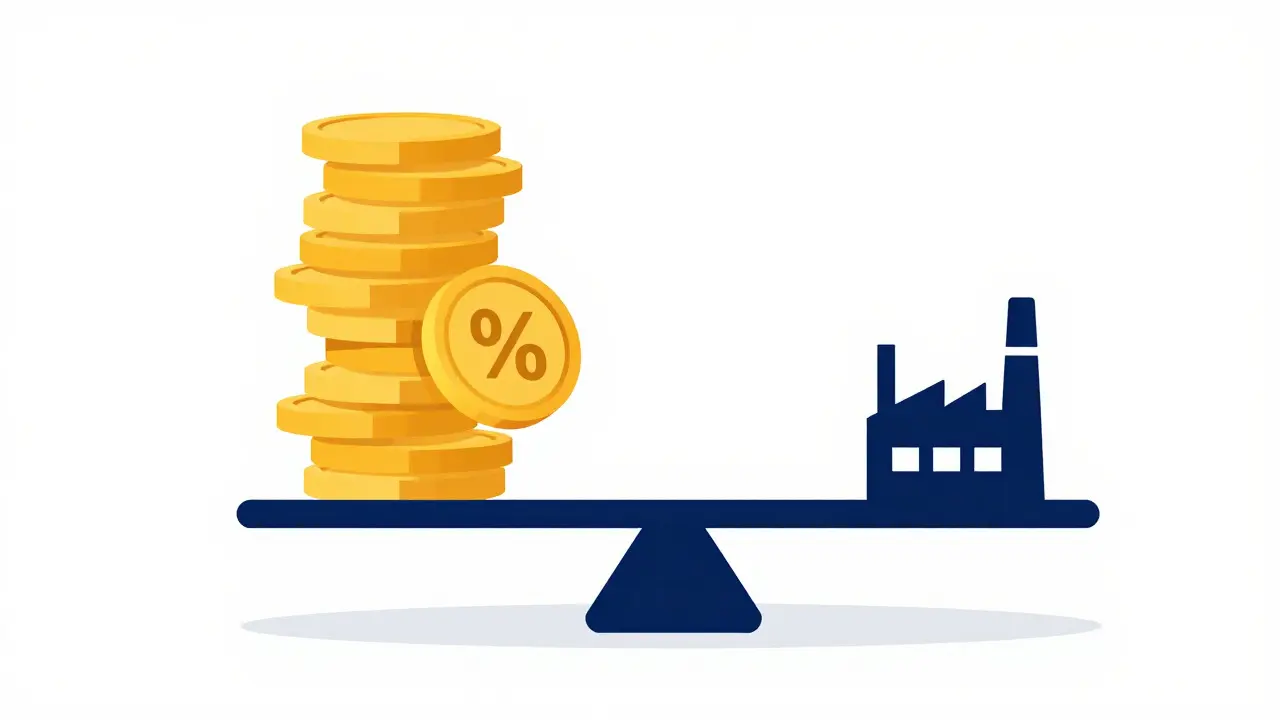
To understand the shortage, you first have to look at the money. Or rather, the lack of it. When a brand-name drug loses its patent protection, generic manufacturers step in. This competition drives prices down, which is great for consumers but terrible for producers. Brand-name pharmaceutical companies often operate with gross margins of 70-80%. Generic manufacturers, on the other hand, typically survive on margins of just 15-20%. For some common drugs, those margins can drop below 5%.
This economic pressure creates a "race to the bottom." Group purchasing organizations (GPOs) and pharmacy benefit managers (PBMs) negotiate contracts based on tiny differences in price-sometimes less than one-tenth of a cent per tablet. If a new manufacturer enters the market and offers a slightly lower price, they win the contract. The original manufacturer then has two choices: match the low price and lose money, or exit the market entirely.
When manufacturers exit, capacity disappears. There is no backup plan. Unlike branded drugs, which usually have a single manufacturer with robust supply chains, generics rely on a few key players. If one company shuts down, as Akorn Pharmaceuticals did in February 2023, the entire supply chain snaps. Akorn's bankruptcy led to immediate recalls and instant shortages with minimal alternatives. This fragility is built into the system. Manufacturers cannot afford to invest in extra safety stocks or modern equipment because every dollar saved today means winning tomorrow's bid.
| Feature | Branded Drugs | Generic Drugs |
|---|---|---|
| Gross Margins | 70-80% | 15-20% (often <5%) |
| Market Competition | Monopoly (during patent) | Highly competitive |
| Investment Capacity | High (R&D, Quality Control) | Low (Cost-cutting focus) |
| Supply Chain Resilience | Robust, single-source control | Fragile, multi-source dependency |
The Global Supply Chain Trap
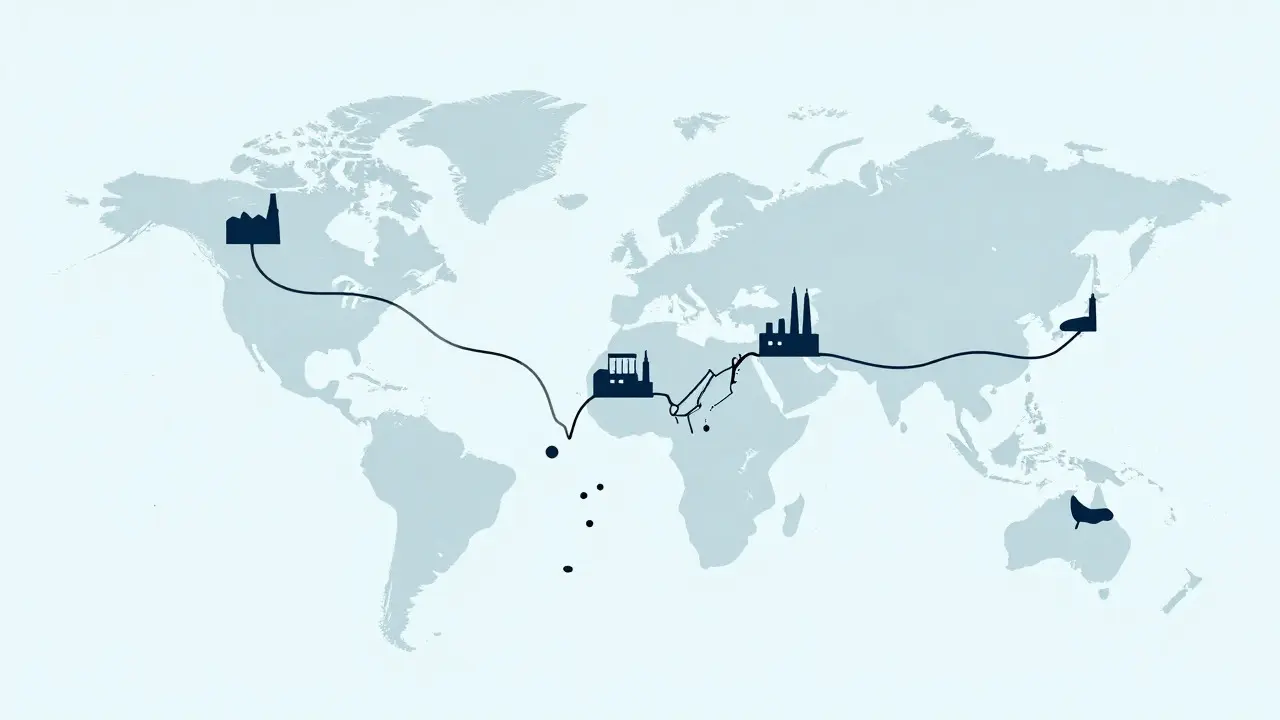
If economics explain why manufacturers are hesitant to produce more, geography explains why they can't just switch suppliers quickly. The U.S. is dangerously dependent on foreign sources for Active Pharmaceutical Ingredients (APIs). As of 2023, 72% of API manufacturing facilities approved for U.S. drugs are located outside the country.
Consider antibiotics. Ninety-seven percent of them have no domestic API source in the United States. For antivirals, that number is 92%. Even among the top 100 generic drugs consumed in America, 83% rely on foreign APIs. Most of these ingredients come from India and China. While this globalization lowered costs initially, it created massive vulnerabilities.
The pandemic exposed these weaknesses clearly. In early 2020, 44 pharmaceutical facilities in China became inoperable, and India halted exports of 26 essential medicines, including acetaminophen. Because the supply chain spans multiple international jurisdictions, a disruption anywhere causes delays everywhere. An API might be produced in one country, combined with inactive ingredients in another, coated in a third location, and packaged elsewhere. Each step adds time and risk.
Quality control becomes nearly impossible in this fragmented system. The FDA has found "enormous and systematic quality problems" at foreign facilities, such as Intas Pharmaceuticals in 2022, leading to the removal of critical cancer drugs like cisplatin from the U.S. market. A 2023 study noted that generic drugs manufactured in India were associated with 54% more serious adverse events compared to identical drugs made in the U.S. While correlation doesn't prove causation, it highlights the risks of relying on regions with less stringent regulatory oversight.
Outdated Technology and High Compliance Costs
You might wonder why manufacturers don't just build new factories in the U.S. The answer is cost and complexity. Establishing a new FDA-compliant manufacturing facility in the United States costs between $250 million and $500 million. It takes 3-5 years to get operational. In contrast, building a similar facility in India or China costs only $50-100 million.
Furthermore, many generic manufacturers still use batch processing, an older method where drugs are made in large batches and tested afterward. Modern continuous manufacturing offers superior process control and real-time quality monitoring. However, switching to continuous manufacturing requires prohibitive upfront capital investments. With margins so thin, manufacturers simply can't afford the upgrade. They are stuck using outdated technology that is prone to errors and inefficiencies.
Regulatory compliance also adds significant overhead. Manufacturers must maintain documentation for 5-7 years and undergo unannounced inspections. Non-compliance penalties average $2.3 million per violation. Responding to inspection deficiencies (Form 483) requires 12-18 months of corrective action, costing around $1.7 million per facility. These costs force smaller manufacturers out of business, further consolidating the market. Today, the top 5 generic manufacturers control 48% of the market, up from 22% in 2010. Less competition means fewer options when shortages hit.
Real-World Impact on Patients and Providers
The statistics become personal when you talk to healthcare professionals. On Reddit’s r/pharmacy community, hospital pharmacists documented switching to alternative antibiotics for 17 different infections in just six months due to shortages. Nurse practitioners report forcing patients with thyroid conditions to switch brands, requiring careful monitoring to ensure efficacy. One Medicare beneficiary saw their monthly heart medication cost jump from $10 to $450 during a 2022 shortage because the generic was unavailable.
Consumer complaints on the FDA’s drug shortage portal increased by 327% between 2019 and 2022. Patients are not just inconvenienced; they are at risk. Chronic conditions require consistent treatment. Interruptions can lead to worsened health outcomes, hospitalizations, and even death. The crisis affects everyone, from rural clinics struggling to find basic supplies to urban hospitals rationing critical care medications.
What Can Be Done?
Solving this crisis requires structural change, not just temporary fixes. Experts suggest several approaches:
- Tax Incentives for Domestic Production: Bipartisan legislation introduced in 2023 proposes tax breaks for companies that manufacture APIs domestically. This could help offset the high initial costs of U.S.-based production.
- Strategic Stockpiles: The government could establish reserves of critical medicines, similar to how it manages vaccines during pandemics. This would provide a buffer against sudden disruptions.
- Reforming Procurement Practices: Hospitals and health systems are increasingly bypassing GPOs to enter direct contracts with manufacturers. This approach prioritizes reliability over the absolute lowest price, encouraging manufacturers to maintain stable production levels.
- Enhanced Foreign Inspections: The Biden administration’s 2024 budget included $80 million for enhanced foreign facility inspections. While a start, experts argue this needs to be scaled up significantly to match the growth in foreign manufacturing sites.
Without these changes, analysts project the number of generic drug manufacturers serving the U.S. market will decline from 127 in 2022 to 89 by 2027. The trend is clear: unless we value reliability as much as low prices, shortages will continue to worsen.
Why are generic drugs cheaper than brand-name drugs?
Generic drugs are cheaper because manufacturers do not need to repeat the expensive research and development (R&D) trials required for brand-name drugs. They only need to prove bioequivalence, meaning the drug works the same way in the body. Additionally, intense competition among multiple generic manufacturers drives prices down further.
Are generic drugs as safe and effective as brand-name drugs?
Yes, the FDA requires generic drugs to be bioequivalent to their brand-name counterparts. However, recent data suggests that variations in manufacturing quality, particularly from foreign facilities with less stringent oversight, can lead to higher rates of adverse events. Consistency in production is key to maintaining safety standards.
What is an Active Pharmaceutical Ingredient (API)?
An API is the specific chemical substance in a drug that produces the therapeutic effect. It is the "active" part of the medication. APIs are often manufactured separately from the final drug product, frequently in countries like India and China, before being shipped to facilities where they are combined with inactive ingredients to create the final pill or liquid.
How do Group Purchasing Organizations (GPOs) contribute to drug shortages?
GPOs negotiate contracts on behalf of hospitals and pharmacies, often awarding deals based on the lowest possible price. This creates a "race to the bottom" where manufacturers cut corners on quality and capacity to win bids. When prices fall below production costs, manufacturers may exit the market, reducing overall supply resilience.
What is continuous manufacturing, and why is it important?
Continuous manufacturing is a modern production method where drugs are made in a steady flow rather than in discrete batches. It allows for real-time quality monitoring and better process control, reducing errors and waste. However, it requires significant upfront investment, which many generic manufacturers cannot afford due to thin profit margins.


Written by Felix Greendale
View all posts by: Felix Greendale